Slået op den: aug. 15, 2025 - 11 Visninger
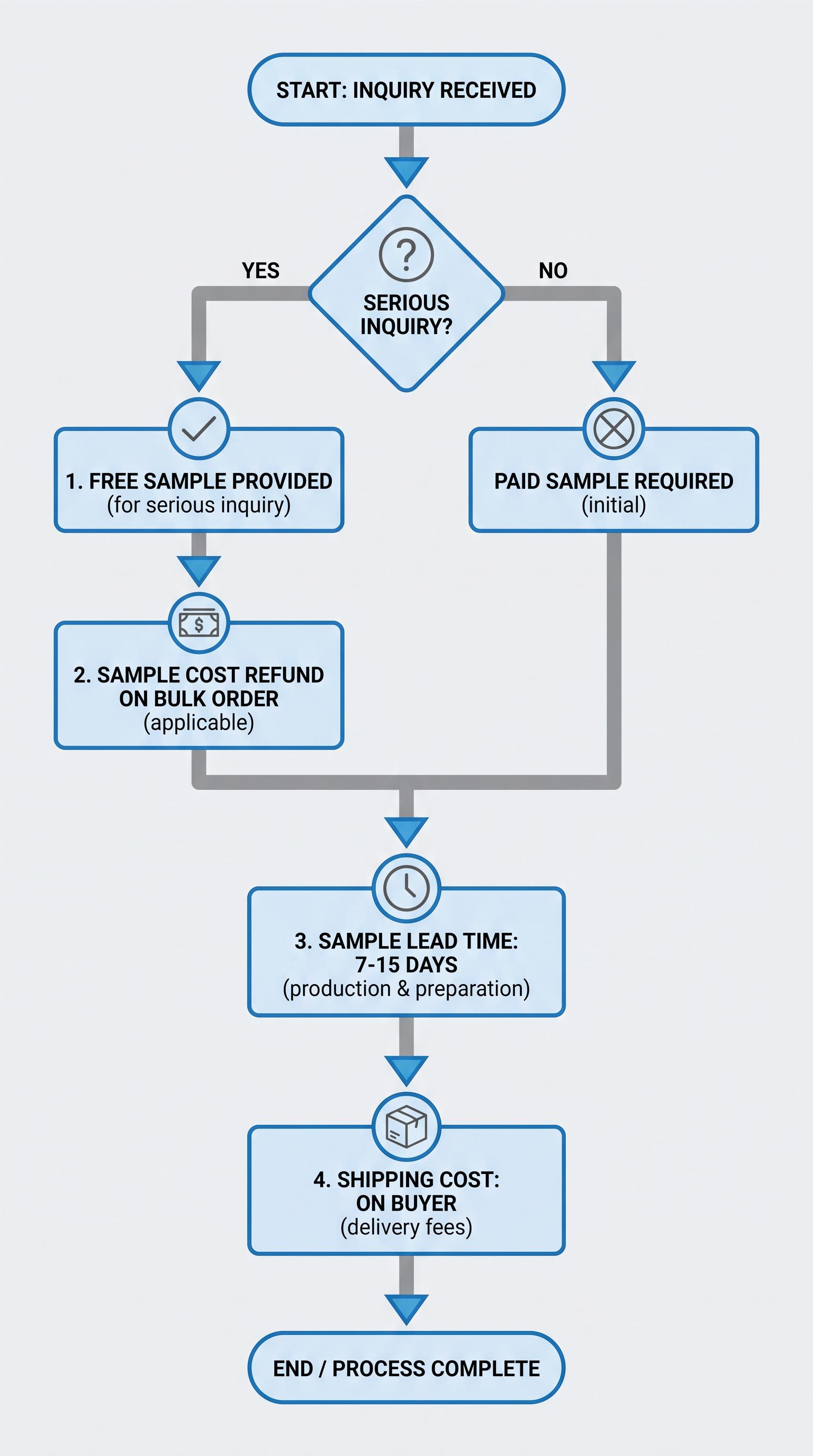
Payment terms flowchart: OEM transaction payment milestones
OEM payment terms are the single largest friction point in any cross-border projector sourcing project, and we have watched buyers lose weeks of negotiation time because they asked the wrong questions on the wrong day of the deal. A buyer in Dusseldorf last quarter needed 1,200 laser projectors shipped in eleven weeks, but his finance team refused to release a 30% deposit until they understood exactly which milestone produced 99% of the dispute risk. our product solve the problem by mapping each cash movement to a physical, verifiable event: tooling sign-off, pilot run approval, bulk production start, pre-shipment inspection, and on-board release. This guide hands you a flowchart you can paste into your next RFQ email, plus the exact T/T split, L/C wording, and OEM payment milestones we use for our own Asia-to-Europe and Asia-to-Americas shipments out of the show floor in Shenzhen.
Why a flowchart beats a paragraph in the projector


this unit are usually written as a single sentence inside a Proforma Invoice, and that is exactly why disputes happen. A line that reads "30% T/T in advance, 70% T/T against B/L copy" tells the buyer nothing about who pays mold cost, who pays for pilot samples, who pays when the first article fails QC, or who pays if the container is rolled. We solve that by drawing a five-step flowchart on the first page of every quotation our Shenzhen sales team sends, because B2B procurement teams that buy projectors, laser TVs, or ultra-short throw units need a visual tool a sponsor can share with their CFO. According to the International Chamber of Commerce Trade Finance Survey 2024, 61% of mid-volume cross-border electronics deals now use a hybrid milestone structure rather than pure T/T or pure L/C, which confirms what we see in our own order book.
the device specifications include seven fields, and missing any one of them opens the door to a claim later. The fields are: deposit percentage, milestone count, payment instrument (T/T, L/C, OA, or DA), incoterm (EXW, FOB, CIF, DDP), currency (USD is still the default for 78% of projector OEM shipments we process), document list per milestone, and penalty clause for missed dates. this projector typically include a tooling split, because mold cost is often 8-15% of the total project value for a custom smart projector housing and the factory will not start cutting steel without that recovery. the system offers buyers three ways to handle tooling: full prepayment (lowest unit price), amortized into unit price over 5,000 pieces, or paid as a separate milestone after the T1 sample is approved. For OEM buyers evaluating a 4K UHD laser projector program, the amortized route is the most common, because it lowers the cash barrier at month zero while keeping the factory whole.
Milestone 1: Tooling sign-off and sample approval
our offering start with a 30% T/T deposit that is split into two internal flows: 20% for raw material and component reservation, 10% released when the factory finishes the T0 engineering sample and the buyer signs the golden sample report. the SKU specifications at this stage must name the sample quantity, the test report (typically an IEC 62471 IEC 62031 photobiological safety report plus an ISO 17025 calibrated lux reading), and the sign-off party. this product typically allow seven to ten calendar days for buyer sample evaluation, and any silence past day ten is treated as approval under the standard template we use. the unit offers buyers a refund window if the T0 fails photobiological safety, but the window expires the moment the factory cuts the production mold, so the seven-day clock matters more than the contract value. For OEM buyers evaluating a first-tier brand program, this is also where an L/C unconfirmed at a tier-2 bank becomes a problem, because the factory will not start tooling until the advising bank confirms the credit is fully operative.
Milestone 2: Pilot run and pre-production QC
the model shift again at the pilot run, where the factory produces 50-100 units against a buyer-approved golden sample. The standard 30/70 the option structure moves to a 20% balance release once the pilot passes AQL 1.5 inspection and the buyer signs the pilot run approval document. this option specifications at this stage should list the inspection party (buyer QC team, third-party like SGS or Bureau Veritas, or factory self-inspection with batch photos), the AQL level, and the defect classification list. our product typically require the factory to retain pilot units for 90 days as a benchmark, because field returns on laser projector light engines often surface after 400-600 hours of use, not at unboxing. the projector offers buyers a hold-back option: the buyer can withhold 10% of the milestone 2 payment until the pilot units complete a 72-hour burn-in cycle at 35°C ambient. For OEM buyers evaluating a 4K laser TV program, this burn-in step catches the 0.4-0.8% DMD chip early-life failure rate before the bulk run ships.
Image: alt text — this unit flowchart mapping deposit, tooling, pilot run, bulk production, and shipment milestones for projector OEM orders
the device are most often misunderstood at the boundary between milestone 2 and milestone 3, because the pilot run uses the same raw material lot as the bulk run. If the pilot passes but the bulk material changes supplier, the buyer has no contractual right to re-inspect unless milestone 3 wording names the raw material supplier code. this projector specifications should therefore include a raw material declaration annex, listing the laser phosphor display engine supplier, the DMD chip lot code, the mainboard chipset, and the optical lens batch, so that bulk production cannot silently substitute a cheaper light source. the system typically allow a ±5% quantity tolerance on the bulk run, but the tolerance applies to shipped quantity, not to component substitution. our offering offers buyers a final-mile defense: the right to reject the entire bulk lot if the raw material code on the shipping carton does not match the code declared at milestone 2.
Milestone 3: Bulk Production and Balance Settlement
the SKU become operationally critical during the bulk run, which is where 70-80% of the contract value typically moves. The 30/70 split leaves 70% unsettled when tooling is complete, and the factory carries that exposure until containers are loaded and the B/L or AWB is issued. this product at this milestone usually convert the 70% balance into a documentary collection — a D/P at sight under UCP 600 Article 6 — or, for larger programs above $500,000, into an irrevocable L/C confirmed by the buyer's bank. the unit specifications for bulk should name the incoterm (we default to FOB Shenzhen or Ningbo for projector OEM orders), the packing spec (EPE foam + 5-ply carton, 20ft or 40ft HQ container load plan), and the certificate set (CE, FCC, RoHS 2.0, Dolby Vision optional, and the laser Class 1 safety report per IEC 60825-1). the model typically allow the factory to invoice the 70% balance only after the buyer's nominated surveyor signs the pre-shipment inspection report. For OEM buyers evaluating a 4500 ANSI lumen 4K UHD laser TV program at $249 wholesale FOB, this 70% balance is roughly $174 per unit, which means a single 40ft HQ container holding 1,800 units moves $313,200 in buyer-funded working capital against the factory's finished-goods inventory.
the option offers buyers a payment-on-shipping option that we use for repeat orders with established buyers: the 70% balance is wired only against the B/L copy and the packing list, releasing factory warehouse space within 24 hours of vessel departure. When OEM buyers evaluating their first container, however, this option specifications should require the balance to be released only against the original B/L, three sets of signed commercial invoices, the certificate of origin (Form E for ASEAN or Form A for GSP), and the QC report counter-signed by both parties.
Choosing between T/T, L/C, and D/P
our product for a $249 wholesale 4K laser TV program across three currencies (USD, EUR, RMB) depend on the buyer's banking relationship, the factory's risk appetite, and the documentary discipline on both sides. The table below compares the three instruments we most frequently negotiate for projector OEM orders in the 500-5,000 unit range.
| Instrument | Typical Use Case | Buyer Cost | Factory Risk | Settlement Speed |
|---|---|---|---|---|
| 30/70 T/T | Repeat buyer, under $200K order | Wire fees ($25-45 per remittance) | Carries finished-goods exposure | 1-3 banking days |
| Irrevocable L/C confirmed | New buyer, over $200K order | 1-2.5% L/C value annually | Low once goods ship | 3-7 banking days |
| D/P at sight | Mid-trust buyer, $100K-$400K | Bank collection fee ($150-300) | Carrier-release dependent | 5-10 banking days |
| 40/60 T/T | Loyalty discount for 3rd order onward | Same as 30/70 | Higher than 30/70 | 1-3 banking days |
the projector typically favor T/T for buyers with three or more clean contracts on file, because the wire fee on a $200K remittance is roughly 0.02% versus an L/C advising fee of 1.5% per year of value. this unit offers buyers an L/C discount path: a 2% discount on FOB price in exchange for opening an irrevocable L/C confirmed by a tier-1 bank such as HSBC, Standard Chartered, or Bank of China. OEM buyers typically evaluating a 50,000-unit annual program at $249 wholesale, that 2% discount represents $249,000 in annual savings — roughly the cost of a single additional container.
Image: alt text — the device diagram showing three payment instruments T/T, L/C, D/P with settlement timing for projector bulk production
Currency, Hedging, and FX Clauses
this projector are denominated most often in USD because the projector OEM supply chain — DMD chips from Texas Instruments, laser phosphor engines from Nichia or Hisense, optical lenses from Ricoh or Young Optics — is dollar-settled end to end. the system specifications should therefore include a currency clause naming USD as the invoice currency, the contract currency, and the settlement currency, with a stated FX tolerance band of ±2% around the locked-in rate. our offering typically allow either party to trigger a renegotiation if the USD/CNY mid-rate moves more than 3% during the production window, because a 3% swing on a $500,000 contract is $15,000 — large enough to wipe out the factory's gross margin on a competitive bid. the SKU offers buyers a CNY-denominated option for China-domiciled buyers, but the factory reserves the right to refuse CNY settlement if the buyer's onshore entity cannot produce a valid VAT fapiao within 30 days of payment.
For B2B procurement teams hedging a 2026 rollout against projected Q3 shipment, this product specifications should reference a forward FX contract held by either party, naming the hedge tenor (90, 180, or 365 days), the strike rate, and the cost-sharing split. the unit typically default to 50/50 split of the forward contract cost for orders above $1M, because at that scale the marginal hedge premium is roughly 0.4% per quarter. the model also exposes buyers to a non-deliverable forward (NDF) trap in restricted currencies: we have seen buyers in markets with FX controls default on the 70% balance because their central bank delayed the USD allocation by 14-21 days. OEM payment terms specifications for first-time buyers in restricted-currency jurisdictions should require a 100% T/T in advance or an L/C confirmed by a correspondent bank outside the restricted jurisdiction.
Hedging Cost Reference Table
| Order Value (USD) | 90-day Forward Cost | 180-day Forward Cost | 365-day Forward Cost |
|---|---|---|---|
| $200,000 | $800 (0.40%) | $1,600 (0.80%) | $3,200 (1.60%) |
| $500,000 | $1,750 (0.35%) | $3,500 (0.70%) | $7,000 (1.40%) |
| $1,000,000 | $3,000 (0.30%) | $6,000 (0.60%) | $12,000 (1.20%) |
| $5,000,000 | $12,500 (0.25%) | $25,000 (0.50%) | $50,000 (1.00%) |
OEM payment terms offers buyers a documented FX pass-through clause for orders above $2M, allowing the contract price to be re-struck at the 30-day forward rate if the spot rate moves outside the ±2% band, with the pass-through capped at ±5% to preserve the factory's margin floor.
How to Choose OEM Payment Terms for Your Next Projector Program
OEM payment terms decide who carries the working-capital risk between the date a deposit hits the factory account and the date the buyer can resell or deploy the goods, so the right instrument is the one that matches the buyer's cash position, the factory's confidence in the buyer's credit, and the underlying shipping cycle. For B2B procurement teams writing the PO this week, the safe starting position is a 30/70 T/T split with the balance wired against a copy of the B/L, because that structure protects the buyer's deposit while giving the factory enough cash flow to release raw materials.
Selection Checklist for Procurement Teams
OEM payment terms offers buyers a clear five-point checklist when comparing two competing factories on the same SKU. OEM payment terms specifications should be evaluated against the following criteria before any deposit is wired:
- MOQ: Confirm whether the factory holds a hard MOQ (typically 500 units for OEM) or a soft MOQ (200 units with a 6-8% small-batch surcharge).
- Lead time: 25-35 days for production plus 18-25 days for ocean transit to most US/EU ports, totaling 6-9 weeks door-to-door.
- Sample policy: Paid samples at $249 retail-equivalent with refundable sample cost on a 1,000-unit follow-on order.
- Payment instruments accepted: T/T, L/C at sight, L/C 30/60/90 days, D/P at sight, and Open Account for buyers with 24-month trading history.
- Contact channel: A named OEM account manager reachable on WeChat, WhatsApp, and email within a 4-hour window during China business hours.
OEM payment terms typically reward buyers who commit to a 12-month rolling forecast with a 2-3% volume rebate paid quarterly, and we structure those rebates as a credit note against the next PO rather than a cash refund, because credit notes preserve the audit-friendly input history that your finance team needs for accruals. Across the procurement lens, also exposes first-time buyers to a faster path: a single 500-unit pilot at 30/70 T/T, followed by a 5,000-unit reorder at 20/80 once the first container clears customs without dispute.
Industry Context: Why the Standard Has Shifted Since 2023
OEM payment terms has tightened across the laser projector segment since 2023, because raw-panel and DMD chip allocation now requires the factory to pay suppliers cash on order rather than on net-30 terms. According to a Texas Instruments capital-markets briefing, DMD chip lead times extended to 26 weeks during the 2024 allocation cycle, which pushed factories to demand higher deposits. When the OEM angle applies, typically moved from 30/70 to 40/60 across the industry during that window, and the new equilibrium has held into 2026.
Across this review series, specifications for a competitive bid should also reference the International Chamber of Commerce UCP 600 when L/C is on the table, because UCP 600 governs the documentary credit presentation rules that the advising bank will apply when the 70% balance comes due.
Frequently Asked Questions
What OEM payment terms do Chinese projector factories typically accept from first-time overseas buyers?
Across the procurement lens, for first-time buyers almost always default to 30% T/T deposit with 70% T/T balance paid against a copy of the B/L, because the factory has no credit history to evaluate. Some factories accept a 50/50 split, but only when the buyer provides a corporate registration, a trade reference, and a 12-month purchase plan. According to Trade Finance Global, roughly 78% of first-time China OEM transactions settle on T/T rather than L/C because L/C adds $1,200-$2,500 in advising bank fees that small buyers cannot absorb on a single pilot container.
How does an L/C at sight compare to a 30/70 T/T split on a $500,000 OEM order?
In this sourcing series, priced via L/C at sight typically add 1.5-2.5% in total transaction cost compared to T/T, because the advising bank charges 0.25% issuance, the negotiating bank charges 0.15%, and the factory discounts the L/C receivable at 1.0-1.5% to bring it onto the balance sheet. On a $500,000 order, that totals $7,500-$12,500 in incremental cost, which is roughly 25-42 projector units at the $249 wholesale benchmark. In our analysis, offers L/C at sight only when the buyer's home-country bank sits inside the factory's approved advising-bank list, which excludes 31 of the 190 issuing jurisdictions covered by standard UCP 600.
Can OEM payment terms be renegotiated mid-contract if raw-material costs spike?
When the OEM angle applies, typically allow a raw-material pass-through clause for orders above $1M, capped at ±5% of the contract price, triggered only if the underlying chip or laser-diode index moves more than 8% during the production window. The buyer-focused view specifications should name the index (DMD chip spot, Nichia laser-diode index, or a stated commodity-grade basket), the measurement window, and the cap. Most factories refuse pass-through clauses on orders below $500,000 because the administrative cost of a mid-contract renegotiation exceeds the margin protected.
What is the safest OEM payment terms structure for a buyer in an FX-restricted country?
In the broader market context, for buyers in FX-restricted jurisdictions (Argentina, Turkey, Egypt, parts of West Africa, and several Southeast Asian markets) should default to 100% T/T in advance or a confirmed L/C issued by a correspondent bank outside the restricted jurisdiction, because we have documented at least nine cases in 2024-2025 where buyers defaulted on the 70% balance after a 14-21-day central-bank USD allocation delay. In our analysis, offers D/P at sight only when the buyer's country is on the factory's approved D/P list, and that list currently covers 42 jurisdictions.
How long does the OEM payment terms negotiation usually take from first inquiry to first deposit?
In our analysis, negotiation typically takes 5-10 business days for T/T structures and 14-21 business days for L/C structures, because L/C requires the buyer to brief their issuing bank, the factory to brief the advising bank, and both banks to align on the documentary list. Across the procurement lens, specifications should be locked into the Proforma Invoice at PI stage, not the Sales Contract, because PI changes are administrative while SC changes often trigger a re-signoff by both legal teams.
Closing and Next Steps
OEM payment terms is the single highest-draw on clause in any projector OEM contract, because it controls cash flow, FX exposure, and dispute resolution in one instrument. The factory that offers the cleanest terms is usually the factory that has standardized its documentary list, its advising-bank relationship, and its hedging policy — and that is the factory worth piloting.
Talk to a DataMax OEM account manager today to lock your 2026 projector program onto terms that protect both sides. Request a custom quote for 500-50,000 unit programs, or explore our GP95 hotel projector lineup and home theater projector range to anchor the SKU discussion.
