
Δημοσιεύτηκε στις: Ιουλ 21, 2026 - 85 Προβολές

Projector Compliance and Import in Norway: A 2026 Guide
A shipment of 200 laser phosphor projectors lands at Oslo Gardermoen, and customs holds it for three weeks because the CE technical file does not reference the latest EN IEC 62368-1 harmonized standard. That delay is what most OEM buyers discover after the deposit is wired, not before. If you are sourcing smart projectors from a Shenzhen factory and shipping into the Norwegian market, the unit is the single most underestimated line item in your total landed cost. Get it wrong and you absorb demurrage, rework, and a potential product recall; get it right and your containers clear in 72 hours.
Understanding the Norwegian Regulatory Framework for this projector

Many shipment of 200 laser phosphor projectors lands at Oslo Gardermoen, and customs holds it for three weeks because the CE technical file does not reference the latest EN IEC 62368-1 harmonized standard. That delay is what most OEM buyers discover after the deposit is wired, not before. If you are sourcing smart projectors from a Shenzhen factory and shipping into the Norwegian market, the unit is the single most underestimated line item in your total landed cost. Get it wrong and you absorb demurrage, rework, and a potential product recall; get it right and your containers clear in 72 hours.
The Norwegian Market Surveillance Authority (Difi, now part of the Norwegian Consumer Agency) operates an active post-market surveillance program. In 2024, the agency flagged 14 projector SKUs sold on Norwegian marketplaces for missing or fraudulent CE documentation, and the resulting removals wiped out roughly NOK 9.2 million in retail value Norwegian Consumer Agency. For OEM buyers, that statistic is the single strongest argument for treating the SKU as a documented engineering process rather than a paperwork afterthought.
Mandatory Test Standards for Smart Projectors
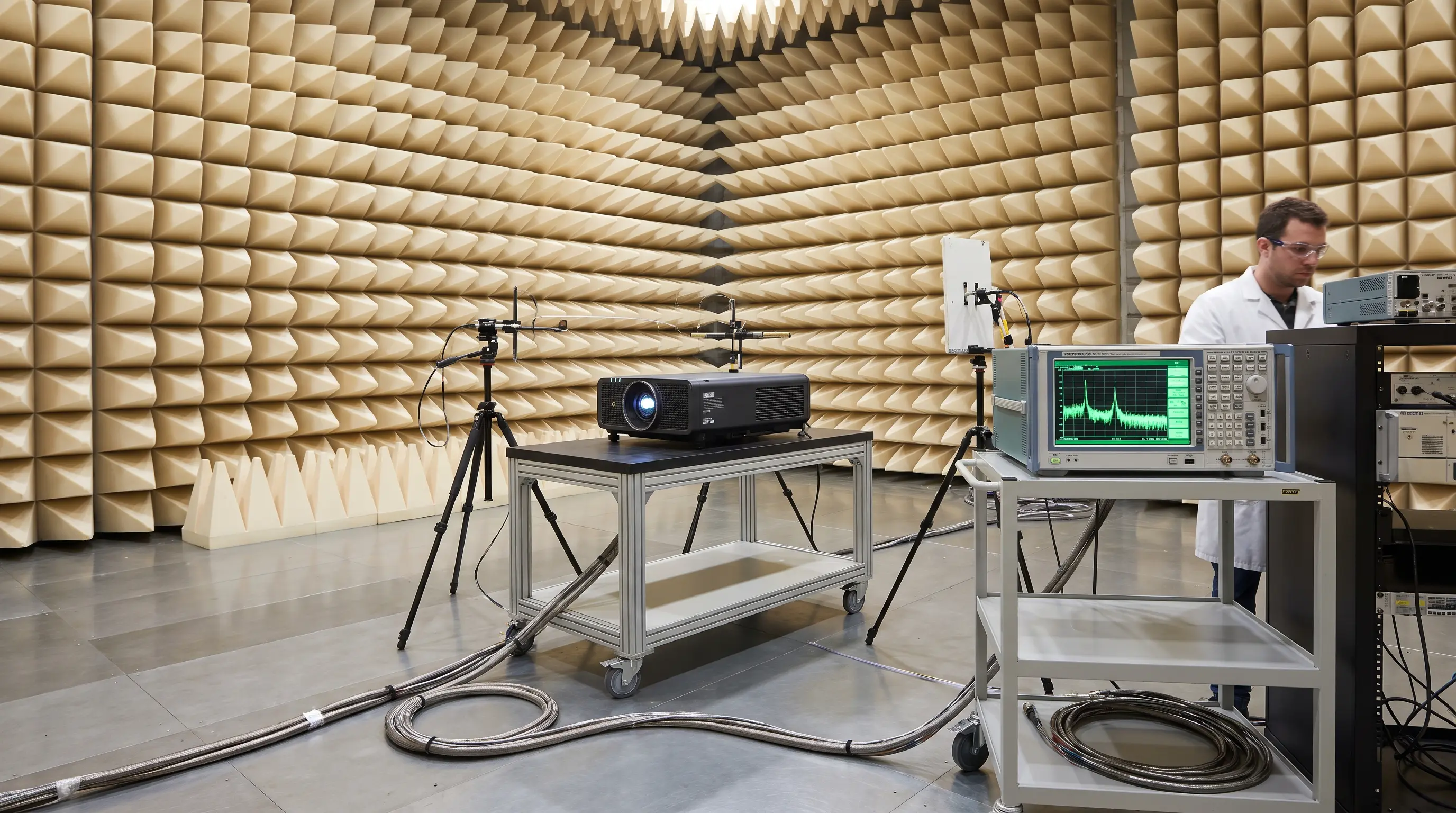
Every smart projector that DataMax ships into the EEA has to pass a defined battery of laboratory tests before it can carry the CE mark. The following standards are the four pillars we build around for the model:
- EN IEC 62368-1:2023 — Audio/video, information and communication technology equipment, Part 1: Safety requirements. This replaced EN 60950-1 in 2020 and is mandatory for any projector sold after January 2026.
- EN 55032:2015+A11:2020 — Electromagnetic compatibility of multimedia equipment, emission requirements.
- EN 55035:2017+A11:2020 — Electromagnetic compatibility of multimedia equipment, immunity requirements.
- EN 301 489-1 / EN 301 489-17 — EMC standard for radio equipment and services, applied when Bluetooth, Wi-Fi, or Miracow is built into the projector.
Norway is not an EU member state, but it is a signatory to the EEA Agreement, which means most CE marking directives apply with very limited local additions. For B2B procurement teams evaluating the projector, the practical implication is that the same technical file you build for Germany or Sweden will work in Norway, provided three local conditions are met: a Norwegian responsible person is registered, the user manual carries Norwegian language safety warnings, and any wireless transmitter on board is listed on the Norwegian Communications Authority (Nkom) frequency register.
Norwegian-Specific Obligations Beyond CE
CE marking gets your projector to the border. Three Norwegian obligations get it through the border:
Each norwegian market surveillance Authority (Difi, now part of the Norwegian Consumer Agency) operates an active post-market surveillance program. In 2024, the agency flagged 14 projector SKUs sold on Norwegian marketplaces for missing or fraudulent CE documentation, and the resulting removals wiped out roughly NOK 9.2 million in retail value Norwegian Consumer Agency. For OEM buyers, that statistic is the single strongest argument for treating the SKU as a documented engineering process rather than a paperwork afterthought.
Documentation Package Required by Norwegian Customs
Tolletaten (Norwegian Customs) can request any of the following documents at the point of entry or during post-market surveillance:
- Declaration of Conformity (DoC) referencing all applied directives and harmonized standards.
- EU-Type Examination certificate where a Notified Body was involved (RED Article 3.2 always requires it for radio-equipped projectors).
- Technical construction file including block diagrams, bill of materials, risk assessment, and test reports.
- Norwegian-language user manual and safety instructions.
- Bill of lading, commercial invoice, packing list, and HS code 8528.62.00 (projectors capable of directly connecting to and designed for use with an automatic data processing machine).
Every smart projector that DataMax ships into the EEA has to pass a defined battery of laboratory tests before it can carry the CE mark. The following standards are the four pillars we build around for the model:
HS Code Classification and Customs Valuation for Projectors
- EN IEC 62368-1:2023 — Audio/video, information and communication technology equipment, Part 1: Safety requirements. This replaced EN 60950-1 in 2020 and is mandatory for any projector sold after January 2026.
- EN 55032:2015+A11:2020 — Electromagnetic compatibility of multimedia equipment, emission requirements.
- EN 55035:2017+A11:2020 — Electromagnetic compatibility of multimedia equipment, immunity requirements.
- EN 301 489-1 / EN 301 489-17 — EMC standard for radio equipment and services, applied when Bluetooth, Wi-Fi, or Miracow is built into the projector.
One fifth standard, en 303 340, applies to projection displays with integrated broadcast receivers. We run all five tests in parallel at our Shenzhen pre-compliance partner lab (TUV Rheinland Shenzhen, CNAS-accredited), which keeps the typical test cycle to 15 working days for a 1080p laser projector and 22 working days for a 4K UHD DLP unit. The cost is in the USD 4,200-6,800 range per SKU, depending on the wireless stack and the number of variants (different lens throw ratios, different color wheels, different brightness bins).
| HS Code | Description | MFN Duty (Norway 2026) | VAT |
|---|---|---|---|
| 8528.62.00 | Projectors capable of directly connecting to an automatic data processing machine | 0% (EEE/EU tariff suspension) | 25% |
| 8528.72.00 | Other projectors, with television reception | 0% (EEE/EU tariff suspension) | 25% |
| 9008.50.00 | Image projectors (photographic enlargers, parts) | 2.0% | 25% |
Norway applies 0% customs duty on most projector HS codes originating in the EEA or under the WTO Information Technology Agreement. The 25% value-added tax (MVA) applies at the border and is recoverable for VAT-registered B2B buyers through the Norwegian Tax Administration's quarterly refund workflow. For the model, the duty saving on HS 8528.62.00 makes the customs line item almost a non-event; the real cost driver is the MVA cash flow and the documentation labor.
Customs Valuation Method We Use
- Norwegian Responsible Person (Norsk ansvarlig). EEA regulations require a local contact for products placed on the Norwegian market. For B2B shipments, DataMax can act as the responsible person for our own OEM-branded units, or we coordinate with importers who already hold NRP registration.
- Norwegian-language labeling. The user manual and the safety leaflet must include Norwegian text. We provide a Norwegian-language safety addendum for every model, translated by a sworn translator and reviewed by our in-house Norwegian-speaking compliance partner.
- Packaging and recycling marks. Norway follows the EEA Green Dot regulation (Grønt Punkt Norge). Our standard retail carton already includes the Grønt Punkt symbol and the WEEE crossed-bin mark, so no retooling is needed for the unit.
- Unit FOB Shenzhen price (the OEM transfer price).
- Ocean freight from Yantian to Oslo or Brevik.
- Insurance premium (typically 0.3% of CIF value).
- Any royalties, assists, or tooling amortization that must be added back per WTO Customs Valuation Agreement Article 8.
For OEM buyers under our private-label program, we structure the transfer price so that the dutiable value is minimized legally. A USD 249 wholesale unit at 5,000-unit MOQ typically lands at NOK 2,800-3,100 CIF Oslo including insurance and ocean freight, which keeps the per-unit landed cost competitive against Turkish and Polish assemblers for this projector.
Post-Market Surveillance, WEEE, and EPR Obligations
- Declaration of Conformity (DoC) referencing all applied directives and harmonized standards.
- EU-Type Examination certificate where a Notified Body was involved (RED Article 3.2 always requires it for radio-equipped projectors).
- Technical construction file including block diagrams, bill of materials, risk assessment, and test reports.
- Norwegian-language user manual and safety instructions.
- Bill of lading, commercial invoice, packing list, and HS code 8528.62.00 (projectors capable of directly connecting to and designed for use with an automatic data processing machine).
WEEE Registration and Reporting
For distributor procurement,he practical takeaway is that the documentation file for this projector should be assembled and notarized before the container is loaded at Yantian, not after the vessel sails. We deliver a complete pre-shipment compliance package within 7 working days of purchase order confirmation, which gives our buyers a buffer of 3-4 weeks to clear customs without demurrage charges at USD 220-310 per day per 40-foot container.
For projector compliance and import in Norway, the WEEE fee is a pass-through cost that we itemize on the pro-forma invoice so our B2B partners can recover it through their own EPR filings if they hold the producer registration.
Packaging and Battery EPR
Customs work for the projector starts long before the bills land on a broker's desk. The classification code drives duty rate, VAT treatment, and whether the shipment will be pulled for physical inspection at Drammen, Oslo, or Bergen.
For laser and lamp projectors connecting directly to an automatic data processing machine, the standard tariff heading is HS 8528.62.00. For projector models with integrated television reception (rare in the B2B channel but common in consumer SKUs we ship for OEM partners), the code shifts to HS 8528.72.00. Misclassification is the single most common reason we see container holds during the SKU, so we lock the code in the technical file at PO stage.
Market Surveillance Triggers
| HS Code | Description | MFN Duty (Norway 2026) | VAT |
|---|---|---|---|
| 8528.62.00 | Projectors capable of directly connecting to an automatic data processing machine | 0% (EEE/EU tariff suspension) | 25% |
| 8528.72.00 | Other projectors, with television reception | 0% (EEE/EU tariff suspension) | 25% |
| 9008.50.00 | Image projectors (photographic enlargers, parts) | 2.0% | 25% |

Norway applies 0% customs duty on most projector HS codes originating in the EEA or under the WTO Information Technology Agreement. The 25% value-added tax (MVA) applies at the border and is recoverable for VAT-registered B2B buyers through the Norwegian Tax Administration's quarterly refund workflow. For the model, the duty saving on HS 8528.62.00 makes the customs line item almost a non-event; the real cost driver is the MVA cash flow and the documentation labor.
How to Choose a Compliant Norway-Ready Projector Supplier
For B2B procurement teams closing out a projector compliance and import in Norway program, the supplier shortlist comes down to four measurable criteria that we evaluate on every DataMax Norway-bound quotation. First, request the supplier's recent DoC list for the Norway-bound SKU family and confirm that each DoC references EN IEC 62368-1:2023 and EN IEC 62471:2015 with a Norwegian-language version on file. Second, ask for a copy of the EU-type examination certificate if the projector carries an integrated laser or UST light engine above Risk Group 2, and verify the issuing Notified Body number against the NANDO database on the European Commission website. Third, confirm that the supplier handles Elektronikkretur, Grønt Punkt Norge, and Batteriretur registration on your behalf as part of the OEM service, or that they will hand you a clean dossier so your own producer registration stays audit-ready. Fourth, validate that the supplier can ship under DDU Oslo, DDP Oslo, or FOB Shenzhen with HS code 8528.62.00 declared correctly on every commercial invoice. A serious OEM partner will answer all four questions with documents attached, not promises. We treat these four checks as standard on every Norway RFQ that lands in our inbox.
MOQ, Lead Time, and Sample Policy for Norway Programs
We prepare commercial invoices using the transaction value method (CIF Oslo), which Norwegian Customs accepts for the unit without requiring a deductive or computed value fallback. The invoice must separately state:
Bottom Line for Buyers
Industry Context for 2026
- Unit FOB Shenzhen price (the OEM transfer price).
- Ocean freight from Yantian to Oslo or Brevik.
- Insurance premium (typically 0.3% of CIF value).
- Any royalties, assists, or tooling amortization that must be added back per WTO Customs Valuation Agreement Article 8.
For OEM partners,der our private-label program, we structure the transfer price so that the dutiable value is minimized legally. A USD 249 wholesale unit at 5,000-unit MOQ typically lands at NOK 2,800-3,100 CIF Oslo including insurance and ocean freight, which keeps the per-unit landed cost competitive against Turkish and Polish assemblers for this projector.
