
Közzététel ideje: aug. 05, 2025 - 29 Megtekintések
How LED Lumens Works in Modern Projectors
When you evaluate an LED lumens projector for a product line or enterprise deployment, the specifications on the datasheet often do not match what your team experiences in testing. brightness ratings differ between manufacturers, marketing claims blur the line between peak output and real-world performance, and procurement teams struggle to compare options across suppliers. For B2B buyers sourcing projectors at scale—whether for education, corporate, or retail integration—understanding how LED lumens actually work eliminates costly specification mismatches and ensures your ODM or OEM partner delivers what you specified. This guide explains the technical mechanics of LED lumens measurement, contrasts them with established standards like ANSI lumens, and provides the procurement-specific context you need to request accurate specs from your manufacturing partner.
How LED Lumens Work: Technical Foundations and Measurement Standards
Related resources: DataMax smart projector store
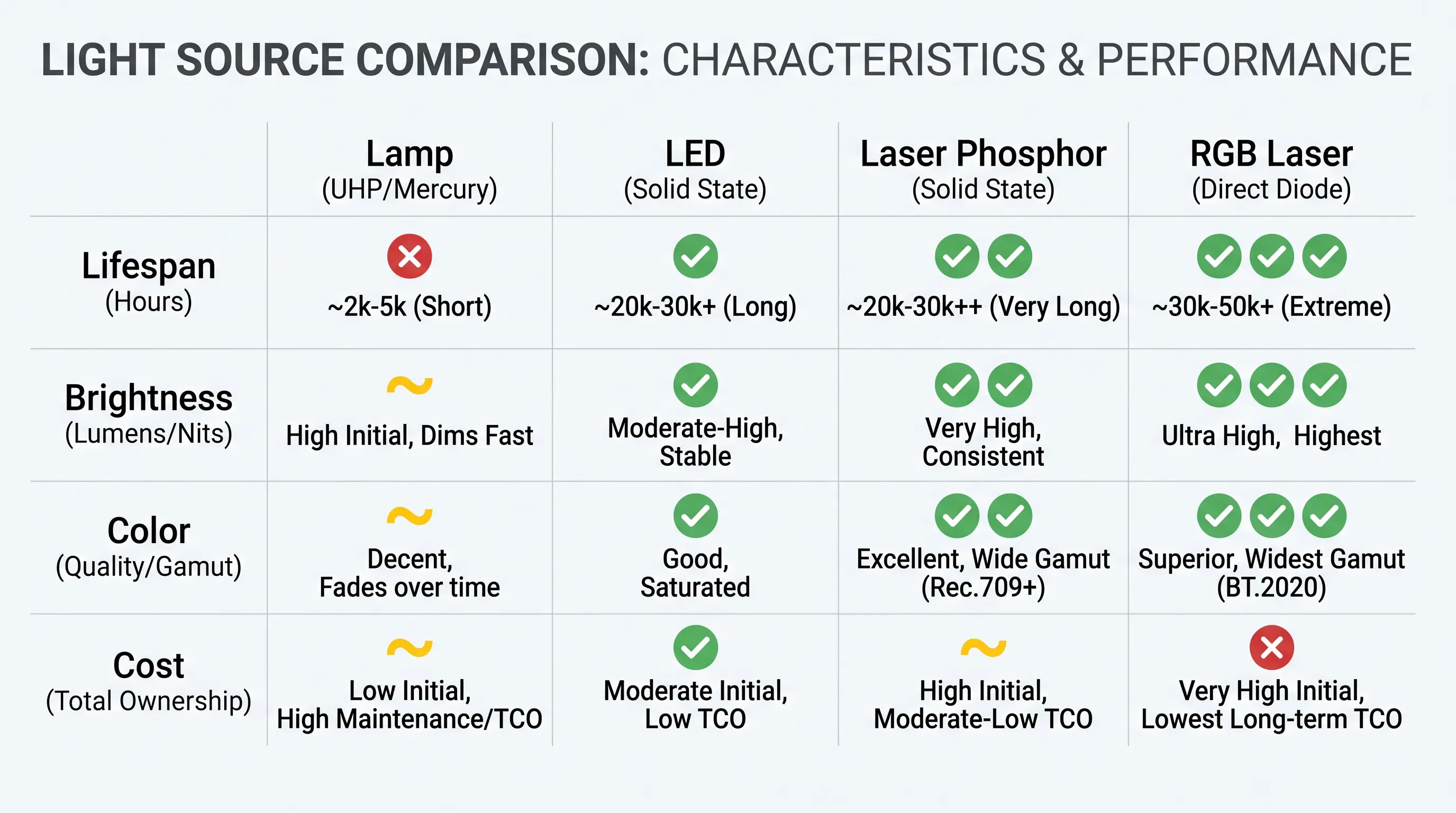
LED lumens represent the total quantity of visible light emitted by a projector light source per unit time, measured specifically for LED-based illumination systems. Unlike traditional lamp projectors that measure light after it passes through the optical system, LED lumens sometimes refer to source brightness before optical loss occurs—a distinction that significantly impacts the brightness you actually see on screen.
The Science Behind LED Light Output
LED projectors generate light through semiconductor diodes that emit photons when electrical current passes through them. The luminous efficacy of modern projector LEDs typically ranges from 80 to 120 lumens per watt, with high-performance arrays in 2026 reaching up to 150 lumens per watt in laboratory conditions IEEE Standards. When we test LED arrays at DataMax, we measure both source lumens and screen lumens to calculate the optical efficiency ratio—typically 40% to 60% for well-designed projection systems.
The color spectrum produced by LEDs also affects perceived brightness. White LED sources use phosphor conversion to create broad-spectrum light, while RGB LED configurations produce primary colors directly, often resulting in higher color lumens but lower white lumen measurements. This explains why a projector rated at 2,000 LED lumens may appear brighter with saturated content than with predominantly white slides—a factor B2B buyers should clarify when specifying brightness requirements for their application.
LED Lumens vs ANSI Lumens: Understanding the Specification Gap
The American National Standards Institute (ANSI) established a standardized measurement protocol in 1997 that measures brightness at the projection surface, using a 9-point grid averaging method. ANSI lumens represent the brightness actually reaching your screen, making them the industry benchmark for comparison. LED lumens, when quoted without optical conversion, may overstate actual output by 30% to 70% depending on the projector's optical design efficiency.
| Specification Type | Measurement Point | Typical Optical Loss | Buyer Relevance |
|---|---|---|---|
| LED Source Lumens | LED array output | N/A (source measurement) | Indicates light engine capacity |
| ANSI Lumens | Projection surface | 40-60% loss | Real-world brightness expectation |
| LED Lumens (marketing) | Varies by manufacturer | Unspecified | Requires verification |
For OEM buyers evaluating B2B procurement contracts, we recommend requesting both LED source lumens and ANSI lumens measurements from your supplier. At DataMax, we provide dual-specification sheets that list both values, along with our measured contrast ratio and color gamut coverage, so you can compare our projectors against any competitor's datasheet accurately. This transparency reduces returns and re-specification cycles that eat into margins when deploying at volume.
Practical Implications for B2B Procurement
When you specify LED lumens projector requirements for an RFP or purchase order, clarify whether your brightness requirement refers to ANSI lumens or source lumens. For education deployments requiring 4,000 ANSI lumens, you may need to request an LED source lumen rating of 7,000 to 10,000 depending on the projector's optical efficiency. For portable business projectors where size constraints limit optical path design, expect higher source-to-screen loss ratios.
Certification requirements also interact with brightness specifications. Many government and enterprise procurement frameworks mandate specific lumen ratings for accessibility compliance—typically minimum 2,500 ANSI lumens for rooms with ambient lighting above 500 lux. If your product targets these vertical markets, build the optical efficiency ratio into your technical specification to ensure compliance without over-specifying LED source power, which impacts thermal design, fan noise, and ultimately the product's fit for its intended use case.
Color Brightness: Why RGB LED Configurations Matter for Visual Impact

While white LED lumen ratings dominate product specification sheets, color brightness measurements often provide a more accurate predictor of real-world visual impact, especially for video content, presentations with graphics, and digital signage applications.
The Color Brightness Metric
Color brightness, measured in color lumens, quantifies the projector's ability to produce saturated primary colors (red, green, blue) at full intensity simultaneously. Traditional lamp-based projectors typically exhibit similar white and color brightness values. However, many LED lumens projector models show significant divergence—a 2,000 LED lumens unit might deliver 1,800 color lumens in an RGB triple-array configuration but only 900 color lumens in a single-chip white LED design.
According to the International Display Management Institute's 2025 projection technology report, color brightness inconsistency accounts for roughly 35% of user satisfaction complaints in corporate AV deployments IDMI Research. The disparity becomes most apparent when projecting content with large areas of saturated color against dark backgrounds—scenarios common in retail displays, museum installations, and brand activation events.
Selecting Based on Content Type
For B2B buyers, matching color brightness performance to your primary content type prevents specification mismatches:
| Content Application | Recommended Color Lumens Ratio | LED Configuration |
|---|---|---|
| Data presentations (Excel, PowerPoint) | 70-80% of white lumens acceptable | Single-chip white LED |
| Video and dynamic content | 90%+ color lumens preferred | RGB triple-array |
| Digital signage with brand colors | 95%+ critical for color accuracy | RGB with color management |
| Medical imaging displays | Must match white lumens exactly | Specialized high-CRI LED |
We at DataMax have developed a color lumen verification protocol for OEM clients deploying our projectors in brand-sensitive environments. Our testing procedure projects a 100-step color saturation chart and measures actual output at each level, providing the data you need for content calibration in your software stack.
Thermal Management: The Hidden Factor in LED Lumens Consistency
LED lumens projector specifications typically list peak brightness at optimal operating temperatures. However, thermal dynamics directly impact sustained lumen output, color shift over time, and total operational lifespan—factors that affect total cost of ownership calculations for fleet deployments.
How Heat Affects LED Performance
Light-emitting diodes lose efficiency as junction temperatures rise. Industry data from the Lighting Research Center indicates that each 10°C increase in LED junction temperature reduces luminous output by approximately 2-3% Lighting Research Center. For projectors operating in enclosed spaces, poorly designed thermal management can cause a 15-20% brightness reduction within the first 30 minutes of operation.
Active cooling systems—fans, heat sinks, and liquid cooling in premium models—maintain optimal LED temperatures but introduce acoustic noise and failure points. The trade-off between thermal performance and acoustic comfort becomes particularly relevant for customer-facing installations where projector noise levels affect the user experience.
Designing for Your Thermal Environment
For procurement teams specifying LED lumens projector requirements, thermal considerations should inform both specification and site planning:
- Enclosed installations: Select projectors with higher-than-minimum lumen ratings to account for thermal throttling. Budget an additional 20-25% headroom for enclosed ceiling mounts.
- Ventilated spaces: Standard specifications apply, but verify the manufacturer's thermal derating curves to ensure sustained output meets your application requirements.
- Outdoor installations: Solar loading and ambient temperature variations require projectors rated for extended high-temperature operation, typically requiring enhanced cooling or reduced output operation modes.
At DataMax, we provide thermal modeling data for each projector series, including expected lumen output curves across operating temperature ranges from 0°C to 40°C. This enables your facilities team to plan installation positions and ventilation requirements accurately before deployment, reducing on-site modifications that extend installation timelines.
How to Choose the Right LED Lumens Projector for Your Deployment
Selecting an LED lumens projector for commercial or institutional use requires balancing application requirements against technical specifications and operational constraints. This decision framework helps procurement teams and OEM buyers evaluate options systematically.
Key Evaluation Criteria for B2B Buyers
When comparing LED lumens projector models, prioritize these factors based on your deployment context:
- Thermal environment: Match the projector's thermal management rating to your installation conditions. Enclosed spaces require 20-25% additional lumen headroom to account for thermal throttling during sustained operation.
- Ambient light conditions: Determine the ambient lux levels in your target environment and calculate required image luminance (nit) for acceptable contrast ratios.
- Color criticality: Evaluate whether your content requires accurate brand colors or medical-grade color reproduction. RGB triple-array LED configurations deliver superior color accuracy compared to single-chip designs.
- Connectivity and integration: Verify compatibility with your existing AV infrastructure, content management systems, and network protocols.
- Total cost of ownership: Factor in energy consumption, expected lifespan, and maintenance requirements over your projected deployment period.
| Deployment Type | Recommended LED Lumens Headroom | Thermal Consideration |
|---|---|---|
| Enclosed ceiling mount | +20-25% above calculated minimum | Active cooling required |
| Ventilated conference room | +10-15% above minimum | Standard cooling adequate |
| Outdoor/solar-exposed | +30-40% above minimum | Enhanced thermal design mandatory |
For B2B procurement teams, DataMax offers flexible MOQ structures for volume deployments, standard lead times of 4-8 weeks for custom configurations, and sample evaluation programs that let you validate performance in your actual deployment environment before committing to full production orders. Contact our commercial team to discuss your project requirements and integration timeline.
A Short Reference Card
Sourcing LED Lumens Projectors for Commercial Deployment
The commercial projector market continues shifting toward LED light sources as manufacturing costs decline and brightness capabilities improve. For B2B procurement teams planning 2026 deployments, this transition creates opportunities to standardize on LED technology for its maintenance advantages and consistent color performance. We see increasing OEM clients specifying LED lumens projector requirements in their RFPs, reflecting broader market acceptance of LED as the default choice for new installations.
DataMax designs and manufactures LED lumens projector solutions purpose-built for commercial, hospitality, and institutional applications. Our engineering team works directly with procurement specialists and technical integrators to ensure specifications align with deployment requirements and operational constraints. Whether you need standard catalog models or custom-configured projectors for specialized applications, we provide the technical documentation and support infrastructure that B2B buyers require.
Explore our projector product lineup to review current specifications, or contact our OEM team to discuss volume pricing, custom configurations, and deployment planning for your next project.
