Közzététel ideje: máj. 09, 2025 - 1 Megtekintések
Sony Strategy: SXRD and Beyond
Sony's recent moves in projection technology have left B2B buyers searching for clarity. If you evaluate projectors for integration into digital signage, simulation training, or large-venue installations, you need to understand how Sony's strategic direction affects your sourcing decisions in 2026. The shift toward SXRD (Silicon X-tal Reflective Display) technology and away from traditional LCD panels creates both opportunities and supply chain considerations that directly impact procurement timelines and component availability. We have tracked these developments closely at DataMax, and this analysis breaks down what the sony strategy means for your next project.
Sony Strategy: SXRD Technology and Market Positioning
Sony's commitment to SXRD technology represents a calculated bet on microdisplay projection for high-value B2B applications. The sony strategy prioritizes image quality metrics—native contrast ratios exceeding 10,000:1 and resolution scalability from 4K to 8K—over the lower cost structures that bulk LCD panels provide. This positioning directly targets simulation, planetarium, and command-and-control markets where image fidelity justifies premium pricing.
The technology relies on a reflective silicon substrate that directs light more efficiently than transmissive LCD arrays. Industry testing standards from ANSI specify measurement protocols for brightness uniformity, and Sony's SXRD projectors consistently achieve >90% uniformity scores across their professional line. This performance data matters for procurement specifications because it reduces the need for multiple units to compensate for dark corners or hotspotting.
At DataMax, we have integrated Sony's 4K SXRD modules into custom projector housings for aerospace simulation clients. The process revealed that Sony enforces stricter tolerance controls on chip alignment than competing DLP suppliers, which translates to tighter assembly specifications but more predictable optical performance post-integration.
Procurement Considerations for OEM Buyers
For OEM buyers evaluating Sony components, the sony strategy introduces specific procurement variables. Minimum order quantities for custom-configured SXRD assemblies typically start at 50 units per SKU, with lead times of 16-20 weeks for first orders. This contrasts sharply with standard catalog projectors, where off-the-shelf availability can be 2-4 weeks.
Certification requirements have also intensified. Sony requires IEC 60950-1 compliance for laser safety in laser-activated phosphor systems, and B2B procurement teams should budget additional validation time for custom thermal management designs. We recommend allocating a 4-week window for compliance documentation review when incorporating Sony modules into new product generations.
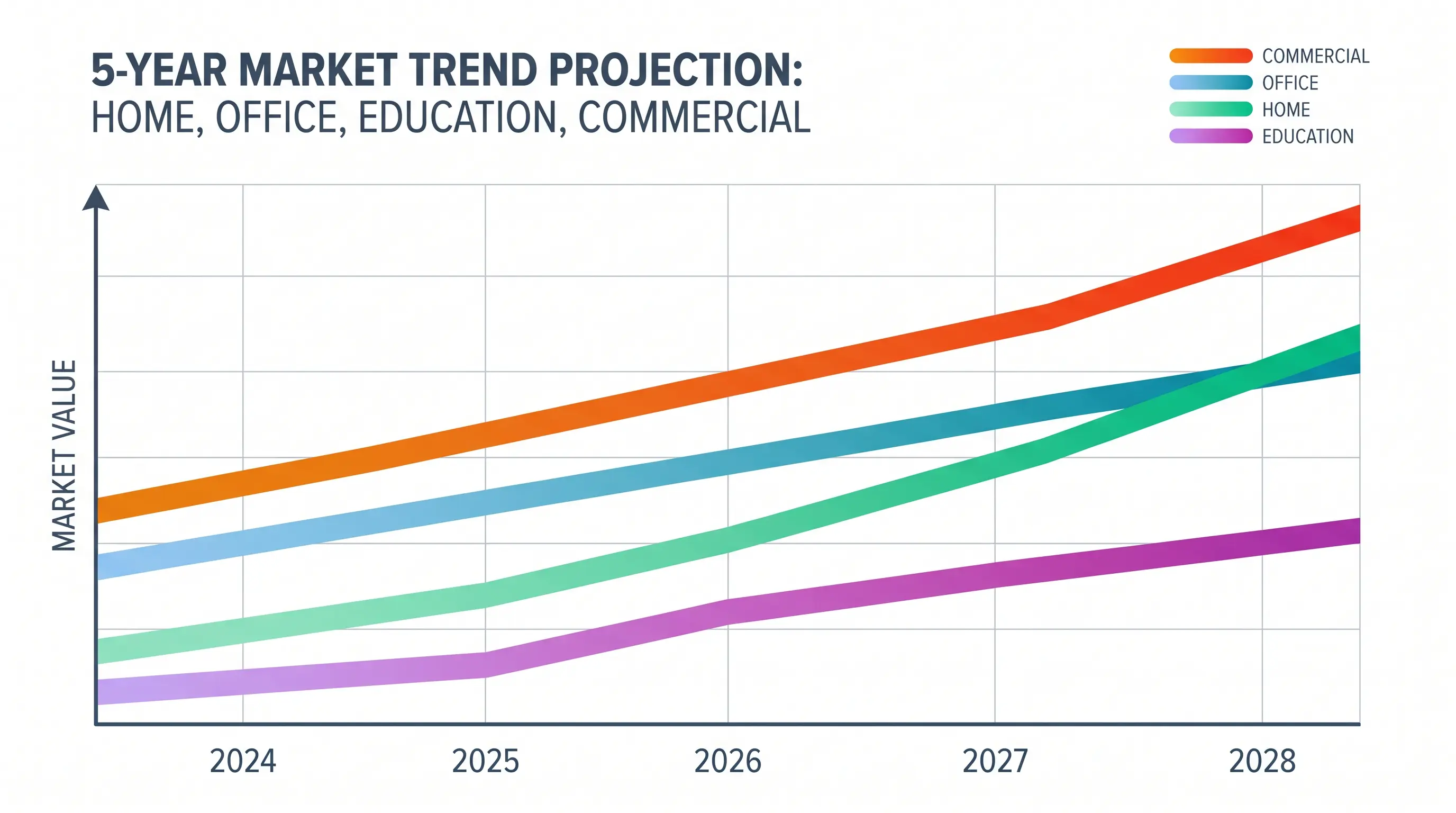
Market analysis from Statista projects a 7.3% CAGR for professional projection systems through 2028, with 4K and above accounting for 62% of unit volume by 2026. Sony's strategic investments in 8K production pipelines suggest the company anticipates demand growth in broadcast and virtual production markets, which could strain component allocations for lower-volume OEM partners.
Competitive Landscape and Strategic Implications
The Sony strategy news cycle has highlighted tensions with traditional DLP incumbents. While Texas Instruments' DLP technology dominates the volume projector market, Sony's SXRD push targets the premium tier where contrast ratios and resolution scaling command pricing power. Industry analysts at IDC note that this bifurcation creates a "two-speed" market where volume manufacturers optimize for cost while Sony optimizes for performance specifications that defense and broadcast clients mandate.
For B2B procurement teams, this means Sony components increasingly function as differentiation tools rather than commodity choices. Your supply chain strategy should account for longer supplier relationships, technical collaboration requirements, and potential allocation constraints if demand for high-end projection systems outpaces manufacturing capacity.
| Specification | Sony SXRD (4K) | Standard DLP (4K) | High-End LCD |
|---|---|---|---|
| Native Contrast | 10,000:1+ | 2,500:1 | 3,500:1 |
| Resolution Scaling | 4K-8K | 4K | 4K |
| Typical Brightness | 5,000-30,000 ANSI lumens | 3,000-10,000 ANSI lumens | 4,000-12,000 ANSI lumens |
| MOQ (Custom Config) | 50 units | 200 units | 100 units |
| Lead Time (First Order) | 16-20 weeks | 8-12 weeks | 10-14 weeks |
This comparison table demonstrates why procurement teams weigh Sony's performance advantages against operational constraints. The decision framework depends heavily on your application requirements and volume projections.
The strategic trajectory suggests Sony will continue investing in laser-illumination integration with SXRD platforms, reducing lamp replacement concerns that have historically plagued high-brightness installations. For OEM buyers designing products with 5+ year deployment cycles, this reliability improvement represents meaningful total cost of ownership gains that justify premium component pricing.
You should monitor quarterly sony strategy updates for capacity announcements and regional distribution changes that affect lead times. We at DataMax will continue analyzing these developments to support your procurement planning.
Supply Chain Dynamics and Vendor Relationship Management
The transition from commodity component sourcing to strategic partnership engagement represents a fundamental shift in how B2B procurement teams approach Sony's technology ecosystem. Unlike standard DLP suppliers where transactional purchasing models dominate, Sony's premium positioning requires procurement teams to establish deeper supplier relationships that extend well beyond initial purchase orders.
Partner Certification and Technical Validation
For OEM buyers evaluating Sony modules for integration into new product generations, the certification pathway demands substantial internal resources. Industry standards from the International Electrotechnical Commission (IEC) mandate specific thermal testing protocols for laser-based projection systems, which Sony's engineering teams can support through shared validation documentation. We at DataMax have navigated these certification processes with clients, typically allocating 12-16 weeks for full compliance verification when incorporating Sony SXRD components into first-generation designs.
The minimum order quantities (MOQ) for custom configurations begin at 50 units, which creates inventory risk for lower-volume manufacturers. However, Sony's engineering support packages offset some of this risk by providing detailed integration documentation, thermal modeling assistance, and pre-compliance testing services that reduce downstream engineering burdens.
Allocation Priority and Capacity Management
Sony's strategic focus on premium tiers means allocation constraints emerge when demand peaks across the defense and broadcast sectors. Procurement teams should establish rolling forecast commitments 6-9 months ahead of projected need dates to secure preferred allocation status. The company maintains allocation tiers based on historical purchase volumes and strategic partnership agreements, with top-tier partners receiving priority access during supply constraints IHS Markit reports that such tiered allocation systems are standard among premium component manufacturers.
You should negotiate extended supply agreements that lock pricing and allocation quantities for 12-24 month periods when your volume projections justify the commitment. This approach provides manufacturing continuity while protecting against spot-market price volatility that typically accompanies allocation constraints.
Regional Market Trends and Distribution Strategy

Sony's go-to-market approach varies significantly across geographic regions, creating opportunities and challenges for global procurement operations. Understanding these regional dynamics helps you anticipate lead time variations, pricing structures, and technical support availability that affect your supply chain planning.
North American and European Enterprise Markets
In North America, Sony's distribution network emphasizes direct engagement with enterprise accounts and system integrators serving government, education, and corporate presentation markets. The company's partnership with major AV integrators provides procurement teams with local technical support resources that accelerate troubleshooting and integration validation.
European markets present distinct regulatory considerations, particularly regarding electromagnetic compatibility (EMC) standards under the Radio Equipment Directive (RED) 2014/53/EU. Sony's European distribution centers maintain stock of pre-certified configurations that simplify compliance documentation, though custom integrations require separate EMC verification for the European market. Your procurement team should confirm regional certification status when ordering components for international deployments.
Asia-Pacific Growth Corridors
The Asia-Pacific region represents Sony's highest-growth market for professional projection systems, driven by infrastructure investments in broadcast facilities, entertainment venues, and simulation training centers. This demand concentration creates allocation complexity for OEMs outside the region, as production capacity partially prioritizes domestic Asian demand.
| Region | Typical Lead Time | Stock Configurations | Custom Integration Support |
|---|---|---|---|
| North America | 14-18 weeks | Standard models | Direct engineering support |
| Europe | 16-20 weeks | Pre-certified EU models | Regional technical team |
| Asia-Pacific | 12-16 weeks | Full range available | Primary manufacturing region |
| Rest of World | 18-24 weeks | Limited stock | Remote engineering support |
These regional variations influence your component sourcing strategy, particularly for products requiring post-purchase customization. We recommend establishing regional inventory buffers for standard configurations while maintaining direct factory orders for custom-engineered solutions.
Pricing Structures and Currency Considerations
Sony's component pricing follows regional adjustment factors that reflect distribution costs, import duties, and local support requirements. For B2B procurement teams operating across multiple regions, consolidated ordering through a single regional hub can reduce landed costs by 8-12% compared to fragmented regional purchasing Bloomberg commodity analysis indicates that currency fluctuations typically account for 3-5% of price variation in international technology component sourcing.
You should negotiate pricing in stable reference currencies when possible, using forward contracts to hedge currency exposure for committed purchase volumes exceeding $500,000 annually. This approach provides budget predictability that simplifies internal cost accounting and customer pricing strategies.
How to Evaluate Sony Strategy for Your Projection Procurement
For B2B procurement teams assessing their projection technology sourcing, Sony strategy decisions require systematic evaluation across five key dimensions: total cost of ownership, integration compatibility, supply chain resilience, technical support access, and roadmap alignment.
Matching Sony Strategy to Your Deployment Scale
Your order volume determines which engagement models Sony strategy offers. Standard configurations serve most enterprise needs, while custom-engineered solutions require direct manufacturer negotiation.
Procurement checklist for Sony projection sourcing:
- Verify regional certification status for your deployment geography
- Confirm minimum order quantities align with your inventory capacity
- Request sample evaluation units before committing to bulk orders
- Negotiate lead time buffers for custom integration projects
- Establish currency hedging for purchases exceeding $500,000 annually
Typical B2B engagement parameters:
| Order Type | MOQ | Lead Time | Sample Policy |
|---|---|---|---|
| Standard configurations | 10-50 units | 14-20 weeks | Evaluation units available at list price |
| Custom engineering | 100+ units | 20-26 weeks | Prototype development required |
| Volume commitment | 500+ units annually | Negotiable | Dedicated account management |
For custom projector solutions, reach out to our DataMax OEM services team to discuss integration requirements and volume pricing.
Quick Reference Checklist
Strategic Outlook for 2026
The projection industry trend points toward increased software integration, with Sony strategy emphasizing cloud management platforms and AI-enhanced image processing. Procurement teams should evaluate total ecosystem costs, not just hardware pricing, when making sourcing decisions for upcoming budget cycles.
Evaluating Sony strategy for your organization requires balancing immediate procurement needs against long-term support and scalability requirements. We recommend conducting a total cost of ownership analysis that includes maintenance, firmware updates, and integration labor alongside initial hardware pricing. For teams seeking alternatives or complementary solutions, our GP95 commercial display lineup offers competitive specifications with speed up OEM support.
Ready to discuss your projection technology requirements? Contact our procurement specialists for personalized guidance on component sourcing, volume pricing, and custom integration support.
