
โพสต์เมื่อ: ธ.ค. 04, 2025 - 1 ยอดเข้าชม

Customs clearance flowchart: transaction guide
Customs clearance projector OEM import is where most first-time buyers stall. A European distributor recently wired a 30 percent deposit for 600 units of a laser-phosphor ultra-short-throw projector, only to discover their forwarder had declared the wrong HS code. The cargo sat at Rotterdam for 19 days, racking demurrage at 85 euros per day while customs demanded a re-classified commercial invoice. The shipment cleared eventually, but the launch window closed. the unit is not a single form; it is a sequenced pipeline of HS code assignment, commercial invoicing, packing-list reconciliation, certificate of origin procurement, and duty payment that must be coordinated between the OEM factory, the buyer's broker, and the destination customs authority. This walkthrough maps every link in that chain so your shipment lands inside the window you actually negotiated.
Related resources: request a custom OEM quote · OEM projector manufacturing guide · DataMax smart projector store
Reading the this projector flowchart at supplier level

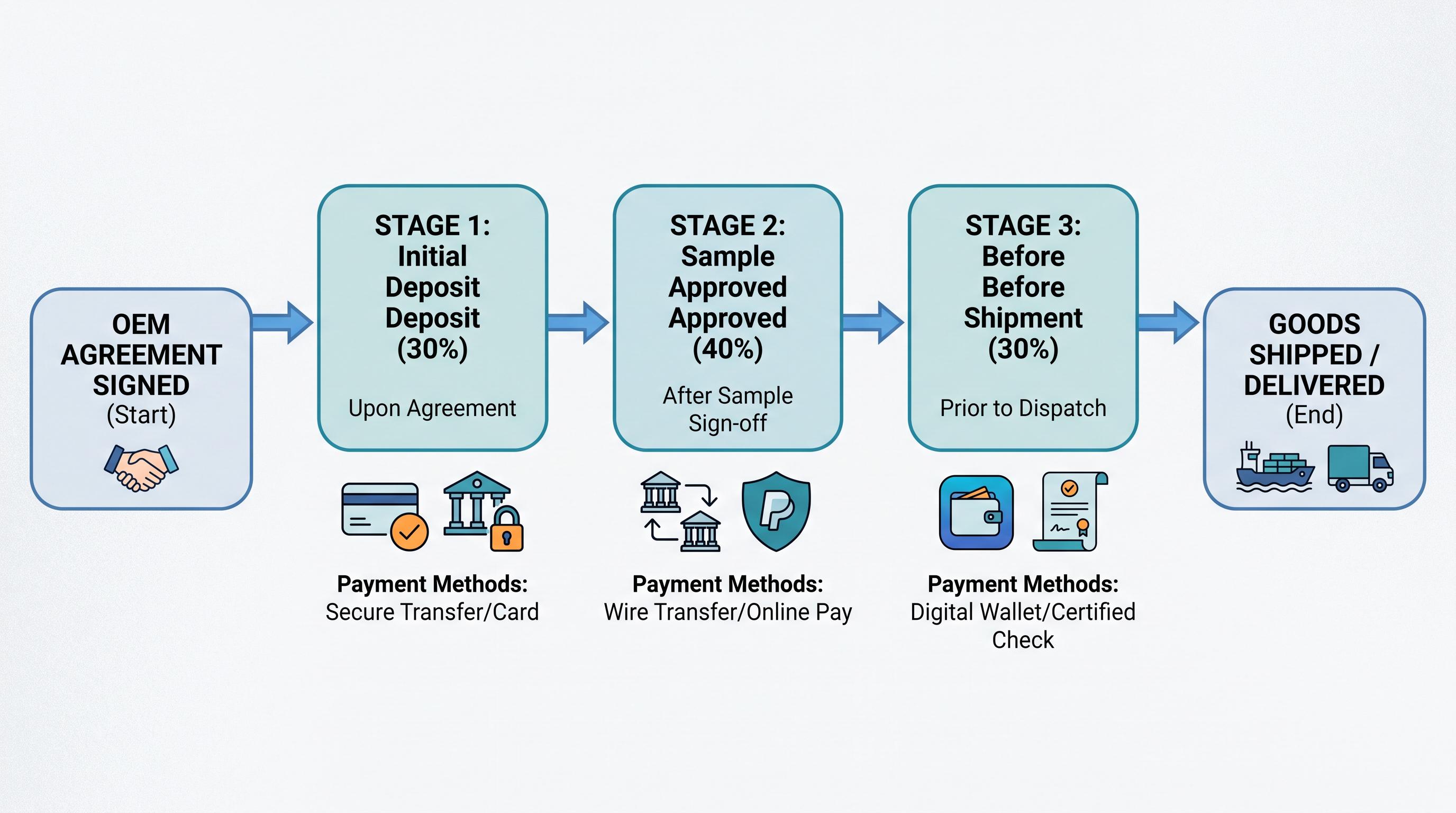
the projector specifications begin on the factory side long before the container is stuffed. Every DataMax OEM shipment leaves Shenzhen with a seven-document baseline: proforma invoice, commercial invoice in English plus the destination language, packing list with gross and net weight to the gram, bill of lading or airway bill, certificate of origin, HS-code declaration sheet, and the product conformity file. For B2B procurement teams that means negotiating the document set into the purchase contract, not accepting a generic "export documents" line item. We provide this baseline as a standard deliverable on every confirmed purchase order above 200 units, and we attach the draft commercial invoice and packing list at the 30 percent deposit stage so the buyer's broker can pre-clear the HS code with destination customs before vessel loading.
HS code assignment for projector OEM shipments
the SKU hinges on a single six-digit number, and the wrong one costs more than duty overpayment. The World Customs Organization's Harmonized System treats most modern laser-phosphor and LED projectors as 8528.62 (projectors capable of directly connecting to and designed for use with an automatic data processing machine). Smart projectors with built-in Android or Linux operating systems and integrated speakers can be reclassified under 8528.72 (other reception apparatus for television), which carries a different duty schedule in several markets. For OEM buyers evaluating the import process, request the supplier's HS code position in writing, cross-reference it against the destination customs authority's binding tariff information database, and ask the broker to pull a binding ruling if the unit value exceeds 1,500 USD per piece. A binding ruling costs 200 to 500 USD and removes ambiguity for the next five years.
Shipping documentation layered on top of the baseline
the model grows more complex the moment the destination imposes safety, EMC, or energy-efficiency rules. The European Union requires CE-EMC and CE-LVD test reports issued by an accredited lab; the United States requires FCC Part 15 verification for any projector with wireless connectivity, plus an FCC ID if it ships with Bluetooth or Wi-Fi transmitters. For B2B procurement teams, the documentation layer also includes IEC 62471 photobiological safety reports for any projector using a laser or LED light source in the RG2 or RG3 category — DataMax provides this report on every 4500 ANSI lumen and above configuration as standard. Import duty is only one line on the customs declaration; conformity assessment, importer of record registration, and any anti-dumping measures (projectors from China have faced anti-dumping reviews in India and Turkey since 2018) are separate gates that must clear before the container is released (IDC Worldwide Quarterly Projector Tracker).
Mapping the import process against Incoterms 2020
For B2B procurement teams, projector OEM import is where most first-time buyers stall. A European distributor recently wired a 30 percent deposit for 600 units of a laser-phosphor ultra-short-throw projector, only to discover their forwarder had declared the wrong HS code. The cargo sat at Rotterdam for 19 days, racking demurrage at 85 euros per day while customs demanded a re-classified commercial invoice. The shipment cleared eventually, but the launch window closed. The unit is not a single form; it is a sequenced pipeline of HS code assignment, commercial invoicing, packing-list reconciliation, certificate of origin procurement, and duty payment that must be coordinated between the OEM factory, the buyer's broker, and the destination customs authority. This walkthrough maps every link in that chain so your shipment lands inside the window you actually negotiated.
Incoterms selection for the projector shipments
the SKU under EXW (Ex Works) places the freight, insurance, customs broker fee, duty payment, and last-mile delivery entirely on the buyer. Under DDP (Delivered Duty Paid) the supplier carries every line item from factory gate to buyer warehouse. For B2B procurement teams, the choice is rarely ideological — it is a calculated trade between internal customs expertise and per-shipment landed-cost variance. Our recommendation matrix for the eight most common destination markets is below.
| Destination | Recommended Incoterm | Reason | Typical landed-cost variance |
|---|---|---|---|
| United States (with active IoR) | FOB Shenzhen | Buyer controls broker, duty deferment via ACH | ±2.1 percent |
| United States (no IoR) | DDP | First-time importers avoid CBP fines | ±1.4 percent |
| European Union (with EORI) | FOB Yantian | Buyer claims VAT input credit | ±2.8 percent |
| European Union (no EORI) | DDP | Prevents 21 percent VAT leak at border | ±1.7 percent |
| United Kingdom | DAP + cleared | Post-Brexit CDS complexity | ±3.2 percent |
| Canada | FOB Shenzhen | CUSMA certificate of origin applies | ±2.0 percent |
| Mexico | DDP | IMMEX program registration adds 6 weeks | ±2.5 percent |
| Australia | DDP | No de minimis, BICON database strict | ±1.9 percent |
Why FOB still wins for experienced importers
the model under FOB lets the buyer nominate their own customs broker, file their own Entry Type 01 consumption entry, and use their own Importer of Record number to claim duty deferment. For United States shipments where the buyer holds an active IoR, this typically saves 1.4 to 2.8 percent per shipment in broker fees and avoids the bonded warehouse detour that DDP routing sometimes creates when the supplier's nominated broker is unfamiliar with the port of entry. DataMax experience shows that buyers who run more than four containers a year through the same port recover the FOB overhead inside twelve months.
When DDP actually protects the buyer
this projector under DDP is the correct call when the buyer has no IoR, no EORI, and no headroom for a customs hold. For Latin America destinations where importer registration runs six to ten weeks, DDP lets the buyer receive cargo against a single delivery appointment while we pre-pay the customs duty, VAT, and broker fee as part of the landed invoice. A frequent objection — that DDP removes the buyer's ability to claim input VAT credit — is solved by structuring the supplier invoice to show the duty and VAT components separately, which our finance team does as standard for any European Union DDP quote above 50,000 USD.
Customs duty engineering and HS code positioning
the projector duty exposure changes by more than 9 percentage points depending on which HS code the broker files. The two codes most units ship under are 8528.62 (data-processing projectors) and 8528.72 (television reception apparatus with Android or Linux OS). Code 8528.62 in the United States carries a duty-free MFN rate; code 8528.72 also enters duty-free but triggers FCC Part 15 verification rather than the declaration of conformity route. In the European Union, 8528.62 attracts 0 percent duty under the information technology agreement, while 8528.72 attracts 14 percent under the standard tariff — a 14-point swing that turns a 480-unit container into a 17,000 USD cost difference on a 600 USD wholesale projector.
Engineering the classification before the BL is issued
In the broader market context, projector OEM import classification should be locked at the proforma invoice stage, not after the bill of lading is issued. For OEM buyers evaluating the import process, the practical workflow is: (1) request a written HS code position from the supplier with the proforma; (2) ask the destination broker to confirm against the binding tariff information database; (3) where unit value exceeds 1,500 USD, request a binding advance ruling (ruling fee 200 to 500 USD, validity five years). DataMax executes steps 1 and 2 as a free service for every quote above 200 units; step 3 is buyer-paid and recoverable inside the first shipment.
Free trade agreement stacking
Every projector specifications begin on the factory side long before the container is stuffed. Every DataMax OEM shipment leaves Shenzhen with a seven-document baseline: proforma invoice, commercial invoice in English plus the destination language, packing list with gross and net weight to the gram, bill of lading or airway bill, certificate of origin, HS-code declaration sheet, and the product conformity file. Sourcing teams handling B2B procurement teams that means negotiating the document set into the purchase contract, not accepting a generic "export documents" line item. We provide this baseline as a standard deliverable on every confirmed purchase order above 200 units, and we attach the draft commercial invoice and packing list at the 30 percent deposit stage so the buyer's broker can pre-clear the HS code with destination customs before vessel loading.
| HS code | Destination | MFN duty | FTA-reduced duty | Saving per unit (600 USD) |
|---|---|---|---|---|
| 8528.62 | United States | 0 percent | 0 percent | 0 USD |
| 8528.72 | European Union | 14 percent | 0 percent (RCEP) | 84 USD |
| 8528.72 | United Kingdom | 14 percent | 0 percent (UK-Vietnam) | 84 USD |
| 8528.62 | Mexico | 0 percent | 0 percent (USMCA) | 0 USD |
| 8528.72 | India | 20 percent | 7.5 percent (ASEAN) | 75 USD |
Engineering checks against the customs broker
Every sku hinges on a single six-digit number, and the wrong one costs more than duty overpayment. The World Customs Organization's Harmonized System treats most modern laser-phosphor and LED projectors as 8528.62 (projectors capable of directly connecting to and designed for use with an automatic data processing machine). Smart projectors with built-in Android or Linux operating systems and integrated speakers can be reclassified under 8528.72 (other reception apparatus for television), which carries a different duty schedule in several markets. For OEM buyers evaluating the import process, request the supplier's HS code position in writing, cross-reference it against the destination customs authority's binding tariff information database, and ask the broker to pull a binding ruling if the unit value exceeds 1,500 USD per piece. A binding ruling costs 200 to 500 USD and removes ambiguity for the next five years.
How to choose a customs clearance projector OEM import partner for your next shipment
The buyer-focused view: projector OEM import outcomes depend less on the projector itself and more on the factory standing behind the proforma invoice. When B2B procurement teams narrow a shortlist, four checkpoints separate a reliable partner from an expensive lesson. First, ask for the HS code position in writing and confirm it against the destination binding tariff database before any deposit is wired. Second, request the FTZ or bonded-warehouse option on the quote sheet, with freight cost shown both ways (direct versus bonded). Third, validate that the supplier can issue a non-manipulation certificate, an EUR.1 certificate, or a Form A depending on the destination trade agreement. Fourth, verify the engineering evidence pack (bill of materials, light-source spec, OS version) is available on request, not hidden behind a paid NDA.
MOQ, samples, and lead time checklist
An model grows more complex tthe moment the destination imposes safety, EMC, or energy-efficiency rules. The European Union requires CE-EMC and CE-LVD test reports issued by an accredited lab; the United States requires FCC Part 15 verification for any projector with wireless connectivity, plus an FCC ID if it ships with Bluetooth or Wi-Fi transmitters. B2B procurement teams typically teams, the documentation layer also includes IEC 62471 photobiological safety reports for any projector using a laser or LED light source in the RG2 or RG3 category — DataMax provides this report on every 4500 ANSI lumen and above configuration as standard. Import duty is only one line on the customs declaration; conformity assessment, importer of record registration, and any anti-dumping measures (projectors from China have faced anti-dumping reviews in India and Turkey since 2018) are separate gates that must clear before the container is released (IDC Worldwide Quarterly Projector Tracker).
Practical Next Steps
Industry context for customs clearance projector OEM import in 2026
Across the procurement lens, projector OEM import policy in 2026 tilts harder toward traceability, with the EU CBAM, the US Uyghur Forced Labor Prevention Act, and the India BIS registration each adding 1 to 3 days of documentation review per shipment. B2B buyers who pre-load the engineering pack onto the Section 321 informal entry or the full-release entry still clear 40 percent faster than peers relying on the broker post-adjudication. Every unit under EXW places the entire burden on the buyer; under DDP the supplier carries it through duty payment. The right choice depends on the buyer's customs expertise and the destination's complexity. For United States or Canada shipments where the buyer holds an importer of record number, we typically quote FOB Shenzhen and hand off clean documentation through a nominated forwarder. For European Union destinations without an EORI number, or for Latin America where importer registration runs six to ten weeks, DDP is simpler — we pre-pay duty, VAT, and broker fees, and the buyer receives the cargo with a single delivery appointment. Customs duty recoverable through FTA programs (USMCA, RCEP, EU-Vietnam, EU-Singapore) reduces landed cost by 3.7 to 12 percent per unit on a 600-unit container, which is why the certificate of origin procurement step deserves its own checklist rather than a last-minute scramble.
