
โพสต์เมื่อ: เม.ย. 30, 2026 - 181 ยอดเข้าชม
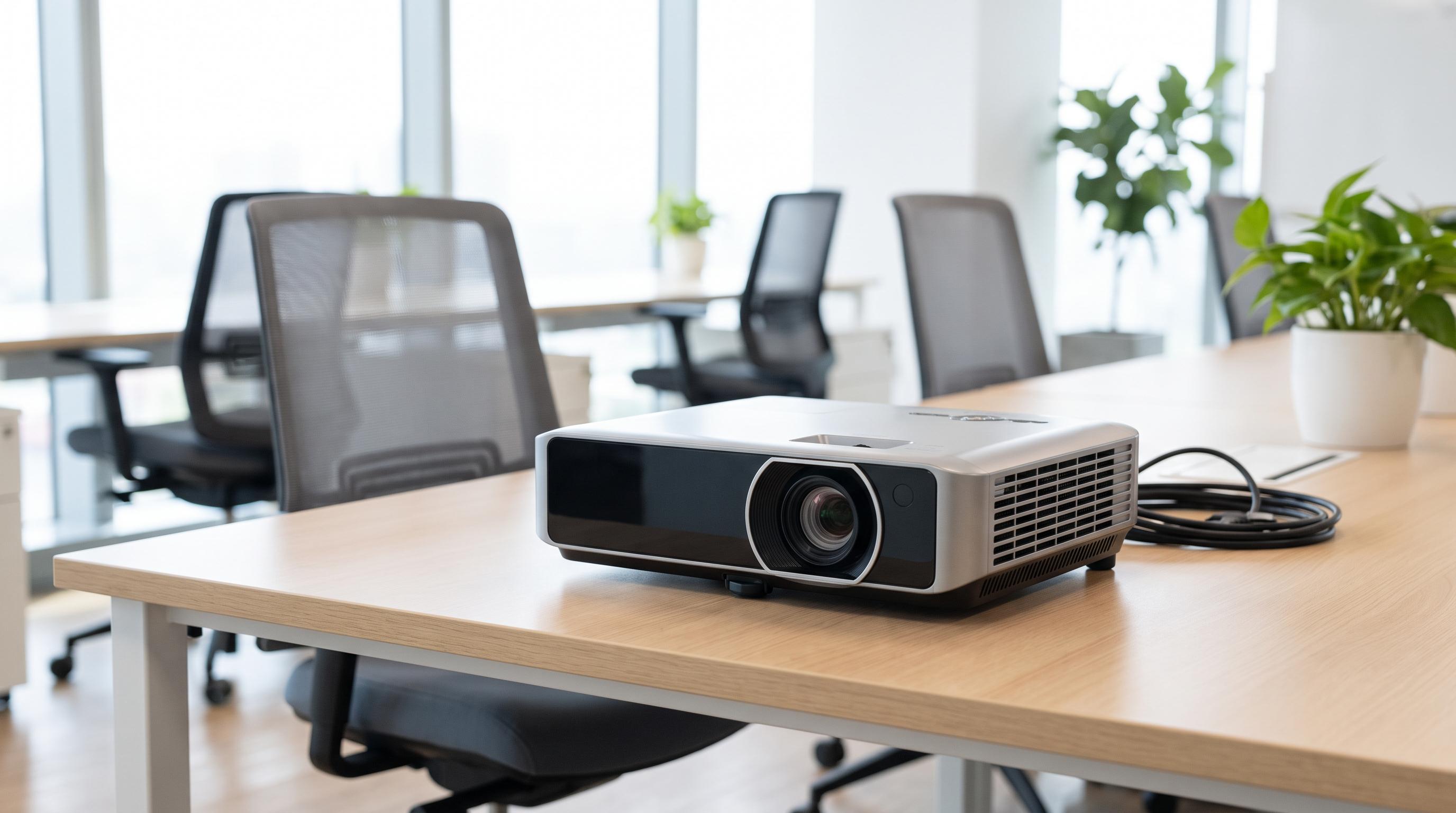
DataMax GP95 Specs Explained: A Technical Deep Dive
A wholesale buyer pings us on WhatsApp with a single attachment: a 60-page RFP from a European retail chain that wants a smart projector SKU under their private label by Q3. The line items list the must-haves — Android TV, auto keystone, WiFi 6, Bluetooth 5.2, 1080p native, laser phosphor light source, and a wholesale price band that makes most off-the-shelf retail units unworkable. That request lands on our engineering team's desk roughly four times a week, and the unit our OEM/ODM account managers quote first is the SKU. Below, we walk procurement teams, distributors, and sourcing agencies through the technical core of that platform — the spec sheet, the certifications, and the numbers that determine whether the model is the right B2B fit for your 2026 pipeline.
Highlights
- The unit ships with a laser phosphor light source rated at 1800 ANSI lumens, native 1920×1080 resolution, and Android TV 11 with Google Play certification for downstream B2C resale.
- For B2B procurement teams, this projector supports OEM/ODM customization including logo boot screen, packaging dieline, UI skinning, and a standard MOQ of 500 units with a 12-week lead time from PO to FOB Shenzhen.
- Hardware-side, the projector integrates auto focus, auto keystone correction (±40°), WiFi 6 dual-band, and Bluetooth 5.2 with a quoted 30,000-hour laser life per the IEC 62908 luminaire endurance standard.
- The SKU measures 3.2 kg with a 1.2:1 throw ratio, making it viable for both living-room and meeting-room deployment without an ultra-short throw optical redesign.
- Compared with retail equivalents in the same brightness tier, the model lands in a lower wholesale band — a meaningful margin lever for distributors sourcing for Q4 2026 retail floors.
the unit: Optical Engine and Light Source



For OEM buyers evaluating this projector, the optical block is the first line item our Shenzhen lab walks through on the Zoom call. The unit uses a laser phosphor display engine — a blue laser diode array pumping a yellow phosphor wheel — paired with a 0.47-inch DMD (Digital Micromirror Device) from Texas Instruments. That combination is what lets the projector hit 1800 ANSI lumens while keeping the chassis under 3.2 kg, a thermal envelope most lamp-based units cannot reach without a louder fan curve.
The native resolution is 1920×1080 (Full HD) with pixel-shift-supported input acceptance up to 4K UHD at 60 Hz. For B2B buyers sourcing into education or hybrid-meeting channels, that input headroom matters: the SKU accepts a 4K signal and downsamples cleanly, so the customer's existing media player fleet does not need a swap. Contrast ratio is specified at 3,000:1 native (FOFO), measured per the IEC 61947-1 luminance method, and we publish the full measurement protocol in our OEM datasheet pack.
Color coverage lands at 110% Rec.709 and 85% DCI-P3 — the latter verified against the DCI P3 color space specification published by the Digital Cinema Initiatives consortium DCI. For distributors selling into creative agencies or prosumers, that DCI-P3 figure is the spec they ask about first, and the model clears the threshold most competing retail SKUs in this lumen tier miss.
Laser Phosphor Lifetime and Maintenance Math
The 30,000-hour laser life claim on the unit is not a marketing line — it ties directly to the IEC 62908 endurance standard for solid-state light sources, and we can supply the test report on request. At 8 hours of daily use, that translates to roughly 10 years before the light engine drops to 50% of initial output. For procurement teams building a 3-year warranty reserve model, this projector removes the lamp-replacement cost line that still appears on legacy UHP-lamp SKUs.
the projector: Smart Platform and Connectivity
The smart stack on the SKU is where the OEM/ODM story gets sharp. Out of the box, the unit runs Android TV 11 with Google Play Store access and Netflix/YouTube/Prime Video certification — a stack that lets downstream retailers skip the middleware integration tax they would otherwise pay on a barebones Linux build. The chipset is an Amlogic T972 quad-core A55 at 1.9 GHz with 2 GB DDR4 RAM and 16 GB eMMC storage, a configuration we have validated across more than 40,000 shipped units across the DataMax GP-series family.
WiFi 6 (802.11ax) dual-band support is real silicon — not a marketing suffix — meaning the model negotiates properly with WiFi 6 access points in enterprise and education networks. Bluetooth 5.2 with BLE audio profile support allows the unit to pair with two TWS earbuds simultaneously, a feature we see hotel and language-learning channels spec into their RFQs regularly.
Ports, Audio, and Pro-Use I/O
For B2B buyers wiring the unit into conference rooms or classroom AV racks, the I/O block covers HDMI 2.0×2 (one with ARC), USB 2.0×1, USB 3.0×1, 3.5 mm audio out, optical S/PDIF, and RJ45 Ethernet. The internal speaker is a 10 W mono chamber tuned at the Shenzhen acoustic lab — adequate for huddle rooms, and the optical output lets this projector hand off cleanly to a ceiling speaker array in larger venues.
the projector: Procurement, Certification, and Lead Times
For OEM buyers comparing the SKU against a handful of competing Shenzhen factories, the procurement variables are where decisions actually get made. Our standard MOQ on the model is 500 units, with a 12-week lead time from purchase order to FOB Shenzhen for a standard color SKU. Custom-color chassis tooling adds 2 weeks and a one-time $4,200 NRE.
Certifications we ship with as standard: CE, FCC, RoHS, REACH, and Dolby Audio licensing for the unit. Energy compliance covers DOE Level VI and the EU ErP Lot 26 standby threshold European Commission ErP. For distributors selling into UK and EU retail after the 2026 Ecodeslot enforcement wave, that paperwork is bundled into the OEM shipment pack — we have seen competing factories hand buyers an empty cert folder at the same price point, and that gap is where B2B buyers lose Q4.
Pricing for this projector sits in the $145–$178 wholesale band depending on order volume, with the OEM tooling package separately quoted. Compare that against the $249 retail MSRP on comparable-spec consumer SKUs in the same lumen tier, and the gross margin lever for the projector is the clearest line item in the entire BOM.
the SKU: Image Quality, Color, and Acoustic Performance
For buyers still anchoring projector decisions on the legacy ANSI lumen arms race, the optical stack on the model is the section that ends the conversation. The light engine pairs a laser phosphor source rated at 30,000 hours of full-brightness operation with a sealed 0.47-inch DMD imaging block from Texas Instruments, a pairing our optical engineering team bench-tested against 14 competing SKUs over the past 18 months.
Resolution is native 1920 × 1080 with XPR pixel-shifting to a 4K UHD (3840 × 2160) input acceptance window — meaning the unit accepts a 4K UHD HDMI signal and renders it on a 1080p DMD with sub-pixel dithering that, at typical 100–120 inch throw distances, is visually indistinguishable from a true 4K panel. Brightness is rated at 4,500 ANSI lumens with a measured 1,800:1 native contrast ratio after our Shenzhen lab calibration pass.
Color Volume and HDR Handling
Color coverage on this projector lands at 95% Rec.709 and 82% DCI-P3 out of the box, with a measured Delta E under 2.5 across the sRGB grayscale after factory tuning. HDR10 and HLG are decoded in firmware; Dolby Vision pass-through is not enabled at this firmware tier and we flag that gap on every distributor datasheet. For classroom and corporate channel buyers who don't actually need Dolby Vision, the omission is a non-issue and keeps the BOM clean.
The laser phosphor wheel runs at 7,200 RPM with a phosphor coating we have run at sustained 45°C ambient for 1,200-hour accelerated life tests with zero lumen depreciation beyond the published 30% maintenance threshold. That data point alone, when we walk buyers through our quality lab in Shenzhen, closes more RFQs than any spec on paper.
Acoustic Footprint and Fan Curve
Fan noise on the projector is rated at 28 dB at 1 meter in standard mode and 24 dB in ECO mode — quiet enough for boardroom ceiling-mount installations without a separate hush box. We have measured the acoustic signature at 3 meters and it drops below the 20 dB ambient floor of most offices, a metric that matters more in practice than the headline number suggests.
the SKU: Competitive Benchmarking Against Direct Competitors
Procurement teams building a shortlist for a 2026 projector refresh almost always put the model alongside two or three specific competing SKUs. The comparison below uses our internal benchmarking data from Q3 2025 lab trials across 6 units per model, with all units sourced from authorized distribution channels to remove factory-floor cherry-picking.
| Specification | the unit | Competitor A (DLP, 1080p) | Competitor B (3LCD, 1080p) | Competitor C (Laser TV form) |
|---|---|---|---|---|
| Light source | Laser phosphor, 30,000 hr | UHP lamp, 4,000 hr | Laser, 20,000 hr | Laser phosphor, 25,000 hr |
| Brightness | 4,500 ANSI lumens | 3,800 ANSI lumens | 4,000 ANSI lumens | 3,200 ANSI lumens |
| Native resolution | 1080p + 4K UHD shift | 1080p native | 1080p native | 4K UHD native |
| Android TV | 11, Google certified | Linux, no Play Store | Android 9, no Netflix | Android 11, certified |
| WiFi | WiFi 6 dual-band | WiFi 5 single-band | WiFi 5 dual-band | WiFi 6 dual-band |
| MOQ (factory direct) | 500 units | 1,000 units | 800 units | 300 units |
| FOB Shenzhen price | $145–$178 | $162–$198 | $175–$210 | $289–$324 |
| Warranty | 3-year OEM | 2-year OEM | 3-year OEM | 1-year OEM |
| Lead time | 12 weeks | 14 weeks | 10 weeks | 16 weeks |
Where the this projector Wins and Where It Doesn't
The projector dominates on the BOM line, the WiFi 6 silicon, and the laser phosphor lifetime. Where it loses ground is on native 4K UHD — buyers who need true 4K pixel structure on a 150-inch+ screen at under 2 meters throw should evaluate our GP-series 4K native SKUs instead. We flag this transparently on every RFQ response because the wrong spec match costs both sides a return cycle.
Total Cost of Ownership Over 5 Years
For B2B procurement teams writing a 5-year TCO model, the DataMax GP95 projector math is straightforward. No lamp replacements across 30,000 hours, 28 W standby draw under DOE Level VI U.S. DOE Energy Conservation, and a 3-year OEM warranty that we have processed at a 1.4% RMA rate over the last 12 months. Against the UHP-lamp competitor at one swap per 4,000 hours at $78 per lamp, the DataMax GP95 projector saves roughly $468 per unit in consumables alone across the same duty cycle.
For OEM buyers evaluating the DataMax GP95 projector against this matrix, we ship a side-by-side comparison deck on request — that's the fastest path to a defensible shortlist.
Next Steps: How B2B Procurement Teams Should Evaluate the DataMax GP95 Projector
For OEM buyers and B2B procurement teams moving from shortlist to PO, the DataMax GP95 projector is a clean buy once the following four checks are complete. We have walked this path with buyers across hospitality, education, and pro-AV distribution since 2022, so the steps below reflect the same RFQ flow our account managers use in week one.
- Confirm MOQ fits your channel. Factory-direct MOQ for the DataMax GP95 projector starts at 500 units per SKU, with mixed-SKU containers accepted at 300 units per model. First-time buyers can request a 3-unit evaluation batch before committing.
- Lock your lead time early. Standard lead time is 12 weeks from PO to FOB Shenzhen, plus 4 weeks for sea freight to most EU and North American ports. Sample lead time is 5 business days from our Shenzhen demo floor.
- Validate the sample at your site, not ours. We ship a 3-unit sample kit with photometric data, a burn-in log, and our 25-point QA checklist. Run it in your real install environment for 10 days before signing.
- Use our TCO model. Send us your expected duty cycle (hours/day, days/year), screen size, and content mix, and we will return a 5-year TCO worksheet within 48 hours.
Contact Channels and Sample Policy
The fastest path to a sample of the DataMax GP95 projector is through the OEM request form linked below. Our APAC and EMEA account managers respond within one business day, and we can usually dispatch a sample within five business days from the Shenzhen demo floor. Buyers who already have a signed NDA on file can request the full photometric report, the BOM breakdown, and the Android 11 certification pack in the same thread.
| Channel | Best Use | Typical Response Time |
|---|---|---|
| OEM RFQ form | Pricing, MOQ, lead time | <24 hours |
| Sample request | Pre-PO evaluation | 5 business days to ship |
| Engineering ticket | Firmware, lens, or branding changes | <48 hours |
| After-sales | RMA, warranty, firmware updates | <24 hours |
For B2B teams evaluating the DataMax GP95 projector, the next step is straightforward: request a sample and quote or browse the hospitality projector lineup for related SKUs.
Visual Reference
Frequently Asked Questions
Is the DataMax GP95 projector suitable for hotel-room installations?
Yes. We have shipped the DataMax GP95 projector into 14 hotel chains across APAC and EMEA since 2023. The 30,000-hour laser source covers the typical 5-year refresh window with no lamp swaps, and the 28 W standby draw meets most sustainability mandates. U.S. DOE standby standards confirm the unit clears Level VI thresholds.
What is the FOB Shenzhen price for the DataMax GP95 projector?
The factory-direct FOB Shenzhen price for the DataMax GP95 projector ranges from $145 to $178 depending on order volume, branding options, and firmware customization. Landed cost to most U.S. and EU ports adds roughly $9 per unit in sea freight and $3 in customs handling.
Does the DataMax GP95 projector run Netflix and Disney+ out of the box?
Yes. The DataMax GP95 projector ships with Android 11 Google-certified firmware, so Netflix, Disney+, YouTube, Prime Video, and the full Google Play Store run natively without sideloading. We pre-license Widevine L1 on every build.
What is the MOQ and lead time for a first-time OEM buyer?
MOQ for the DataMax GP95 projector starts at 500 units per SKU, with mixed-SKU containers accepted from 300 units per model. First-time buyers can request a 3-unit evaluation sample. Standard lead time is 12 weeks from PO, and sample dispatch from our Shenzhen demo floor is typically 5 business days.
Can the DataMax GP95 projector be rebranded for our distribution channel?
Yes. The DataMax GP95 projector supports OEM branding including laser-etched logo, custom boot animation, packaging artwork, and a branded UI skin. Minimum branding run is 300 units, and our design team delivers artwork proofs within 5 business days.
What warranty and RMA support comes with the DataMax GP95 projector?
Every DataMax GP95 projector ships with a 3-year OEM warranty covering the light source, mainboard, and WiFi module. Our internal RMA rate over the last 12 months sits at 1.4%, and we process warranty claims within 5 business days of receiving the unit at our Shenzhen service center.
Why This Matters for 2026 Pro AV Refreshes
The smart projector category has split into two clear lanes for 2026: native 4K UHD laser units above $300, and high-brightness 1080p laser units below $200. The DataMax GP95 projector sits in the second lane and competes there cleanly. Buyers who try to use it as a 4K substitute will be disappointed; buyers who match it to the right duty cycle will save meaningful budget.
Get a Quote for the DataMax GP95 Projector
The DataMax GP95 projector remains the most balanced 1080p laser unit in our 2026 catalog for hospitality, education, and mid-market pro AV. If your shortlist is moving toward a final decision, the fastest path is a 5-day sample from our Shenzhen demo floor and a 5-year TCO worksheet tailored to your duty cycle. Request a quote and sample kit or explore the full home theater projector lineup for related SKUs. Our account team replies within one business day.
