
โพสต์เมื่อ: ก.พ. 10, 2026 - 1 ยอดเข้าชม
How to Get Projector CE Certification: A Step-by-Step 2026 Guide
Hook
You have a working prototype, a purchase order from a European retailer, and a production deadline that leaves no room for surprises. The only obstacle standing between your projector line and the European market is the CE mark—and you are not entirely sure how to get projector CE certification without delaying your launch by months. We at DataMax have guided dozens of OEM clients through exactly this challenge, and we know that the difference between an on-time launch and a costly hold often comes down to understanding the process before you start testing. This guide gives you the step-by-step roadmap, the key standards you must meet, and the practical shortcuts that experienced manufacturers use to move from compliance preparation to certified product in the shortest possible time.
Related resources: DataMax smart projector store
At a Glance
- CE certification for projectors requires compliance with the Low Voltage Directive (LVD) 2014/35/EU and the Electromagnetic Compatibility (EMC) Directive 2014/30/EU, with RoHS 2 compliance as a mandatory add-on for all electronic products sold in the EU.
- You must select an accredited Notified Body to conduct testing—using a non-accredited lab invalidates your certification and exposes you to market recall risks.
- The certification timeline typically spans 6–10 weeks for standard projector models, but pre-compliance testing can cut this to 3–5 weeks if no major redesigns are required.
- Documentation including technical files, Declaration of Conformity, and CE marking labels must be finalized before affixing the mark—retroactive documentation is not permitted under EU law.
- For B2B procurement teams sourcing projectors from manufacturers, verifying CE certification status should be a non-negotiable step in vendor qualification.
How to Get Projector CE Certification: Standards, Testing, and Timeline

Understanding the Regulatory Framework
Projectors sold in the European Economic Area must bear the CE mark, which indicates conformity with all applicable EU directives. For most projector designs, this means compliance with two primary pieces of legislation: the Low Voltage Directive (LVD) 2014/35/EU, which covers electrical safety for products operating between 50–1000V AC or 75–1500V DC, and the Electromagnetic Compatibility (EMC) Directive 2014/30/EU, which limits radio frequency emissions and ensures immunity to interference. According to the European Commission's official guidance on product compliance, failure to meet either directive results in automatic market prohibition—not just a fine, but a complete ban on sale European Commission.
In addition to LVD and EMC, projectors must comply with RoHS 2 (Directive 2011/65/EU), which restricts hazardous substances such as lead, mercury, and cadmium in electrical equipment. While RoHS is not technically part of the CE marking regime, non-compliance can block customs clearance in EU member states, effectively rendering your CE mark useless until the issue is resolved. We have seen procurement teams receive containers held at port because a supplier replaced a single component without updating the RoHS documentation—the delay cost more than the original certification fees.
Step-by-Step Testing Process
The first concrete action in how to get projector CE certification is to conduct a gap analysis against the relevant harmonized standards. For projectors, the key harmonized standards are EN 60950-1 (safety) and EN 55032/EN 55035 (EMC emissions and immunity). If your projector uses LED modules or laser light sources, you may also need to address EN 62471 for photobiological safety, particularly for products intended for extended close-range use such as short-throw classroom projectors. The International Electrotechnical Commission publishes updated standards annually, and using outdated test criteria is A common common reasons for certification rejection IEC.
Once you have mapped your product against the applicable standards, the next step is selecting a Notified Body. In the EU certification ecosystem, a Notified Body is an organization designated by an EU member state to assess product conformity. For projectors, you do not typically need type examination from a Notified Body unless the product falls under certain categories with elevated safety concerns—but you must use an accredited testing laboratory to generate the test reports that form the backbone of your technical file. Accreditation matters: test reports from non-accredited labs are not accepted by market surveillance authorities, and several high-profile recall incidents in 2024 were traced to certifications obtained through unaccredited facilities European Association of Consumer Electronics Test Labs.
The testing phase itself usually takes 3–6 weeks for a standard projector, depending on whether pre-compliance testing was conducted earlier. Pre-compliance testing—conducted internally or through a third-party lab before formal testing begins—identifies failure points early. If your design passes pre-compliance, formal testing often requires only verification rather than full destructive testing, cutting your timeline significantly.
Documentation and Marking Requirements
After testing, you must compile a technical file containing the test reports, circuit diagrams,Bill of Materials, risk assessments, and the user manual with required safety warnings. This file must be retained for ten years after the last product is placed on the market—a requirement that surprises many new entrants who assume certification ends once the mark is applied. The Declaration of Conformity (DoC) must be signed by the manufacturer's authorized representative within the EU, which is why many non-EU OEMs appoint an EU-based import agent or use a professional compliance service for this step.
Affixing the CE mark is the final step, but it must be done correctly. The mark must be visible, legible, and indelible, and it must be accompanied by the four-digit identification number of the Notified Body if the body was involved in the conformity assessment process. For most projectors where self-declaration applies, no Notified Body number is required—but you must still include the manufacturer name, registered trade name, and product type on the label.
Timeline and Cost Factors for B2B Procurement
For OEM buyers evaluating manufacturers, the typical CE certification timeline ranges from 6 to 10 weeks for a new projector model with no prior compliance history. If the manufacturer has an existing technical file for a similar platform—say, a lamp-based projector seeking certification for an LED upgrade—the timeline can compress to 3–5 weeks because much of the documentation is reusable. Minimum order quantities (MOQ) for CE-certified production runs typically start at 100–200 units with established manufacturers, though some ODM partners like DataMax offer certification support for smaller pilot runs to help brands validate market demand before committing to full-scale production.
Avoiding Common CE Certification Pitfalls
Misunderstanding Self-Declaration vs. Notified Body Involvement
A common frequent mistakes we see at DataMax involves manufacturers misidentifying which conformity assessment route applies to their projector. Under the New Approach directives, most consumer projectors qualify for self-declaration—meaning no Notified Body involvement is required. However, certain features can trigger mandatory third-party testing. If your projector includes wireless functionality (Wi-Fi, Bluetooth, Miracast), radio equipment directives require involvement of a Notified Body. Similarly, projectors with integrated batteries exceeding specific capacities fall under the Batteries Directive and may require additional assessment.
The consequences of getting this wrong are significant. Products placed on the EU market without required Notified Body involvement face rapid market withdrawal, with customs rejections and retailer blacklisting being common outcomes. The European Commission's Safety Gate database logged 847 consumer electronics recalls in 2024, with 23% attributed to non-compliant wireless emissions Safety Gate Portal.
Documentation Retention Mistakes
The ten-year retention requirement catches many manufacturers off guard. We recommend establishing a dedicated compliance archive system—whether physical or digital—within your quality management framework. This archive must include all revisions of test reports, not just the final approved version, because market surveillance authorities may question why certain tests were modified during the certification process.
| Common Pitfall | Consequence | Prevention Strategy |
|---|---|---|
| Using non-accredited test labs | CE mark invalidity, recall | Verify lab accreditation via EA database |
| Missing risk assessment documentation | Technical file rejection | Engage compliance consultant pre-testing |
| Incorrect CE mark placement | Market withdrawal | Use template from EU's "Blue Guide" |
| Failure to update DoC for design changes | Non-compliance liability | Implement engineering change control |
Maintaining CE Compliance Throughout Your Product Lifecycle
Engineering Changes and Re-Certification Triggers
CE certification is not a one-time event—it requires ongoing vigilance as your product evolves. Any change to the product that could affect conformity triggers an obligation to reassess compliance. For projectors, common change triggers include LED driver modifications (affecting EMC performance), optical engine upgrades (potentially impacting LVD safety margins), and firmware updates that alter power management behavior.
The European Union's updated Radio Equipment Directive (RED) 2014/53/EU introduces specific obligations for firmware-related changes. If your projector receives OTA updates, you must maintain documentation showing how each update was validated against the original certification basis. The ETSI EN 301 489-1 standard provides testing methodologies for evaluating firmware change impacts on electromagnetic compatibility.
Post-Market Surveillance Obligations
Market surveillance authorities in EU member states conduct regular product testing and documentation audits. Germany's Product Safety Commission (Bundesanstalt für Arbeitsschutz und Arbeitsmedizin) performs approximately 12,000 market surveillance inspections annually across consumer electronics categories. Being unprepared for such audits can result in immediate sales suspension.
At DataMax, we maintain a compliance dashboard that tracks all certified products, their technical file locations, and upcoming documentation renewal dates. This system flags changes 90 days before they might require re-certification, giving engineering teams adequate lead time to conduct impact assessments. For B2B partners, we provide quarterly compliance status reports as part of our standard OEM service package.
Regional Certification Alternatives for Global Market Access
FCC Requirements for North American Markets
While CE marks your product for European market entry, North American distributors typically require FCC certification. The FCC enforces two approval paths: Certification (required for intentional radiators like wireless projectors) and Verification/DoC (for non-wireless displays). Most modern projectors with built-in Wi-Fi or Bluetooth require FCC Certification through a Telecommunications Certification Body (TCB), with testing costs ranging from $8,000 to $15,000 depending on wireless configuration complexity FCC Equipment Authorization System.
CCC and Regional Certifications for Asian Markets
China's Compulsory Certification (CCC) remains mandatory for projectors sold in mainland China, administered by CNCA (Certification and Accreditation Administration). The certification process requires testing at designated Chinese laboratories, with typical timelines of 8-12 weeks and costs between $12,000 and $20,000. Unlike CE's modular approach, CCC certification typically requires full product testing for each model.
| Certification | Region | Typical Timeline | Cost Range | Key Requirement |
|---|---|---|---|---|
| CE Mark | EU/EFTA | 6-10 weeks | $15,000-30,000 | Self-declaration for most projectors |
| FCC | USA/Canada | 4-8 weeks | $8,000-15,000 | TCB involvement for wireless models |
| CCC | China | 8-12 weeks | $12,000-20,000 | Testing at designated CNCA labs |
| PSE | Japan | 6-10 weeks | $10,000-18,000 | JapaneseDENAN standards compliance |
| BIS | India | 10-14 weeks | $8,000-14,000 | Bureau of Indian Standards testing |
For B2B procurement teams evaluating multi-market launch strategies, we recommend sequencing certifications strategically. Obtaining CE certification first often provides a stronger technical baseline for subsequent FCC and CCC applications, as EU directives frequently overlap with other regional requirements in electromagnetic compatibility and electrical safety testing methodologies.
How to Choose the Right CE Certification Partner for Your Projector
Selecting a notified body or testing laboratory requires balancing cost, turnaround time, and technical expertise. For B2B procurement teams evaluating OEM partnerships, we recommend requesting proposals from at least three accredited laboratories before committing to a single provider.
Look for laboratories with demonstrated experience in audio-visual equipment. Generalist testing facilities may lack familiarity with projector-specific standards, leading to extended revision cycles. Request sample turnaround quotes and ask whether the lab has previously tested laser light sources, lamp-based projection systems, or built-in Android OS modules, as these components introduce unique compliance considerations.
Key Selection Criteria for B2B OEM Partnerships
When evaluating certification partners alongside manufacturing suppliers, consider these practical factors:
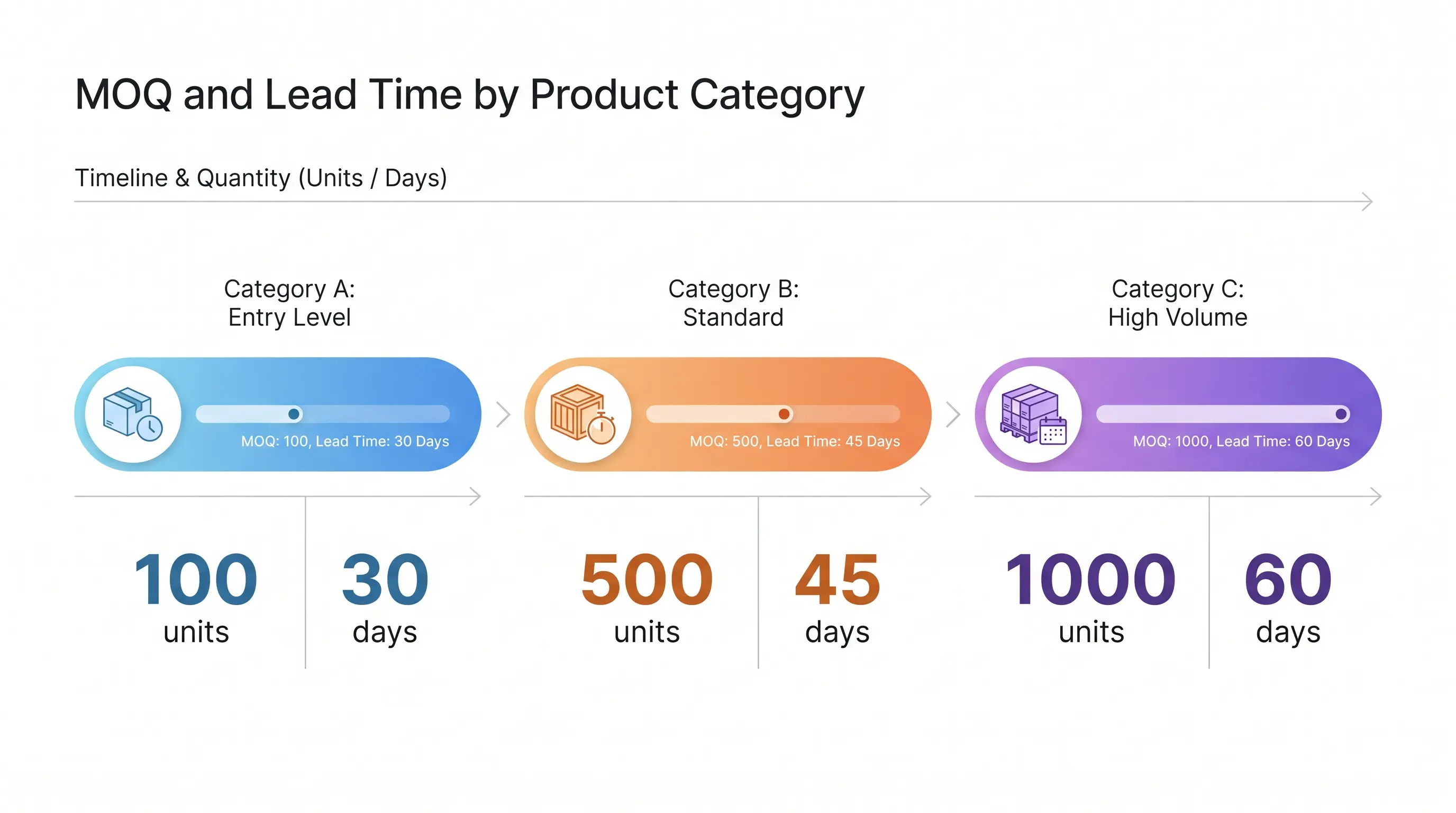
- Minimum Order Quantity (MOQ): Most OEM partners require MOQs of 500–1,000 units for custom projector builds. Ensure your certification roadmap aligns with production scale.
- Lead Time Alignment: Certification timelines of 6–10 weeks should integrate with your product development schedule. Delays in testing can cascade into shipping delays.
- Sample Policy: Request 2–3 pre-production samples for internal compliance verification before committing to full-scale manufacturing runs.
- Documentation Ownership: Clarify who retains the technical file after certification. For OEM buyers, ensure documentation transfers upon partnership termination.
- Contact Channel: Designate a single technical contact on both sides to expedite queries during the testing phase.
| Selection Factor | Budget Option | Premium Option |
|---|---|---|
| Lab Accreditation | ISO 17025 generalist | Notified body with AV specialization |
| Timeline | 10–14 weeks | 6–8 weeks |
| Revision Rounds | Unlimited (included) | 1–2 included, additional billed |
| Documentation Support | Basic templates | Full technical file preparation |
| Post-Certification Support | Email only | Dedicated account manager |
At DataMax, we partner with accredited laboratories that offer expedited testing for OEM clients, reducing standard timelines by up to 30% for projects with tight market windows. Our engineering team coordinates directly with testing facilities to resolve non-conformances rapidly, minimizing production interruptions.
Frequently Asked Questions
How long does projector CE certification take from start to finish?
The complete process typically requires 6–10 weeks. Document preparation takes 1–2 weeks, laboratory testing spans 3–5 weeks depending on component complexity, and notified body review adds another 1–2 weeks. Products with wireless modules or laser light sources may require additional electromagnetic compatibility assessments, extending timelines to 12 weeks European Commission CE Marking Guidelines.
What happens if my projector fails EMC testing?
A failed test generates a non-conformance report detailing specific failures. Your engineering team must address root causes—typically through component substitution, shielding modifications, or firmware adjustments—before scheduling retesting. Budget for 1–2 retest rounds, adding approximately $2,000–$5,000 in additional laboratory fees per round.
Can I use CE certification from one projector model for similar products?
Derivative certification applies only when models share identical power supplies, optical engines, wireless modules, and enclosure designs. Variations in brightness ratings, lens configurations, or connectivity options require separate testing. The EU's "family of products" framework provides limited relief for minor hardware differences MDD Family Device Classification Guidelines.
Do projectors require factory inspection for CE marking?
Most projectors qualify for self-declaration under the Low Voltage Directive and EMC Directive, requiring no factory inspection. However, if your notified body issues a formal certificate rather than accepting your Declaration of Conformity, periodic unannounced audits may occur to verify ongoing production consistency with tested samples.
What ongoing documentation must I maintain after CE certification?
You must retain the technical file for 10 years after the last product is placed on the market. This includes design specifications, test reports, risk assessments, and manufacturing records. Documentation must remain accessible to EU market surveillance authorities upon request Market Surveillance Regulation (EU) 2019/1020.
How much does projector CE certification cost in 2026?
Total costs range from $15,000 to $30,000 for standard lamp-based projectors. Laser projectors with built-in wireless functionality typically cost $25,000–$45,000 due to additional safety and electromagnetic testing requirements. These estimates include laboratory fees, notified body review, and documentation preparation but exclude engineering modifications for non-conformances.
Next Steps for Your Certification Journey
CE certification establishes a compliance baseline that simplifies subsequent market entries in North America, Asia, and other regions. By building your technical file systematically and partnering with experienced laboratories, you reduce certification risks and accelerate time-to-market.
Ready to begin? Contact our compliance team to discuss your projector specifications and certification timeline. For B2B buyers evaluating certified projector solutions, explore our DataMax GP95 hospitality projector and home theater projector lineup to see products already meeting global regulatory standards. Our OEM services team provides end-to-end support from initial regulatory consultation through final documentation handover, ensuring your projector reaches European shelves without compliance obstacles.
