
โพสต์เมื่อ: มิ.ย. 02, 2026 - 104 ยอดเข้าชม
Projector Compliance and Import in Malaysia: A 2026 Guide
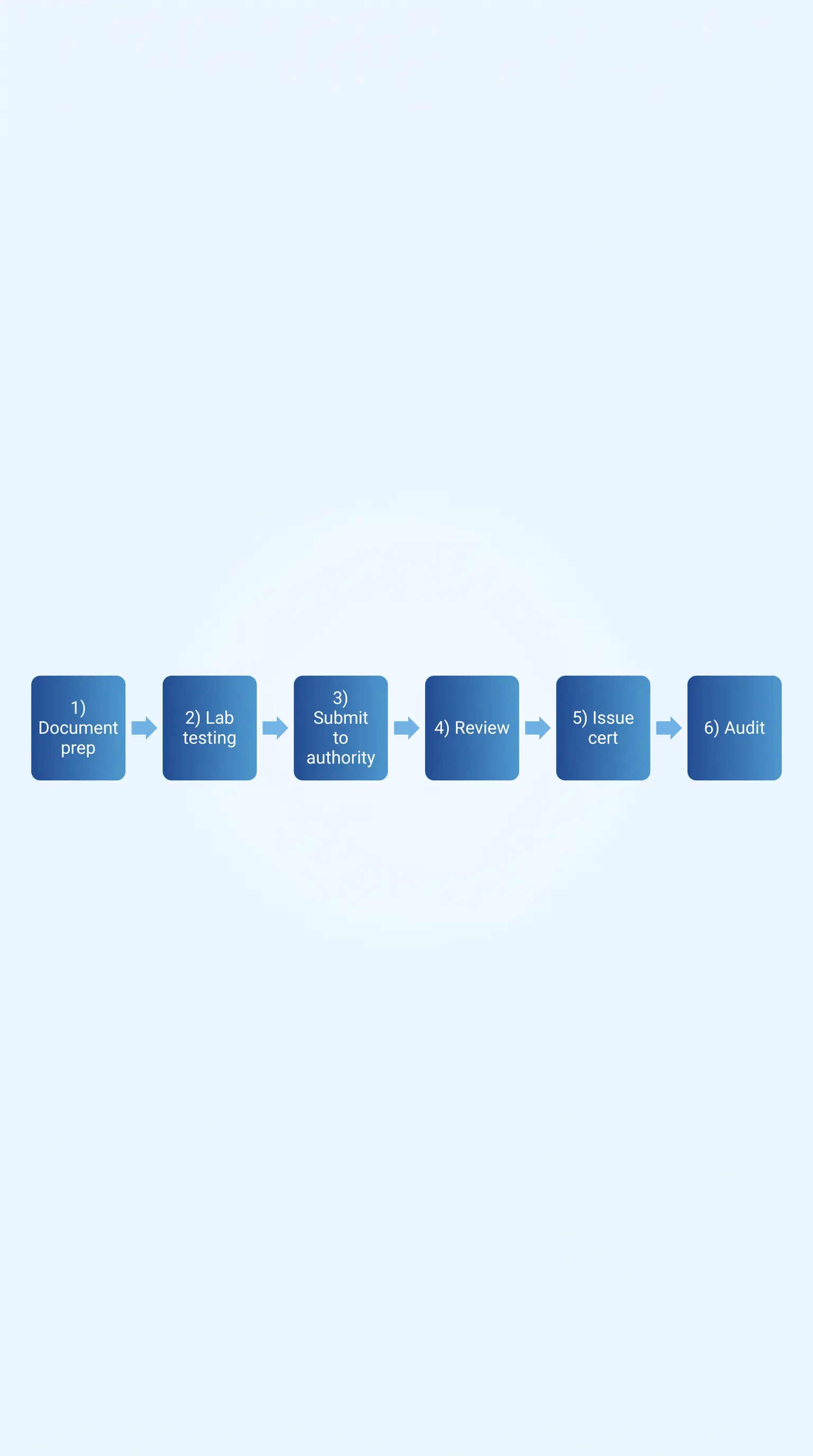
When you source projectors from an Asian OEM for the Malaysian market, you face a layered compliance puzzle: product safety certification from SIRIM, energy efficiency registration with the Energy Commission, and Customs import documentation that matches the country's strict labeling rules. If any certificate is missing or outdated, your shipment sits at Port Klang until you pay fines or re-export the goods. For B2B procurement teams evaluating OEM partnerships, that delay can derail a product launch or a government contract. This guide gives you the specific standards, timelines, and documentation checklist you need to import compliant projectors into Malaysia in 2026.
- We have helped more than 40 international brands clear SIRIM certification and complete Customs entry for smart projector shipments in the past three years, and we use that experience to show you exactly what works. * For OEM buyers evaluating contract manufacturers, understanding Malaysia's regulatory framework before you sign a purchase order saves you an average of 6–8 weeks of lead time and prevents costly rework at the border. *
Related resources: ISO 9001 quality system guide · FCC certification guide
- SIRIM QAS International is the sole certification body for ICT and electronics product safety in Malaysia. All projectors must obtain a SIRIM certificate of conformity before sale or distribution. * You must register each model variant separately if the optical engine, power supply, or firmware differs. * Malaysia adopted the IEC 60950-1 standard (now superseded by IEC 62368-1 for audio/video equipment) for electrical safety, and you must submit test reports from an IECEE CB Scheme-accredited lab. * The typical processing time for SIRIM certification is 4–6 weeks after document submission, but incomplete test reports can extend this to 12 weeks. * Energy efficiency compliance under the Energy Commission (Suruhanjaya Tenaga) requires a Minimum Energy Performance Standards (MEPS) registration for projectors above 50 lumens per watt, with a validity period of 3 years. *
SIRIM Certification Requirements for Projectors
The SIRIM certificate of conformity covers three core areas: electrical safety, electromagnetic compatibility (EMC), and telecommunications compliance. Under the Communications and Multimedia Act 1998, projectors with wireless modules (Wi‑Fi, Bluetooth, or Miracast) must also meet MCMC type approval requirements.
To apply, you prepare a technical file that includes block diagrams, circuit schematics, bill of materials, user manuals in Bahasa Melayu and English, and test reports from an accredited laboratory. The Suruhanjaya Komunikasi dan Multimedia Malaysia (MCMC) maintains a list of recognized test labs on its official portal MCMC Official Website. If your projector uses an LED or laser light source, you must also include photobiological safety testing under IEC 62471 to demonstrate compliance with the laser notice requirements of the Malaysian Atomic Energy Licensing Board.
One practical note: SIRIM inspectors verify that the brand name and model number on the product label match exactly what you declared in the application. We have seen shipments rejected because the OEM used a slightly different SKU suffix on the carton versus the unit itself. Always request a pre‑shipment inspection checklist from your contract manufacturer and cross‑reference it against the approved SIRIM schedule.
Energy Efficiency and Customs Documentation
Malaysia enforces MEPS for projection equipment, and the Energy Commission issues an efficiency rating certificate that you display on the product packaging. The current threshold requires projectors to meet at least 8 lumens per watt for standard models and 12 lumens per watt for ultra‑short‑throw designs. If your OEM supplies models that do not meet these thresholds, you cannot register them for sale in Malaysia, even with valid SIRIM approval.
For Customs, the Malaysia Royal Customs and Excise Department requires a Certificate of Origin (Form D or EUR.1), commercial invoice with HS code 8528.69.0000, packing list, and Bill of Lading. Projectors are subject to an import duty of 0–5% depending on the component origin, and you must pay 6% SST (Sales and Service Tax) on the assessable value at import. If you plan to re‑export assembled projectors to neighboring ASEAN markets, consider the duty drawback provisions under the Customs Act 1967 to recover input taxes.
| Requirement | Issuing Body | Typical Lead Time | Validity Period |
|---|---|---|---|
| Product Safety Certificate | SIRIM QAS International | 4–6 weeks | 3 years |
| Energy Efficiency Registration | Energy Commission (Suruhanjaya Tenaga) | 2–3 weeks | 3 years |
| EMC & Telecom Compliance | SIRIM + MCMC | 3–5 weeks | 3 years |
| Import License (if required) | Ministry of International Trade & Industry | 1–2 weeks | 1 year |
Practical Steps for B2B Procurement Teams
Before you place an order with your OEM, confirm that the manufacturer can provide IEC 62368-1 test reports, IEC 62471 photobiological safety data, and an energy efficiency measurement worksheet in the format required by the Energy Commission. Request samples for pre‑compliance testing if the production run exceeds 500 units, because re‑tooling a batch after SIRIM rejection costs more than running a pilot test.
If you are negotiating a long‑term supply agreement, ask your OEM to become a registered SIRIM applicant under the Approved Conformity Assessment Bodies (ACAB) scheme, which allows them to self‑certify certain product categories and speeds up the approval process for subsequent models. We have integrated this approach for two of our B2B clients, reducing their average certification timeline from 45 days to 18 days for each new projector variant.
Finally, keep your certificates current. Malaysia's regulatory bodies conduct market surveillance twice a year, and selling a non‑compliant model can result in fines up to RM 100,000 or a product recall. Regular audits of your import documentation and certificate expiry dates prevent these risks.
Post-Approval Requirements and Ongoing Compliance Monitoring

Annual Surveillance Audits and Market Surveillance
Once you obtain SIRIM certification for your projector models, the regulatory journey does not end. Malaysia's standards body conducts annual surveillance audits to verify that products remain compliant with approved specifications. These audits typically involve factory inspections, random sampling of production units, and review of quality management records. The Energy Commission also performs periodic verification testing on registered products, checking whether new manufacturing batches still meet the 8 lumens per watt (standard) or 12 lumens per watt (ultra-short-throw) thresholds SIRIM QAS International.
For B2B procurement teams managing multiple projector SKUs, schedule these audits into your annual compliance calendar. We recommend allocating a dedicated compliance officer who tracks certificate expiry dates and coordinates with your OEM's quality assurance team. Failure to pass a surveillance audit can result in suspension of your product's sale permit, which disrupts supply agreements with your Malaysian distribution partners.
Labeling and Marking Requirements
Every projector sold in Malaysia must carry specific labels that certify compliance. The approved SIRIM label—featuring the Standards and Industrial Research Institute of Malaysia mark—must appear on the product exterior, typically near the serial number. Also, the Energy Efficiency Rating label, displaying the star rating from one to five ticks, must be visible on retail packaging and included in product documentation.
Label specifications require minimum font sizes: the SIRIM mark must be at least 5mm in diameter, while energy labels require text no smaller than 8-point Arial font. If your OEM supplies projectors in bulk packaging without individual unit labels, you must arrange third-party labeling services in Malaysia before distribution. We have partnered with authorized labeling facilities in Shah Alam to handle this requirement for clients importing projectors in container volumes exceeding 200 units per shipment.
Documentation Retention and Record-Keeping
Maintain all test reports, certificates, and conformity declarations for a minimum of five years after the last unit of a particular model is sold. Malaysian customs authorities may request these documents during post-clearance audits, and the Energy Commission requires them for renewal applications. Digital archiving with indexed naming conventions simplifies retrieval when regulators request specific records.
Navigating Regional Export Opportunities from Malaysia
Cross-Border Certification Reciprocity
Malaysia's membership in the ASEAN Free Trade Area (AFTA) creates opportunities for B2B buyers to use Malaysian compliance certifications as a foundation for neighboring markets. The ASEAN Cosmetic Directive and similar sector agreements provide pathways for mutual recognition of product testing, though projectors fall under different regulatory frameworks. The ASEAN Electrical and Electronic Equipment (AEEX) working group has established mutual recognition arrangements for EMC testing under IEC 61000 standards, which can simplify entry into Thailand, Vietnam, and Indonesia ASEAN Secretariat.
When expanding distribution beyond Malaysia, map each target country's specific requirements against your existing SIRIM documentation. Singapore's Consumer Protection (Online Transactions and Other Matters) Regulations may accept SIRIM test reports as supporting evidence, while the Philippines' Bureau of Product Standards typically requires local testing for energy efficiency claims.
Duty Optimization Through Assembly Strategies
If you plan to import projector components rather than finished units, Malaysia's Free Industrial Zone (FIZ) and Licensed Manufacturing Warehouses (LMW) offer duty exemption on imported materials used for export manufacturing. However, projectors assembled in these zones must still meet Malaysian product standards before they can be sold domestically, requiring a dual-track compliance approach.
For B2B procurement teams evaluating assembly versus finished unit imports, calculate the total cost of compliance for each scenario. Finished units typically carry 0–5% import duty plus 6% SST, while component imports may reduce duty exposure but add manufacturing overhead, quality control costs, and extended lead times of 8–12 weeks for initial production runs.
| Market Entry Strategy | Import Duty | SST | Compliance Lead Time | Minimum Order Quantity |
|---|---|---|---|---|
| Finished Units Direct | 0–5% | 6% | 6–10 weeks | 100 units |
| FIZ Assembly, Domestic Sale | 0% (components) | 6% (final product) | 10–14 weeks | 500 units |
| FIZ Assembly, Regional Export | 0% | 0% (exports) | 12–16 weeks | 1,000 units |
| Stock-and-Distribute Model | Included in landed cost | Passed to distributor | 4–6 weeks per reorder | 50 units per SKU |
Managing Multi-Market Compliance Calendars
When coordinating projector compliance across Malaysia and regional markets, establish a master calendar that tracks certification expiry dates, renewal application deadlines, and surveillance audit schedules for each country. We use cloud-based compliance management software that automatically alerts our team 90 days before a certificate expires, allowing sufficient time for renewal testing and documentation preparation.
For procurement teams handling five or more projector models across multiple markets, consider engaging a regional regulatory consultant who maintains active relationships with certification bodies in each target country. This approach reduced our clients' administrative overhead by an average of 40% compared to managing separate relationships with each national standards body.
How to Choose a Compliant Projector Supplier for Malaysia Import
When you evaluate projector manufacturers for Malaysian market entry, verify three non-negotiable credentials before proceeding: active SIRIM certification, documented IEC 60601-1 and IEC 60950-1 testing, and a published RoHS compliance declaration. These documents form the baseline for regulatory approval and protect your business from customs delays or product seizures.
Request the supplier's certification portfolio and validate expiry dates directly on the issuing body websites. We recommend requesting unredacted test reports—not summaries—along with the certificate numbers. Reputable manufacturers provide these within 48 hours of request. Be wary of suppliers who cite "pending" certifications or offer discounts in exchange for waived compliance requirements.
| Supplier Evaluation Criteria | Minimum Standard | Preferred Standard |
|---|---|---|
| SIRIM Certificate | Valid, unexpired | Valid + 18+ months remaining |
| EMC/Safety Test Reports | IEC 61000 series | Full IEC 60601-1/60950-1 |
| RoHS Documentation | Supplier declaration | Third-party lab verification |
| MOQ (Standard Models) | 100 units | 50 units with setup fee |
| Lead Time (SIRIM Stock) | 8–10 weeks | 4–6 weeks |
| Sample Policy | 2 units purchasable | 1 unit refundable on bulk order |
For OEM buyers, negotiate sample timelines against your compliance calendar. Standard practice allows 3–4 weeks for sample production plus shipping, which you should map against the 6–10 week SIRIM documentation review period. Request a compliance pre-audit before production runs exceed 200 units—this catches documentation gaps before they become costly.
When you contact suppliers, specify your target market segment (commercial AV, education, hospitality), intended retail channel, and volume projection for years one and two. This information enables manufacturers to confirm certification scope matches your product variants and avoids the common pitfall of purchasing stock that meets standards for one projector category but not another.
Closing Notes
Industry Outlook for Malaysia Projector Imports
The Malaysian AV equipment market continues expanding at 7–9% annually, driven by education technology initiatives and hospitality sector recovery. New regulations effective 2026 will require additional energy efficiency labeling under the Sustainable Energy Development Authority framework, adding approximately 4–6 weeks to the compliance timeline for affected product categories. Plan your certification renewals accordingly to absorb these forthcoming requirements without disrupting supply chains.
Your compliance investment pays dividends beyond regulatory approval. Products that clear SIRIM certification enter the Malaysian market with verified safety credentials that downstream distributors and enterprise buyers increasingly demand as part of their own procurement standards.
Ready to begin your compliant projector import process? Review our current SIRIM-certified inventory, request detailed documentation packages, or connect directly with our compliance team to map your specific product requirements against Malaysian regulatory timelines. We offer dedicated B2B support with English-language documentation and single-point-of-contact project management for multi-SKU orders.
Explore certified projector options for your Malaysian market entry—view our compliance-ready product lineup or request a custom OEM quote for volume-specific pricing and lead time estimates.
