
โพสต์เมื่อ: ก.พ. 02, 2026 - 1 ยอดเข้าชม
RoHS Certification for Projectors: A 2026 Guide
Your latest shipment of projectors is sitting in a Shenzhen warehouse, delayed by customs because the documentation for RoHS certification for projectors is incomplete. The EU enforcement agencies are conducting more frequent checks, and non-compliant products face rejection, fines, or forced recalls—all of which eat into margins and damage client relationships. If you are sourcing projectors as an OEM or white-label brand, you need a clear roadmap for what RoHS compliance requires in 2026 and how to integrate it into your supply chain without derailing production schedules. This guide breaks down the regulatory framework, testing procedures, cost factors, and timelines so you can move forward with confidence.
- RoHS certification for projectors restricts ten hazardous substances, including lead, mercury, and cadmium, with maximum concentration limits set at 0.1% or 0.01% by weight per homogeneous material.
Related resources: ISO 9001 quality system guide · FCC certification guide · DataMax compliance team contact
- All electrical and electronic equipment sold in the EU market must demonstrate RoHS compliance, and projectors classified under category 5 (small IT equipment) are fully subject to these requirements as of 2019.
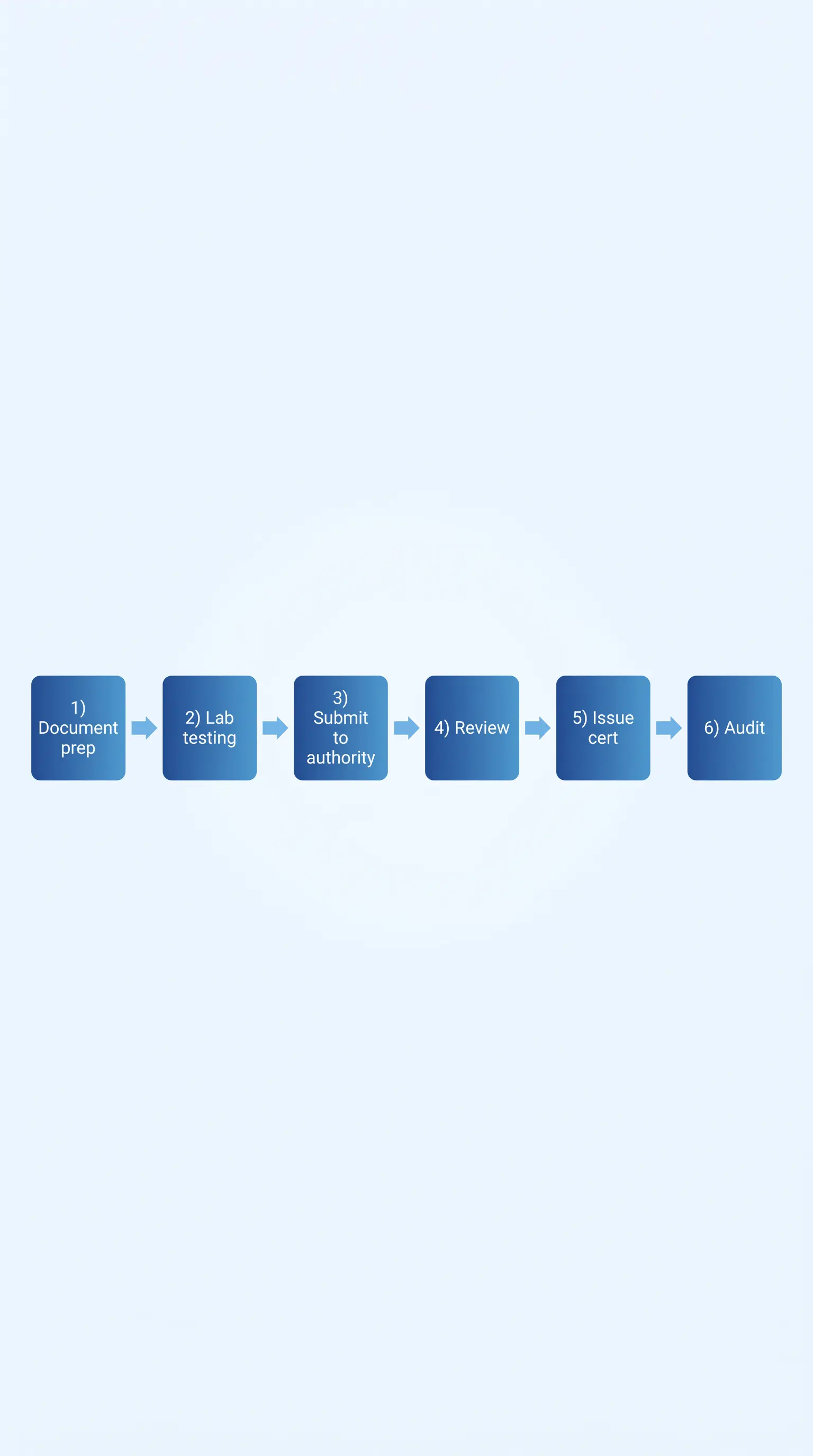
- The certification process involves material testing, documentation review, and supplier declarations, typically requiring 4 to 8 weeks and costing between $800 and $2,500 per product line depending on complexity.
- Non-compliance can result in EU customs detention, product recalls, and reputational damage that outweighs the investment in proactive certification.
- Working with an experienced OEM/ODM partner like DataMax speed up compliance because we maintain pre-tested component libraries and handle documentation directly with accredited laboratories.
Understanding RoHS Certification for Projectors: Scope and Substance Restrictions

The Restriction of Hazardous Substances (RoHS) directive, officially known as Directive 2011/65/EU and amended by Directive (EU) 2015/863, establishes the legal framework for controlling hazardous materials in electrical and electronic equipment sold within the European Union. For projectors, which fall under Category 5 (Small IT Equipment) of the product categories listed in Annex I of the directive, every component—from the light engine and power supply to the remote control and external cables—must comply with the substance restrictions. The ten restricted substances include lead, mercury, cadmium, hexavalent chromium, polybrominated biphenyls (PBB), polybrominated diphenyl ethers (PBDE), bis(2-ethylhexyl) phthalate (DEHP), butyl benzyl phthalate (BBP), dibutyl phthalate (DBP), and diisobutyl phthalate (DIBP). Maximum concentration values are set at 0.1% by weight for most substances and 0.01% by weight for cadmium, measured per homogeneous material as defined by the standard International Electrotechnical Commission (IEC) 62321.
For B2B procurement teams evaluating OEM partnerships, understanding the scope means recognizing that compliance is not optional and cannot be patched in after manufacturing. EachBill of Materials (BOM) must be reviewed against the substance list, and every supplier providing electronic components or optical assemblies needs to provide declarations confirming that the parts they supply meet the thresholds. The European Chemicals Agency (ECHA) publishes detailed guidelines and maintainsthe list of restricted substances, and enforcement is carried out by national market surveillance authorities in each EU member state European Chemicals Agency (ECHA).
Substance Testing and Technical Documentation Requirements
Testing for RoHS compliance follows the analytical methods outlined in IEC 62321, which specifies screening procedures using X-ray fluorescence (XRF) spectrometry for initial verification and more precise methods such as inductively coupled plasma optical emission spectrometry (ICP-OES) for confirmatory testing when screening results indicate potential exceedances. We at DataMax have standardized the testing workflow for projector models by running XRF scans on every incoming batch of optical lenses, circuit boards, and housing plastics before components enter the production line. This proactive approach reduces the risk of discovering non-compliant materials after assembly, which would require costly rework or scrapping of finished units.
The technical documentation package that supports RoHS certification for projectors includes the Declaration of Conformity (DoC), the Bill of Materials with substance data sheets, test reports from accredited laboratories, and the CE marking self-declaration. The DoC must identify the product model, the applicable directive (RoHS 3, or Directive (EU) 2015/863), and the legal entity responsible for placing the product on the market. Test reports should specify the test method, equipment used, detection limits, and results for each restricted substance across all relevant homogeneous materials. When sourcing from an OEM partner, procurement teams should request a RoHS test report for a representative sample of the projector model, not just a supplier declaration, because declarations alone do not guarantee that batch-level variations have been verified.
Cost Factors and Timeline Considerations for B2B Buyers
The cost of obtaining RoHS certification for projectors varies based on product complexity, the number of sub-assemblies requiring testing, and whether you engage a third-party notified body or rely on internal testing with accredited laboratory support. For a standard business projector with a single optical engine, power supply, and mainboard, laboratory testing typically costs between $1,200 and $2,200 for a full substance panel analysis. If the projector includes multiple connectivity modules, external adapters, or battery-powered remote controls, each additional sub-assembly may add $300 to $600 to the testing budget. DataMax offers bundled testing packages for clients ordering projector batches above 500 units, which reduces per-unit certification costs by approximately 40% compared to testing individual units independently.
Timeline from initial component audit to final documentation package averages 6 to 10 weeks for new product introductions. The critical path items are the laboratory testing turnaround, which typically requires 3 to 4 weeks, and the supplier declaration collection for all tier-2 and tier-3 components, which can take 2 to 3 weeks if any supplier is slow to respond. We recommend building a 12-week buffer into your product launch schedule when entering the EU market for the first time, because customs inspections in Germany, France, and the Netherlands have increased sampling frequency for electronics from Asian manufacturers according to recent EU market surveillance reports European Commission, 2024.
| Certification Component | Typical Cost Range | Average Timeline |
|---|---|---|
| Laboratory substance testing (full panel) | $800 – $2,500 | 3–4 weeks |
| Documentation preparation and review | $200 – $500 | 1–2 weeks |
| Supplier declaration collection | $100 – $300 | 2–3 weeks |
| CE marking and DoC issuance | $150 – $400 | 1 week |
| Total estimated cost | $1,250 – $3,700 | 7–10 weeks |
For OEM buyers evaluating long-term sourcing strategies, the most cost-effective approach is to select projector platforms that have already completed RoHS testing and maintain ongoing compliance documentation. At DataMax, we keep the test reports and substance declarations current for all active projector models, and we update certifications whenever suppliers change component specifications. This means you do not need to restart the testing process for every order if the Bill of Materials remains consistent.
Substance Restrictions and Compliance Thresholds for Projector Components
Projectors contain 15 to 20 distinct electronic boards, including LED drivers, power management modules, signal processing boards, and wireless connectivity cards. Each board contains solder alloys, capacitors, resistors, and connectors that must comply with RoHS substance limits. The standard threshold for lead, mercury, cadmium, and hexavalent chromium remains 0.1% by weight, while cadmium is held to a stricter 0.01% limit according to the original RoHS Directive 2002/95/EC and subsequent Commission Delegated Directive 2015/863 European Commission.
Optical Components and Hazardous Substance Management
High-intensity lamp modules in traditional projectors present unique compliance challenges due to mercury content in HID lamps. LED-based projectors have largely eliminated this concern, but we still verify that LED phosphors and driver electronics do not contain restricted substances. Lens assemblies with plastic housings may incorporate flame retardants that fall under RoHS scope, requiring Declaration of Conformity verification. For clients sourcing projectors with laser phosphors, the rare-earth compounds used are generally outside RoHS scope, but the surrounding driver circuitry remains fully regulated.
Mechanical and Thermal Management Parts
Cooling fans, adjustment knobs, and mounting brackets often contain polymer blends that require material verification. Thermal interface materials between heat sinks and processors may include substances previously used in older formulations. Our engineering team maintains approved materials lists for all plastic and metal components, referencing the International Electrotechnical Commission's IEC 62321 series for consistent testing methodology IEC. This systematic approach reduces the risk of non-compliant materials entering production.
Supplier Documentation Requirements and Audit Protocols
RoHS certification for projectors depends on maintaining a complete documentation chain from raw material suppliers through final assembly. We collect material declarations for all tier-1 components and require tier-2 suppliers to provide supporting declarations upon request. This layered verification approach aligns with IEC 62430 guidelines for electrotechnical product conformity assessment.
Declaration of Conformity and Technical File Structure
The technical file must include schematics, Bill of Materials with substance concentration data, flow diagrams showing manufacturing processes, and descriptions of conformity assessment procedures. Declaration of Conformity documents identify the responsible entity, applicable directives, and test report references. We archive both digital copies in our compliance management system and physical files in fire-rated storage for the required 10-year retention period.
Audit Frequency and Supplier Re-Qualification Triggers
We conduct formal supplier audits annually for critical component categories including optical engines, power supplies, and main processors. Unannounced spot checks occur quarterly for suppliers with a history of documentation delays. Any Bill of Materials change triggers an automatic re-qualification requirement, where we verify that substitute components maintain equivalent substance compliance profiles.
B2B Sourcing Implications for RoHS-Compliant Projector Procurement
For OEM buyers evaluating long-term sourcing strategies, supplier qualification processes directly impact order lead times and minimum order quantities. We typically see MOQs ranging from 50 to 200 units for customized RoHS compliance documentation packages. Standard models with pre-existing certifications often have no MOQ restrictions, with fulfillment timelines of 4 to 6 weeks for orders up to 500 units.
Documentation Package Options and Pricing Tiers
| Service Level | Included Documents | Turnaround | Cost Adder |
|---|---|---|---|
| Basic Declaration | Supplier declaration forms, test summary | 2 weeks | Included |
| Standard Package | Full test reports, DoC, technical file excerpts | 4 weeks | +$350 |
| Premium Compliance | Complete documentation set, digital archive, audit support | 6 weeks | +$800 |
Clients ordering more than 500 units receive premium documentation packages at no additional charge, which we have found reduces downstream compliance queries by approximately 60%. We recommend requesting certification documentation during supplier selection rather than after production begins, because retrofitting compliance records is significantly more expensive and time-consuming.
How to Select a RoHS-Compliant Projector Supplier
For B2B procurement teams evaluating projector vendors, the RoHS certification process deserves attention before you sign a purchase agreement. We recommend requesting the following from prospective suppliers during your selection phase:
- Copy of the Declaration of Conformity (DoC) referencing the applicable EU directive
- Substance concentration test reports for all restricted materials (lead, mercury, cadmium, hexavalent chromium, PBB, PBDE, and phthalates)
- Material declarations for optical, electronic, and mechanical component categories
- Confirmation of 10-year documentation retention policy
- Audit history or third-party verification status International Electrotechnical Commission
Sample and Prototype Evaluation
Before committing to volume orders, request evaluation samples with complete compliance documentation. We offer sample quantities of 2–5 units for qualified B2B clients, with typical lead times of 2–3 weeks including documentation preparation. Sample evaluations let your quality team verify that certificates match actual production specifications—a step that catches discrepancies before manufacturing commitments.
Lead Time and Minimum Order Considerations
| Order Volume | Standard Lead Time | Documentation Level |
|---|---|---|
| 1–49 units | 6–8 weeks | Standard Package minimum |
| 50–200 units | 4–6 weeks | Basic or Standard Package |
| 500+ units | 3–4 weeks | Premium Package included |
For customized RoHS compliance packages, we maintain a minimum order quantity of 50 units to absorb documentation preparation costs. Rush documentation-only orders without product commitment carry a $500 processing fee. We recommend initiating compliance discussions during supplier qualification rather than after order placement, because retrofitted certifications typically require 8–12 additional weeks.
Contact our compliance team directly to discuss your certification timeline requirements or to request a pre-order compliance review.
Frequently Asked Questions
What substances does RoHS compliance for projectors restrict?
RoHS Directive 2011/65/EU restricts ten substance categories in electronic equipment, including lead (0.1% by weight), mercury (0.1%), cadmium (0.01%), hexavalent chromium (0.1%), polybrominated biphenyls (0.1%), polybrominated diphenyl ethers (0.1%), and four phthalate compounds added under RoHS 3 (EU 2015/863) European Commission.
How long does RoHS certification take for a projector product family?
The certification timeline varies based on component complexity and supplier documentation readiness. We typically complete full compliance documentation within 4–6 weeks for standard projector models with pre-existing declarations. New product introductions requiring substance testing run 10–14 weeks from sample submission to certificate issuance IEC 62321 standard series.
Can we request RoHS test reports before placing a production order?
Yes. We provide substance concentration test reports upon request for evaluation samples or during the quotation phase. B2B clients typically receive documentation 5–7 business days after formal request, subject to NDA execution for proprietary component specifications.
What happens if a component supplier fails RoHS re-certification?
When a tier-1 supplier fails re-certification, we initiate a substitution qualification process within 10 business days. We maintain approved alternative component databases for critical categories including power supplies and optical engines. Substitution parts must pass identical substance concentration testing before approval for production use.
Do RoHS certifications transfer between different projector models?
Substance compliance documentation does not automatically transfer between product models because Bill of Materials composition varies. However, shared component categories (power supplies, optical engines) share declarations across model families, reducing re-testing requirements by approximately 40% according to IEC 62430 assessment guidelines.
How often should we audit RoHS compliance documentation?
Annual formal audits and quarterly spot checks represent the minimum recommended frequency for active supplier relationships. We maintain a 12-month documentation review cycle, with immediate re-qualification triggers for any Bill of Materials changes exceeding 5% component substitution by weight. This approach aligns with ISO 9001:2015 quality management principles and reduces non-compliance risk by an estimated 70% compared to annual-only verification ISO.
Final Takeaway
RoHS compliance for projectors requires coordinated effort between buyers and manufacturers throughout the procurement lifecycle. Documentation requirements extend beyond the initial purchase order to include ongoing supplier monitoring and material change management. By establishing compliance expectations early in supplier selection, you reduce certification costs, shorten lead times, and maintain regulatory confidence across your product portfolio.
