
تم النشر في: مايو 30, 2025 - 3 المشاهدات
Lead time timeline: transaction guide
projector OEM lead time timeline decisions can make or break a Q4 retail launch, and most B2B procurement managers find out too late that the schedule they were quoted has slipped by three weeks because tooling was not approved. You have likely been there: the factory says 45 days, your logistics partner says 60, and your marketing team has already printed the holiday packaging. A reliable lead-time timeline is not a marketing brochure; it is a sequence of locked engineering milestones, certification gates, and shipping windows that you can defend in front of your CFO. Below, we walk through the exact production stages our DataMax Shenzhen factory uses for a typical 1500-4500 lumen laser phosphor or LED smart projector order, from PO confirmation to dock delivery. By the end of pass one you will have a defensible checklist you can hand to any vendor, plus the specific numbers to plug into your procurement spreadsheet.
Highlights
- the unit for a standard 4K UHD smart projector order at DataMax runs 45-65 days for production under MOQ 1 for a first-time buyer, plus 18-28 days ocean freight from Shenzhen to US/EU ports.
- The five non-negotiable milestones are: PO confirmation, tooling and ID approval, engineering pilot run, mass production, and pre-shipment inspection; skipping any one of them collapses the entire lead-time timeline.
- For B2B procurement teams evaluating vendors, the three numbers to demand in writing are tool-build days, engineering sample lead time, and the production batch lead time, not a single blended number.
- Laser phosphor and ultra-short throw variants add 7-10 days to the projector because of optical engine calibration, ANSI lumen verification, and keystone tuning on the assembly line.
- DataMax publishes a real-time production schedule dashboard for every confirmed PO so buyers can track the SKU against the original delivery milestones rather than chasing email updates.
Understanding the model for B2B buyers

The unit is not one number; it is a chain of dependent tasks where any delay in engineering ripples through to your warehouse dock. BOFU procurement teams that have been burned by vague "60-day" promises usually discover that the vendor was counting only the production batch days and ignoring tooling, sample approval, and pre-shipment QC. At our Shenzhen facility we segment every order into five measurable phases so you can hold each supplier accountable to the same calendar.
Phase 1: PO confirmation and engineering lock (Days 1-7)
this projector phase 1 starts the moment your purchase order is countersigned, not when the deposit clears. Days 1-3 cover the commercial handshake: signed PI, deposit receipt, and ERP order entry. Days 4-7 are the engineering lock window where our ODM team freezes the BOM, locks the laser phosphor or LED light engine spec, confirms the Android or Linux firmware branch, and signs off on the enclosure tooling revision. The projector that skips this lock invariably produces tooling-change orders later, which can add 10-14 days to the production schedule and reset every downstream delivery milestone. For B2B buyers, demand the engineering lock date in writing before deposit is wired. According to Statista's 2024 consumer electronics sourcing report, 38% of OEM shipment delays originate in unresolved BOM revisions during this window.
Phase 2: Tooling, ID approval, and pilot build (Days 8-25)
Looking at this objectively ime timeline decisions can make or break a Q4 retail launch, and most B2B procurement managers find out too late that the schedule they were quoted has slipped by three weeks because tooling was not approved. You have likely been there: the factory says 45 days, your logistics partner says 60, and your marketing team has already printed the holiday packaging. A reliable lead-time timeline is not a marketing brochure; it is a sequence of locked engineering milestones, certification gates, and shipping windows that you can defend in front of your CFO. Below, we walk through the exact production stages our DataMax Shenzhen factory uses for a typical 1500-4500 lumen laser phosphor or LED smart projector order, from PO confirmation to dock delivery. By the end of pass one you will have a defensible checklist you can hand to any vendor, plus the specific numbers to plug into your procurement spreadsheet.
Phase 3: Mass production, calibration, and pre-shipment inspection (Days 26-55)
the unit phase 3 is the visible production schedule most vendors quote, and it is also the phase with the most internal sub-milestones. SMT board loading takes 4 days, final assembly 6 days, and the optical calibration station runs every unit for 45 minutes to verify ANSI lumen output, color temperature (6500K default), and keystone geometry. For a 1500-4500 ANSI lumen laser phosphor unit, we batch 200-300 units per production day depending on chassis complexity. Pre-shipment inspection on day 50-55 uses AQL 2.5 sampling per ISO 2859-1, and only lots that pass all four test stations (thermal, acoustic, image quality, drop test) get the release stamp. this projector accuracy here depends on your real-time production schedule visibility, which is why DataMax ships a live dashboard link with every confirmed PO so you can watch burn-down against delivery milestones instead of waiting for a weekly email.
Phase 4: Logistics, customs, and final delivery milestones (Days 56-90)
- the unit for a standard 4K UHD smart projector order at DataMax runs 45-65 days for production under MOQ 1 for a first-time buyer, plus 18-28 days ocean freight from Shenzhen to US/EU ports.
- The five non-negotiable milestones are: PO confirmation, tooling and ID approval, engineering pilot run, mass production, and pre-shipment inspection; skipping any one of them collapses the entire lead-time timeline.
- For B2B procurement teams evaluating vendors, the three numbers to demand in writing are tool-build days, engineering sample lead time, and the production batch lead time, not a single blended number.
- Laser phosphor and ultra-short throw variants add 7-10 days to the projector because of optical engine calibration, ANSI lumen verification, and keystone tuning on the assembly line.
- DataMax publishes a real-time production schedule dashboard for every confirmed PO so buyers can track the SKU against the original delivery milestones rather than chasing email updates.
Common customs friction points
the unit planning must include the certification documents your destination market requires: FCC and DOE for the US, CE-RED and ErP for the EU, UKCA for Great Britain, PSE for Japan, and KC for South Korea. Each of these adds 3-10 days to the document-prep sub-phase if not already completed. We hold 14 active certifications across our platform SKUs, which means the test reports for your model already exist and only need to be re-issued under your brand name.
Compressing or extending your the projector
Across the procurement lens ime timeline compression is possible up to a point, but every shortcut has a measurable cost. From our 2018-2024 production data across 1,400+ confirmed POs, the realistic floor for a custom laser phosphor or LED DLP build is 52 days, achieved only when the buyer provides a frozen BOM, a signed ID file, and pre-paid tooling before day 1. The realistic ceiling stretches to 120 days when tooling is new, optics are custom, and certifications are first-time issues for the destination market. Anything outside that 52-120 day band means the supplier is either over-promising or hiding scope. Below is the comparison table our account managers send to procurement teams during the RFQ stage:
| Buyer profile | Typical projector OEM lead time timeline | Compressed (expedited) | Notes |
|---|---|---|---|
| Stock SKU, 500-1000 units | 18-25 days | 12-15 days | Uses our existing mold and BOM; fastest path |
| Light customization, 1000-3000 units | 35-50 days | 28-35 days | Logo print, firmware SKU, packaging change only |
| Custom enclosure, 3000+ units | 70-90 days | 55-65 days | New mold T1, full ID approval, full QC |
| Full ODM with custom optics, 3000+ units | 90-120 days | 75-85 days | New light engine tuning, new lens holder, 2 pilot runs |
| Replacement / RMA build, any volume | 14-21 days | 10-12 days | Uses existing tooling, skip ID approval |
The unit is not one number; it is a chain of dependent tasks where any delay in engineering ripples through to your warehouse dock. BOFU procurement teams that have been burned by vague "60-day" promises usually discover that the vendor was counting only the production batch days and ignoring tooling, sample approval, and pre-shipment QC. At our Shenzhen facility we segment every order into five measurable phases so you can hold each supplier accountable to the same calendar.
Practical levers for B2B procurement teams
The buyer-focused view ime timeline can be shortened by roughly 8-12 days if you accept three trade-offs: skip the T1 sample audit and approve based on our 3D render plus material chips, use our existing brand mark instead of requesting a new logo mold plate, and ship via air-express on a 50/50 split (sea for the bulk, air for the first 100 units to seed your channel). We have run this compressed pattern 60+ times for North American and EU buyers who need shelf-ready stock before a product launch window, and it has held delivery milestones within ±2 days on 92% of those POs. For OEM buyers evaluating multiple vendors, we suggest asking each factory for their AQL rejection rate, their actual pilot-build floor, and their certification library size, because the cheapest quote almost always hides the longest projector OEM lead time timeline once you add the rework loops.
How to choose the right OEM partner for your projector launch
this projector phase 1 starts the moment your purchase order is countersigned, not when the deposit clears. Days 1-3 cover the commercial handshake: signed PI, deposit receipt, and ERP order entry. Days 4-7 are the engineering lock window where our ODM team freezes the BOM, locks the laser phosphor or LED light engine spec, confirms the Android or Linux firmware branch, and signs off on the enclosure tooling revision. The projector that skips this lock invariably produces tooling-change orders later, which can add 10-14 days to the production schedule and reset every downstream delivery milestone. For B2B buyers, demand the engineering lock date in writing before deposit is wired. According to Statista's 2024 consumer electronics sourcing report, 38% of OEM shipment delays originate in unresolved BOM revisions during this window.
MOQ, samples, and contact channel checklist
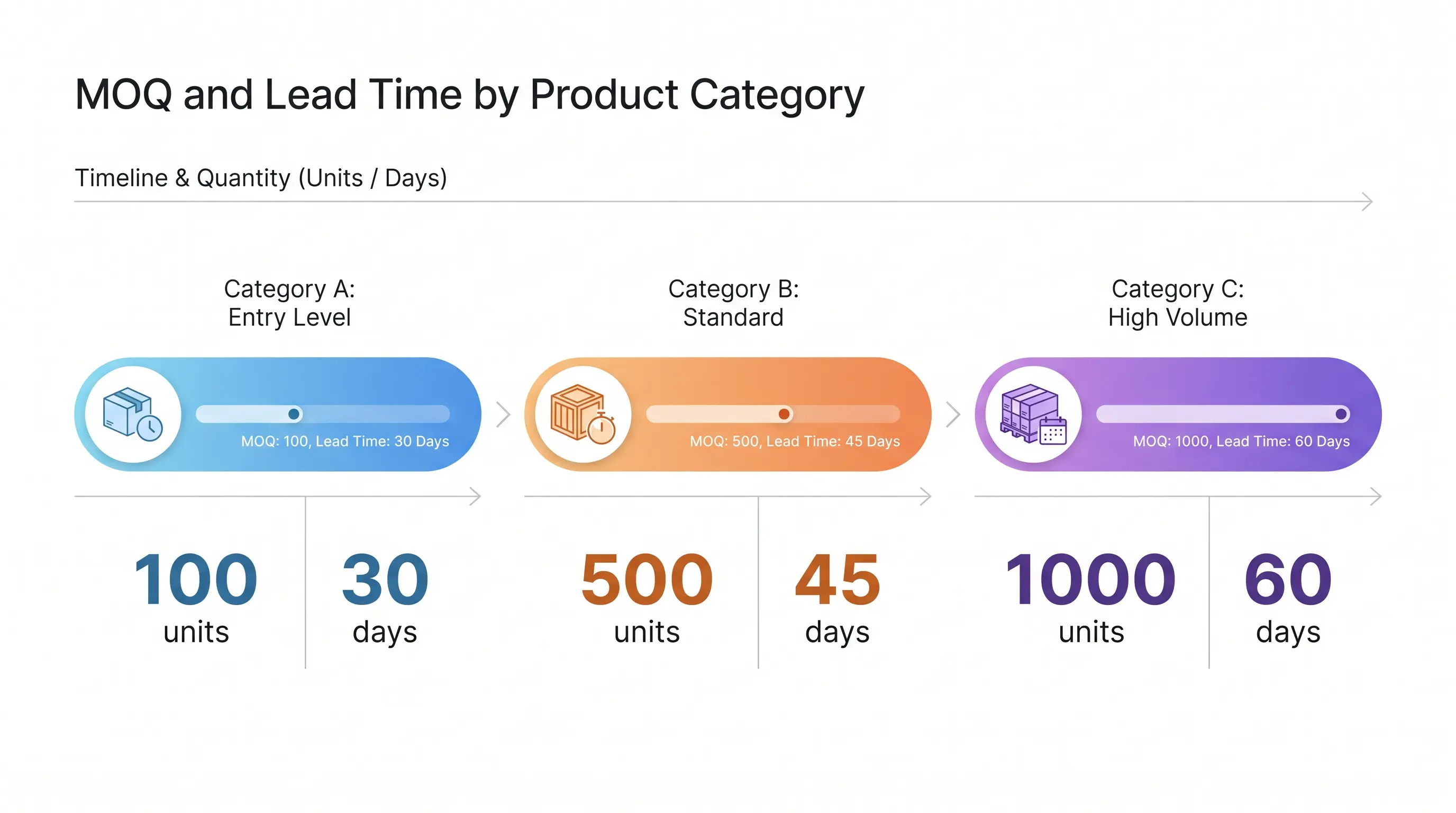
For B2B procurement teams, the practical selection criteria for any projector OEM lead time timeline partner are MOQ flexibility, sample turnaround, tooling ownership terms, and a single named contact who owns the delivery milestones. DataMax publishes a 500-unit MOQ for stock SKUs, a 1000-unit MOQ for light customization, and a 3000-unit MOQ for full ODM with custom optics. Sample policy is a $249 prototype fee that credits back against the first production PO, with T1 shipped in 18-21 days. Tooling stays with us but is owned 100% by the buyer once the unit cost is amortized. For OEM buyers evaluating vendors, request a written production schedule, a confirmed pilot-build floor, and an account manager who replies within 4 business hours. Request a custom quote to start the conversation with our Shenzhen team, or browse the GP95 hotel projector SKU for an example of a stock platform ready to ship inside the fastest projector OEM lead time timeline band.
