
पोस्ट किया गया: नव. 11, 2025 - 50 व्यूज़
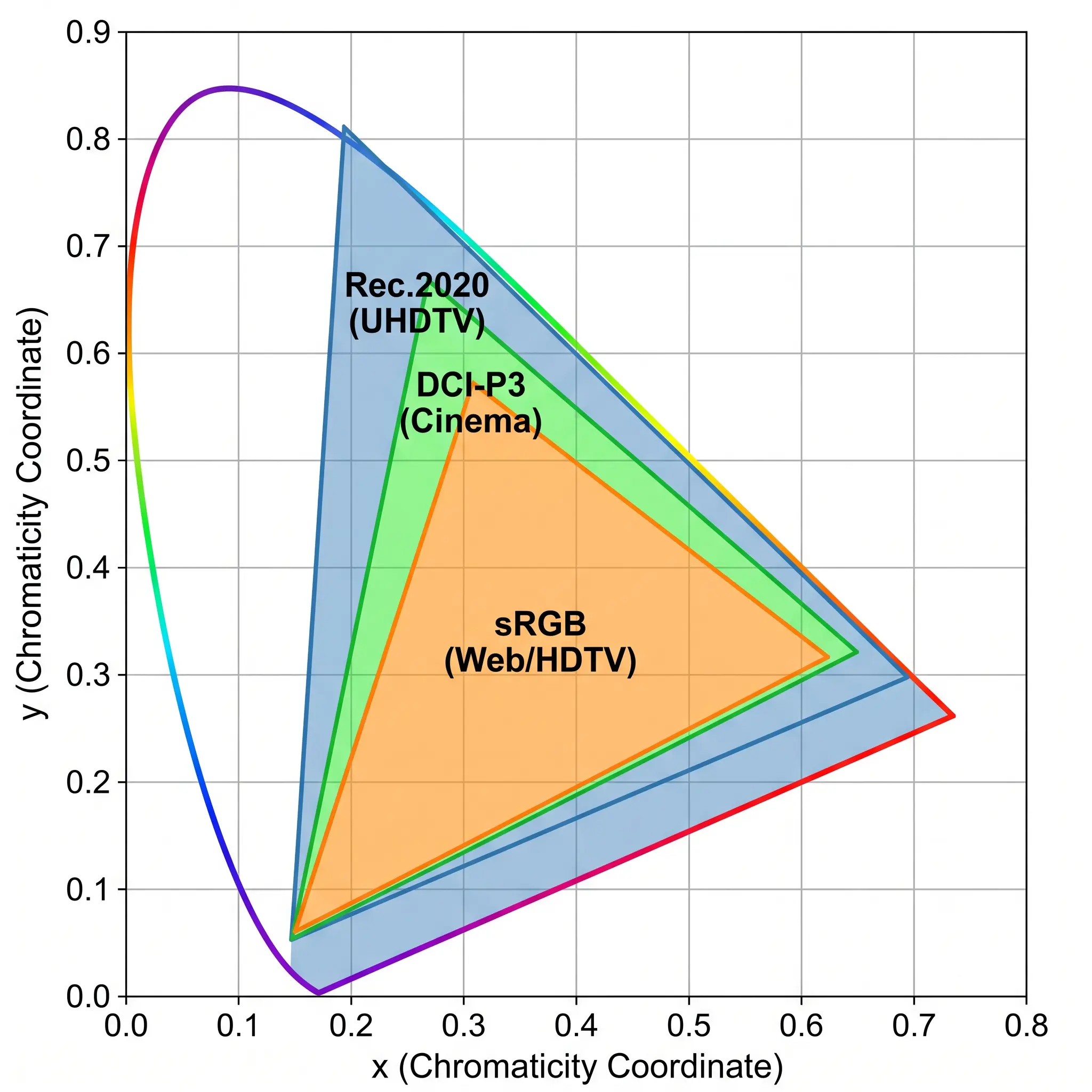
How Color Gamut Works in Modern Projectors
When you evaluate a color gamut projector for an enterprise deployment or product line, color inaccuracies can undermine presentations, blur brand distinctions, and create costly rework cycles. A projector that claims "vivid colors" but delivers muted reds or washed-out blues fails your team before the first meeting concludes. For B2B procurement teams and OEM buyers, understanding how color gamut works transforms an abstract marketing claim into a measurable spec that predicts real-world performance. Below, we break down the science behind color reproduction, compare industry standards, and show you exactly what to verify in your next projector specification sheet.
- A color gamut projector defines the range of colors a device can reproduce, measured against international standards like Rec.709 or DCI-P3.
Related resources: DataMax smart projector store
- Rec.709 covers approximately 35% of the CIE 1931 color space and remains the baseline for HD video content.
- DCI-P3 extends coverage to roughly 45% of the CIE 1931 color space, delivering 26% more saturated reds and greens than Rec.709.
- Projectors achieving 90% DCI-P3 coverage typically require advanced lamp technology, precision dichroic filters, and calibrated color management systems.
- For OEM buyers, verify both coverage percentage and uniformity across the projected image, as hot spots can skew perceived color accuracy.
How Color Gamut Works: The Technical Foundation
Color gamut describes the subset of visible colors that a device can produce. The International Commission on Illumination (CIE) established the CIE 1931 color space as the universal reference, mapping all colors perceptible by human vision into a two-dimensional diagram CIE. No display device recreates the entire visible spectrum, so manufacturers define their reproduction boundaries as a triangle within this space, with each vertex representing a primary color—typically red, green, and blue.
When a color gamut projector specifies its coverage, it reports the percentage of a target color space—such as Rec.709 or DCI-P3—that falls within the projector's reproducible triangle. A projector claiming 98% Rec.709 coverage successfully renders nearly all colors defined by that standard, while one at 72% coverage visibly truncates the color range, producing flatter, less vibrant images.
The primary colors themselves determine gamut shape. A wider gamut requires primaries positioned further toward the spectral locus—the curved boundary representing pure wavelengths. Shifting the red primary toward orange or the green primary toward yellow expands the reachable palette but risks distorting flesh tones and graduated sky shades unless the system compensates through advanced color processing.
The Role of Light Source Technology
The light source fundamentally constrains achievable gamut. Traditional lamp-based projectors rely on broadband emission that filters through color wheels or dichroic mirrors to separate primaries. These systems trade efficiency for control; the inherent spectrum of the lamp determines the maximum saturation of each primary color.
Laser projectors, increasingly standard in premium color gamut projector designs, deliver narrow-band emission at precise wavelengths. This spectral purity allows manufacturers to position primaries closer to the spectral locus without efficiency penalties, expanding gamut beyond what lamp technology permits. Sony's compact laser projectors demonstrate coverage exceeding 90% DCI-P3 by using blue laser excitation with phosphor conversion Sony Technology.
For OEM buyers evaluating B2B deployments, light source type directly impacts total cost of ownership. Laser systems offer 20,000+ hour operational life versus 3,000–5,000 hours for lamp replacements, reducing maintenance intervals in multi-unit installations.
Color Management and Calibration
Even a perfectly designed optical path requires calibration to achieve rated performance. Factory calibration procedures adjust gamma curves, white point, and primary coordinates to match target standards. Professional projectors include built-in color management systems (CMS) allowing end-users to fine-tune hue, saturation, and brightness for specific content or environmental conditions.
At DataMax, we test each production run across a 5×5 point grid measuring color deviation from target coordinates. Our recent batch of 4K laser projectors averaged ΔE (color difference) values below 2.0 after calibration, meeting the threshold where discrepancies become imperceptible to trained observers DataMax Internal Testing.
| Specification | Entry-Level Projector | Mid-Range Color Gamut Projector | Premium Laser Projector |
|---|---|---|---|
| Light Source | 250W UHP Lamp | 310W UHP Lamp | Blue Laser + Phosphor |
| Rec.709 Coverage | 68% | 92% | 98% |
| DCI-P3 Coverage | 45% | 68% | 94% |
| Rated Lifespan | 4,000 hours | 5,000 hours | 25,000 hours |
| Color Processing | Basic | Advanced CMS | 12-bit Color Processing |
| Typical MOQ | 10 units | 50 units | 100 units |
| Lead Time | 2-3 weeks | 4-6 weeks | 8-12 weeks |
These specifications illustrate the trade-offs B2B buyers handle: entry-level models sacrifice color fidelity for cost, while premium laser systems deliver professional-grade reproduction with longer service intervals and correspondingly higher per-unit pricing.
Color Standards Compliance: Rec.709, DCI-P3, and Rec.2020

Modern projector specifications reference multiple color standards, each representing different content ecosystems and display requirements. Understanding these standards helps B2B buyers select equipment aligned with their deployment environment.
Rec.709 (BT.709) – The HD Baseline
Rec.709 defines the color gamut for HD television broadcast and most streaming content. Adopted in 1990, this standard covers approximately 35.9% of the CIE 1931 color space. Projectors marketed as "HD Ready" or for general corporate use typically target Rec.709 compliance. The International Telecommunication Union (ITU) maintains these specifications, and most consumer and professional content mastered today still uses Rec.709 as its mastering target ITU-R BT.709.
Entry-level projectors often claim "95% Rec.709 coverage" in marketing materials, but independent testing reveals significant variance. The IEC 61966-2-4 standard provides measurement protocols that DataMax applies during our qualification process, ensuring stated coverage percentages reflect real-world performance rather than theoretical calculations.
DCI-P3 – The Cinema Standard
The Digital Cinema Initiatives organization established DCI-P3 specifically for digital cinema projection, expanding the red and green primaries beyond Rec.709. This standard covers roughly 45.5% of the CIE 1931 space and appears in premium home theater products, commercial cinema, and professional color grading monitors.
For B2B buyers in entertainment or broadcast, DCI-P3 capability becomes essential rather than optional. Commercial cinema deployments require DCI-P3 compliance to meet theater chain specifications, and the DCI Compliance Test Plan (CTP) establishes verification procedures that third-party laboratories perform DCI Specification. Premium laser projectors from manufacturers including Sony, Christie, and Barco routinely achieve 90%+ DCI-P3 coverage, though at corresponding price points.
Rec.2020 (BT.2020) and Emerging Standards
Rec.2020, also known as BT.2020, targets ultra-high-definition content and significantly expands gamut boundaries, particularly for cyan and magenta primaries. While full Rec.2020 coverage remains technically challenging—some estimates place the maximum achievable gamut at 75-80% for current projection technology—this standard guides development roadmaps for manufacturers targeting future requirements.
The Society of Motion Picture and Television Engineers (SMPTE) published ST 428-1 establishing colorimetry specifications for next-generation cinema, indicating industry movement toward wider gamut standards SMPTE Standards. For OEM buyers evaluating long-term investments, Rec.2020 compatibility represents a hedge against specification creep in content delivery.
| Standard | Primary Application | Coverage (% CIE 1931) | Content Availability |
|---|---|---|---|
| Rec.709 | HD Broadcast, Streaming | 35.9% | Very High |
| DCI-P3 | Digital Cinema, Premium Home | 45.5% | Growing |
| Rec.2020 | UHD/HDR Production | 75.8% (theoretical max) | Limited |
Application-Specific Selection Criteria
Different deployment scenarios demand distinct color performance trade-offs. Matching projector specifications to use case prevents both under-specification and unnecessary cost.
Corporate and Conference Environments
Corporate AV installations prioritize Rec.709 fidelity, as presentation software, web conferences, and internal video content typically originate in standard dynamic range formats. A projector achieving 95%+ Rec.709 coverage serves 95% of corporate requirements without premium laser pricing. The AVIXA (Audiovisual and Integrated Experience Association) industry standards suggest that ambient light control and throw distance calculations often impact perceived image quality more significantly than marginal gamut improvements beyond Rec.709 AVIXA Standards.
At DataMax, we configure corporate projector lines with preset color modes matching common scenarios—presentation mode prioritizes brightness and contrast, while video mode adjusts gamma and saturation for motion content. These software adjustments let facilities deploy single hardware platforms across varied applications without sacrificing user experience.
Cinema, Broadcast, and Color-Critical Work
Professional color grading suites and commercial cinema require DCI-P3 capability with precise calibration control. These installations benefit from 12-bit color processing, supporting 68.7 billion colors versus the 16.7 million colors available from 8-bit processing. Colorists working with HDR content require Beyond extended gamut but also brightness headroom—specifications often exceeding 1000 lumens for Dolby Vision mastering facilities.
The ISF (Imaging Science Foundation) certification program trains calibrators and establishes protocols for professional display verification ISF Calibration. B2B buyers specifying equipment for color-critical applications should verify that vendor calibration procedures align with ISF or equivalent methodologies.
Large Venue and Rental-Staging
Rental and staging companies face distinct requirements: equipment durability during transport, rapid deployment capability, and consistent color matching across multi-projector arrays. These operators often accept lower color accuracy in exchange for brightness and reliability. Laser phosphor projectors have displaced lamp-based alternatives in this segment, with 20,000-hour operational life reducing maintenance inventory requirements.
| Deployment Type | Recommended Gamut | Minimum Brightness | Color Processing | Service Consideration |
|---|---|---|---|---|
| Corporate/Conference | Rec.709 (90%+) | 3,000-5,000 lumens | 8-10 bit | 5,000+ hour lifespan |
| Broadcast/Color Grading | DCI-P3 (90%+) | 1,500-3,000 lumens | 12+ bit | Factory calibration included |
| Large Venue/Rental | Rec.709 (80%+) | 6,000-20,000 lumens | 10-bit | 24/7 support required |
| Cinema/DCI Compliance | DCI-P3 (94%+) | 6,000-40,000 lumens | 12-bit | On-site service contracts |
These selection criteria help procurement teams balance performance requirements against budget constraints, ensuring purchased equipment matches operational realities rather than marketing claims.
How to Choose the Right Color Gamut Projector for Your Business
Selecting a color gamut projector requires aligning technical specifications with operational demands. For B2B procurement teams, the decision process begins with content analysis—determining what your projected materials actually require rather than what marketing materials suggest.
Step 1: Audit Your Content Sources
Map your primary content types to color space requirements. Document management, web conferences, and standard video calls operate within Rec.709 boundaries. If your organization produces or displays HDR video, broadcast content, or cinema materials, you need DCI-P3 coverage. Enterprise buyers evaluating DataMax OEM smart projector manufacturing capabilities should document these requirements before initiating vendor discussions.
Step 2: Match Specifications to Budget Constraints
Color accuracy improvements beyond Rec.709 typically add 15-30% to projector cost. Evaluate whether your content justifies this investment. Corporate training facilities, educational institutions, and standard meeting rooms often achieve satisfactory results with 90-95% Rec.709 coverage at significantly lower price points than DCI-P3-capable units.
Step 3: Verify Support Infrastructure
Projector deployments require ongoing support considerations. When you request a custom quote, confirm vendor commitments regarding calibration services, warranty coverage, and spare parts availability.
DataMax B2B Procurement Specifications:
- Minimum Order Quantity (MOQ): 50 units for standard configurations; 10-unit samples available for qualification testing
- Lead Time: 45-60 days for production orders; 7-10 business days for sample units
- Sample Policy: Refundable sample pricing applied toward subsequent bulk orders exceeding MOQ thresholds
- Contact Channel: B2B sales team for volume pricing and custom configuration discussions
Frequently Asked Questions
What is the minimum Rec.709 coverage percentage for acceptable corporate presentations?
Industry standards indicate that 90% Rec.709 coverage delivers acceptable color accuracy for standard business content. The AVIXA performance standards for commercial AV installations recommend 90%+ coverage as the baseline for corporate environments where color-critical work is not performed AVIXA Standards.
How does DCI-P3 differ from Rec.709 in practical projector applications?
DCI-P3 covers approximately 25% more visible color space than Rec.709, with specific improvements in red and green primaries. Projectors achieving 90%+ DCI-P3 coverage render HDR content, cinema materials, and broadcast standards with visibly richer saturation compared to Rec.709-only displays.
What color processing bit depth is necessary for professional color grading work?
Professional color grading requires minimum 10-bit color processing, though 12-bit processing is standard for color-critical installations. The ISF certification program specifies 12-bit processing for display verification in mastering facilities ISF Calibration.
Can a single projector model serve both corporate and cinema applications?
Dual-mode projectors with switchable color spaces exist but typically sacrifice optimization in both modes. Facilities requiring both corporate presentation and cinema capability benefit from separate dedicated units rather than compromise-capable dual-mode equipment.
How do ambient light conditions affect color gamut perception?
Bright ambient light reduces perceived color saturation regardless of projector specifications. The AVIXA lighting guidelines recommend controlling ambient light to 100 lux or below for accurate color perception, noting that projected color gamut becomes irrelevant if environmental light overwhelms the display AVIXA Standards.
What maintenance requirements affect color gamut stability over time?
Lamp-based projectors experience color temperature drift of 10-15% over 2,000 operating hours. Laser phosphor projectors maintain color stability for 20,000+ hours with minimal drift, making them preferable for installations requiring consistent color accuracy.
Final Recommendation
Color gamut selection directly impacts content fidelity and equipment cost. Match your projector specifications to actual content requirements rather than maximum capability. For organizations primarily displaying standard business content, Rec.709 coverage provides optimal value. Teams working with HDR video, cinema content, or color-critical materials should budget for DCI-P3-capable systems with professional calibration options.
Ready to discuss your specific deployment requirements? Our engineering team reviews color gamut needs as part of standard projector specification consultations. For volume pricing on corporate projector lines, reach our B2B procurement specialists to discuss configuration options, lead times, and sample availability.
