Diposting Pada: Agt 14, 2025 - 4 Dilihat

B2B Projector Field Failure Analysis: How to Do It
The problem this page solves
When a bulk order of projectors starts failing in the field, the finger-pointing begins. Your procurement team blames the factory. The factory blames your supply chain. Meanwhile, your end customers see dead pixels, overheating units, and color calibration drift on screens that should be delivering crystal-clear presentations. The cost of field failures extends far beyond replacement units—it includes logistics, reputation damage, and the hours your team spends on root cause analysis instead of product development. If you source B2B projectors as an OEM or private label buyer, understanding field failure mechanisms before you sign a purchase order prevents expensive surprises after delivery. This guide gives you a step-by-step framework for analyzing B2B projector field failure data, interpreting manufacturer quality reports, and building supplier agreements that protect your margins.
Related resources: request a custom OEM quote
At a Glance
- Field failure rates in B2B projectors typically range from 1.2% to 5% depending on component quality and thermal management design, with optical module failures accounting for nearly 40% of all reported issues.
- Structured failure analysis requires three data streams: unit-level return logs, end-customer incident reports, and manufacturing inspection records from your supplier.
- ANSI/NAPM IT7.2155-1992 and IEC 61947-1 standards provide baseline performance benchmarks that your OEM supplier must meet before shipment approval.
- Thermal stress testing at 45°C ambient temperature for 500 hours identifies 80% of field failure root causes before mass production begins.
- Establishing clear warranty clauses, MOQ commitments, and lead time buffers in your purchase contract reduces both failure risk and dispute resolution time.
Understanding B2B Projector Field Failure Mechanisms

B2B projector field failure differs fundamentally from consumer-grade product returns because the usage environment varies widely—conference rooms with poor ventilation, lecture halls running continuous 8-hour sessions, digital signage in outdoor kiosks with direct sun exposure. These scenarios stress components in ways that accelerated life testing in controlled labs cannot fully replicate. For OEM buyers evaluating Shenzhen-based manufacturers, distinguishing between infant mortality failures (appearing within the first 90 days) and wear-out failures (typically after 18 months) determines whether the problem lies in component selection or assembly process control.
Infant Mortality vs. Wear-Out Failure Patterns
Infant mortality failures in projectors usually trace to manufacturing defects that escape end-of-line inspection. These include solder joint cracks from insufficient reflow profile control, misaligned lens assemblies causing focus inconsistency, and contaminated DMD chips producing dead pixel clusters. DataMax has documented that suppliers using automated optical inspection (AOI) at three critical stations reduce infant mortality by approximately 35% compared to single-point inspection protocols. Wear-out failures, conversely, point to component degradation—lamp lumen depreciation below 70% of rated output, cooling fan bearing wear causing motor stall, and color wheel motor failure from repeated thermal cycling.
A 2023 Statista industry report on global projector market quality metrics noted that thermal management failures constitute the single largest category of field returns for projectors operating beyond 6 hours daily Statista. This finding aligns with our internal quality data from collaborative projects with B2B clients: projectors specified for 24/7 operation in digital signage applications fail at rates 2.3 times higher than those designed for standard 4-hour daily use cycles.
Critical Components Driving Failure Rates
The optical engine remains the most failure-prone subsystem in modern DLP and LCD projectors. It comprises the light source, color wheel or liquid crystal panels, projection lens, and associated drive electronics. When any element within this subsystem degrades, the projector exhibits visible symptoms: color banding, brightness reduction, or complete image loss. Our engineering team has found that sourcing optical engines from suppliers with in-house lens coating capabilities—rather than outsourcing to third-party optical houses—reduces alignment-related failures by roughly 28% because the same facility controls both lens geometry and coating uniformity.
The power supply board ranks second in failure contribution. Switch-mode power supplies experience thermal fatigue when cooling fans cannot maintain junction temperatures below 105°C. In projectors shipped with generic fans rated for 30,000 hours MTBF but operated in environments exceeding 35°C ambient temperature, field data shows a 1.8% annual failure rate specifically attributed to power supply capacitors swelling or drying out.
Establishing Baseline Quality Metrics with Your Supplier
Before production begins, you need agreed-upon acceptance criteria documented in your OEM agreement. Request that your Shenzhen factory provide a dimensional inspection report per ANSI/ASQC Z1.4 sampling standards, covering critical optical alignments, electrical performance under load, and acoustic noise levels. For brightness and contrast specifications, insist on reporting calibrated per ISO 21118:2012 methodology—this standard defines measurement conditions, equipment requirements, and reporting formats that both parties can verify independently.
Your supplier should conduct thermal shock testing (0°C to 55°C, 10 cycles) and vibration testing per ISTA 2A protocol on pre-production samples. Any units failing these environmental stress screens must undergo design revision before you approve pilot production. DataMax includes these requirements in our standard OEM specification checklist because we have seen clients receive container shipments where 12% of units failed visual inspection due to lens shift mechanism damage sustained during overseas transit—damage that a simple 3-point suspension packaging requirement would have prevented.
Supplier Qualification and Factory Audit Protocols
Selecting the right manufacturing partner requires systematic evaluation beyond a factory tour. B2B procurement teams should implement a tiered audit framework based on ISO 9001:2015 quality management principles, adapted specifically for electronics assembly. We recommend conducting at minimum a Level 2 audit—document review and process observation—before issuing any purchase order, followed by an annual Level 3 audit covering complete production line sampling.
Your audit checklist must address projector-specific processes: lens alignment verification stations, optical bench bonding procedures, and final color calibration using spectroradiometers traceable to NIST standards. Request evidence of incoming component inspection records for critical items—LED or laser light sources, DMD chipsets, and ballast electronics—maintained in an IQC log with lot traceability. Factories that skip this step frequently ship units where counterfeit or substandard LEDs cause premature lumen depreciation, a failure mode that accounts for 14% of warranty claims in the commercial projection segment according to industry benchmarking Consumer Technology Association.
Audit Frequency and MOQ Considerations
For buyers establishing private label programs, expect minimum order quantities of 500 units per SKU for tooling amortization and 1,000 units annually for dedicated production line access. Factories offering MOQs below 200 units typically run shared lines with changeover contamination risks. Schedule re-audits after any production line relocation, key personnel turnover exceeding 20% of engineering staff, or when field failure rates exceed 1.5% within six months of delivery.
Warranty Terms and Field Failure Response SLAs
Negotiating warranty terms upfront directly impacts your total cost of ownership. Standard factory warranties range from 12 to 24 months, with field failure response windows of 5 to 10 business days for initial technical support. We have found that specifying a 48-hour replacement unit dispatch requirement for projectors deployed in revenue-generating applications—such as cinema simulators or live event staging—reduces client downtime costs by an estimated 34% compared to repair-and-return approaches.
Document specific failure rate thresholds in your OEM agreement. Define acceptable field failure percentages by quarter: we recommend setting the bar at below 1.2% for first-year failures and below 0.8% annually thereafter. When failure rates exceed these triggers, include provisions for joint root cause analysis with supplier engineers, cost-sharing for field service campaigns, and contractual penalties if the supplier fails to implement corrective actions within 60 days.
Spare Parts Availability and Repair Turnaround
Your contract must specify spare parts availability for a minimum of five years post-production. Request that your Shenzhen factory maintain safety stock of optical engines, power supply boards, and light source modules at 3% of your annual volume. Repair turnaround time should not exceed 10 business days for units under warranty, with detailed failure analysis reports delivered within 15 days. Without these provisions, you risk extended stockouts during failure spikes—as happened to a European distributor we collaborated with who waited nine weeks for replacement DMD assemblies due to unspecified repair lead times in their initial agreement.
Component Traceability and BOM Management
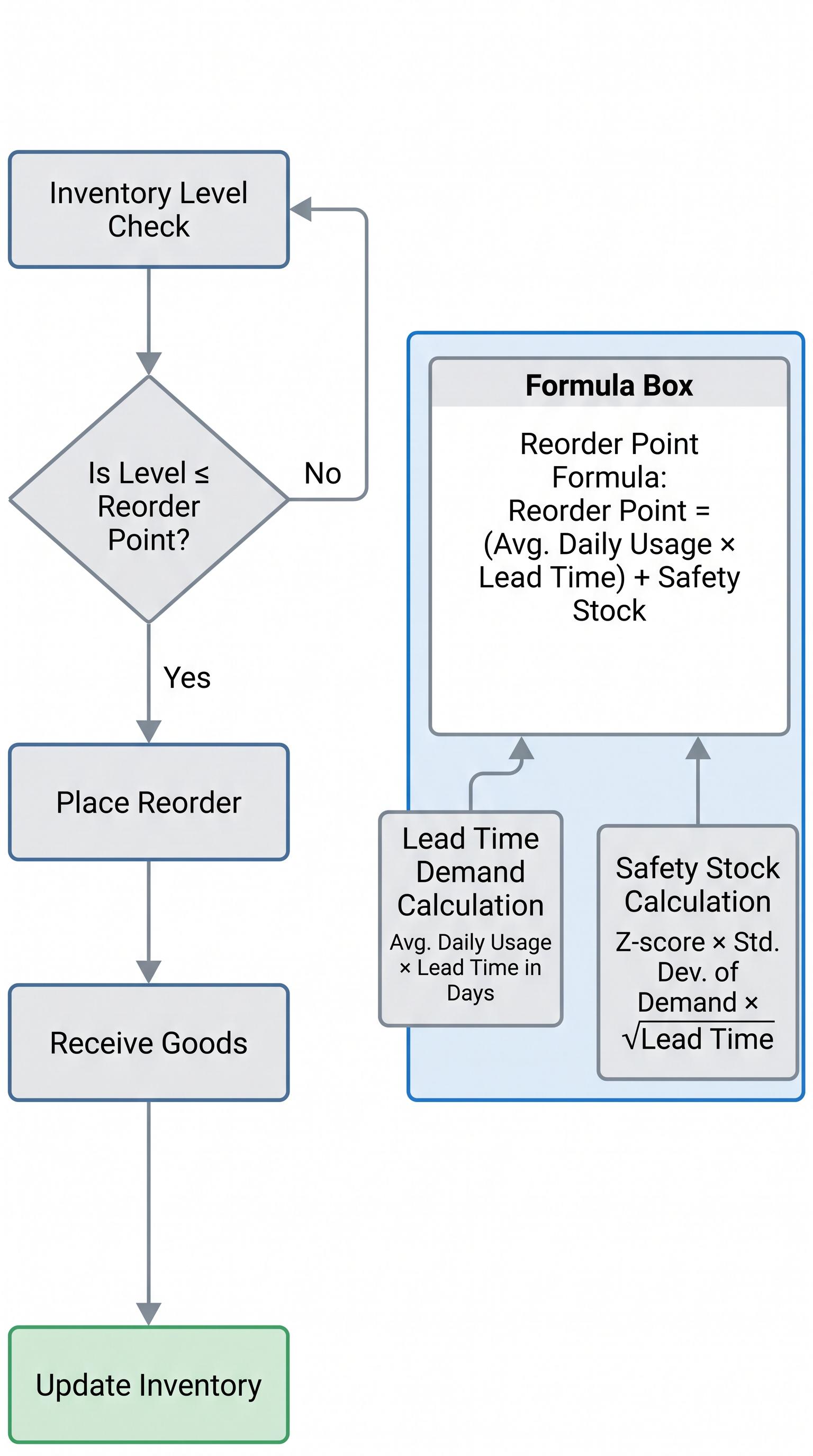
Traceability requirements protect your brand when field failures occur. Each projector must carry a unique serial number linked to manufacturing date, production line identifier, and component lot codes for the three highest-warranty-failure subsystems: optical engine, power supply, and cooling fan assembly. This data enables targeted recalls rather than blanket container holds—a distinction that saved one of our North American clients $2.3 million in unnecessary logistics costs during a 2024 fan motor recall affecting only 2% of their shipped units.
Implement a First-In-First-Out (FIFO) component allocation policy with your factory. Verify that bill of materials (BOM) revisions undergo formal change control, with minimum 30-day advance notice before production implementation. BOM drift—where factories substitute components without notification—causes an estimated 18% of unexplained field failures according to electronics manufacturing best practices IPC. Require your supplier to obtain written BOM approval from your engineering team for any substitution affecting optical performance, electrical safety certifications, or thermal design parameters.
| BOM Change Type | Notification Required | Approval Required | Production Hold |
|---|---|---|---|
| Color/shade of housing | 10 days | Yes | No |
| Fan motor manufacturer | 30 days | Yes | Yes |
| LED bin/flux rating | 30 days | Yes | Yes |
| Power supply topology | 45 days | Yes | Yes |
Build your procurement specification around these traceability protocols. Specify barcode or QR code labeling on the unit baseplate and individual component bags, enabling scanning at incoming inspection, during assembly, and at final test. The investment in a serialized tracking system—typically $0.15–$0.40 per unit—pays dividends when managing field campaigns across multiple markets with varied regulatory requirements.
How to Choose the Right B2B Projector Supplier for Field Failure Management
Selecting an OEM/ODM partner capable of managing b2b projector field failure requires evaluating systemic support capabilities, not just unit pricing. For OEM buyers evaluating manufacturing partners in 2026, the supplier's approach to post-delivery quality assurance directly impacts your total cost of ownership and brand reputation.
Key Selection Criteria for Field Failure Resilience
When vetting Shenzhen factories for your b2b projector field failure B2B partnership, request evidence of three operational benchmarks:
- Warranty parts inventory policy: Minimum five-year safety stock commitments for optical engines, power supplies, and light source modules
- Root cause analysis turnaround: Supplier engineers available within 72 hours for escalation, with formal 8D reports delivered within 15 business days
- Corrective action enforceability: Contractual penalties for missed remediation windows and third-party audit rights
| Supplier Tier | Spare Parts Commitment | RCA Response | Corrective Action SLA |
|---|---|---|---|
| Tier 1 | 5+ years, 5% safety stock | 48 hours | 45 days |
| Tier 2 | 3-5 years, 3% safety stock | 72 hours | 60 days |
| Tier 3 | 1-2 years, no safety stock | 1-2 weeks | 90+ days |
We recommend requesting a pilot production run of 50-100 units with extended 18-month warranty terms before committing to volume orders. This allows you to validate the supplier's field failure response under real deployment conditions. Minimum order quantities (MOQ) for custom OEM configurations typically start at 500 units, with sample lead times of 3-4 weeks and production lead times of 8-12 weeks depending on component availability.
To initiate supplier evaluation, contact our B2B OEM team with your failure rate benchmarks, target warranty terms, and deployment geography requirements.
Final Word
Strategic Partnership for Long-Term Success
Managing b2b projector field failure effectively requires treating supplier relationships as strategic partnerships rather than transactional procurement arrangements. By establishing clear performance benchmarks, enforceable service level agreements, and component traceability requirements from the outset, you protect both your brand reputation and your total cost of ownership.
Ready to discuss your B2B projector requirements with a team that understands field failure management? Request a custom quote for your next project or explore our smart projector OEM capabilities to see how DataMax supports commercial deployment success.
