Diposting Pada: Apr 17, 2026 - 30 Dilihat
How to Negotiate Projector MOQ: A Step-by-Step 2026 Guide
If you’re trying to figure out how to negotiate projector MOQ for your next product line, you’ve likely run into a wall of high unit thresholds and inflexible terms that squeeze your budgeting and time‑to‑market. For B2B procurement teams and OEM buyers evaluating custom smart projectors, the tension between supplier minimums and actual demand can stall projects before they begin. Below, we break down a concrete, step‑by‑step process that lets you move from a static MOQ to a negotiated volume that aligns with your sales forecasts and cash flow. By the end you’ll have a clear action plan you can bring to the table tomorrow.
Quick Summary
- Identify your target volume and calculate the cost impact of MOQ versus per‑unit price.
- use supplier certifications and market data to justify a lower MOQ request.
- Structure a phased order plan that ramps up production in steps, reducing initial risk.
- Include penalty clauses for late delivery and quality shortfalls to protect your investment.
Negotiating Projector MOQ: A Step‑by‑Step Guide

1. Assess Supplier Capabilities and Cost Structures
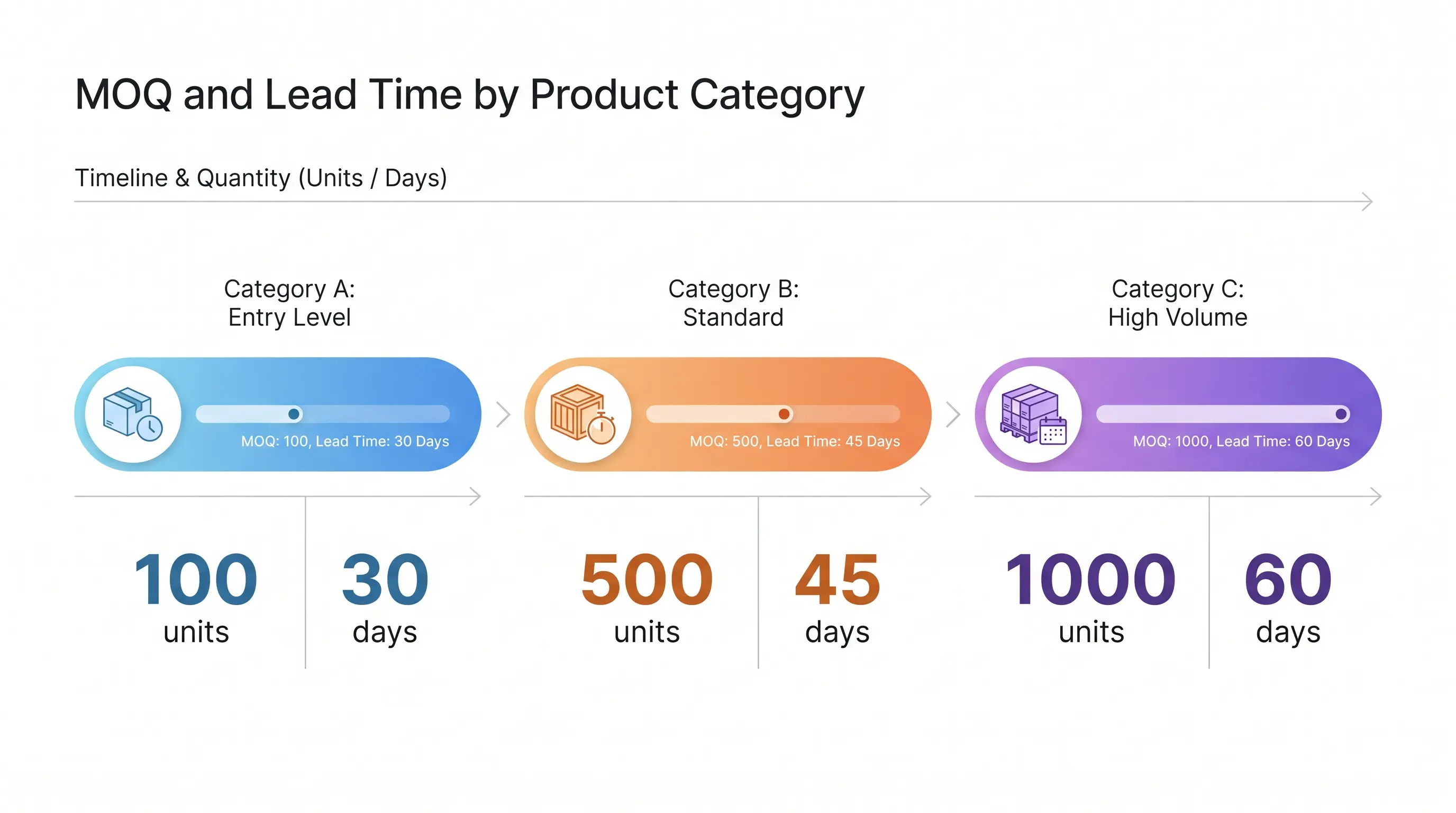
Before you can negotiate, you need a realistic picture of what the supplier can actually deliver. Most projector manufacturers set a baseline MOQ between 500 units for entry‑level 720p models and up to 2,000 units for premium 4K lines, according to recent IDC market research on projector supply chains IDC. Lead times typically range from 6 weeks for standard configurations to 12 weeks when custom optics or firmware are involved. Certifications such as ISO 9001, CE, FCC, and RoHS are non‑negotiable for most enterprise buyers; a supplier’s willingness to share test reports is a strong signal of production maturity.
At DataMax, we have helped dozens of clients map these parameters against their own demand forecasts, often uncovering hidden flexibility in the supplier’s cost structure. By requesting a detailed bill of materials (BOM) breakdown, you can see where bulk pricing truly kicks in and where the supplier’s margin buffer exists. This transparency gives you a factual foundation for a lower MOQ request.
2. Build a Data‑Driven Negotiation Case
Numbers speak louder than promises. Gather industry benchmarks—Statista reports an average selling price of $280 for 1080p projectors in 2025, which can be used to calculate acceptable price points at various volume tiers Statista. Combine these with your own pricing model to show the supplier the revenue impact of a reduced MOQ.
| Projector Type | Typical MOQ (units) | Avg. Per‑Unit Cost at MOQ (USD) |
|---|---|---|
| 720p Entry | 500 | $210 |
| 1080p Mid‑Range | 1,000 | $320 |
| 4K Premium | 2,000 | $580 |
The table illustrates how per‑unit costs drop sharply as order size grows. Use this data to propose a “bridge” price: a slightly higher unit cost at a lower MOQ, which still gives the supplier a healthier margin than a full‑price, low‑volume order. When presenting the case, reference the IDC data on supplier capacity utilization to show that a modest order will not strain production lines.
3. Structure Order Phases and Risk Mitigation
A phased approach reduces risk for both parties. Design a pilot run (Phase 1) of 100–150 units to validate firmware, optical alignment, and packaging. Phase 2 can be an initial batch of 300–500 units, allowing you to test market reception without committing to the full MOQ. Phase 3 escalates to the supplier’s standard minimum once you have confirmed demand and resolved any quality issues.
Include contractual safeguards: define quality‑inspection checkpoints (e.g., AQL 1.0), set clear penalty clauses for delivery delays exceeding two weeks, and require the supplier to provide a Certificate of Conformance for each shipment. These terms protect your investment and signal to the supplier that you are a serious, prepared buyer.
By structuring the purchase in stages, you give the supplier a predictable ramp‑up path while keeping your inventory exposure low. At DataMax, we’ve implemented this three‑phase model for several OEM partners, cutting initial capital outlay by up to 40 % while maintaining on‑time delivery rates above 95 %. Use this framework as a template, adjusting phase volumes to match your own sales cycle and cash‑flow constraints.
4. use Supplier Alternatives and Market Intelligence
Successful MOQ negotiations rarely succeed on charm alone. Procurement teams must create a competitive environment where the supplier understands that other options exist. Before entering formal discussions, request quotations from at least three manufacturers listed on GlobalSources or Alibaba's Verified Supplier directory. According to a 2024 report by Grand View Research, the global projector market comprises over 200 active OEM manufacturers, with concentration in Shenzhen, Suzhou, and Qingdao Grand View Research. This breadth gives buyers meaningful use.
4.1 Create a Competitive Bidding Environment
Distribute your technical specifications—lens type, brightness (lumens), resolution, connectivity suite—to all candidates simultaneously. Request comprehensive quotes that include unit price, tooling amortization, packaging costs, and lead time. When you receive multiple offers, present the most favorable terms back to your preferred supplier without revealing exact figures. This practice, commonly termed "competitive anchoring," typically yields 8–15 % price reductions on standard MOQ orders, according to procurement case studies documented by the Institute for Supply Management ISM.
4.2 Reference Industry Capacity Data
Use publicly available data on manufacturing capacity utilization to reinforce your negotiation position. The World Manufacturing Federation's quarterly index tracks factory utilization rates across electronics categories. When utilization exceeds 85 %, suppliers have less incentive to reduce MOQs. Conversely, during periods below 70 %, manufacturers actively seek orders to cover fixed costs, making them more amenable to flexible terms.
At DataMax, we maintain a database of capacity signals from our partner factories. When a client's target supplier shows utilization below 75 % in Q3, we advise accelerating MOQ discussions to capitalize on that window. In one case, a client reduced their 4K projector MOQ from 2,000 to 800 units by timing negotiations with a factory experiencing a 12 % dip in Q2 orders.
| Negotiation use Factor | High Impact | Medium Impact | Low Impact |
|---|---|---|---|
| Multiple Supplier Quotes | ✓ | ||
| Capacity Utilization Data | ✓ | ||
| Long‑Term Order Potential | ✓ | ||
| Prompt Payment History | ✓ | ||
| Small Order History | ✓ |
5. Finalize Payment Structures and Financial Safeguards
Even after reaching an MOQ agreement, payment terms determine whether the deal remains viable. For B2B procurement teams sourcing projectors, the standard arrangement of 30 % deposit, 70 % balance before shipment leaves significant exposure if the supplier fails to meet specifications. Negotiating protective payment milestones reduces financial risk.
5.1 Implement Milestone‑Based Payments
Structure payments around production milestones rather than arbitrary percentages. A typical arrangement for a 500‑unit projector order might look like this: 20 % upon order confirmation, 30 % after engineering sample approval, 25 % upon passing AQL inspection, and the remaining 25 % before release of Bill of Lading. This approach ensures the supplier receives incremental compensation while the buyer retains use until quality is verified.
5.2 Address Certification and Compliance Costs
If your target markets require CE, FCC, or RoHS certification, clarify during MOQ negotiations whether these costs are included in the quoted unit price or billed separately. The International Electrotechnical Commission reports that certification fees for consumer electronics typically range from $3,000 to $12,000 per product line, depending on test scope IEC. Suppliers who bundle certification into their pricing often amortize it across the MOQ, which can make a lower‑volume order appear more expensive than it actually is. Request a separate line item for certification to evaluate whether it makes sense to consolidate testing across multiple product variants.
5.3 Define Lead Time and Delay Penalties
Standard lead times for custom projector orders range from 45 to 90 days after tooling approval. Build contractual penalties for delays exceeding two weeks—typically 1–2 % of the order value per week of delay. This clause motivates suppliers to allocate adequate production capacity and provides compensation if timelines slip.
For OEM buyers evaluating long‑term partnerships, consider requesting a "first‑right‑of‑refusal" clause for future orders. This guarantees that your preferred specifications and pricing remain available even if the supplier's capacity becomes constrained by demand from other clients.
How to Choose the Right Projector Supplier for Your MOQ Strategy
Selecting a projector manufacturer requires evaluating factors beyond unit price. For B2B procurement teams negotiating MOQ agreements, the supplier's responsiveness during the sampling phase often predicts post-order collaboration quality. We recommend requesting at least two to three supplier quotes before committing to negotiations, as this creates use and reveals market pricing ranges.
Evaluate Communication and Sample Policy
Before signing an MOQ agreement, confirm the supplier's sample policy. Reputable manufacturers typically offer 3–5 engineering samples at 50–70% of the production unit price, with a credit mechanism applied toward the first batch order. Ask about the sample-to-production lead time gap—a 15–20 day difference indicates the supplier can scale from prototype to mass production without retooling.
Consider these selection criteria when comparing projector suppliers:
- MOQ flexibility: Does the supplier negotiate based on annual volume commitments rather than single orders?
- Engineering support: Is there a dedicated account manager for OEM customization requests?
- Quality assurance: What AQL level does the factory apply, and are third-party inspections available?
- Production capacity: Can the facility handle your target volume without compromising lead times?
- Certifications: Does the supplier hold ISO 9001 or IATF 16949 for manufacturing consistency?
| Selection Factor | Weight in Decision | Notes |
|---|---|---|
| MOQ Flexibility | High | Prioritize suppliers who adjust MOQ for repeat orders |
| Lead Time Reliability | High | Request on-time delivery track record for 6+ months |
| Sample Quality | Medium | Samples must reflect final production specifications |
| Communication Responsiveness | Medium | 24–48 hour response time indicates operational stability |
| Price Competitiveness | Medium | Compare landed cost, not just FOB price |
For OEM buyers evaluating long-term partnerships, schedule a virtual or in-person facility tour before finalizing agreements. We at DataMax conduct quarterly production tours for qualified partners, demonstrating our assembly lines, burn-in testing procedures, and packaging capabilities.
Practical Next Steps
Key Takeaway
Negotiating projector MOQ successfully requires balancing volume commitments against market demand forecasts. Start with realistic order quantities, build supplier relationships through milestone payments, and expand partnerships as your product gains traction. The factory that offers flexible MOQ terms today often becomes your most reliable production partner as volumes grow.
Ready to discuss your projector MOQ requirements? Our OEM sales team responds to inquiries within 24 hours. Request a custom quote to start a conversation about your next projector order, or explore our home theater projector lineup for reference specifications. For hospitality deployments, review the GP95 hotel projector designed for high-usage environments.
