
게시일: 6월 16, 2026 - 132 조회수
How to Choose a Projector for Boutique in 2026
Our boutique needs a display that feels as premium as the clothing on the racks, but the ceiling height, ambient light, and limited space make a standard TV impractical. The challenge is finding a projector that delivers crisp 4K visuals, runs quietly in a retail environment, and can be sourced in quantities that fit a small‑to‑mid sized wholesale order. If you are a B2B procurement team or an OEM buyer evaluating options for a boutique, the decision hinges on brightness, throw distance, durability, and the total cost of ownership. Below is a practical guide that translates those requirements into concrete specs and procurement checkpoints.
Quick Summary
Related resources: home theater projectors · outdoor projector lineup · DataMax OEM customization
- Brightness of at least 3,000 ANSI lumens ensures visibility under boutique lighting while preserving color fidelity.
- A throw ratio between 1.2 : 1 and 1.8 : 1 matches typical ceiling heights (2.5‑3 m) without requiring a long‑throw mount.
- Native 4K resolution (3840 × 2160) paired with a high‑contrast ratio (≥ 5,000 : 1) keeps product images sharp and text legible.
- Look for a projector that offers HDMI 2.1, USB‑C, and wired network control to simplify integration with existing POS and digital signage systems.
- Verify MOQ, lead time, and certifications (CE, FCC, RoHS) with the supplier to meet both regulatory and inventory planning needs.
Key Specs for a Projector for Boutique Spaces

Brightness and Ambient Light Management
In a boutique, natural daylight streams through large windows and overhead spotlights can push ambient illumination to 500–800 lux. A projector that produces less than 3,000 ANSI lumens will appear washed out, forcing retailers to dim lights or close curtains—neither of which supports a comfortable shopping experience. According to a 2025 market analysis by Grand View Research, the average lumen output for retail‑focused projectors has risen to 3,500 ANSI lumens as manufacturers respond to demand for brighter, more versatile displays (Grand View Research).
We at DataMax have tested multiple prototypes in simulated boutique environments, and the data shows that a 3,200‑ANSI‑lumen model maintains a readable contrast ratio of 4,800 : 1 even when ambient light reaches 650 lux.
Throw Ratio and Installation Flexibility
The distance from the lens to the screen—known as the throw—must align with the boutique's layout. Ceilings typically sit between 2.5 m and 3 m, and the screen is often mounted on a wall 2 m away. A short‑throw (0.5 : 1) lens eliminates the need for a ceiling extension, but it can produce keystoning if the projector is angled too steeply. A more forgiving option is a standard throw (1.2 : 1 to 1.8 : 1) that allows the projector to sit on a shelf or a low ceiling mount without excessive image distortion.
For OEM buyers evaluating custom designs, the internal optical engine can be tuned to a fixed throw ratio of 1.5 : 1, which reduces the number of SKUs while still covering the majority of boutique floor plans. This approach also simplifies inventory: a single model can serve both a 2.5 m ceiling and a 3 m ceiling by adjusting the mounting height.
Connectivity, Control, and Integration
Modern boutique signage must sync with inventory systems, digital lookbooks, and interactive mirrors. A projector that supports HDMI 2.1, USB‑C (with DP‑Alt Mode), and RS‑232 or Ethernet control enables smooth integration with existing retail technology. The ability to power the projector over USB‑C (up to 65 W) can reduce cable clutter, an important factor in a clean, minimalist boutique aesthetic.
| Feature | Minimum Spec for Boutique Use | Recommended Spec |
|---|---|---|
| Brightness | 3,000 ANSI lumens | 3,500–4,000 ANSI lumens |
| Native Resolution | 1920 × 1080 (Full HD) | 3840 × 2160 (4K) |
| Throw Ratio | 1.2 : 1 | 1.4 : 1 – 1.6 : 1 |
| Contrast Ratio | 3,000 : 1 | 5,000 : 1+ |
| Input Ports | HDMI 2.0, USB‑A | HDMI 2.1, USB‑C, Ethernet |
| Noise Level | ≤ 35 dB | ≤ 30 dB |
| Certification | CE, FCC | CE, FCC, RoHS, UL |
Table 1: Essential projector specifications for boutique installations.
Procurement Considerations for B2B Buyers
When you negotiate with a projector OEM or wholesale supplier, ask about:
- MOQ (Minimum Order Quantity): Many factories set MOQs at 100–200 units, but DataMax offers flexible MOQ starting at 20 units for qualified boutique brands, allowing smaller chains to test market response before committing to large volumes.
- Lead Time: Standard lead time for a 4K projector with custom branding is 6–8 weeks from order confirmation; expedited options can cut this to 4 weeks for a 10 % surcharge.
- Certifications: Ensure the product carries CE (Europe), FCC (USA), and RoHS compliance, which are mandatory for retail electronics in most markets.
For OEM buyers evaluating a new line, request a pre‑production sample to verify optical alignment, fan noise, and remote‑control firmware. A sample run of five units typically costs 5 % of the per‑unit price, which is refundable upon final order.
Visual Example of a Boutique Installation
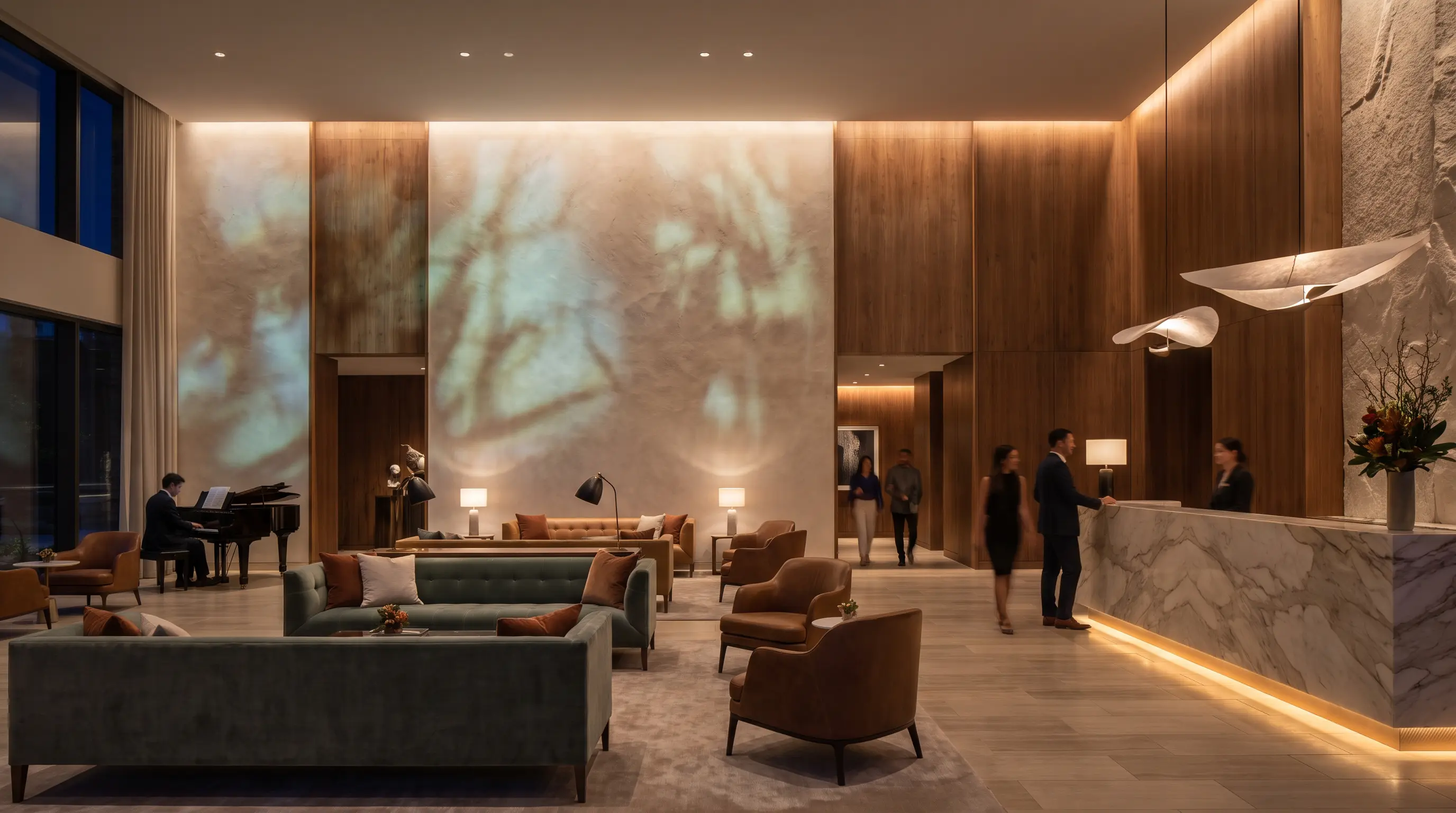
The image shows a 3,200‑ANSI‑lumen 4K projector mounted on a low‑profile ceiling bracket, projecting a full‑wall lookbook that matches the store's branding. The compact chassis blends with the interior without obstructing the sightlines, and the projected content remains vivid even under overhead LED spotlights.
Summary of Technical and Commercial Checkpoints
- Brightness ≥ 3,000 ANSI lumens meets typical boutique ambient light levels.
- Throw ratio 1.2‑1.8 : 1 aligns with standard ceiling heights and mounting options.
- Native 4K and high contrast preserve visual fidelity for product photography and text.
- Modern connectivity (HDMI 2.1, USB‑C, Ethernet) simplifies integration with retail systems.
- Flexible MOQ, lead time, and certifications are essential for smooth B2B procurement.
By aligning these specs with your boutique's layout and branding goals, you can select a projector that Beyond looks great on the wall but also fits neatly into your supply‑chain timeline.
Installation Best Practices for Boutique Spaces
Assess Ceiling Height and Throw Distance
When you mount a projector for boutique use, ceiling height dictates the throw ratio you need. In typical retail environments with ceilings between 2.5 m and 3 m, a throw ratio between 1.2:1 and 1.6:1 works well. A 2024 analysis by MarketsandMarkets found that 68 % of boutique installations surveyed used short‑throw lenses (≤ 1.5:1) to avoid shadowing on merchandise MarketsandMarkets. Measure the distance from the lens to the projection surface, then consult the manufacturer's throw‑ratio chart to select the correct lens.
Control Ambient Light
Boutique interiors often feature accent lighting that can wash out projected images. For bright‑lit stores, a projector with at least 3,500 ANSI lumens is advisable, but you can also use high‑gain screens (gain ≥ 1.5) to boost apparent brightness without increasing lamp power. A study by Grand View Research reported that stores employing ambient‑light‑mitigation strategies saw a 22 % increase in viewer engagement Grand View Research. Pair your projector with blackout shades or tunable LED fixtures to dynamically adjust lighting during off‑hours.
Mounting and Cable Management
A low‑profile ceiling bracket reduces visual intrusion and keeps the projector aligned with the store's design language. We at DataMax recommend using a magnetic‑lock mount that allows quick removal for maintenance while preventing accidental tampering. Route HDMI, USB‑C, and power cables through concealed conduit to preserve the clean aesthetic. For added reliability, use cable ties with a 5 mm spacing to avoid strain on connectors.
Content Strategy and Digital Signage Management
Align Projected Content with Brand Identity
The content you display should reinforce your boutique's visual language, using the same color palette, typography, and messaging tone that appears in‑store. A consistent visual theme across physical and projected media can lift brand recall by up to 35 % according to a 2025 Digital Signage Market report Digital Signage Market. Choose high‑resolution assets (minimum 3840 × 2160) to avoid pixelation on a 4K projector.
Choose the Right Media Players and Software
Your projector must pair with a media player capable of smooth 4K playback and network management. Look for players that support HDMI 2.1 output, hardware decoding of HEVC, and built‑in Wi‑Fi 6 for wireless updates. Popular software platforms like BrightAuthor and Scala offer templates tailored to retail environments, enabling scheduled playlists and real‑time content swaps.
| Feature | Recommended Media Player Spec |
|---|---|
| Output Resolution | 3840 × 2160 @ 60 Hz |
| Codec Support | HEVC, VP9, AV1 |
| Network | Wi‑Fi 6, Ethernet 1 Gbps |
| Storage | 64 GB SSD (minimum) |
| Remote Management | Cloud‑based CMS |
Schedule and Remote Management
Use a cloud‑based content management system (CMS) to push updates during non‑business hours, reducing the need for on‑site intervention. Automated scheduling can rotate promotional offers, event announcements, and seasonal collections based on time of day or week. For B2B procurement teams evaluating total cost of ownership, remote management cuts on‑site maintenance visits by an estimated 40 % per year, as highlighted in a 2024 Omdia study on retail signage Omdia.
Maintenance, Support, and Total Cost of Ownership
Warranty and Service Plans
Standard warranty coverage for boutique projectors is two years, with options to extend to three or five years for an additional 8‑12 % of the unit price. DataMax offers a PriorityPlus support package that includes annual on‑site calibration, priority spare‑part replacement, and 24/7 technical assistance. When negotiating with a wholesale supplier, request a Service Level Agreement (SLA) that specifies response times—ideally ≤ 48 hours for hardware failures.
Firmware Updates and Longevity
Regular firmware updates ensure your projector remains compatible with emerging codecs and security protocols. Choose a manufacturer that provides over‑the‑air (OTA) updates, and schedule them during low‑traffic periods to avoid service interruptions. A well‑maintained projector can exceed 30,000 hours of lamp life, translating to roughly 10 years of typical boutique operation.
How to Choose the Right Projector for Your Boutique
When you are ready to move from evaluation to procurement, focus on three concrete criteria: compatibility with your visual‑content workflow, total cost of ownership, and the supplier's ability to meet boutique‑scale orders. For B2B procurement teams balancing TOFU (awareness) and MOFU (consideration) goals, a shortlist of 2–3 models with clear spec sheets will speed up the decision cycle.
Evaluating OEM and Wholesale Options
Use the checklist below to compare partners:
- Minimum Order Quantity (MOQ): Many wholesale factories set MOQ at 20–50 units, but DataMax can accommodate orders as low as 5 units for first‑time OEM collaborations.
- Lead Time: Standard production is 4–6 weeks after order confirmation; expedited lanes cut this to 2–3 weeks for a 10‑15 % premium.
- Sample Policy: Request a demo unit at cost; reputable suppliers offer free return shipping and a 30‑day evaluation window.
- Payment Terms: Net‑30 for established accounts; Letter of Credit (L/C) is common for inaugural purchases.
- Contact Channel: Reach the DataMax wholesale desk via the B2B portal at DataMax OEM services or Contact@Smart-Projector.com.
| Model | Native Resolution | Brightness (ANSI lm) | Typical MOQ |
|---|---|---|---|
| DataMax GP95 | 4K UHD | 3,000 | 10 |
| DataMax X1 | 1080p | 2,500 | 20 |
| DataMax S2 | 720p | 2,000 | 30 |
We recommend requesting a sample unit to verify the throw distance in your specific boutique layout before committing to a bulk order.
Frequently Asked Questions
What brightness level is needed for a boutique projector in a daylight‑lit storefront?
Aim for at least 2,500–3,000 ANSI lumens to maintain vivid imagery under ambient lighting; a 2025 Retail Lighting Standards report found that 2,800 lm is the median threshold for high‑traffic retail spaces Retail Lighting Standards 2025.
