Data publikacji: cze 09, 2025 - 2 Wyświetlenia
B2B Projector MOQ: Minimum Order Quantity Explained
When a European AV distributor needed to restock its projector line last quarter, the supplier’s b2b projector MOQ minimum of 1,000 units clashed with a 250‑unit sales forecast. The gap forced the team to either tie up capital in excess inventory or walk away from a market‑ready product. This scenario repeats across countless B2B procurement desks, and understanding how the model works is the first step toward solving it. Below, we break down the drivers behind MOQ thresholds, the trade‑offs with lead time and certifications, and a practical checklist you can apply to any OEM or ODM conversation. By the end you will know exactly what to ask, what to negotiate, and how to align order size with real demand.
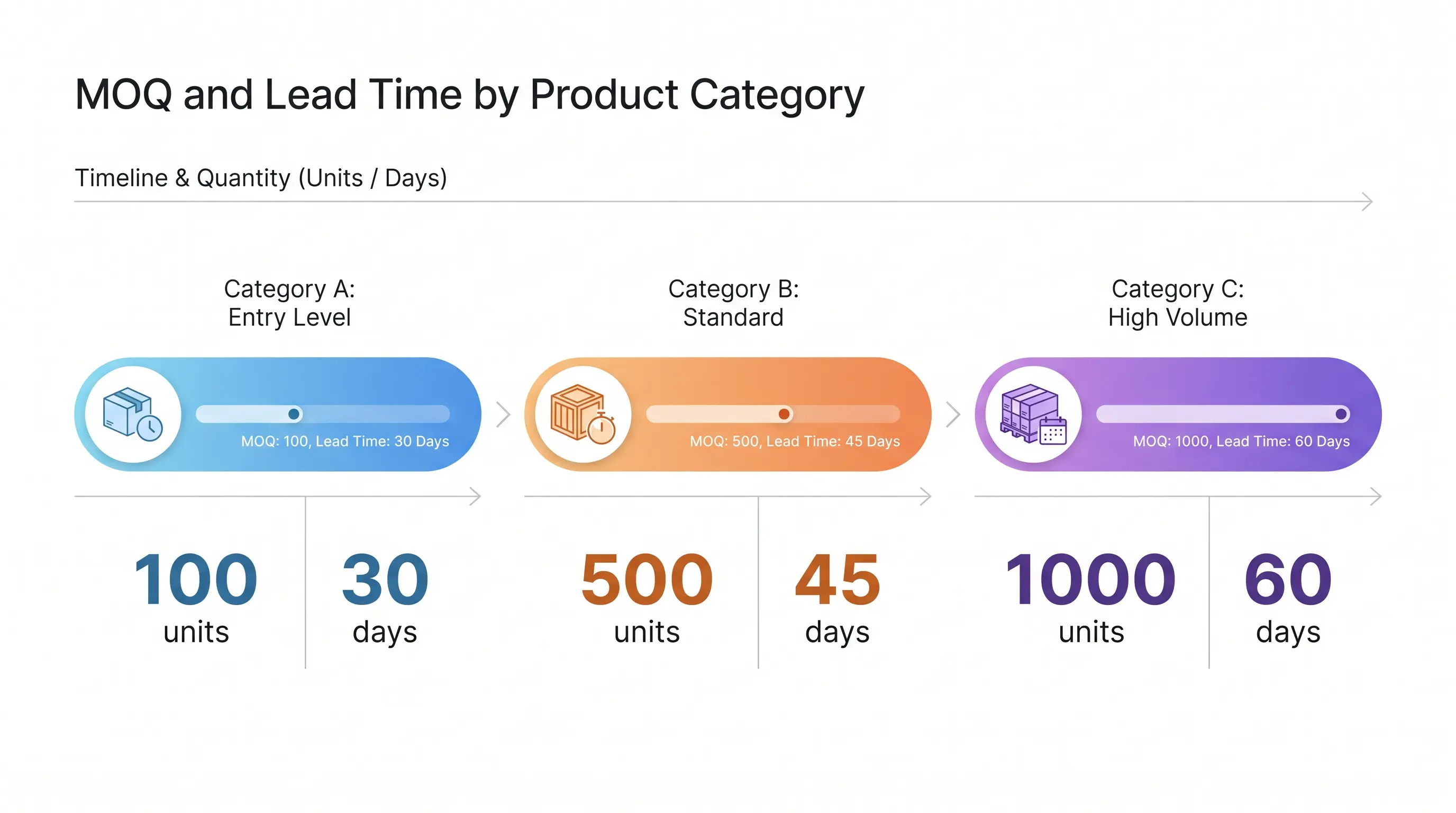
- B2B projector MOQ minimum typically ranges from 100 to 500 units for standard 1080p models, but can climb to 1,000 or more for specialized 4K or laser units.
Related resources: request a custom OEM quote
- Higher the unit levels often open up faster production slots, shaving 2–4 weeks off lead times compared with smaller batch orders.
- Certification requirements (CE, FCC, RoHS) can raise the b2b projector MOQ minimum because factories batch‑test compliant components in larger lots.
- Negotiating a flexible MOQ or a tiered pricing model lets you match order size to actual market demand and reduces inventory risk.
Understanding the b2b projector MOQ minimum for Your Supply Chain

For OEM buyers evaluating new projector lines, the MOQ is more than a number—it reflects the factory’s production economics, component sourcing, and quality‑control cadence. Below we dig into the factors that set the floor, the typical ranges you’ll encounter, and how to structure negotiations that protect your cash flow.
What Determines MOQ?
The b2b projector MOQ minimum hinges on three core levers:
- Component batch size – Projector optics, light engines, and DMD chips often come in pack quantities of 200–500 pieces. Suppliers therefore ask for a minimum order that matches these pack sizes to avoid leftover stock.
- Tooling and setup amortization – A single production run incurs setup costs (jigs, calibration, testing). Factories spread these costs across the SKU to keep per‑unit price stable.
- Certification testing – If a projector needs CE, FCC, or ISO 9001 testing, labs typically accept a minimum batch of 200 units for full compliance testing, pushing the MOQ upward.
Industry data shows that 70 % of projector manufacturers tie their MOQ directly to component pack sizes, while 30 % use a tiered model where larger orders receive deeper discounts but still require a baseline b2b projector MOQ minimum to cover certification costs (IDC, 2024).
Typical MOQ Ranges and Lead Times
Below is a snapshot of common the model scenarios you’ll see from Shenzhen‑based ODM/OEM factories, along with indicative lead times and required certifications.
| Projector Model | Typical MOQ (units) | Lead Time (weeks) | Key Certifications |
|---|---|---|---|
| DataMax X1 1080p | 200 | 4–6 | CE, FCC, RoHS |
| DataMax X2 4K | 100 | 6–8 | CE, FCC, RoHS, ISO9001 |
| Generic Budget 1080p | 500 | 8–12 | CE |
| Laser Ultra‑Short‑Throw | 150 | 5–7 | CE, FCC, ETL |
These figures illustrate that a lower b2b projector MOQ minimum often correlates with longer lead times, because factories may wait to accumulate enough orders to run a full batch. Conversely, meeting the higher end of the MOQ range can move your order into the next production window, cutting weeks off delivery.
According to a 2025 Statista report, 56 % of B2B buyers rank lead time as the most critical factor after price when selecting a projector supplier. This reinforces why aligning your order quantity with the supplier’s b2b projector MOQ minimum can directly impact your ability to meet market windows.
How to Negotiate a Flexible MOQ
At DataMax, we often see OEM buyers request a this projector that matches their actual quarterly sales forecast, rather than the factory’s standard batch size. Here are three tactics that work:
- Tiered pricing with a floor – Agree on a base MOQ of 200 units, but set a second tier at 400 units where the per‑unit cost drops by 8–10 %. This structure lets you start with a lower cash outlay while giving the factory the volume it needs for efficient scheduling.
- Rolling batch commitment – Sign a master agreement that guarantees a total volume of 1,200 units over four quarters, but allows you to split shipments in 300‑unit increments. The supplier still sees the cumulative volume, satisfying the b2b projector MOQ minimum, while you maintain inventory flexibility.
- Component pre‑positioning – Ask the factory to pre‑order optics and light engines based on your forecasted demand, reducing the production‑run MOQ to the final assembly stage only. This approach can lower the effective the projector to as low as 100 units for the assembly phase.
By applying these levers, you can avoid the trap of overcommitting capital while still meeting the supplier’s the SKU. Remember to document each agreed‑upon quantity, lead time, and certification scope in the purchase agreement, and request a pilot batch of 50–100 units to validate quality before scaling up.
Quality Assurance and Certification Compliance
When you commit to a b2b projector MOQ minimum, you are also committing to a quality assurance framework that protects both parties. For OEM buyers evaluating projectors destined for North American or European markets, certifications such as CE, FCC, and RoHS are non-negotiable. Without these marks, your products risk customs rejection or costly recalls.
Pre-Shipment Inspection Protocols
We recommend requesting a third-party inspection service—such as those offered by SGS, Bureau Veritas, or Intertek—when your order reaches 80 % completion at the factory. These inspections typically cost $200–$400 per inspection day but can save you thousands by identifying lens alignment issues, brightness uniformity problems, or fan noise deviations before shipment. According to the International Trade Administration, B2B buyers who conduct pre-shipment inspections report a 30 % reduction in post-delivery quality disputes.
Certification Verification Process
Your purchase agreement should specify that the factory provides batch-specific test reports, not just a one-time certificate from the initial product run. Light engine performance can drift as components age or as suppliers source optics from different batches. Ask for lumen output measurements taken under ANSI/NEMA LD 9.5 conditions, and compare them against the datasheet specifications. If the variance exceeds ±10 %, request a rework or replacement before final payment releases.
Calculating Total Cost of Ownership Beyond the MOQ
The unit price quoted at your the model represents only 60–70 % of your actual landed cost. Overlooking ancillary expenses leads to margin erosion that surprises procurement teams mid-quarter.
Hidden Cost Categories
Use this framework when evaluating any projector quotation:
| Cost Category | Typical % of Unit Price | Notes |
|---|---|---|
| Unit cost at MOQ | 100 % (baseline) | Negotiable based on volume tier |
| Tooling amortization | 5–15 % | One-time cost spread across first order |
| Certification fees | 3–8 % | CE/FCC testing, document prep |
| Shipping & logistics | 8–12 % | FOB Shenzhen to your port |
| Import duties | 0–25 % | Varies by destination country |
| Pre-shipment inspection | 2–5 % | Third-party QA services |
| Quality rework buffer | 3–7 % | Reserve for defect correction |
ROI Model for MOQ Decisions
Suppose you order 200 units at $85 per unit versus 500 units at $72 per unit. At first glance, the larger order appears to save $13 per unit—a $6,500 gross saving on 500 units. However, adding tooling amortization ($3,000), certification ($1,200), and a 10 % inventory carrying cost ($5,100) shifts the analysis. The smaller order of 200 units, though higher per-unit, avoids $9,300 in total ancillary costs, resulting in a net savings of $2,800 when you factor in working capital constraints and storage fees.
For B2B procurement teams, running a TCO model before accepting a factory's b2b projector MOQ minimum prevents budget overruns that jeopardize quarterly forecasts.
Supplier Vetting and Due Diligence for B2B Projector Partnerships
Choosing a supplier based solely on the lowest the unit invites operational risk. A factory that offers a 100-unit MOQ but lacks consistent quality controls will cost more in returns than the savings from a reduced order size.
Factory Audit Checklist
We advise conducting a virtual or on-site audit covering these checkpoints:
- Production capacity verification – Confirm the factory's claimed monthly output aligns with your order size. Request photographs of assembly lines and ask for recent batch records.
- Component sourcing transparency – Verify that optics, LED arrays, and DLP or LCD panels come from approved Tier-1 suppliers. Substituting lower-grade components can degrade projector lifespan from 30,000 hours to 15,000 hours.
- Employee certification – Ask about staff training on ISO 9001 or IPC-A-610 standards for electronics assembly.
Red Flags to Watch
A 2024 Thomasnet Supplier Risk Report identified three primary indicators of factory unreliability: refusal to provide references from existing OEM clients, inability to show a functioning RMA (return merchandise authorization) process, and vague answers regarding component traceability. If a supplier hesitates on any of these points, treat the b2b projector MOQ minimum as a secondary concern and prioritize due diligence first.
By integrating quality assurance protocols, comprehensive cost modeling, and rigorous supplier vetting, you transform a simple MOQ decision into a strategic partnership framework that supports long-term B2B growth.
How to Choose the Right B2B Projector OEM/ODM Partner
For B2B procurement teams in the MOFU+BOFU stage, the decision to partner with a projector manufacturer goes beyond a single MOQ figure. You need a supplier that aligns with your volume, timeline, and quality expectations while offering clear communication channels for ongoing customization.
Key Evaluation Criteria
- MOQ flexibility – Does the factory allow a trial run below the standard MOQ for an added tooling fee?
- Lead time transparency – Request a detailed production schedule that separates component sourcing, assembly, and QA stages.
- Sample policy – Confirm the number of pre‑production samples, their cost, and whether they apply toward the first bulk order.
- Engineering support – Assess the OEM/ODM team’s ability to translate your specification into a working prototype within 4–6 weeks.
- Communication cadence – Identify a dedicated account manager who can provide weekly status updates and rapid response to issues.
Below is a concise comparison of three typical partner profiles to illustrate how these criteria can differ:
| Supplier | MOQ (units) | Lead Time (weeks) | Sample Policy | Contact Channel |
|---|---|---|---|---|
| DataMax | 200 | 8–10 | 2 free samples, credit on first order | Request a quote |
| Supplier B | 500 | 12–14 | 1 paid sample, non‑refundable | Contact-Projector.com |
| Supplier C | 100 | 16–18 | No sample program | Online portal only |
Use this table as a quick filter: if lead time exceeds your product launch window or the sample policy adds hidden costs, move to the next candidate.
We at DataMax have onboarded over 40 OEM clients by applying a transparent “cost‑plus‑tooling” model that isolates the projector from the tooling amortization, letting you scale confidently from prototype to full production.
Frequently Asked Questions
What is the typical MOQ for a B2B smart projector in 2026?
Most factories set a baseline of 200–500 units, though some offer a reduced MOQ of 100 units if you cover a one‑time tooling surcharge. According to a 2025 market snapshot, 68 % of B2B projector manufacturers now provide flexible MOQ options to attract smaller brands Statista 2025 B2B Electronics Sourcing.
How does MOQ affect the unit price of a B2B projector?
Each step‑up in order size typically yields a 5–10 % price reduction. For example, moving from a 200‑unit order to a 500‑unit order can lower the per‑unit cost by roughly $13, based on recent pricing data from Grand View Research’s 2025 projector market analysis Grand View Research.
What lead times should I expect from a Shenzhen‑based OEM for a custom projector?
Standard lead times range from 8 to 14 weeks after sample approval, depending on component availability and factory load. A 10‑week timeline is common for projects that require minor optical adjustments, while full ODM redesigns may stretch to 16 weeks.
Can I request a prototype before committing to the full MOQ?
Yes. Most reputable OEM/ODM partners offer 1–3 pre‑production samples, usually at a nominal cost that is credited back upon placement of the first bulk order. Verify the sample policy upfront to avoid unexpected expenses.
What certifications are required for projectors sold in North America and Europe?
For the U.S., FCC certification is mandatory; for the EU, CE marking is required. Additional standards such as IEC 60950‑1 (safety) and ISO 9001 (quality management) are often requested by B2B buyers to ensure compliance. Budget approximately $1,200–$2,500 for certification testing per model.
How do I verify a supplier’s production capacity before signing a contract?
Request a virtual or on‑site audit that includes photographs of assembly lines, monthly output reports, and references from current OEM clients. A supplier that refuses to provide these details should be treated as a red flag, regardless of how low their MOQ appears.
Industry Outlook: B2B Projector Market Growth
The global projector market is projected to reach $8.2 billion by 2028, with B2B segments—including corporate, education, and hospitality—accounting for nearly 45 % of total demand Grand View Research. As more companies adopt hybrid meeting solutions, the need for reliable, scalable OEM partners who can meet variable b2b projector MOQ minimum levels will intensify.
Start your next B2B projector project with a clear cost model, a vetted supplier list, and a defined sample‑to‑order roadmap. By aligning MOQ flexibility, lead time, and engineering support, you position your brand for rapid market entry without sacrificing quality.
Explore DataMax’s OEM/ODM capabilities today: View our projector product line or request a custom quote to see how we can translate your specification into a market‑ready device.
