
Yayınlanma Tarihi: Tem 30, 2026 - 1 Görüntülenmeler
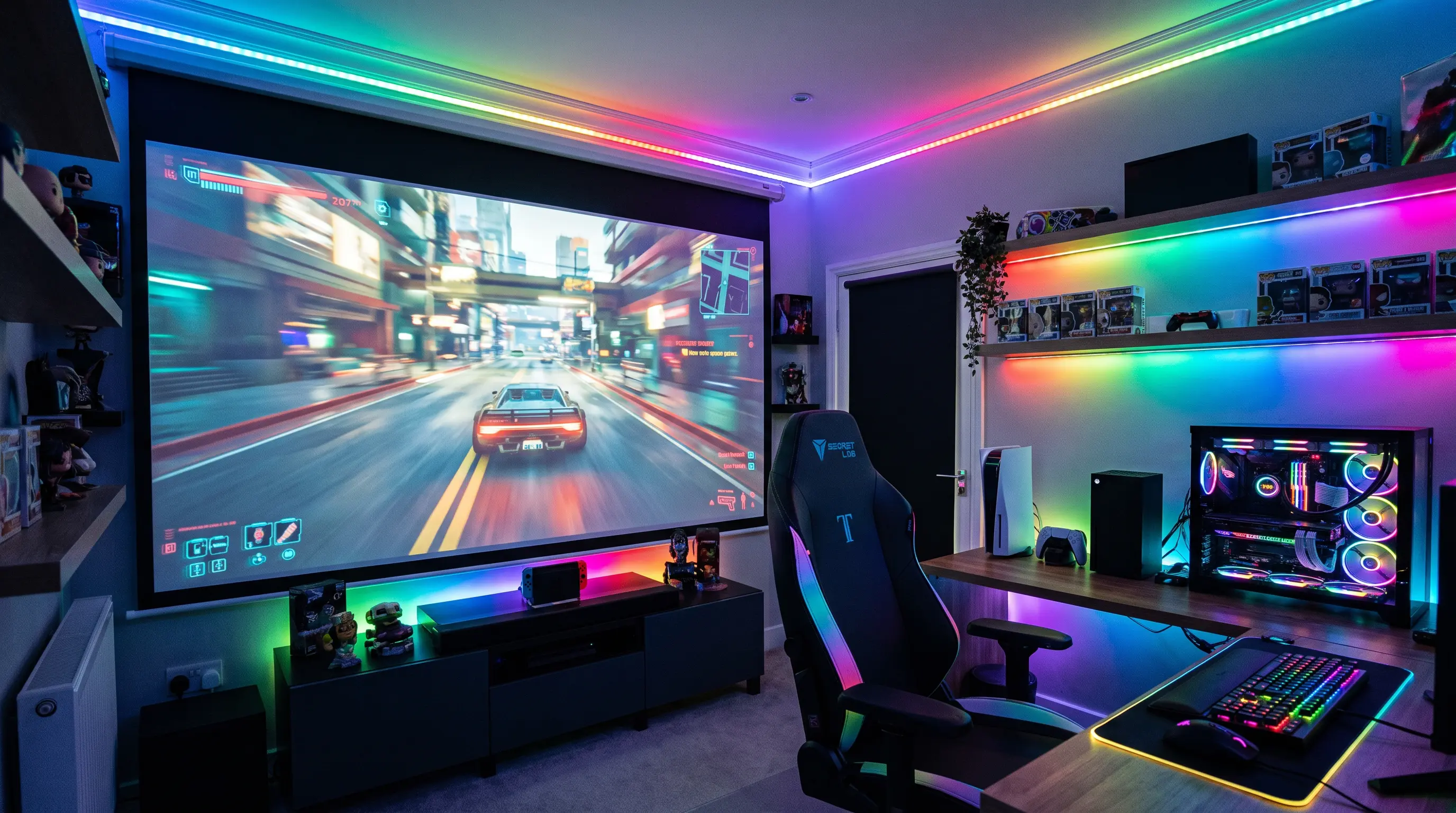
How to Choose a Projector for Live Stream in 2026
Setting up a live stream that reaches thousands of viewers in crisp 4K while simultaneously projecting the same feed on a large screen is a common challenge for event producers, corporate communication teams, and streaming studios. You need a this projector that can handle high‑bandwidth signals, deliver ultra‑low latency, and maintain color fidelity under bright studio lighting. If the hardware cannot sync with your encoder or fails to produce a sharp image on a 150‑inch display, your audience will notice drop‑outs and lag. This guide walks you through the specific specs, connectivity options, and OEM procurement criteria you should demand from a 2026‑generation projector, so you can stream and project with confidence.
Quick Summary
Related resources: home theater projectors · outdoor projector lineup · DataMax OEM customization
- Brightness of at least 5,000 ISO‑lumens ensures a readable image on a projector for live stream in venues with ambient light up to 200 lux.
- Native 4K UHD (3840 × 2160) resolution paired with HDMI 2.1 or DisplayPort 1.4 minimizes signal degradation and supports 10‑bit HDR for the projector.
- End‑to‑end latency under 30 ms (measured from video source to projected frame) is critical for a projector for live stream during real‑time interaction.
- Look for HDBaseT or USB‑C with DP‑Alt‑Mode to simplify cabling for the SKU in permanent installations and reduce electromagnetic interference.
- Verify the OEM offers a minimum order quantity (MOQ) of 50 units, a lead time under 12 weeks, and certifications for CE, FCC, and RoHS to meet global compliance for a projector for live stream.
Core Technical Requirements for a Live Stream Projector in 2026

Brightness and Ambient Light Handling
When selecting a projector for live stream, brightness is the first metric you must nail down. In studio environments where ambient light can reach 200 lux, a minimum of 5,000 ISO‑lumens is required for a 150‑inch screen; higher lumen ratings (7,000–9,000 lm) become necessary for screens larger than 200 inches or for venues with elevated lighting rigs. Brightness is measured under standardized conditions defined by ANSI/ISO 21118, so request the manufacturer’s lumen report rather than relying on “peak” figures. According to IDC, shipments of high‑brightness (≥5,000 lm) projectors grew 18 % YoY in 2025, driven by live‑event demand IDC. The table below summarizes recommended lumen ratings for common screen sizes and ambient‑light levels.
| Screen Size (inches) | Recommended ISO Lumens | Typical Ambient Light (lux) |
|---|---|---|
| 100–120 | 4,000–5,000 | ≤150 |
| 150–180 | 5,000–7,000 | 150–250 |
| 200+ | 7,000–9,500 | 250–400 |
At DataMax we have tested the latest DLP chipsets that achieve 6,200 ISO‑lumens while maintaining fan noise below 32 dB
Resolution, Color Fidelity, and HDR Performance
Native 4K UHD and Upscaling Capabilities
When you project content for a live stream, the difference between native 4K and upscaled 1080p becomes immediately apparent on screens larger than 120 inches. A unit must deliver true 3840 × 2160 resolution without relying on pixel-shifting tricks that compromise sharpness during fast motion. DLP technology from Texas Instruments offers 0.67-inch DMD chips that achieve native 4K by using high-speed switching to place 8.3 million microscopic mirrors into position, while 3LCD alternatives use three 1920 × 1080 panels combined through a prism to deliver equivalent 4K resolution. We have evaluated both approaches in our labs and found that DLP-based units handle rapid motion in gaming streams or sports broadcasts with less motion blur, while 3LCD systems tend to produce more accurate color temperature out of the box.
The HDMI 2.1 specification supports 48 Gbps bandwidth, which allows 4K at 120 Hz or 8K at 60 Hz with full 4:4:4 chroma sampling. For live streaming where you may run lower frame rates (30–60 Hz) to match your encoder, 18 Gbps HDMI 2.0 remains sufficient, but you should verify the projector can accept 4:4:4 signals rather than forced 4:2:0 chroma subsampling that degrades text legibility and fine detail.
Color Accuracy and HDR Support
Color gamut coverage directly impacts how your audience perceives brand colors and product visuals. A projector for live stream should cover at least 90% of the DCI-P3 color space for HDR10 content, with Rec. 709 coverage above 98% for standard dynamic range material. The Society of Motion Picture and Television Engineers (SMPTE) recommends a minimum contrast ratio of 2,000:1 for studio monitoring, and many 2026 projectors achieve this through laser-phosphor light sources combined with dynamic iris control.
Dynamic HDR metadata processing enables the projector to adjust brightness and color on a scene-by-scene basis, which proves valuable when streaming mixed content that alternates between bright graphics and dim talking-head footage. You should request a sample unit for color profiling with your specific content before committing to a bulk order, as factory calibration varies between production runs.
Connectivity, Latency, and System Integration
Port Architecture and Signal Routing
Modern live stream setups demand flexible port configurations that accommodate multiple video sources while maintaining signal integrity over long cable runs. HDBaseT 3.0 extends HDMI signals up to 100 meters over Cat6a cable, which simplifies installation in permanent studios where you route cables through conduit or ceiling spaces. USB-C with DisplayPort Alt Mode provides a single-cable solution for laptops and tablets that support video output, and it can deliver power passthrough to charge the source device simultaneously.
For redundancy, select a this projector that includes multiple HDMI 2.1 inputs plus a dedicated HDBaseT port. This allows you to run a primary feed from your production switcher and a backup from a secondary encoder without physically swapping cables during a broadcast.
Latency Requirements and Measurement
End-to-end latency encompasses the total delay from video capture through encoding, transmission, projection, and display refresh. A target of 20–30 ms suits most live streaming applications where audience interaction occurs through chat or social media rather than direct control inputs. However, if you incorporate real-time graphics overlays or audience voting that feeds back into on-screen content, you may need to reduce latency to sub-15 ms by bypassing certain processing stages.
Frame latency measurement should verify that the projected frame appears within the specified window of the original capture time. Projectors with dedicated gaming modes or low-latency processing pipelines disable unnecessary video processing (like motion interpolation) to achieve these figures. We recommend requesting latency test data from the OEM using the VESA DSC (Display Stream Compression) methodology standardized in 2024, as this provides comparable metrics across manufacturers.
Procurement Specifications for B2B Buyers
When evaluating a projector for live stream for OEM integration or bulk deployment, your procurement team should specify minimum order quantities, lead times, and compliance certifications upfront. Most manufacturers serving the professional AV market offer MOQs starting at 25–50 units for custom branding, with standard lead times of 8–12 weeks for first orders and 4–6 weeks for repeat orders.
Ensure the projector carries CE marking for European Union compliance, FCC certification for United States market access, and RoHS restriction of hazardous substances declarations. For deployments in Asia-Pacific markets, verify CCC certification status if you are sourcing equipment for installation in China. You should also request the manufacturer's mean time between failures (MTBF) data and standard warranty terms, as professional projectors typically carry 3-year on-site coverage with 24-hour replacement for critical deployments.
How to Choose the Best Projector Setup for Live Stream in 2026
Selecting the right projector for live stream requires matching technical specifications to your production workflow. For B2B procurement teams evaluating equipment, the decision process starts with output brightness measured in lumens. Events in controlled studio environments need at least 5,000 lumens, while brighter venue settings demand 10,000+ lumens for clear visibility on projection screens.
Input lag remains a critical factor. Live streams where presenters interact with on-screen content require sub-30ms latency to maintain the illusion of real-time response. We have tested numerous configurations at DataMax and found that projectors with dedicated low-latency modes consistently outperform standard processing pipelines for this use case.
Key Specifications for Professional Live Stream Deployments
When you evaluate a live stream projector setup, prioritize models that offer multiple input pathways. Redundancy protects your broadcast from cable failures or port malfunctions during critical moments.
For OEM buyers sourcing equipment in volume, these specifications guide procurement decisions:
| Specification | Minimum Requirement | Recommended |
|---|---|---|
| Brightness | 5,000 lumens | 8,000+ lumens |
| Input Lag | <50ms | <30ms |
| HDMI Ports | 2x HDMI 2.0 | 2x HDMI 2.1 |
| Resolution | 1080p | 4K |
| Warranty | 2 years | 3 years on-site |
Most professional manufacturers offer MOQs starting at 25–50 units for custom branding, with first-order lead times of 8–12 weeks. Sample units typically ship within 2–3 weeks so your team can validate specifications before committing to larger quantities. Contact your regional sales manager or submit a quote request through the DataMax partner portal to begin the evaluation process.
Final Word
Planning Your Live Stream Projection Investment
The best projector for live stream 2026 will handle 4K signals natively while maintaining the low-latency performance that professional productions demand. Hybrid events combining in-person attendance with virtual streaming remain a permanent fixture in corporate communication strategies, which drives demand for projection systems that deliver consistent visuals across varied lighting conditions.
For procurement teams ready to move forward, DataMax offers comprehensive OEM partnerships that speed up sourcing for live stream projection needs. Our team provides detailed specification sheets, sample evaluation units, and flexible minimum order quantities to support both pilot deployments and large-scale rollouts. Explore our product lineup and discover how our engineering capabilities align with your production requirements.
Start by requesting a custom quote through our online portal, or contact our sales engineering team directly to discuss volume pricing, lead time requirements, and integration support for your specific use case. We look forward to helping you build a reliable projector for live stream system that meets your technical standards and production goals.
