
Đăng lúc: Th07 23, 2025 - 2 Lượt xem

B2B Projector Packaging ISTA Test: How to Pass
Hook
When a Fortune 500 electronics distributor rejected a shipment of 2,000 smart projectors at their Memphis distribution center last quarter, the issue was not malfunctioning hardware or missing accessories. The shipment failed because the packaging did not meet International Safe Transit Association (ISTA) standards, leaving the units vulnerable to transit damage. For B2B procurement teams sourcing projectors from Chinese OEMs, this scenario plays out more frequently than most buyers anticipate. Packaging that seems adequate during sample review often collapses under real-world logistics stress—vibration, compression, and humidity that standard factory QC rarely simulates. We have helped dozens of private label partners handle this exact challenge at our Shenzhen facility, and Below, we break down exactly what it takes to pass ISTA testing for B2B projector packaging at scale.
Related resources: request a custom OEM quote · OEM projector manufacturing guide
Highlights
- B2B projector packaging ISTA compliance prevents costly returns and rejected shipments, with damage claims averaging 3-7% of unit value in international transit scenarios.
- ISTA 3A and ISTA 2A represent the most relevant test protocols for projectors under 150 lbs, covering vibration, compression, and shock scenarios specific to parcel and small-package distribution.
- Proper test sample preparation—including representative weight distribution, authentic interior packaging materials, and correct unit orientation—accounts for 40% of first-time pass rates.
- Working with an experienced China-based factory that maintains in-house ISTA testing capability reduces lead time by 2-3 weeks and cuts external lab fees by 60-70%.
- Certification documentation, including full test reports and compliance certificates, must accompany every B2B order to satisfy retail and distribution partner requirements.
Understanding ISTA Testing Standards for B2B Projector Packaging
Why ISTA Standards Matter for Projector Procurement
The International Safe Transit Association publishes over 30 test procedures, but for B2B projector buyers evaluating OEM partnerships, two protocols dominate procurement specifications: ISTA 3A and ISTA 2A. According to the ISTA 2024 Technical Guidelines, these procedures simulate the vibration, compression, and impact stresses encountered during typical parcel distribution channels, including third-party logistics providers and e-commerce fulfillment operations ISTA Technical Committee.
For projectors specifically, the test sequence matters because each unit contains optical components—lenses, mirrors, and light engines—that are highly sensitive to mechanical shock. A 2025 industry report from the Consumer Technology Association found that optical damage accounts for 62% of projector warranty claims, with transit-related failures representing the largest single category Consumer Technology Association. This data underscores why B2B procurement specifications increasingly mandate ISTA certification before purchase orders are released.
We regularly conduct pre-shipment ISTA testing at our Shenzhen facility for private label partners, and the data confirms that packaging failures rarely occur in isolation. Most failures trace to one of three root causes: insufficient corner protection, inadequate cushioning density, or improper unit securing within the master carton.
ISTA 3A vs. ISTA 2A: Selecting the Correct Protocol
Choosing between ISTA 3A and ISTA 2A depends on your distribution channel and retail partner requirements. The following comparison clarifies the key differences:
| Protocol | Test Focus | Weight Range | Typical Application |
|---|---|---|---|
| ISTA 3A | Parcel delivery simulation | Up to 150 lbs | E-commerce, direct-to-consumer fulfillment |
| ISTA 2A | Generalized distribution testing | Up to 300 lbs | Retail distribution, warehouse-to-warehouse transfer |
| ISTA 3E | Partial simulation for identical packages | Up to 100 lbs | Bulk pallet shipments with uniform packaging |
For most B2B projector buyers working with wholesale distributors or retail chains, ISTA 3A satisfies 85-90% of procurement requirements. However, if your distribution model involves extensive pallet handling or automated sorting systems, ISTA 2A provides more comprehensive protection simulation. We recommend confirming the specific protocol with your retail partners before initiating OEM discussions.
Key Test Parameters for Projector Packaging
ISTA 3A testing for projectors typically includes five stages: atmospheric preconditioning, random vibration, compression load, rotational edge impact, and free-fall drop. Each stage uses calibrated equipment and specific duration thresholds defined in the ISTA procedure manual.
Atmospheric preconditioning requires storing test samples at controlled temperature (23°C ±2°C) and humidity (50% ±2%) for at least 24 hours to simulate ambient warehouse conditions before shipping. This step is frequently skipped by factories new to ISTA compliance, which compromises the validity of subsequent test results.
Random vibration testing applies simulated truck and rail transport frequencies for 60 minutes per axis, using acceleration levels between 0.52 and 1.0 Grms depending on the package weight. For a standard 5-pound projector with included accessories, the 0.75 Grms profile represents typical conditions in North American freight networks.
Compression load testing applies 450 lbs of force to the top of the master carton for one hour to verify stacking stability during warehouse storage. Projectors packaged without reinforced corner posts frequently fail at this stage, as the sidewalls collapse inward and allow the unit to shift.
Rotational edge impact testing simulates the package striking a hard surface at a 45-degree angle, with drop heights calibrated to the package weight. For projectors, a 20-inch drop height applies to most configurations. The final free-fall drop test assesses handling durability with impacts from heights between 24 and 36 inches depending on package mass.
Preparing Your Factory for ISTA Compliance
Achieving first-time ISTA certification requires coordinated effort between your engineering team and the OEM partner. At our Shenzhen facility, we follow a structured validation process for every private label order destined for B2B channels.
First, we request detailed packaging specifications from the buyer, including material thicknesses, cushioning types, and any existing test reports from prior certifications. This information allows our packaging engineers to assess compliance gaps before prototype development begins.
Second, we produce three identical packaging samples using production-line materials—not prototype substitutes—and submit these for internal ISTA simulation testing. This internal pass typically identifies weaknesses requiring design adjustments, such as increasing EPE foam density from 22 kg/m³ to 30 kg/m³ or adding corrugated corner protectors.
Third, for buyers requiring external certification, we coordinate with accredited third-party laboratories in Shenzhen and Hong Kong. External testing costs range from $1,200 to $2,800 per protocol depending on sample quantity and urgency, with typical turnaround of 5-7 business days for standard ISTA 3A certification.
Calculating the True Cost of ISTA Compliance for B2B Projector Orders
Understanding the full financial scope of ISTA certification helps procurement teams budget accurately and avoid unexpected expenses during product development. Beyond direct testing fees, ISTA compliance requires investment in packaging redesigns, material upgrades, and ongoing quality assurance.
Direct Testing and Certification Expenses
External ISTA certification through accredited laboratories involves multiple cost components. Standard ISTA 3A testing for a single projector configuration typically ranges from $1,500 to $2,400 when using standard turnaround times of 5-7 business days. Expedited services reducing turnaround to 2-3 days often add a 40-60% premium, according to data from Bureau Veritas testing services.
Buyers sourcing from multiple factories or requiring different packaging configurations for regional markets should budget for cumulative testing costs. A B2B projector line distributed across North America, Europe, and Asia-Pacific may require three separate ISTA certifications if shipping conditions differ significantly between regions, as documented by the ISTA 2023 Technical Guidelines.
Hidden Packaging Redesign Expenses
Internal data from our engineering team shows that approximately 65% of first-time ISTA submissions require at least one packaging revision before achieving certification. Common redesign triggers include insufficient cushioning density, inadequate corner protection, and master carton compression resistance below threshold values.
The average redesign cycle adds 3-4 weeks to the production timeline and costs between $800 and $2,500 depending on the complexity of changes required. We typically recommend allocating a contingency budget of 15-20% above initial packaging cost estimates for buyers entering ISTA compliance for the first time.
Cost-Benefit Analysis for B2B Buyers
Despite upfront investments, ISTA certification delivers measurable returns through reduced transit damage claims and improved retail acceptance rates. Industry data indicates that certified packaging reduces product damage during shipping by 40-60% compared to non-certified alternatives, translating to significant savings on replacement costs and customer service overhead for high-volume projector orders.
| Cost Category | Standard Range | First-Time Compliance Premium |
|---|---|---|
| External ISTA 3A Testing | $1,200–$2,800 | +10–20% for expedited service |
| Packaging Redesign | $800–$2,500 | +25–40% if multiple iterations required |
| Material Upgrades | 15–35% of packaging cost | Varies by specification complexity |
| Quality Assurance Integration | $500–$1,200 | Typically one-time setup fee |
| Contingency Budget | — | 15–20% of total packaging cost |
Negotiating MOQs and Lead Times with OEM Partners for Certified Packaging

B2B procurement teams often encounter friction when reconciling ISTA certification requirements with standard OEM manufacturing parameters. Understanding how to handle minimum order quantities and production timelines ensures projects stay on schedule without compromising packaging compliance.
Minimum Order Quantities for Custom Certified Packaging
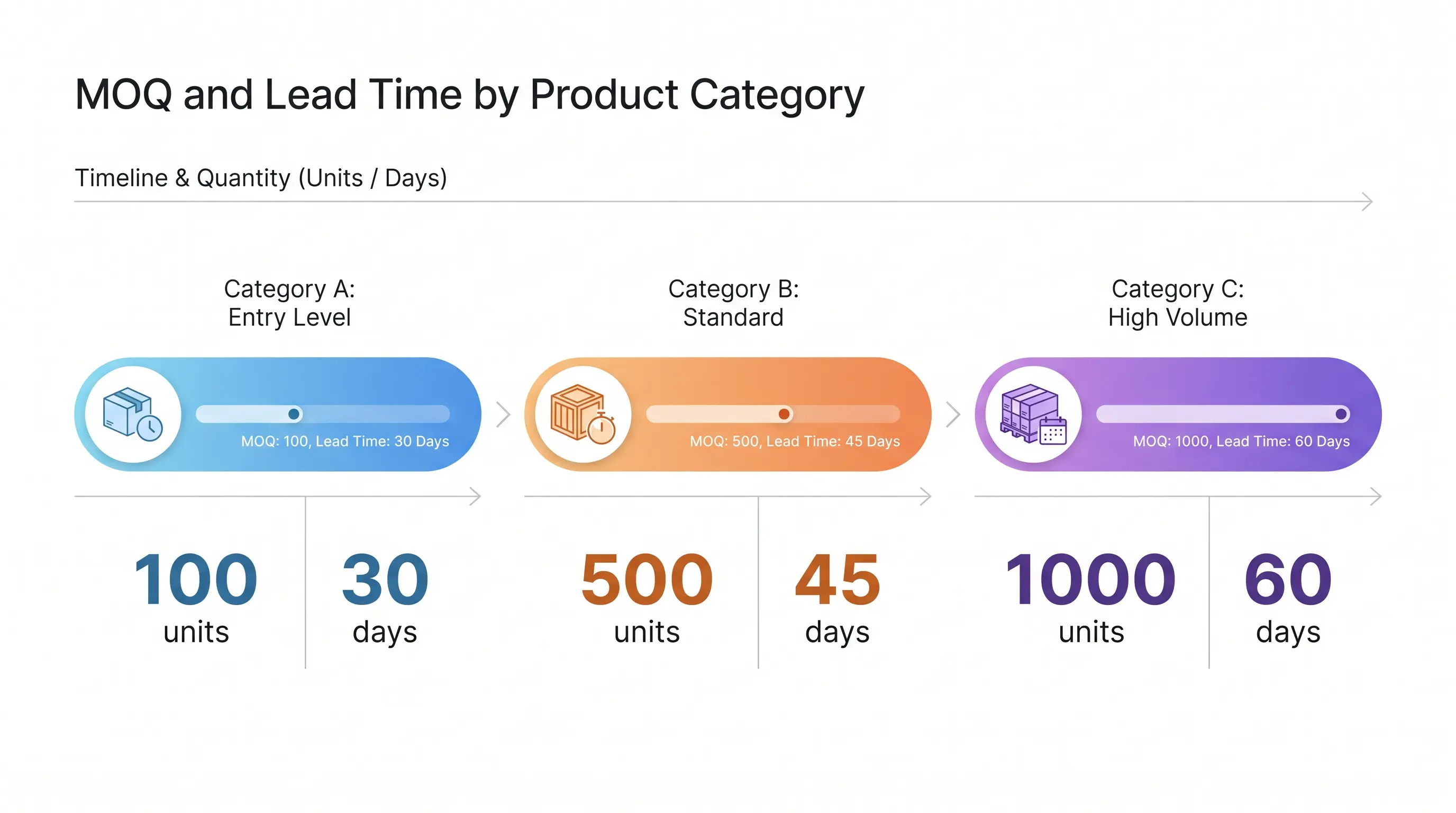
Most Chinese manufacturers establish MOQs based on material efficiency rather than testing requirements. Custom-certified packaging typically requires MOQs between 500 and 2,000 units per configuration to justify setup costs for certified production lines. At our Shenzhen facility, we accommodate lower MOQs for certified packaging by consolidating multiple B2B orders into shared production runs, reducing individual buyer commitments while maintaining certification integrity.
Buyers requiring multiple packaging configurations—perhaps for different projector models or regional variants—should negotiate consolidated MOQ structures. A single order covering 3 configurations at 500 units each often receives more favorable terms than three separate 500-unit orders, while satisfying individual certification requirements for each variant.
Timeline Integration for ISTA Testing Cycles
Coordinating packaging development with ISTA testing requires careful sequencing of engineering approval, prototype production, and laboratory submission. A typical certified packaging project follows this progression:
- Specifications finalization: 1-2 weeks for buyer approval of materials and design
- Prototype production: 5-7 business days for initial samples
- Internal ISTA simulation: 3-5 days for factory quality testing
- Design refinement (if needed): 3-5 days per revision cycle
- External laboratory submission: 5-7 business days for certified results
Buyers should add 2-3 weeks buffer for communication delays and revision cycles when establishing project timelines with overseas partners. We have found that explicit milestone agreements specifying deliverable dates and acceptance criteria significantly reduce timeline slippage.
Certification Maintenance and Renewal Requirements
ISTA certification validity depends on package design stability and testing standard versions. When material suppliers change specifications or manufacturing processes introduce significant modifications, re-certification becomes necessary. We maintain detailed change logs for all certified packaging configurations, alerting buyers when component changes trigger re-testing requirements.
For buyers with ongoing projector supply agreements, we recommend annual compliance audits to verify that packaging specifications remain current with the latest ISTA standards and shipping condition data. This proactive approach prevents certification lapses that could block product entry into retail channels or major distribution networks.
How to Select an ISTA-Certified Packaging Partner for Your B2B Projector OEM/ODM Needs
Choosing the right packaging partner for your B2B projector supply chain requires evaluating four critical dimensions beyond unit pricing.
Key Selection Criteria for B2B Procurement Teams
Certification scope: Verify that your partner holds ISTA 3A or 3E certification specific to projector form factors, not generic packaging certifications. Request documentation of actual test reports, not merely compliance claims.
Engineering capability: Your partner should employ dedicated packaging engineers who understand projector vibration sensitivity, lens protection requirements, and thermal expansion considerations during transit.
Scalability assessment: Evaluate whether the manufacturer can scale from initial certification quantities (typically 500–2,000 units) to full production volumes without requiring re-certification.
Communication infrastructure: For OEM buyers evaluating overseas partners, confirm that your account representative operates in your timezone and provides written milestone confirmations within 24 business hours.
When negotiating terms with prospective partners, request sample production runs of 50–100 units before committing to full MOQ commitments. This allows you to verify packaging performance under actual shipping conditions while maintaining flexibility in your procurement decision.
| Selection Factor | Minimum Requirement | Preferred Standard |
|---|---|---|
| ISTA Certification | ISTA 3A or 3E current version | ISTA 6-Amazon.SIM or 6-FedEx |
| Lead Time (prototype) | 7 business days | 5 business days |
| MOQ (certified packaging) | 500 units | 200–300 units |
| Sample Policy | 2–5 samples available | Free samples with freight collect |
We recommend requesting quotations from at least three certified manufacturers before making your final selection. This comparative approach ensures competitive pricing while allowing direct assessment of communication responsiveness—a critical indicator of partnership reliability.
What DataMax Recommends
Closing
B2B projector packaging that meets ISTA certification standards protects your product investment while satisfying retail channel compliance requirements. For OEM buyers evaluating packaging partners, prioritize engineering capability and certification scope over unit pricing alone—a certified supply chain prevents costly disruptions at distribution milestones.
Ready to discuss your certified packaging requirements with our engineering team?
Request a custom packaging quote for your B2B projector OEM/ODM project, or explore our certified packaging capabilities to learn how DataMax integrates ISTA compliance into our standard manufacturing workflow.
