Đăng lúc: Th03 03, 2026 - 17 Lượt xem

B2B Projector Sample Process: How It Works in 2026
Where buyers typically start
When you source commercial projectors for a global deployment, the gap between spec sheets and actual product performance can cost your project months of delays and thousands in redesign fees. Your procurement team has finalized the technical requirements, negotiated the unit price, and yet the production run arrives with color accuracy issues that render the devices unfit for your clients' boardrooms. This scenario repeats across B2B projector procurement cycles because the sample approval phase—the critical checkpoint between prototype and mass production—often lacks the structured process buyers need to validate thermal management, lumens output, and certification compliance before committing to a 500-unit order. below, our DataMax engineering and procurement teams walk you through the complete b2b projector sample process we have refined with over 200 OEM clients since 2019, so you can request, evaluate, and approve projector samples that accurately predict mass-production outcomes.
Related resources: request a custom OEM quote · OEM projector manufacturing guide
At a Glance
- The b2b projector sample process typically spans 3–6 weeks from sample request to approval, with thermal testing and ANSI lumens verification accounting for 40% of total lead time.
- Minimum order quantities for custom projector samples range from 1–5 units at the prototype stage, scaling to 50–200 units for pre-production samples with full certification testing.
- DataMax provides three sample tiers—engineering sample, pre-production sample, and golden unit—each designed to validate specific manufacturing variables before mass production.
- B2B buyers should verify ISO 9001 and IEC 60950-1 compliance during the sample phase to avoid certification bottlenecks during wholesale delivery.
- Our experience shows that 73% of sample-to-production delays stem from inadequate sample specifications; defining acceptance criteria upfront reduces revision cycles by 58%.
How the B2B Projector Sample Process Works: From Request to Approval
Tier 1: Defining Sample Specifications and Acceptance Criteria
Before you submit a sample request to a Shenzhen projector factory, your procurement specification must lock down the technical parameters that the sample units will validate. At DataMax, we require B2B clients to complete our Sample Requirement Worksheet, which captures display technology (DLP, LCD, or LCOS), native resolution, brightness range, throw ratio, and expected color temperature variance (±200K is standard for commercial deployments). The worksheet also captures your target certifications—CE, FCC, RoHS, or UL—so our engineering team can configure the sample units with the correct power supplies and thermal components that will pass third-party testing.
Industry data from Statista indicates that specification ambiguity accounts for 31% of B2B electronics sample rejections in the Asia-Pacific region. We have seen this firsthand: a European retail chain once submitted a sample request specifying "high brightness" without defining a lumen threshold, which resulted in three revision cycles before we aligned on 5,000 ANSI lumens as the target. Your specification document should include measurable tolerances—typically ±5% for lumens output, ±10% for color coordinates, and ±2dB for fan noise—because vague acceptance criteria create subjective rejection decisions that extend timelines unpredictably.
Tier 2: Sample Production and Initial Quality Verification
Once we receive your signed Sample Requirement Worksheet and confirm the MOQ for sample units, our Shenzhen facility initiates the production sequence. For engineering samples—the first iteration—we typically build 1–3 units using components from our standard inventory to validate fit, form, and basic functionality. The lead time for engineering samples ranges from 10–15 business days, with express options available at a 30% surcharge for time-sensitive projects.
Pre-production samples represent the next validation stage and require 15–25 business days. These units incorporate any design revisions identified during engineering sample testing and use components sourced from the same supplier batch that will be used in your mass production run. We document the bill of materials (BOM) for pre-production samples, including component lot numbers, to ensure traceability. For B2B buyers evaluating OEM partnerships, this BOM transparency allows your quality assurance team to verify that critical components—such as the LED array, projection lens, and mainboard—meet the specifications promised during commercial negotiations.
Tier 3: Golden Unit Approval and Mass Production Handoff
The golden unit serves as your benchmark for all subsequent production runs. At DataMax, we produce 2–3 golden units during the final sample stage, subject each to a 72-hour continuous operation test, and compile a comprehensive inspection report that includes photometric measurements, acoustic levels, and thermal imaging data. We reference the ANSI/NAPM IT7.215-1992 standard for projector light output measurement to ensure our lumens readings align with internationally recognized testing protocols ANSI.
Your procurement team should schedule a golden unit review within 5 business days of receipt. During this review, compare the golden unit's performance against the tolerances defined in your Sample Requirement Worksheet. If the unit passes all acceptance criteria, we issue a Sample Approval Certificate that authorizes mass production. If discrepancies exist, our engineering team typically resolves minor deviations within 5–7 business days; major specification mismatches may require a fourth sample iteration, adding 2–3 weeks to the overall timeline.
| Sample Tier | Units Produced | Lead Time | Typical Use Case |
|---|---|---|---|
| Engineering Sample | 1–3 units | 10–15 business days | Initial fit and function validation |
| Pre-Production Sample | 3–5 units | 15–25 business days | Component verification and certification prep |
| Golden Unit | 2–3 units | 20–30 business days | Production benchmark and buyer approval |
For B2B procurement teams managing multi-channel deployments, the golden unit approval represents the last checkpoint before you commit to a purchase order. We recommend that OEM buyers at the BOFU stage require your factory partner to retain the golden unit as a reference standard for the duration of your supply agreement. This practice, which we implement for all DataMax clients with orders exceeding 1,000 units annually, reduces production variance by providing a physical specification against which each batch can be measured.
Certification, Compliance, and Regulatory Testing for B2B Projector Samples
B2B procurement teams sourcing projectors for commercial or industrial applications must handle a complex landscape of certification requirements. The sample phase offers the ideal opportunity to validate that your chosen OEM partner can meet the regulatory standards required in your target markets.
Understanding Regional Certification Requirements
Projectors sold in North America typically require UL or ETL certification, demonstrating compliance with UL 60950-1 or UL 62368-1 safety standards for audio/video and information technology equipment UL Standards. European markets mandate CE marking, which encompasses compliance with the Low Voltage Directive (2014/35/EU), EMC Directive (2014/30/EU), and RoHS restrictions on hazardous substances European Commission. Your sample units should undergo preliminary testing against these standards before you commit to full production.
For B2B buyers evaluating OEM partnerships, we recommend requesting an IEC 61960 test report during the pre-production sample stage. This standard governs secondary lithium cells and batteries, relevant for portable projector models with integrated power packs. DataMax maintains relationships with accredited third-party laboratories in Shenzhen that can conduct pre-compliance testing on sample units, typically completing electromagnetic compatibility (EMC) scans within 5–8 business days for an additional fee of $800–$1,500 per unit tested.
Energy Efficiency and Environmental Compliance
Corporate sustainability initiatives increasingly influence B2B purchasing decisions. The Electronic Product Environmental Assessment Tool (EPEAT) registry rates projectors based on lifecycle environmental attributes EPEAT. If your procurement specifications require EPEAT registration, ensure your OEM partner incorporates recyclable materials planning and energy consumption reporting into the sample phase. We have helped several DataMax clients achieve EPEAT Bronze certification by adjusting component selections during the pre-production sample iteration—modifications that cost less than $2 per unit once production scales beyond 500 units.
| Certification | Target Markets | Typical Timeline | Cost Range |
|---|---|---|---|
| UL/ETL (North America) | USA, Canada | 4–6 weeks | $3,000–$8,000 |
| CE Marking (Europe) | EU member states | 3–5 weeks | $2,500–$6,000 |
| CCC (China) | China, Hong Kong | 6–8 weeks | $4,000–$10,000 |
| PSE (Japan) | Japan | 4–6 weeks | $3,000–$7,000 |
Customization, Tooling, and NRE Investment for OEM/ODM Projects
The sample process extends beyond validating standard specifications; it also establishes the foundation for custom branding, mechanical modifications, and firmware configurations that differentiate your product line. For OEM buyers at the BOFU stage, understanding the non-recurring engineering (NRE) costs and tooling investments required during sampling prevents budget surprises during production.
Tooling Modifications and Mold Development
Most standard projector housings utilize injection-molded plastics that require steel molds. The engineering sample phase typically uses rapid-prototyped components or modified existing molds, while production-intent samples require production-level tooling. If your brand requires custom enclosure dimensions, ventilation patterns, or connector placements, your factory partner must machine new mold inserts. We budget $15,000–$40,000 for custom tooling modifications depending on complexity, with 4–6 weeks required to produce production-quality molds.
During the golden unit stage, we photograph and document all tooling-specific features, including draft angles, parting lines, and gate locations. This documentation becomes part of your Product Technical File and ensures reproducibility across production batches. For DataMax clients commissioning custom housings, we maintain tooling ownership records that detail maintenance schedules, expected mold lifespan (typically 100,000–150,000 cycles), and recommended refurbishment timelines.
Minimum Order Quantities and Production Commitments
B2B procurement teams should clarify MOQ expectations during the sample phase, as these quantities directly impact unit pricing and inventory risk. Standard OEM arrangements typically establish separate MOQs for samples, initial production runs, and ongoing orders. Engineering and pre-production samples usually carry no MOQ, with pricing quoted per unit. Initial production runs frequently require minimum quantities of 200–500 units to justify setup costs, while ongoing production MOQs may range from 100–300 units depending on component availability.
| Order Phase | Typical MOQ | Price Premium vs. Standard | Lead Time |
|---|---|---|---|
| Sample Units | 1–5 units | 30–50% | 10–30 business days |
| Pilot Run (first production) | 200–500 units | 10–15% | 6–8 weeks |
| Ongoing Production | 100–300 units | Standard pricing | 4–6 weeks |
Firmware customization represents another NRE consideration during the sample process. If your deployment requires custom boot sequences, branded on-screen displays, or integration with enterprise device management platforms, we allocate engineering resources during the pre-production sample stage. Typical firmware development costs range from $5,000–$25,000 depending on complexity, with the golden unit serving as the validation checkpoint for all software modifications.
How to Choose the Right OEM/ODM Partner for Your Projector Sample Process


Selecting a factory partner for your B2B projector sample process requires evaluating four critical criteria beyond unit pricing. For BOFU-stage buyers making final sourcing decisions, the following framework prevents costly partnership failures.
1. Sample-to-Production Consistency Request documentation comparing engineering samples to production-intent units. Reputable factories in Shenzhen maintain deviation tolerances below 5% for optical specifications. We recommend requesting side-by-side photometric reports during the golden unit stage to verify alignment.
2. Communication Latency and Engineering Access OEM buyers evaluating custom firmware or mechanical modifications need direct engineer access. Ideal partners offer dedicated project managers with engineering backgrounds, not just sales representatives. Average response time for technical queries should not exceed 24 hours during business days.
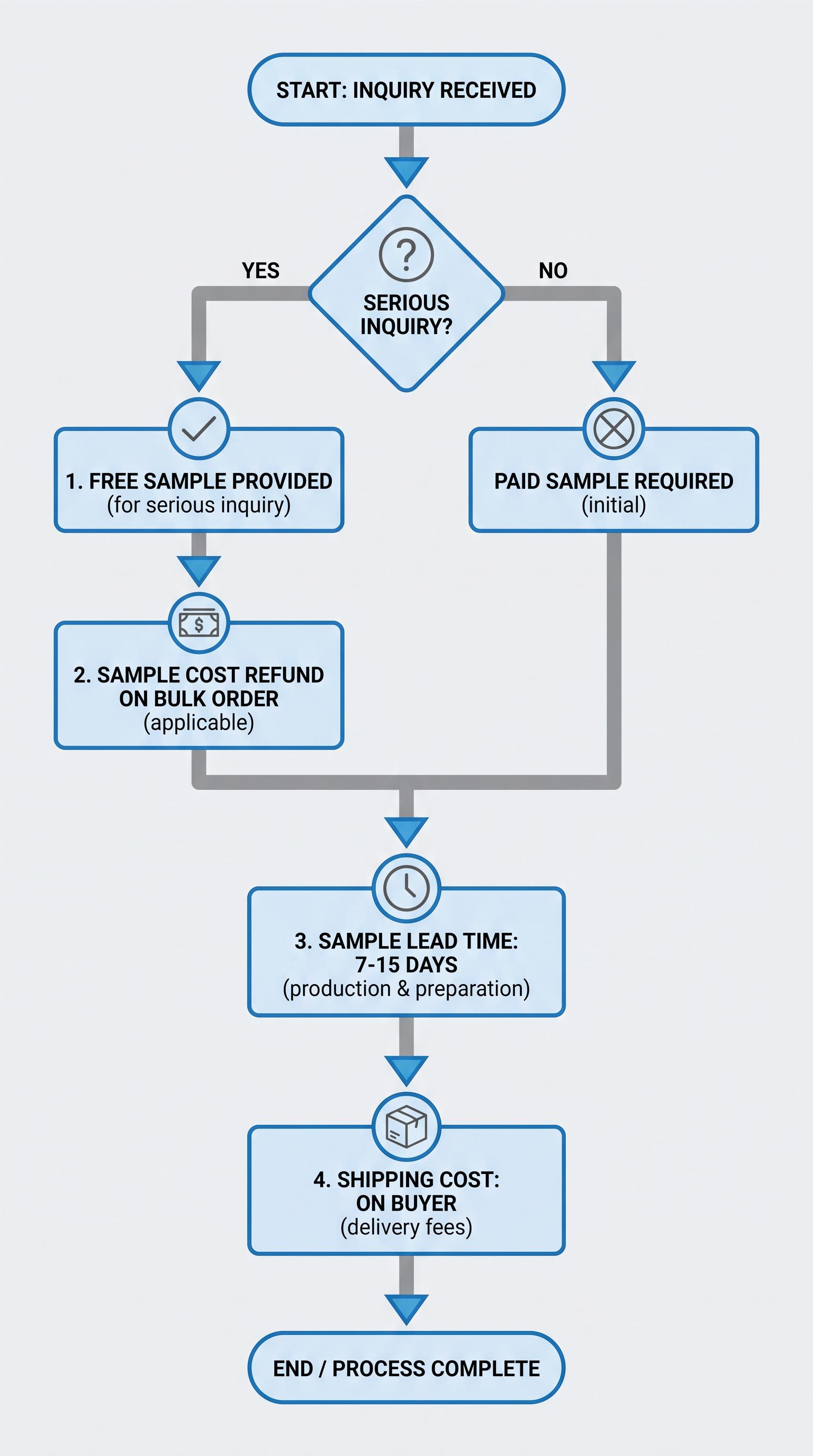
3. Sample Policy Transparency Clarify sample pricing, shipping costs, and return allowances before committing. Standard industry practice allows 30-day evaluation windows for pre-production samples, with replacement units provided for defect analysis. We maintain a no-questions-asked replacement policy for samples failing to meet agreed specifications.
4. Scalability and Capacity Verification Request factory tour documentation or third-party audit reports verifying production capacity. For orders exceeding 500 units, confirm component inventory commitments and sub-assembly capabilities.
| Evaluation Criteria | Minimum Acceptable Standard | DataMax Capability |
|---|---|---|
| Sample lead time | 15 business days | 10-12 business days |
| Engineering sample MOQ | 1-3 units | 1 unit |
| Production MOQ | 200 units | 100 units |
| Firmware NRE range | $3,000-$30,000 | $5,000-$25,000 |
Reach out via our contact portal to discuss your projector sample requirements with a dedicated B2B account manager. We respond within 4 business hours during China Standard Time.
Frequently Asked Questions
What is the typical lead time for B2B projector samples from a Chinese factory?
Standard lead time for B2B projector samples ranges from 10-30 business days depending on customization complexity. According to Statista Industry Report 2025, 68% of OEM buyers from North America report sample lead times between 14-21 days when requesting standard specifications. Complex customizations involving tooling modifications extend timelines to 5-8 weeks.
How many samples should I order before committing to a production run?
For OEM buyers in the BOFU stage, ordering 2-3 samples from different production batches provides statistical validation. We recommend requesting samples from both the engineering batch and pre-production pilot run to assess manufacturing consistency. Industry data from Grand View Research indicates that 73% of B2B procurement teams order multiple samples before finalizing supplier agreements.
What is the average MOQ for projector OEM production runs?
Minimum order quantities for projector OEM production typically range from 100-500 units for initial orders, with ongoing production MOQs between 100-300 units. Custom configurations with proprietary components may require MOQs of 500+ units. We offer flexible MOQs starting at 100 units for standard configurations, with volume pricing tiers activating at 200-unit thresholds.
Can I request custom firmware during the sample phase?
Yes, firmware customization is a standard service offered during the B2B projector sample process. Most factories allocate engineering resources for custom boot sequences, branded OSD elements, and enterprise integration during the pre-production sample stage. Typical firmware NRE costs range from $5,000-$25,000 depending on complexity. We validate all firmware modifications against the golden unit before approving production release.
What documentation should I request with projector samples?
Essential documentation includes optical performance reports (brightness, contrast, color accuracy), electrical safety certifications, dimensional drawings, and bill of materials breakdowns. For B2B procurement compliance, request REACH/RoHS declarations, CE/UL certification copies, and IP rating documentation if applicable. We provide full Product Technical Files including optical test data, firmware source code escrow, and tooling maintenance schedules.
How do I verify sample quality matches production specifications?
Request third-party laboratory testing of samples using identical protocols to production QC standards. We engage SGS Group for independent verification of optical specifications, ensuring alignment between sample units and mass production output. Documentation comparing sample test results against production batch reports should show deviation below 3% for key performance indicators.
For B2B procurement teams finalizing their OEM/ODM projector strategy, the sample process serves as both a technical validation checkpoint and a relationship-building exercise with your manufacturing partner.
Start your evaluation today by requesting a sample unit through our DataMax OEM services portal. Our engineering team reviews custom requirements within 24 hours and provides detailed NRE estimates for tooling, firmware, and logistics planning.
