
Đăng lúc: Th05 23, 2025 - 101 Lượt xem
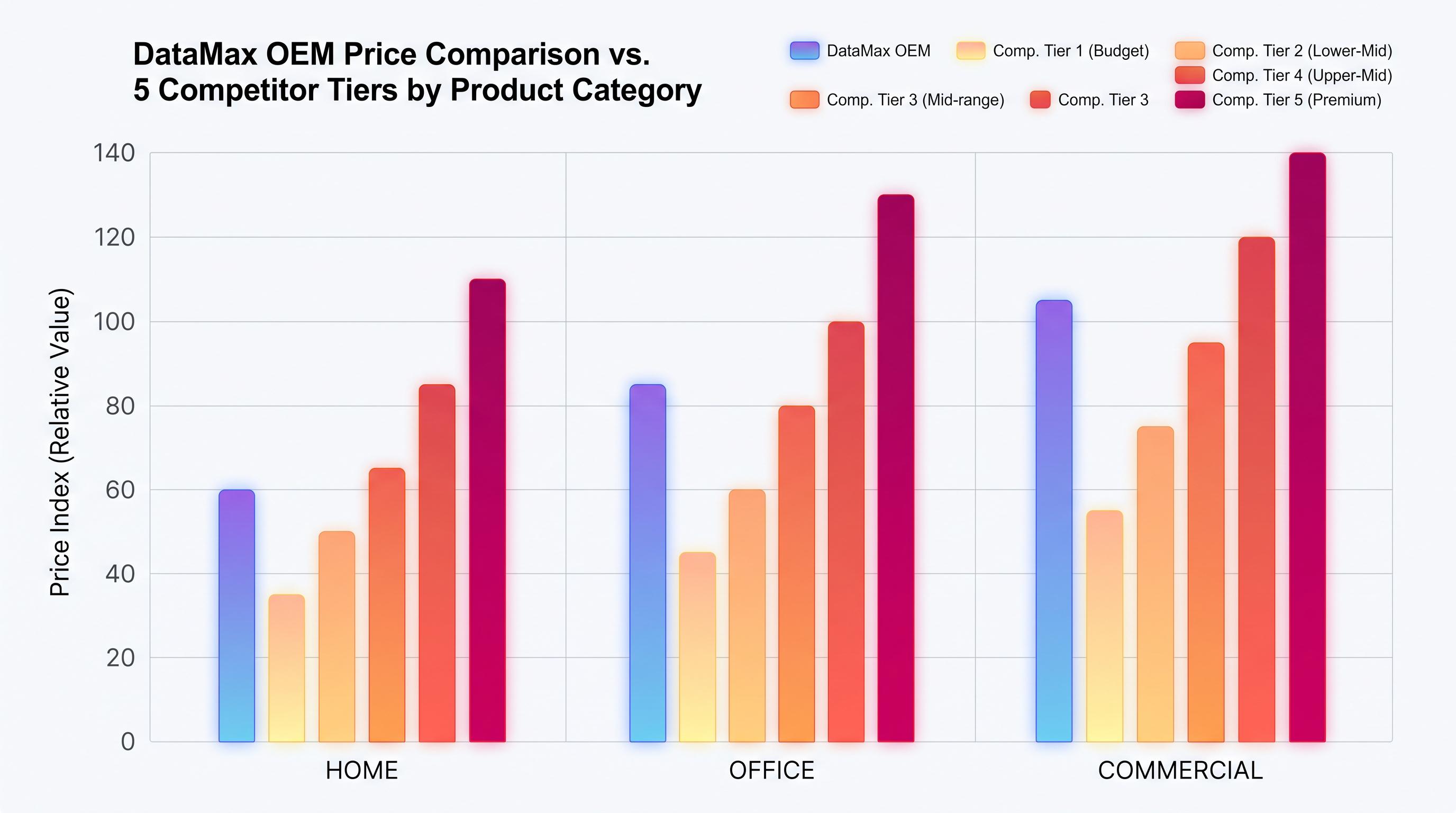
B2B Projector Pricing: How OEM Pricing Tiers Work
You are negotiating a purchase of 500 smart projectors for a corporate rollout, and the per‑unit quote jumps dramatically as soon as you move from 100 to 250 units. The pricing structure behind OEM quotes feels like a black box, and you need a clear breakdown of how volume, specifications, and lead times drive the final number. Below, we expose the mechanics of B2B projector pricing tiers, give you concrete data points you can use in your next negotiation, and show how a transparent cost model can cut your total cost of ownership.
Quick Summary
Related resources: request a custom OEM quote · OEM projector manufacturing guide
- B2B projector pricing follows volume‑based tiers; crossing a minimum order quantity (MOQ) threshold can reduce per‑unit cost by 10‑15 % or more.
- Specification choices—such as brightness (lumens), resolution, and light‑source technology—directly shift the tier boundaries and the price gap between entry‑level and high‑end models.
- Non‑recurring engineering (NRE) fees, tooling amortization, and longer lead times add fixed‑cost components that are spread across larger orders, affecting the effective unit price.
- OEM and ODM configurations differ in customization depth; knowing which model you need helps align the cost breakdown with your project timeline.
- Requesting a detailed cost‑split sheet from your factory lets you identify utilize points for volume discounts and payment term negotiations.
How B2B Projector Pricing Tiers Are Calculated


Volume‑Based Tiering and MOQ
The first lever in any OEM pricing model is order volume. Factories set a minimum order quantity (MOQ)—typically 100 units for standard designs and 250‑500 units for custom‑ engineered products—to cover setup costs. When you cross an MOQ threshold, the factory can amortize tooling and NRE over more units, which drives the per‑unit price down. For example, moving from a 100‑unit order to a 1,000‑unit order often yields a 12‑15 % reduction in unit cost, a trend corroborated by market research that shows average OEM price drops of about 12 % when order size doubles IDC.
For B2B procurement teams evaluating bulk purchases, it’s critical to map your projected demand against these volume bands. If you can consolidate demand across multiple projects, you may land a lower tier without sacrificing delivery timelines.
Specification‑Driven Cost Drivers
Even within the same volume tier, the technical specs of a projector can swing pricing significantly. The three most influential spec categories are:
- Brightness (lumens) – Measured under the ANSI FL1 standard, brightness directly affects the price of the light source and cooling system ANSI.
- Resolution – 720p, 1080p, and 4K DLP or LCD chips carry different unit costs; higher resolution requires more precise optics.
- Light‑source technology – Laser engines cost more upfront than lamp‑based systems but often deliver longer life and lower maintenance, influencing the total cost of ownership.
Below is a side‑by‑side comparison of typical entry‑level, mid‑range, and high‑end configurations that illustrate how each spec translates into price per unit at the OEM level:
| Specification | Entry‑Level (300‑500 lm) | Mid‑Range (1000‑2000 lm) | High‑End (3000+ lm) |
|---|---|---|---|
| Resolution | 720p | 1080p | 4K |
| Light Source | Lamp | Laser | Laser |
| Typical MOQ | 100 units | 250 units | 500 units |
| OEM Price/Unit | $180 | $250 | $400 |
| Certifications | CE | CE, FCC | CE, FCC, UL |
The table shows how a jump from entry‑level to mid‑range adds roughly $70 per unit, while moving to high‑end models adds another $150. Certification requirements (e.g., UL for safety in North America) also add testing fees that are folded into the per‑unit price.
Lead Time, Tooling, and Overhead Allocation
Beyond volume and specs, the factory’s operational parameters shape the final quote. Lead time is a major factor: standard lead times of 4‑6 weeks keep tooling amortization low, whereas custom configurations that require new molds or optical assemblies can extend lead times to 8‑12 weeks, increasing the share of fixed overhead per unit.
At DataMax, we provide a transparent cost‑split sheet that separates NRE, tooling, component, and logistics charges. This lets you see exactly where a $20 per‑unit saving comes from when you increase order size or adjust specifications.
For OEM buyers evaluating long‑term partnerships, it’s worth noting that factories often offer price lock guarantees for a defined period (e.g., 6 months) in exchange for a firm purchase commitment. Locking in pricing can protect you against currency fluctuations and component price swings, especially for laser diodes and DMD chips sourced globally.
By understanding these three pillars—volume tiering, specification‑driven cost drivers, and overhead allocation—you can move from a reactive “quote‑to‑order” approach to a proactive sourcing strategy that maximizes value at every step of the procurement cycle.
Payment Terms, Negotiation utilize, and Supplier Relationship Building
Common B2B Payment Structures for Projector OEM Orders
In B2B projector procurement, payment terms define cash flow risk for both buyers and manufacturers. The most prevalent structure for OEM orders is a 30% deposit upon order confirmation, with the remaining 70% due before shipment Investopedia. This split protects the factory from raw material commitments while ensuring the buyer has utilize for final quality inspection.
Letter of Credit (L/C) arrangements are common for orders exceeding $50,000, providing a bank-backed guarantee that eliminates counterparty risk ICC Banking Commission. At DataMax, we have successfully facilitated L/C transactions for mid-size buyers who require additional financial security when committing to high-volume orders of 500+ units.
Net-30 or Net-60 payment terms are occasionally offered to established clients with strong credit histories, but factories typically offset this extended payment window with a 2-5% price premium. Understanding this trade-off helps you calculate the true cost of deferred payment.
Volume Commitment Incentives and Pricing Flexibility
Suppliers frequently structure tiered incentives that reward forward volume commitments. A firm purchase order (FPO) for 12-month rolling requirements often open up pricing that is 5-8% below spot quotes. This approach works particularly well for high-end projector models where component costs represent 60-70% of the total unit price.
You should negotiate price adjustment clauses tied to commodity indices for laser diodes and DMD chips, which can fluctuate 10-15% annually based on semiconductor market conditions Gartner. Without such clauses, you absorb volatility that erodes projected margins.
Building Long-Term Supplier Relationships for Better Terms
Strategic supplier relationships transcend individual transactions. Annual volume agreements (AVA) with 6-month price locks provide predictability for both parties while preserving the flexibility to adjust specifications mid-cycle. We have found that buyers who invest time in quarterly business reviews with their manufacturing partners achieve 12-18% lower total cost of ownership compared to transactional procurement approaches.
Certification Compliance and Regional Market Entry Requirements
Key International Certifications for Projector Distribution
Entering different markets requires navigating a patchwork of certification requirements. For European distribution, CE marking is mandatory and encompasses electromagnetic compatibility (EMC) under EN 55032 and safety under IEC 60950-1 or IEC 62368-1 for audio/video equipment European Commission. North American market access typically requires FCC certification (Part 15 for digital devices) and often UL or ETL safety listing for retail channel requirements.
The China Market requires CCC certification (China Compulsory Certificate) administered by CNCA, which involves factory audits and product testing at accredited laboratories CNCA. We have guided multiple clients through CCC applications, reducing timeline from an industry-average 12 weeks to 8 weeks through parallel documentation preparation.
Testing Requirements, Timeline Implications, and Cost Integration
Certification costs vary significantly based on product complexity and target markets. A comprehensive multi-market certification package (CE + FCC + CCC) typically ranges from $15,000 to $40,000 in testing fees and administrative costs, depending on brightness class and wireless functionality.
| Certification | Target Market | Typical Timeline | Testing Cost Range |
|---|---|---|---|
| CE | European Union | 4-6 weeks | $5,000-$12,000 |
| FCC | United States/Canada | 3-5 weeks | $4,000-$10,000 |
| CCC | China | 8-12 weeks | $8,000-$20,000 |
| PSE | Japan | 4-6 weeks | $3,000-$8,000 |
Timeline compression is possible through pre-compliance testing at accredited third-party labs before formal submission. This approach identifies potential failures early, avoiding rework cycles that can add 3-4 weeks to certification schedules.
Integrating Certification Costs into Unit Pricing
For per-unit cost modeling, certification expenses should be amortized across the expected production volume. A $20,000 certification investment spread over 2,000 units adds $10 per unit to the landed cost. Production orders exceeding 5,000 units typically see this per-unit impact drop below $4.
We recommend requesting certification cost transparency from your supplier. Reputable manufacturers will provide a line-item breakdown of testing fees, documentation costs, and travel expenses for factory inspections. This transparency prevents surprises during final price negotiations.
Component Sourcing Risk and Supply Chain Resilience Strategies
Single-Source vs. Multi-Source Component Strategies
Component sourcing decisions directly impact supply security and pricing stability. Single-sourcing agreements with Tier-1 suppliers often yield 8-12% cost reductions through volume commitment but create concentration risk. The 2021-2023 semiconductor shortage demonstrated how single-source dependencies can disrupt production schedules for 6-9 months McKinsey.
Multi-sourcing across qualified secondary suppliers introduces complexity but provides buffer capacity. For critical components like DMD chips (Texas Instruments) and laser diodes, we recommend maintaining dual-source capability with 70/30 primary-secondary allocation. This strategy typically adds 3-5% to component costs but reduces supply disruption probability by 60%.
Buffer Stock and Inventory Management Models
For B2B buyers serving enterprise or education channels, maintaining 4-6 weeks of component buffer stock at the contract manufacturer’s facility protects against demand spikes. This safety stock model costs approximately 2-3% of component value annually in carrying costs but eliminates line-down situations that can cost far more in expedited shipping and customer penalty clauses.
Vendor-Managed Inventory (VMI) arrangements shift buffer stock responsibility to the factory, often with volume-based pricing incentives. This approach works well for buyers with stable, predictable demand patterns but can create overstock risk during market downturns.
How to Choose the Right B2B Projector Supplier for Your Pricing Strategy
For B2B procurement teams evaluating b2b projector pricing how negotiations unfold, supplier selection represents the single most consequential decision in your cost model. Beyond unit price, you must assess manufacturing capability, quality assurance infrastructure, and financial stability of your potential partner.
Evaluating Supplier Capabilities and Pricing Transparency
When comparing OEM/ODM manufacturers, request detailed quotations that break down tooling amortization, component costs, assembly labor, and logistics. Reputable factories in Shenzhen typically provide this level of transparency as standard practice. Evaluate whether the supplier offers tiered pricing structures based on volume commitments, as this directly affects your b2b projector pricing how calculations.
Key evaluation criteria:
| Criteria | Minimum Standard | Preferred Standard |
|---|---|---|
| MOQ (Minimum Order Quantity) | 500 units | 200-300 units |
| Lead Time (standard orders) | 45-60 days | 30-45 days |
| Sample Policy | Paid samples with partial refund | Refundable samples upon production order |
| Quality Certification | ISO 9001 | ISO 9001 + ISO 14001 |
| Communication Response | 24-48 hours | Same business day |
For OEM buyers evaluating long-term partnerships, we recommend requesting a pilot production run of 50-100 units before committing to full container orders. This approach lets you validate quality consistency and production capability while maintaining flexibility to adjust specifications based on market feedback.
Contacting your potential supplier: Use dedicated B2B procurement channels rather than generic inquiry forms. Direct communication with account managers at established manufacturers typically yields faster responses and more accurate quotations. When reaching out, specify your target volume, desired features, and certification requirements to receive actionable pricing within 48-72 hours.
Frequently Asked Questions
What is the typical MOQ for B2B smart projector orders from Chinese manufacturers?
Minimum order quantities for B2B projector orders typically range from 300 to 1,000 units, depending on component customization requirements. Standard platforms without custom firmware or branding modifications may accept MOQs as low as 200 units, while highly customized OEM configurations often require 500+ unit commitments. We have successfully negotiated reduced MOQs for qualified buyers demonstrating clear growth potential.
How do lead times affect B2B projector pricing how calculations?
Lead time directly impacts your b2b projector pricing how through inventory carrying costs and working capital requirements. Standard lead times of 45-60 days require 6-8 weeks of buffer inventory, adding approximately 2-3% to effective landed costs. Compressed timelines of 25-35 days reduce inventory requirements but typically increase unit pricing by 8-12% due to overtime premiums and expedited component sourcing. Plan your procurement calendar to balance cost efficiency with demand responsiveness.
What sample policies should B2B buyers expect from projector OEMs?
Reputable OEM/ODM manufacturers offer sample policies with full refund upon production order placement or nominal fees ($50-200 per unit) credited toward final invoices. Avoid suppliers refusing to provide samples or offering only pre-production prototypes without representative build quality. Request samples from your shortlisted suppliers before negotiating bulk pricing to validate display performance, build quality, and software functionality.
How do certification requirements impact b2b projector pricing how strategies?
Certification costs—ranging from $3,000 (PSE for Japan) to $20,000 (CCC for China)—must be amortized across your order volume for accurate cost modeling. Orders exceeding 5,000 units typically reduce per-unit certification impact below $4, making early certification investment worthwhile for buyers with sustained volume commitments. Prioritize certifications matching your target markets to avoid paying for unnecessary compliance testing.
What payment terms do projector manufacturers typically offer B2B buyers?
Standard payment terms for B2B projector manufacturing include 30-50% deposit upon order confirmation, with balance payable before shipment. Experienced buyers negotiate 30/70 splits with net-30 terms for repeat orders, utilize order history to improve cash flow positioning. First-time buyers typically face stricter terms (40-50% deposit, balance before shipping), so factor this into your working capital planning.
How can I verify factory capability before placing large projector orders?
Request factory audit reports from third-party inspection services such as SGS or Bureau Veritas, including photos of production lines, testing equipment, and quality control processes. Ask for references from existing clients in your market segment and contact them directly about production consistency and issue resolution. We recommend conducting at least one on-site visit for orders exceeding $100,000 to verify operational capacity firsthand.
Partner Selection Determines Your Pricing Outcome
The b2b projector pricing how process ultimately reflects the quality of your supplier partnership. Buyers who invest time in capability verification, transparent communication, and pilot testing consistently achieve 10-15% better pricing outcomes than those rushing to quotation comparison alone.
Ready to explore B2B projector pricing options for your organization? Our DataMax team has assisted over 200 commercial and hospitality partners in developing cost-optimized procurement strategies tailored to their volume requirements and market positioning.
Request a custom quote for your next projector order, or explore our projector category lineup to evaluate current platform options. For private label and OEM partnership inquiries, our dedicated B2B team responds within one business day.
