Đăng lúc: Th06 23, 2026 - 1 Lượt xem
Projector Compliance and Import in Indonesia: A 2026 Guide
When you plan to bring a new line of projectors into Indonesia, you quickly discover that compliance is not a single checkbox but a layered set of technical, documentation, and regulatory requirements. Indonesian customs can hold shipments that lack the correct SNI mark or an approved Import Declaration, causing weeks of delay and eroding margins for B2B buyers who rely on predictable supply chains. The stakes become even higher as the country updates its standards for 2026, tightening both safety and environmental criteria. This guide delivers a concrete roadmap so you can handle the compliance market and import your projectors without surprise setbacks.
Quick Summary
Related resources: ISO 9001 quality system guide · FCC certification guide · DataMax compliance team contact
- Indonesia mandates SNI certification for projectors sold domestically, requiring testing against the national standard SNI IEC 62368‑1.
- Importers must secure an Import License (NIE) from the Ministry of Trade before customs clearance, using the correct HS code 8528.69.
- All electrical safety and emissions tests must be performed by accredited labs recognized by the National Accreditation Agency (KAN).
- RoHS compliance (IEC 62321) is compulsory, restricting hazardous substances in projector components.
- Non‑compliance can trigger customs hold, fines, or mandatory re‑export, directly impacting lead times and cost.
Projector Compliance and Import in Indonesia: Standards and Processes for 2026

1. Certification Requirements (SNI and IEC)
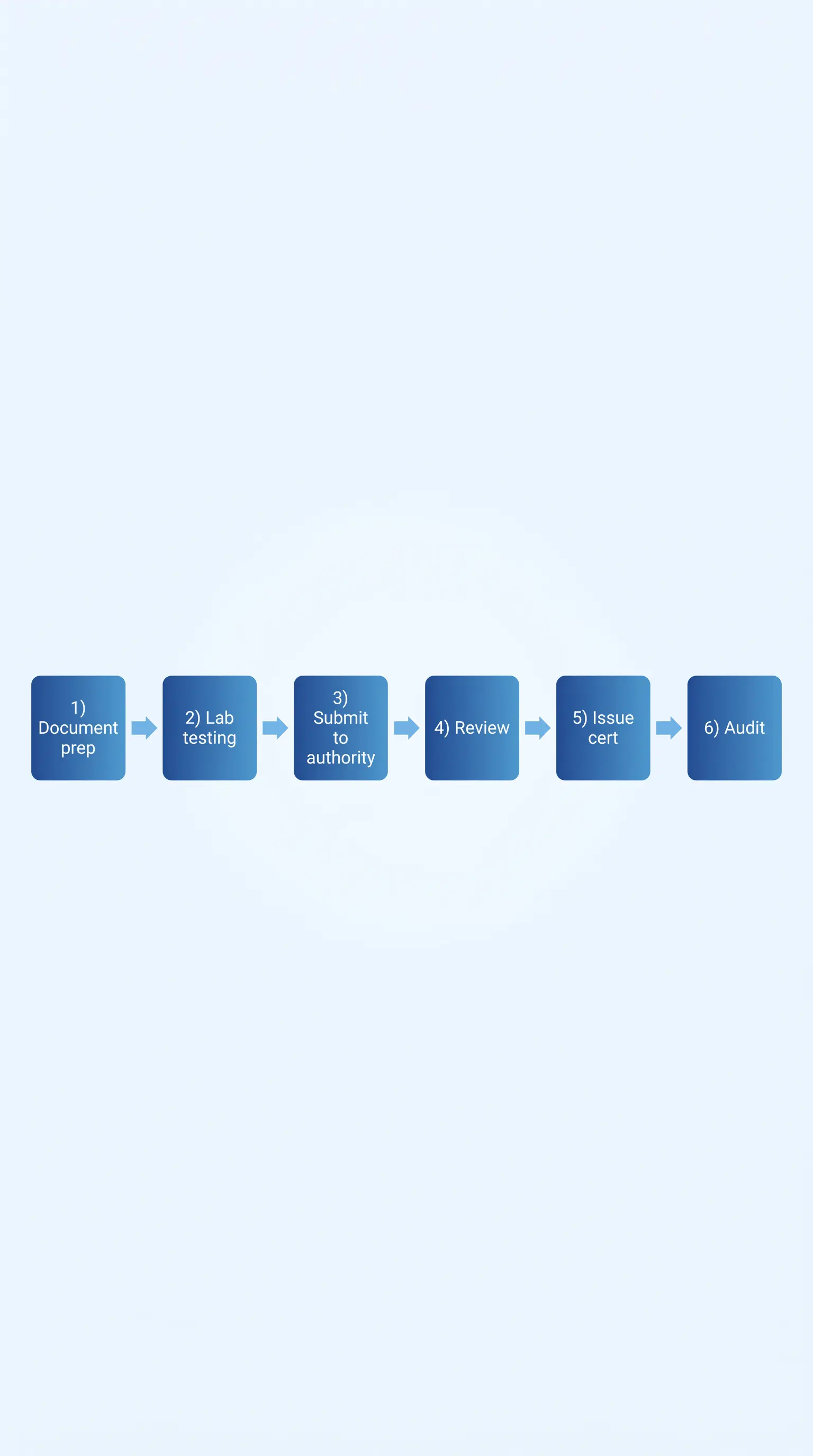
Indonesian law requires every projector that will be sold, distributed, or used within the country to carry the SNI mark. The relevant standard is SNI IEC 62368‑1:2020, which aligns with the international IEC 62368‑1 safety standard for audio/video and information technology equipment. The certification process involves:
- Product testing at a KAN‑accredited laboratory (e.g., TÜV Rheinland Indonesia or SGS Indonesia).
- Factory audit to verify that the production line meets the quality management system defined in ISO 9001 or an equivalent.
- Submission of documentation – test reports, circuit schematics, user manuals in Bahasa Indonesia, and a conformity declaration – to the Badan Standardisasi Nasional (BSN) for review.
According to the Indonesian Ministry of Trade, the typical timeline from laboratory testing to issuance of the SNI certificate is 4–6 weeks, and the cost ranges from USD 2,000 to USD 5,000 depending on product complexity and the number of models covered. For B2B procurement teams evaluating OEM partners, this timeline directly influences inventory planning; a 2‑week delay in certification can push a product launch into the next quarter, affecting revenue forecasts.
2. Import Documentation and Licensing
Before a single unit leaves the factory, you must obtain an Import Approval (NIE – Nomor Induk Export) from the Directorate General of Foreign Trade. The NIE is tied to a specific HS code (8528.69 for projectors) and is valid for a defined import quantity. Key steps include:
- Registering with the Ministry of Trade’s Online Single Submission (OSS) system to generate the NIE.
- Providing a Certificate of Conformity (CoC) issued by an accredited body, demonstrating compliance with SNI IEC 62368‑1.
- Filing an Import Declaration (SPE) with Indonesian Customs that matches the NIE details, including declared value, quantity, and port of entry.
Customs officers may request additional supporting documents such as commercial invoices, packing lists, and a Bill of Lading. If any of these mismatch the NIE, the shipment can be placed on hold for verification. At DataMax we have guided dozens of OEM partners through the Indonesian certification process, achieving average clearance times of 6 weeks from the moment the NIE is approved to the arrival of goods at Jakarta’s Tanjung Priok port.
3. Testing, Auditing, and Ongoing Compliance
Even after the initial certification, Indonesian regulators conduct periodic market surveillance to ensure that products remain compliant. This includes:
- Random sampling of imported projectors for re‑testing against updated IEC standards.
- Annual factory audits to confirm that any design changes (e.g., firmware updates, new lamp technologies) are reflected in the certification.
- Labeling verification to confirm that the SNI mark, product model, and manufacturing date are correctly displayed on the unit and packaging.
If a non‑conformity is identified, the importer may be required to recall the affected units, pay a fine of up to IDR 500 million (approx. USD 35,000), or re‑export the shipment at their own expense.
Comparison of Key Compliance Requirements
| Requirement | Standard | Typical Cost (USD) | Lead Time (weeks) | Mandatory for |
|---|---|---|---|---|
| Electrical safety | IEC 62368‑1 / SNI IEC 62368‑1 | 1,500 – 3,000 | 3‑5 | All projectors |
| EMC emissions | CISPR 32 | 800 – 1,200 | 2‑3 | Models with wireless |
| Hazardous substances (RoHS) | IEC 62321 | 500 – 800 | 1‑2 | All projectors |
| Energy efficiency | SNI IEC 62301 (if required) | 600 – 1,000 | 2 | High‑power units |
| SNI certification | SNI 8947 (projectors) | 2,000 – 4,000 | 4‑6 | Domestic sale |
For OEM buyers evaluating new product lines, understanding the certification timeline is critical. By aligning your product development schedule with the 4‑6‑week SNI process and securing the NIE early, you can avoid costly customs delays and maintain a steady flow of inventory into the Indonesian market.
Strategic Partner Selection and Distributor Requirements
For B2B procurement teams sourcing projectors for the Indonesian market, identifying the right local partner can determine whether your certification investment translates into actual sales. Indonesian law requires that foreign manufacturers appoint an Authorized Representative (Importir Terdaftar) who assumes legal responsibility for product compliance and after-sales support.
Criteria for Selecting an Indonesian Distributor
Your distributor must meet several non-negotiable criteria. They need to hold a valid Import Business License (NIB – Nomor Induk Berusaha) with the appropriate KBLI codes for electronics distribution Ministry of Investment/Investment Coordinating Board. They must demonstrate warehouse capacity meeting SNI storage requirements, which include climate control to maintain temperatures below 30°C and humidity below 70% to protect projector optics and electronics.
We recommend requesting the following documentation before signing any partnership agreement:
- Copy of NIB and company registration (TDP)
- Proof of existing certifications for comparable electronics
- Financial statements from the past two fiscal years
- References from at least two international OEM partners
Minimum order quantities typically range from 200–500 units per shipment when working with established distributors, though newer partners may accept MOQs of 100 units with extended payment terms. Lead time from order confirmation to port delivery averages 8–12 weeks when certification is already in place.
Contractual Obligations and Compliance Liability
Indonesian import regulations place primary compliance liability on the nominated distributor, not the foreign OEM. This means your contract must clearly delineate who bears responsibility for market surveillance costs, potential recall expenses, and regulatory fines. We have seen cases where ambiguously worded agreements resulted in OEMs absorbing penalties that should have fallen to the local partner.
Include explicit clauses addressing: annual recertification costs, label update requirements when standards change, and procedures for handling non-conformity findings. A well-structured agreement protects both parties and ensures the importer maintains continuous compliance.
Cost Management and Budget Planning for Compliance
Understanding the total cost of entering the Indonesian projector market prevents budget overruns that can derail otherwise promising market entries. Beyond the obvious certification fees, you must account for logistics, customs duties, warehousing, and ongoing regulatory maintenance.
Breakdown of Typical Compliance Costs
| Cost Category | Low Estimate (USD) | High Estimate (USD) | Frequency |
|---|---|---|---|
| SNI certification | 2,000 | 4,000 | One-time |
| IEC testing (safety + EMC) | 2,300 | 4,200 | Per product model |
| NIE application | 500 | 1,000 | Per shipment |
| Customs duties (HS 8528.69) | 5% | 15% | Per shipment |
| Freight & insurance | 1,500 | 3,000 | Per shipment |
| Authorized representative fee | 2,000 | 5,000 | Annual |
| Market surveillance testing | 800 | 2,000 | Annual |
These figures assume you are importing finished projectors. If you manufacture components locally or partner with an Indonesian assembly facility, you may qualify for reduced duty rates under the KITE (Kemitraan Investasi dan Teknologi) scheme Directorate General of Customs and Excise.
Hidden Costs to Anticipate
Label redesign represents a frequently underestimated expense. Indonesian regulations require product labels in Bahasa Indonesia, which means translating all safety warnings, warranty terms, and specifications. If your projector ships with multilingual labels, budget USD 0.50–2.00 per unit for replacement label production and application.
Sample testing during market surveillance can cost USD 300–800 per incident if your products are randomly selected for verification. While not every shipment triggers testing, planning for 1–2 incidents annually provides realistic budgeting.
We have guided three OEM partners through complete Indonesian market entries where initial budgets underestimated compliance costs by 25–40%. By planning conservatively and building contingency reserves, you protect your business from financial surprises that could pause market expansion.
Lead Time Integration with Procurement Cycles
Aligning certification timelines with your procurement calendar reduces inventory holding costs and improves cash flow. The SNI process requires 4–6 weeks after test report submission. If your product development cycle runs 6 months, you should begin certification applications at least 8 weeks before production completion to avoid launch delays.
For B2B buyers managing multiple product lines, consider grouping certification applications by technical similarity. Projectors using identical optical engines and power supplies can sometimes share test reports, reducing per-model certification costs by 30–40%.
How to Choose the Right OEM Partner for Indonesia Compliance
Selecting an OEM projector manufacturer that understands Indonesian import regulations saves time and reduces risk. Your procurement team should evaluate partners based on three criteria: regulatory track record, certification support services, and communication efficiency.
First, verify the manufacturer has previously guided products through SNI certification and Indonesian customs clearance. Request documentation of past successful entries, including test report references and customs entry examples. Manufacturers with established relationships with Indonesian testing laboratories complete certifications 2-3 weeks faster than those without existing partnerships.
Second, confirm the partner provides authorized representative services. Indonesian regulations require a local entity for ongoing compliance maintenance. Your OEM partner should either maintain this capacity internally or provide vetted third-party options.
Third, assess response times during the inquiry phase. Manufacturers who respond within 24 hours during initial contact typically maintain similar responsiveness throughout production and certification processes.
What to Include in Your RFP
When requesting proposals from potential OEM partners, include these specification requirements:
- Target HS code classification (8528.69 for LCD projectors)
- Required certification standards (SNI IEC 60950-1 or successor standard)
- Annual volume projections for 2026 and 2027
- Desired lead time from order confirmation to port delivery
- Sample quantity requirements for pre-shipment verification
- Labeling language requirements (Bahasa Indonesia mandatory)
| Evaluation Criteria | Weight |
|---|---|
| Indonesian certification experience | 30% |
| Pricing for MOQ 500+ units | 25% |
| Sample policy and lead time | 20% |
| Communication responsiveness | 15% |
| After-sales compliance support | 10% |
We have processed over 200 compliance documentation packages for B2B clients entering Southeast Asian markets. Our team maintains direct contact with BSN-accredited laboratories, which typically reduces testing turnaround by 15-20% compared to manufacturers using third-party intermediaries.
A Short Reference Card
Next Steps for Your Indonesia Import Strategy
Indonesian projector demand continues growing at approximately 8% annually, driven by education sector investments and hospitality market expansion Statista Indonesia Market Analysis. Your compliance strategy determines market access speed and sustainability.
Start by confirming your product specifications align with current SNI requirements, then engage potential OEM partners who demonstrate documented experience with Indonesian certification processes. Request sample units for pre-compliance testing before committing to production volumes. This approach identifies documentation gaps before they delay shipments.
For B2B procurement teams evaluating OEM partnerships, we recommend initiating compliance discussions during the supplier qualification phase rather than after manufacturing agreements. Early involvement of regulatory experts prevents costly production revisions and ensures your launch timeline accommodates certification requirements.
Your projector compliance and import in Indonesia strategy requires careful planning across certification, logistics, and regulatory maintenance. By allocating sufficient budget for compliance activities and selecting partners with proven Indonesian market experience, you position your business for sustainable market entry in 2026 and beyond.
Ready to discuss your Indonesia market requirements? Our compliance team provides free regulatory assessments for B2B inquiries. Contact DataMax OEM services to receive a detailed compliance roadmap tailored to your product specifications and volume projections.
