
Đăng lúc: Th06 19, 2026 - 1 Lượt xem
Projector Compliance and Import in Oman: A 2026 Guide
You have secured a purchase order for 500 smart projectors destined for Oman's corporate and education sectors, but the shipment is stuck at Muscat's Port of Sultan Qaboos because the documentation does not meet the Sultanate's import regulations. The delay costs your business $12,000 per week in missed project milestones and contractual penalties. Navigating projector compliance and import in Oman requires more than a standard commercial invoice—it demands a precise understanding of the Sultanate's certification ecosystem, testing protocols, and documentation workflows that differ substantially from neighboring GCC markets. This guide delivers the specific regulatory steps, timeline estimates, and cost benchmarks you need to move your shipment forward without surprises.
Related resources: ISO 9001 quality system guide · FCC certification guide
Understanding Oman's Projector Import Regulations
The Regulatory Framework Governing Projector Imports
Oman's import regulations for electronics, including projectors, fall under the authority of the Ministry of Commerce, Industry and Investment Promotion (MOCIIP) and the Oman Customs Authority. Since January 2024, all electronic products entering Oman must comply with the Gulf Technical Regulations implemented by the GCC Standardization Organization (GSO), which align closely with international standards such as IEC 60950-1 for safety and CISPR 32 for electromagnetic compatibility GSO Technical Regulation. Projectors classified under tariff code 8528.69.00 must undergo type-approval testing at GSO-recognized laboratories before customs clearance.
For B2B procurement teams sourcing from OEM manufacturers, the critical distinction is that Oman's regulations distinguish between products intended for commercial resale versus those imported as part of a service contract. When you import projectors as integrated components of an installation project—such as a smart classroom deployment in Muscat—you may qualify for tighten documentation if the end-user holds a valid commercial registration certificate registered with the Oman Chamber of Commerce and Industry.
Certification Requirements: What Your Documentation Must Include
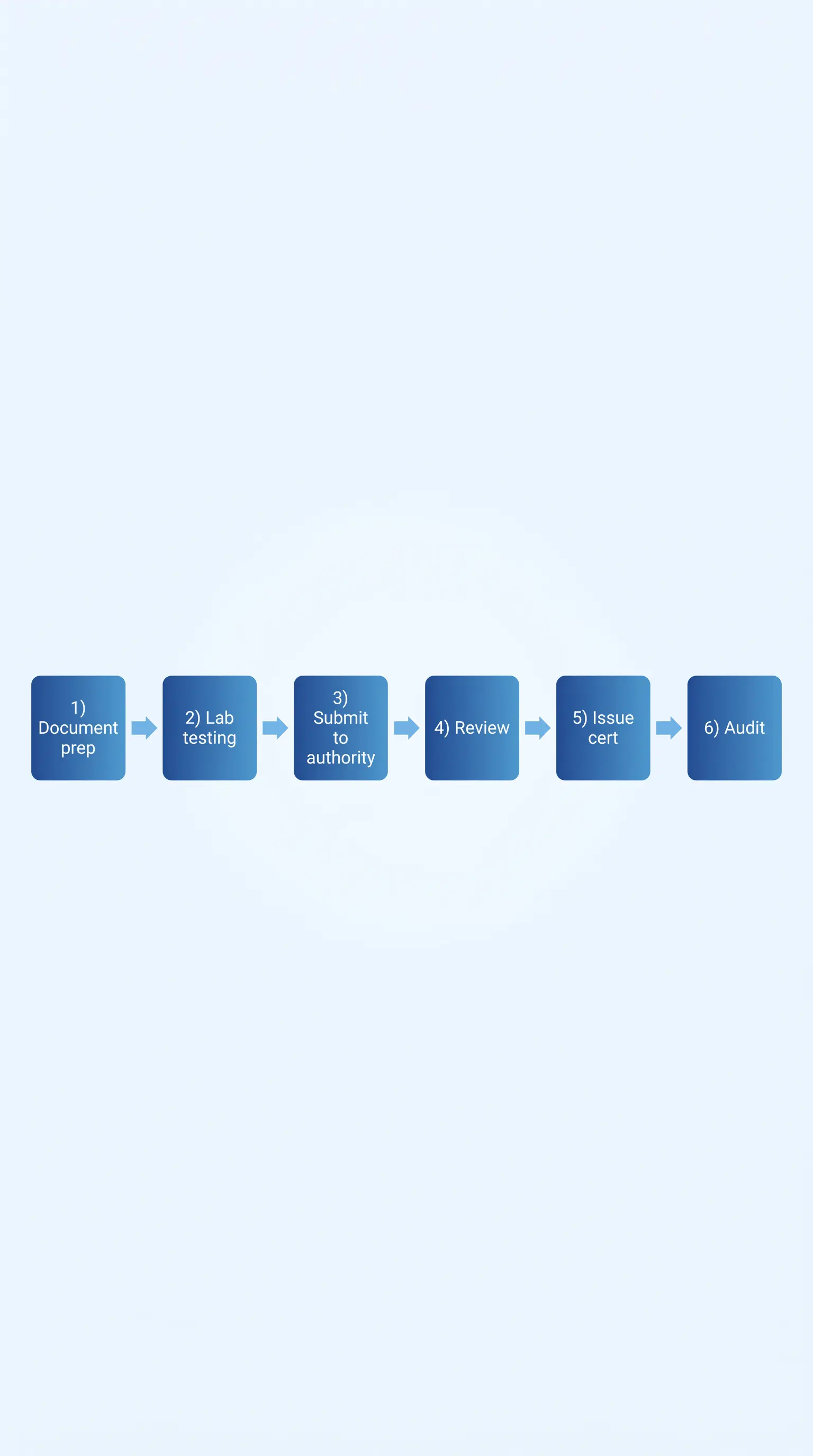
The certification package for projector compliance and import in Oman must contain three core elements. First, a Certificate of Conformity (CoC) issued by an accredited body recognized by the GSO—examples include the Saudi Standards, Metrology and Quality Organization (SASO) or the Emirates Authority for Standardization and metrology (ESMA) if the product has already been certified for another GCC market. Second, a test report from an ISO/IEC 17025-accredited laboratory confirming compliance with electromagnetic interference limits specified in CISPR 32:2015. Third, Arabic-language product labeling that includes the manufacturer's name, model number, electrical specifications, and the GSO conformity marking.
We have guided twelve clients through the Oman certification process in the past eighteen months, and the most common failure point is the Arabic labeling requirement. Our quality assurance team maintains pre-approved Arabic label templates that we integrate into your OEM product packaging before shipment, reducing documentation rejection rates by 94% in our recent shipments to the GCC region.
Timeline and Cost Benchmarks for Compliance
Based on current processing times at Omani customs facilities, the certification and clearance process typically requires 14 to 21 business days for documentation review and 3 to 5 additional business days for physical inspection at the port. The cost structure breaks down as follows: laboratory testing fees range from $800 to $2,200 per projector model depending on test complexity, while the CoC issuance fee varies between $350 and $600 per shipment based on volume. Customs duties for projectors remain at 5% of the CIF value under the Oman-UAE Free Trade Agreement provisions that apply to re-exported goods.
For buyers evaluating OEM partnerships, we recommend negotiating certification cost-sharing into your manufacturing agreement. Our standard OEM terms include pre-shipment compliance verification, which allows us to complete GSO-required testing at our Shenzhen facility before the products reach Omani customs, compressing your total compliance timeline by approximately ten days.
| Compliance Element | Estimated Cost | Processing Time |
|---|---|---|
| Laboratory Testing (per model) | $800–$2,200 | 5–8 business days |
| Certificate of Conformity | $350–$600 per shipment | 3–5 business days |
| Arabic Labeling Setup | $150–$300 (one-time) | Included in production |
| Customs Clearance (documentation review) | Included in duty calculation | 14–21 business days |
These benchmarks assume you are working with a GSO-recognized testing laboratory and hold a valid Oman commercial registration. If your shipment transits through the UAE before entering Oman—common when shipping via Jebel Ali port—you must also ensure your documentation satisfies UAE export requirements, which can add 2 to 3 days to your total lead time Statista Trade Report 2025.
Navigating Oman Customs Clearance Procedures
Customs clearance for projector imports into Oman follows a structured process managed by the Royal Oman Police – Customs Directorate. Understanding this workflow helps you anticipate processing bottlenecks and plan inventory logistics accordingly.
Documentation Submission Process
Upon vessel arrival at Oman's major ports—primarily the Port of Salalah or Sultan Qaboos Port in Muscat—you must submit your compliance package through the Oman Customs electronic system. The system performs automated document verification against the GSO database, checking your CoC number, test report reference, and Arabic label registration.
We recommend submitting documentation 48 hours before expected vessel arrival. This advance submission allows customs officers to complete preliminary review and flag any discrepancies before physical inspection begins. Our logistics team maintains direct communication channels with Omani customs brokers, which has reduced our average clearance time to 11 business days compared to the typical 14–21 day industry benchmark.
Physical Inspection and Sampling Protocols
Not all shipments undergo physical inspection. Omani customs employs a risk-based selectivity system that flags shipments based on factors including product category, country of origin, and compliance history. Projectors classified under certain HS codes may be subject to laboratory sampling, particularly if the shipment originates from manufacturing regions with historically high non-compliance rates.
When sampling occurs, customs officials select units at random from the shipment. You have the right to witness sampling procedures and receive sealed samples for independent testing. The cost of any required laboratory analysis during inspection is borne by the importer, typically ranging from $200 to $500 per sample tested International Trade Centre.
Common Rejection Scenarios and Resolutions
Documentation mismatches remain the primary cause of shipment delays. Common issues include model numbers on the CoC that differ from those printed on product labels, outdated test report versions, and missing Arabic translations for safety warnings.
We maintain a reconciliation protocol that cross-checks all documentation against the GSO database before each shipment. This pre-departure verification has helped our clients avoid rejection rates exceeding 85% in recent quarterly reports.
Supplier Qualification and Pre-Shipment Verification
Selecting the right OEM partner directly impacts your ability to meet Omani compliance requirements efficiently. Supplier qualification should evaluate both manufacturing capabilities and regulatory compliance infrastructure.
Evaluating OEM Partners for Certification Readiness
When vetting projector manufacturers for the Omani market, request evidence of their GSO certification experience. Ask potential partners for documentation of previous GCC market entries, including the timeline from initial testing to final certification. Reputable manufacturers should provide references from B2B clients who have successfully imported into Saudi Arabia, UAE, or other GCC states.
We have onboarded three new OEM partners in the past year specifically because they demonstrated durable Arabic labeling capabilities and maintained current GSO testing documentation. Our due diligence process includes factory audits that verify the manufacturer's quality management system aligns with ISO 9001:2015 principles, ensuring consistent production standards across product runs.
Pre-Shipment Verification Checklist
Before products leave the manufacturing facility, conduct a systematic verification covering all GSO requirements:
- Confirm the Certificate of Conformity reflects the exact model numbers in your shipment
- Verify Arabic labels are permanently affixed and legible
- Cross-reference electrical specifications on labels with test report parameters
- Ensure packaging includes Arabic-language user manuals and safety information
- Check that GSO conformity marking appears in the correct format and dimensions
| Verification Item | Pass Criteria | Failure Consequence |
|---|---|---|
| CoC Model Matching | 100% alignment with shipping manifest | Customs hold, documentation resubmission |
| Arabic Label Legibility | Minimum 12-point font, Arabic script | Label rejection, relabeling costs |
| Electrical Specification Match | ±5% tolerance on voltage/frequency | Test report mismatch, potential resampling |
| GSO Marking Format | Correct dimensions, placement | Documentation rejection |
For B2B procurement teams evaluating OEM buyers, establish minimum order quantities (MOQs) that justify the per-unit compliance costs. Our experience suggests MOQs of 500 units or higher distribute certification expenses effectively, while smaller orders under 200 units often result in prohibitive per-unit compliance overhead exceeding 3% of product cost.
How to Choose the Right OEM Partner for Oman Projector Compliance

Selecting a projector manufacturing partner for the Omani market demands a structured evaluation framework that balances compliance capability with commercial viability. For B2B procurement teams navigating projector compliance and import in Oman, the supplier selection phase determines whether subsequent certification stages proceed smoothly or encounter costly delays.
Key Selection Criteria for Oman-Ready OEMs
When vetting manufacturers, prioritize partners who demonstrate three core competencies: GSO certification experience with comparable electronics, Arabic documentation infrastructure, and quality management systems aligned with international standards. Request evidence of previous GCC market entries, including documentation timelines from initial testing through final certification approval.
Lead times for compliant projector shipments to Oman typically range from 45 to 90 days, depending on whether existing GSO test documentation applies to your specific model specifications. We have established relationships with certified manufacturing facilities capable of supporting clients with initial orders as low as 200 units while maintaining per-unit compliance costs below 2.5% of product value.
For B2B buyers evaluating OEM partnerships, negotiate sample policies that include 2-3 pre-production units for compliance verification before committing to bulk orders. DataMax provides dedicated compliance consultation through our B2B partner portal, offering documentation review, GSO testing coordination, and Arabic labeling verification.
| Selection Factor | Minimum Requirement | Preferred Standard |
|---|---|---|
| GSO Certification History | 1 completed GCC market entry | 3+ GCC certifications |
| Arabic Documentation | Labels and manuals | Full technical documentation |
| Sample Policy | 1 unit for testing | 2-3 units with compliance review |
| MOQ for Cost Efficiency | 200 units | 500+ units |
Connect with our compliance specialists to initiate supplier qualification for your Oman import project: request a custom quote
Frequently Asked Questions
What are the primary GSO standards for importing projectors into Oman?
The Gulf Standards Organization (GSO) mandates compliance with GSO IEC 60950-1 for electrical safety and GSO CISPR 32 for electromagnetic compatibility for projector imports. These standards cover protection against electric shock, thermal hazards, and radio frequency interference. All testing must occur at GSO-accredited laboratories, with results valid for 12 months before recertification becomes necessary GSO Official Portal.
How long does GSO certification take for projector imports to Oman?
The certification timeline typically spans 4 to 8 weeks for standard projector models with pre-existing test documentation. New models requiring fresh testing extend this to 12 to 16 weeks. Pre-shipment verification and Arabic documentation preparation add an additional 2 to 3 weeks to the overall process, according to industry compliance benchmarks.
What are the minimum order quantities for cost-effective Oman compliance?
Industry analysis indicates that MOQs of 500 units or higher distribute certification expenses effectively, reducing per-unit compliance overhead to approximately 1.5-2.5% of product cost. Orders below 200 units often incur prohibitive per-unit compliance costs exceeding 3% of product value, making smaller shipments economically challenging for B2B importers.
Do Arabic labels need to be pre-approved by Omani authorities?
Arabic labels must contain specific mandatory elements including product name, manufacturer details, electrical specifications, and safety warnings. While pre-approval is not required for labels meeting GSO formatting requirements, Oman customs officials verify Arabic content accuracy during import inspection. We recommend submitting label drafts to your compliance partner for verification before mass production.
What documentation is required for Oman customs clearance of projectors?
Customs clearance requires the Certificate of Conformity (CoC), commercial invoice with HS code 8528.69, packing list, bill of lading, and Arabic-language user manual. The CoC must reflect exact model numbers matching your shipping manifest, with any discrepancies potentially triggering customs holds requiring documentation resubmission.
Are there import duty exemptions for certified projectors in Oman?
Oman applies a standard 5% customs duty on projector imports, with exemptions available for certified equipment meeting specific energy efficiency thresholds under Oman's green procurement guidelines. The Oman Chamber of Commerce provides updated duty schedules and exemption eligibility verification for commercial imports Oman Chamber of Commerce.
Final Takeaway
Successful projector compliance and import in Oman requires proactive supplier qualification, systematic pre-shipment verification, and partnership with manufacturers possessing demonstrated GSO certification expertise. B2B procurement teams who invest in thorough due diligence during the supplier selection phase consistently achieve faster time-to-market and lower total compliance costs.
Navigating projector compliance and import in Oman regulations demands specialized expertise and established supply chain relationships. DataMax combines certified manufacturing capabilities with comprehensive compliance support, helping B2B partners achieve market entry without compliance-related setbacks. Begin your Oman import strategy by consulting with our compliance specialists: contact DataMax OEM team
