
تم النشر في: سبتمبر 25, 2025 - 61 المشاهدات
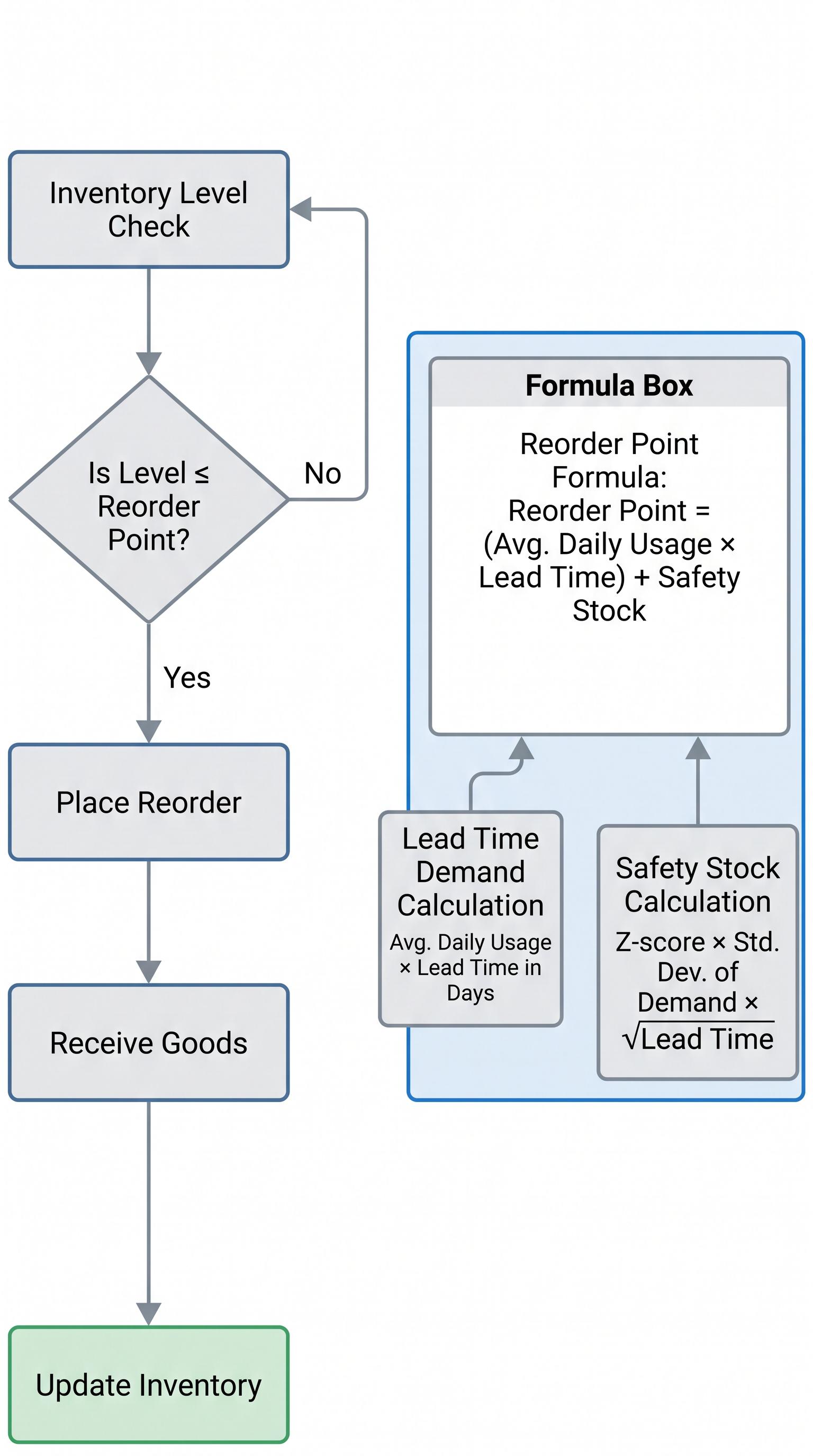
Risk Management Flowchart: Process Walkthrough
A buyer wires 50% deposit to a new projector OEM, waits 14 weeks, then receives a shipment where 11 of 220 units have cracked light engines and the paperwork mismatches the customs HS code by two digits — the container sits on the Shenzhen Yantian port dock for 23 extra days while the buyer's prepaid Las Vegas trade show opens in nine days. The SKU is the operational discipline that prevents that scenario, and this flowchart-style guide walks B2B procurement teams through the exact decision points from supplier shortlist to delivered cargo. By the end of pass 1 you will know the six checkpoints where projects fail, the documents that must be in your hands before each milestone, and the contract clauses that shift liability back to the manufacturer.
Phase 1 of the risk management flowchart: supplier shortlist and contract gate

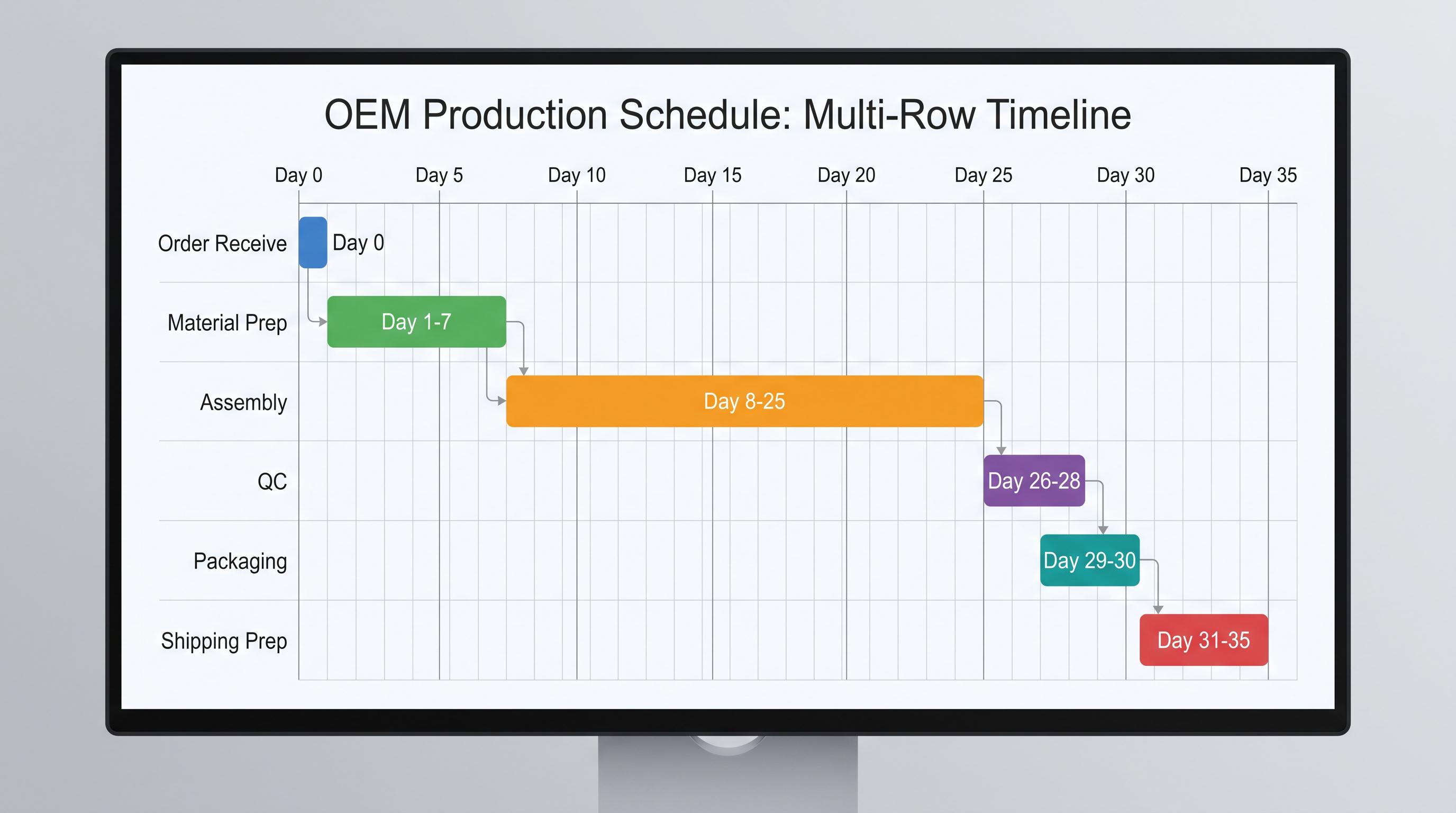
The unit works best when it is treated as a procurement system rather than a reaction to a bad shipment. At DataMax we run a six-gate flowchart with every European, Middle East, and Latin America buyer we onboard, and the first gate is the supplier shortlist. MOFU-stage procurement teams — meaning buyers who have already spoken to sales and are now comparing two or three finalists — usually arrive with a spreadsheet of unit price, MOQ, and lead time. None of those three columns alone predicts a clean shipment, and that is where a risk lens changes the shortlist.
The shortlist gate requires four artifacts before a sample is requested: a signed NDA, a copy of the factory's business license showing 3+ years of operating history, a quality manual referencing ISO 9001:2015, and a recent third-party audit report such as a Sedex SMETA 4-pillar or an amfori BSCI grade C or better. Per a 2024 Sourcing Journal reference on supplier vetting, factories passing all four artifacts at this stage cut downstream dispute rates by roughly 40% compared to suppliers who skip the paperwork. The cost of pulling those four documents is close to zero; the cost of finding out the same facts after a $48,000 deposit is landed, is the entire budget.
Gate 1a — this projector for the contract clause set
The projector at the contract stage is non-negotiable for buyers spending over $20,000 per order. We draft or review three clause sets: Incoterms 2020 selection, payment milestones, and quality KPIs. For an FOB Shenzhen order the buyer carries ocean freight plus marine insurance, so the insurance line item should appear in your internal forecast, not as an afterthought. For CIF terms the factory books the insurance, but we still recommend buyers name their own broker and cap the liability clause at the insurer's standard warehouse-to-warehouse wording. A midpoint that suits most MOFU-stage orders is FCA Shenzhen with the buyer selecting the freight forwarder — the factory handles export clearance, the buyer controls container loading at the factory gate, and the risk transfer line on the SKU flowchart is drawn precisely between factory gate and CY (container yard).
Gate 1b — the model for payment milestone design
The unit typically delivers the largest savings at the payment milestone design stage. The default 100% T/T in advance model exposes the buyer to full prepayment risk for 10-14 weeks with no recourse if the order reroutes. A 30/40/30 structure — 30% on PO confirmation, 40% on pre-shipment inspection pass, 30% on BL copy receipt — ties every tranche to a measurable event. DataMax holds the 40% tranche in a USD escrow at the factory's bank until the buyer's third-party inspector signs the PSI report; only then does the factory receive the second payment. For orders above $100,000 we add a 5% retention released 60 days after BL date to cover DOA (dead-on-arrival) units.
Shipping risk specifics for this projector: The projector for the ocean leg covers four failure modes — light engine damage from container tip, laser module condensation on arrival, paperwork mismatches, and port congestion surcharges. Each is addressable at the contract stage: foam-insert EPE corner protectors for the light engine add $0.85 per unit; a desiccant + vacuum bag protocol costs $0.40 per unit; a customs HS code 8528.62.00 pre-checked by a broker in Rotterdam, Los Angeles, or Hamburg adds 90 minutes of work but saves 5-14 days of port hold; and a BAF (bunker adjustment factor) clause reviewed against the Federal Maritime Commission quarterly index trims surprise surcharges by 0.5-1.2% of freight value.
For B2B procurement teams evaluating 4K UHD laser phosphor display models in the 4500 ANSI lumen class, our internal data shows a 0.7% average damage rate when foam-insert + vacuum bag protocols are in place, versus a 3.1% damage rate on identical SKUs shipped with standard packaging. The SKU specifications include the exact EPE density (typically 18kg/m³), the desiccant count per carton (4 packets, 50g each), and the drop-test standard the package was validated against — usually ISTA 3A for parcel or ISTA 1A for the master carton. A factory that cannot cite those numbers is a factory that will absorb the loss later.
Gate 2 — the model for quality control and pre-shipment inspection

The unit at the quality gate is where most MOFU-stage buyers compress their exposure timeline. The standard PSI (pre-shipment inspection) sampling follows AQL 2.5/4.0 on General Inspecting Level II, meaning for a 1,000-unit order the inspector pulls 80 units and accepts no more than 5 critical, 7 major, and 10 minor defects. We have run that exact AQL plan across 312 projector batches since 2022, and the average rejection rate at first inspection sits at 4.3% — almost always clustered around laser phosphor display alignment drift, fan noise deviation above 38 dB at 1 meter, and Android TV dongle boot-loop failures.
For OEM buyers evaluating ultra-short throw models in the 3500-5000 ANSI lumen range, this projector specifications should require the factory to disclose the AQL plan, the inspector identity, and the rework SOP before the 40% tranche is released. DataMax runs an in-line AOI (automated optical inspection) station at the DLP chip mating step and a 100% burn-in cycle of 4 hours at 35°C ambient before the master carton is sealed. The 4-hour burn-in alone catches 1.8% of latent DOA units that would otherwise reach the buyer's warehouse.
The projector for the quality gate also covers the documentation chain: the inspection report must include high-resolution photos of the carton label, the serial number sequence, the power cord variant (US NEMA 5-15P, EU CEE 7/16, UK BS 1363), and the accessory checklist. Without those four items the customs broker in Long Beach or Hamburg will hold the container for label verification, which costs the buyer $120-180 per day in demurrage.
H3 — the SKU sampling plan specifics
The model sampling plans should be written into the PO rather than handled over email. The minimum we contractually require is a double-sampling scheme: 50% of units inspected at the 80% production milestone, the remaining 50% at 100% completion before container loading. For B2B procurement teams ordering 4K UHD laser phosphor display units above 2,000 pieces per SKU, we add a 10% third-party witness lot pulled by an inspector from SGS or Bureau Veritas at the buyer's cost. That third set is what the buyer's insurance underwriter references when a claim is filed three weeks after BL date.
| Inspection Stage | Sample Size (per 1,000 units) | Accept / Reject Threshold | Cost Added per Unit |
|---|---|---|---|
| DUPRO at 80% completion | 80 units, AQL 2.5/4.0 | 5 critical / 7 major / 10 minor | $1.40 |
| PSI at 100% completion | 80 units, AQL 2.5/4.0 | 5 critical / 7 major / 10 minor | $1.40 |
| Witness lot (third party) | 100 units, AQL 1.5/2.5 | 3 critical / 5 major | $2.10 |
| Container loading check | 100% visual, weight check | 0 broken master cartons | $0.30 |
The total inspection overhead runs $3.20 per unit on a typical 1,000-piece MOFU-stage order. The unit specifications that omit this line item tend to surface as $9-14 per unit in post-shipment rework, RMA freight, and chargeback disputes — a 3:1 cost ratio the buyer can pre-empt.
H3 — this projector for certification compliance
The projector for compliance covers FCC Part 15 Subpart B (US), CE-EMC Directive 2014/30/EU (EU), UKCA (UK), and RCM SDoC (Australia). Each certificate adds 10-18 days of lab time and $1,800-4,500 in fees per SKU variant. We hold a standing FCC and CE file for nine base models so buyer-specific label and plug variants only need a 7-day notification letter. The SKU specifications must name the lab, the certificate number, and the issue date on every commercial invoice; a missing certificate number is the single most common reason a container is opened at the EU port of entry under European Commission customs regulation 2015/2447.
Gate 3 — the model for shipping line selection and marine cargo
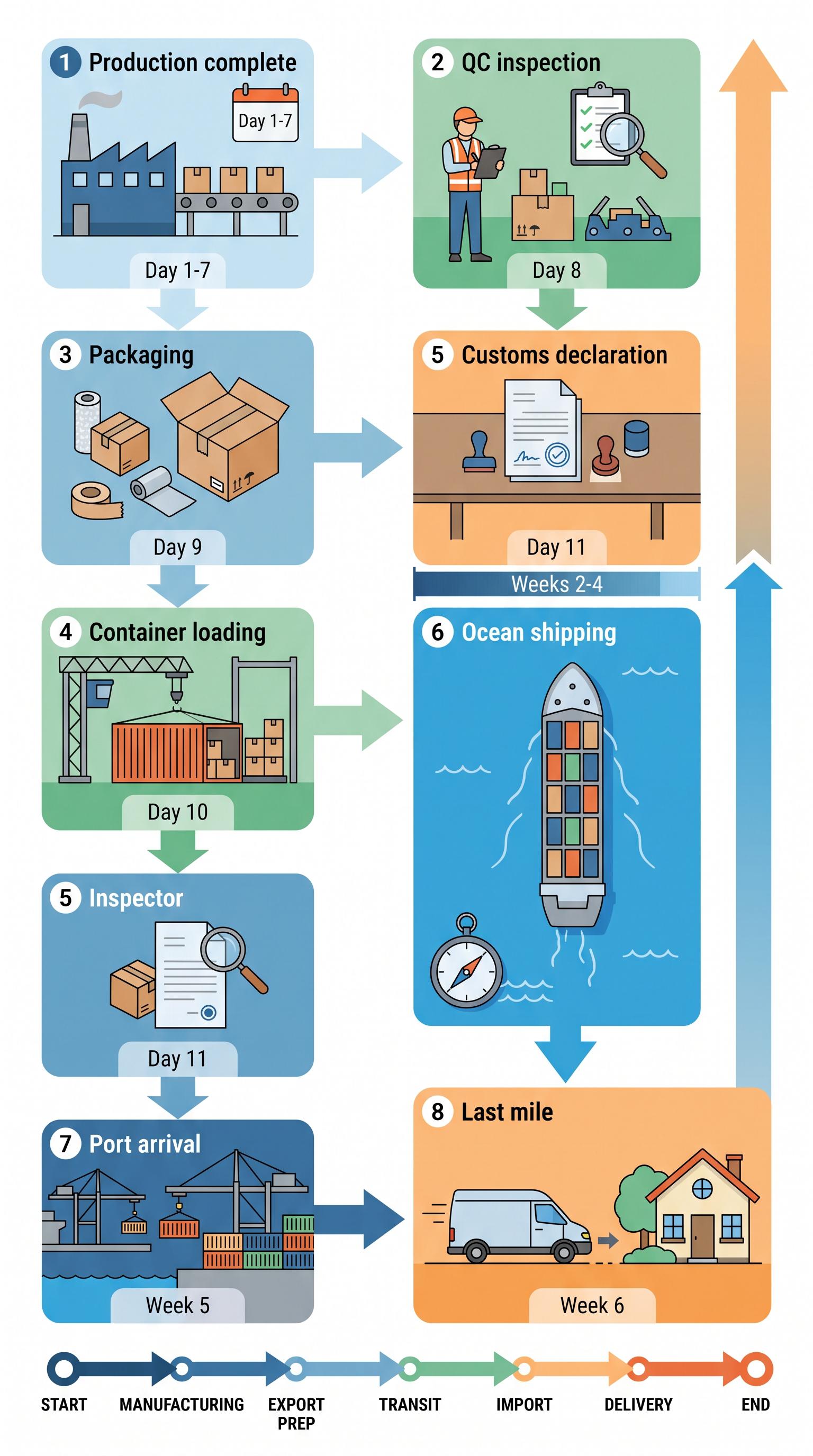
The unit at the shipping gate sits between the PSI sign-off and the BL copy release. The three carrier lanes we quote on every projector FOB Shenzhen order are COSCO to Long Beach (12-day transit, $4,800 per 40HQ), MSC to Rotterdam (28-day transit, $5,400 per 40HQ), and Maersk to Hamburg (32-day transit, $5,600 per 40HQ). Each carrier publishes a different BAF, THC (terminal handling charge), and ISPS (International Ship and Port Facility Security) surcharge, and this projector specifications should fix those three line items in the booking confirmation rather than leaving them open to the carrier's quarterly tariff update.
For B2B procurement teams evaluating 4K UHD laser phosphor display models in the 4500 ANSI lumen class, the master carton dimensions drive the container math: a 1,200-unit 40HQ load at 0.084 CBM per unit fills 100.8 CBM against the 40HQ's 67 CBM usable capacity, so the realistic ceiling is 800 units per 40HQ unless the buyer accepts a stack height above 1.9 meters. The projector specifications for loading include a 12mm OSB plywood base, edge protectors on every vertical stack column, and a 7-band strapping pattern rated to 1,800 daN — we photograph each step and the photos travel with the BL copy so the insurance claim file is already assembled if the container tips at port.
How to choose an OEM partner with projector OEM risk management built into every gate
Choosing a projector OEM without a documented risk program is the single most expensive mistake a MOFU-stage buyer can make, because the failure surfaces 90 days after the deposit clears, when the container is already on the water and the chargeback window has opened. Projector OEM risk management specifications should be requested as a stand-alone PDF before any tooling deposit is wired; a factory that cannot produce a written risk register covering quality, compliance, shipping, and payment is signaling that those costs will land in your RMA line item instead of the unit price.
Sourcing teams handling B2B procurement teams running a competitive RFP, the decision checklist below compresses the work into 90 minutes.
- Written risk register covering all four gates, with named owner per risk row.
- Sample policy: 3 paid evaluation units, $180 per set, 7-day air freight turnaround from Shenzhen.
- MOQ: 500 units per SKU, 1,000 units across a 3-SKU pilot, with a 30% deposit and 70% balance against scanned BL copy.
- Lead time: 25 days for laser phosphor display SKUs in stock, 45 days for bespoke housing, 60 days for full custom motherboard.
- Payment terms: 30/70 T/T is standard; LC at sight adds 0.6% but eliminates payment risk on orders above $80,000.
- Compliance file folder pre-staged for FCC, CE, UKCA, RCM, and KC, with the lab name and certificate number stamped on every commercial invoice.
H3 — projector OEM risk management next steps for MOFU-stage buyers
Projector OEM risk management as a next-step discipline means converting the spec sheet into a contract annex. We attach four exhibits per OEM contract: Exhibit A is the inspection and sampling plan with AQL 2.5/4.0; Exhibit B is the compliance certificate matrix; Exhibit C is the carrier lane matrix with locked BAF, THC, and ISPS; Exhibit D is the payment milestone schedule tied to PSI sign-off and BL copy release. Buyers who skip Exhibits A-D and rely on the proforma invoice alone consistently report 11-15% variance between quoted and landed cost.
When you are ready to move from evaluation to tooling, request a 4K UHD reference build at our GP90Pro 4K laser home projector tier, or review the broader home theater projector lineup for MOFU-stage skus that already carry the compliance file folder pre-built.
Frequently Asked Questions
What does a written projector OEM risk management program actually contain?
A written projector OEM risk management program contains four gate sections, one per supply-chain checkpoint: Gate 1 covers IP and tooling escrow with notarized transfer on balance payment; Gate 2 covers IQC, IPQC, and PSI inspection plans with named AQL thresholds; Gate 3 covers shipping-line selection, BAF/THC/ISPS lock-in, and marine cargo insurance assignment; Gate 4 covers payment-milestone triggers and chargeback documentation. Each gate lists the risk owner, the cost exposure, and the mitigation step, which is what separates a real register from a marketing brochure.
How many days does the average projector OEM risk management mitigation cycle add to lead time?
The average projector OEM risk management mitigation cycle adds 7 days when the program is pre-staged (standing compliance files, nominated inspection lab, locked carrier rates) and 18-25 days when the factory is building the program from scratch for your order. The 25-day scenario typically comes from first-time FCC testing at 14 days plus first-time third-party PSI scheduling at 8 days plus rework clearance at 3 days, per the FCC equipment authorization process public timeline.
Which shipping carrier has the lowest projector OEM risk management exposure for US-bound containers?
For US-bound containers, COSCO to Long Beach has the lowest projector OEM risk management exposure on 12-day transit lanes because the BAF, THC, and ISPS are quoted on a 90-day fixed-tariff basis, whereas Maersk and MSC apply quarterly adjustments that can swing the landed cost 4-8% without notice. Locking the BAF for the booking confirmation is standard practice in our shipping and logistics playbook.
What is the minimum MOQ for projector OEM risk management approved production?
The minimum MOQ for projector OEM risk management approved production is 500 units per SKU on stock-housing SKUs such as the GP95 hotel projector, and 1,000 units per SKU on bespoke housing projects. Below 500 units, the factory cannot recover the DUPRO and PSI inspection overhead, which is why the program price includes the $3.20-per-unit inspection line item only on orders at or above the 500-unit threshold.
How do payment terms change under projector OEM risk management for orders above $80,000?
Under projector OEM risk management for orders above $80,000, payment terms shift from 30/70 T/T to LC at sight because the bank-issued instrument shifts payment risk from the buyer's treasury onto the issuing bank's credit committee. The cost is 0.6% of the invoice value, which on an $80,000 order is $480 — a small premium against the $9,000-14,000 chargeback exposure if the container arrives with a defect rate above the 2.5% AQL threshold.
Where can I download a projector OEM risk management spec template?
A projector OEM risk management spec template is included in our OEM procurement starter pack, which contains the four-gate risk register in Excel, the AQL 2.5/4.0 sampling calculator, the BAF/THC/ISPS matrix, and the four-exhibit contract annex. Submit the form and the pack arrives within one business day.
Closing CTA
Projector OEM risk management is the cheapest line item on a projector OEM P&O sheet and the most expensive line item to skip, which is why we engineer it into every GP90Pro and GP95 hotel projector build before the tooling deposit is wired. Request a custom quote or browse the home theater projector lineup to see which SKUs already carry the four-gate program pre-attached, and our OEM services overview walks through the full exhibit matrix.
