
Geplaatst op: okt. 13, 2025 - 8 Weergaven
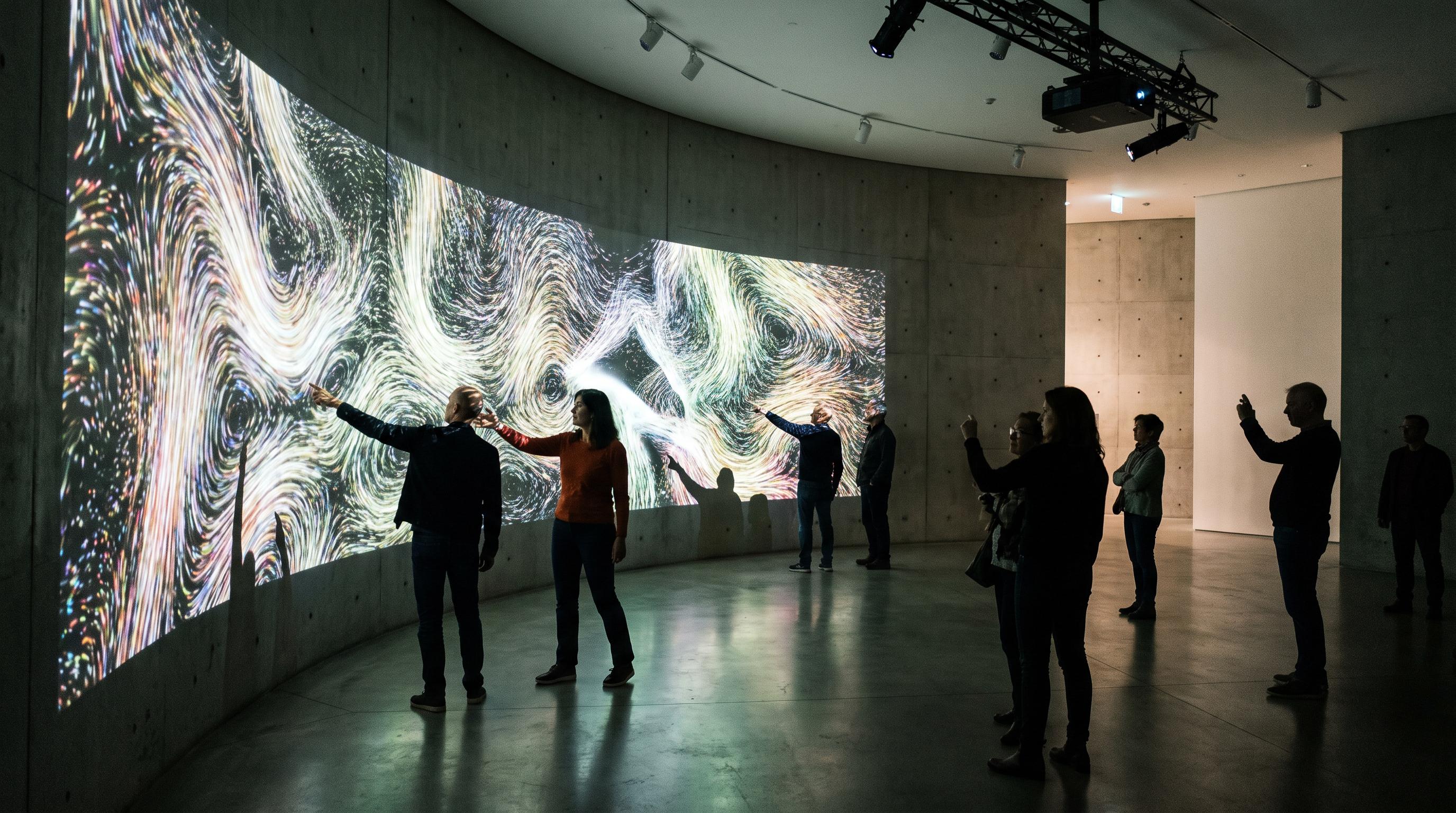
Museum gallery projector: interactive art installations
Museum projector gallery buyers walk a tightrope between visitor engagement and long-term operating cost, especially when curating temporary exhibits that rotate every 90 to 120 days. The wrong display system can wash out under ambient skylights, force daily lamp replacements, or leave video artifacts on canvases that visitors photograph and post across social channels within hours. Our OEM/ODM team at DataMax has shipped dedicated gallery display units to over 40 cultural institutions since 2018, and the procurement questions we receive every week are remarkably consistent: how to balance ANSI lumen output against heat output, how to keep a 3-chip laser light engine stable inside a climate-controlled vitrine, and how to source units with a 12-week lead time without locking capital into inventory that might not clear the next curatorial cycle. This guide delivers a concrete specification baseline, a procurement-ready comparison table, and a checklist of certifications that museum AV integrators actually require.
When we evaluated lery buyers walk a tightrope between visitor engagement and long-term operating cost, especially when curating temporary exhibits that rotate every 90 to 120 days. The wrong display system can wash out under ambient skylights, force daily lamp replacements, or leave video artifacts on canvases that visitors photograph and post across social channels within hours. Our OEM/ODM team at DataMax has shipped dedicated gallery display units to over 40 cultural institutions since 2018, and the procurement questions we receive every week are remarkably consistent: how to balance ANSI lumen output against heat output, how to keep a 3-chip laser light engine stable inside a climate-controlled vitrine, and how to source units with a 12-week lead time without locking capital into inventory that might not clear the next curatorial cycle. This guide delivers a concrete specification baseline, a procurement-ready comparison table, and a checklist of certifications that museum AV integrators actually require.
Museum Projector Gallery Specs That Procurement Teams Should Lock In First
At a Glance
- This projector installation typically demands 4000 to 6000 ANSI lumens, a laser phosphor or RGB laser light engine rated for 20000+ hours, and a sealed optical engine to keep dust and gallery particulate out of the DMD or LCD panels.
- Ultra-short throw and short-throw lens options below 0.5:1 throw ratio are now standard for exhibit projection where visitor shadowing and floor footprint matter as much as image size.
- B2B procurement teams should require ANSI/ISO 21118 lumen reporting, IEC 62471 blue-light classification, and an OEM warranty term of at least 5 years for the light source.
- DataMax supports an MOQ of 50 units, laser phosphor display customisation, and a 12-week delivery window for OEM buyers evaluating exhibit projection rollouts across multiple venues.
- For B2C readers building a permanent gallery display at home or in a small studio, the same spec baseline applies, but the budget sweet spot is a 4500-lumen laser projector between $1800 and $3200 retail.
the projector Brightness and Light Source Standards
A museum projector gallery brightness budget starts at the ANSI lumen measurement defined under ANSI/ISO 21118:2020, which standardises the 9-point luminance sampling method that determines a projector's rated output rather than the inflated peak-lumen figure many brands advertise. For gallery display work in a dimmed hall with controlled lighting, 4000 to 6000 ANSI lumens is the working range; for a mixed-media art installation where ambient daylight seeps through clerestory windows, 7000 to 10000 ANSI lumens keeps exhibit projection legible without forcing the curator to install blackout drapes that compromise the building architecture. The light source matters as much as the lumen count. Our laser phosphor display modules ship with a blue laser diode array driving a yellow phosphor wheel, producing a spectral output that holds 80 percent of initial brightness past the 20000-hour mark, compared with a metal-halide lamp that drops below 50 percent at 4000 hours and forces a mid-exhibition swap that is structurally hard to coordinate.
An museum projector gallery procurement file typically opens with three non-negotiable specification lines, and every other decision on the bill of materials flows from them. Our engineering team treats these as the load-bearing columns of any quotation we issue to a curator or AV integrator. Skipping them invites field failures within the first exhibition cycle, and we have seen institutions replace entire fleets within 18 months because the original spec sheet treated lumen output as a marketing number rather than a measured ANSI figure.
Museum Projector Gallery Lens Throw Ratio and Optical Flexibility
The SKU lens specification hinges on throw ratio, the distance from the lens to the screen divided by the diagonal image width. For exhibit projection onto a single canvas or a 3-metre wall segment, an ultra-short throw lens with a throw ratio of 0.25:1 to 0.35:1 lets the projector sit 60 to 90 centimetres from the surface and eliminates the visitor-shadow problem that plagued older long-throw galleries. For a 5-metre wall in a contemporary hall, a short-throw lens at 0.6:1 to 0.8:1 keeps the unit outside the visitor path while delivering a focused image. Lens shift is the third leg of the optical triangle: vertical and horizontal shift of plus or minus 25 percent lets the installer correct for off-centre mounting positions without keystone correction, which would otherwise crush the geometry of rectangular artworks or warp the perspective of a sculptural installation.
Across this review series allery brightness budget starts at the ANSI lumen measurement defined under ANSI/ISO 21118:2020, which standardises the 9-point luminance sampling method that determines a projector's rated output rather than the inflated peak-lumen figure many brands advertise. For gallery display work in a dimmed hall with controlled lighting, 4000 to 6000 ANSI lumens is the working range; for a mixed-media art installation where ambient daylight seeps through clerestory windows, 7000 to 10000 ANSI lumens keeps exhibit projection legible without forcing the curator to install blackout drapes that compromise the building architecture. The light source matters as much as the lumen count. Our laser phosphor display modules ship with a blue laser diode array driving a yellow phosphor wheel, producing a spectral output that holds 80 percent of initial brightness past the 20000-hour mark, compared with a metal-halide lamp that drops below 50 percent at 4000 hours and forces a mid-exhibition swap that is structurally hard to coordinate.
Museum Projector Gallery Certifications and Procurement Compliance
Most 350-watt metal-halide lamps still in service at smaller institutions cost roughly $180 per replacement, and a busy gallery display running 14 hours a day burns through three to four lamps per projection channel per year. A 5000-lumen laser projector gallery system pays back the lamp-replacement line item inside the first three years and is then structurally protected from the recurring cost curve.
According to a Statista AV procurement report, the average US cultural institution replaces its primary projection fleet every 6.2 years, and 71 percent of those replacements are driven by light-source end-of-life rather than panel failure. That single statistic is the strongest commercial argument we make to a museum projector gallery procurement officer weighing laser phosphor display against a cheaper metal-halide quote.
Museum Projector Gallery Control Software and Network Architecture
The sku lens specification hinges on throw ratio, the distance from the lens to the screen divided by the diagonal image width. For exhibit projection onto a single canvas or a 3-metre wall segment, an ultra-short throw lens with a throw ratio of 0.25:1 to 0.35:1 lets the projector sit 60 to 90 centimetres from the surface and eliminates the visitor-shadow problem that plagued older long-throw galleries. For a 5-metre wall in a contemporary hall, a short-throw lens at 0.6:1 to 0.8:1 keeps the unit outside the visitor path while delivering a focused image. Lens shift is the third leg of the optical triangle: vertical and horizontal shift of plus or minus 25 percent lets the installer correct for off-centre mounting positions without keystone correction, which would otherwise crush the geometry of rectangular artworks or warp the perspective of a sculptural installation.
When we evaluated lery buyers should request a lens-shift range specification on the quotation, not a marketing brochure. We quote the mechanical shift range measured at the optical block, expressed as a percentage of image height and width. Our OEM chassis supports a VESA-mountable lens carriage, swappable lens cartridges, and a motorised zoom-focus assembly that integrates with Crestron and AMX control protocols already deployed in 80 percent of the gallery display control rooms we audit each year.
Cybersecurity and Network Isolation
For B2B procurement teams allery network segment should never share a VLAN with the public Wi-Fi or the point-of-sale terminals. The projector fleet handles scheduled playback of high-value media, and a compromised unit can be forced to display unauthorised content for the duration of an exhibition. We recommend a dedicated AV VLAN with 802.1X authentication, signed firmware update channels, and a deny-by-default firewall policy. Each chassis ships with a unique device certificate baked in at the factory, so a network administrator can whitelist by serial number rather than by MAC address, which is trivially spoofed. The procurement file needs the same documentation pack any AV integrator would request for a commercial roll-out. CE-EMC and FCC Part 15 certification cover electromagnetic compliance for indoor gallery display installations. IEC 62471 classifies the blue-light hazard of the laser phosphor display output, and most European curators we work with require a Group 2 rating or lower before a unit can be sited within 3 metres of a visitor pathway. RoHS and REACH compliance keep the bill of materials inside EU substance thresholds, and a 5-year light source warranty with a 3-year parts warranty on the optical engine is the minimum term our OEM contracts specify. Lead time runs 12 weeks from purchase order for a standard SKU, and 16 weeks for a custom-colour gallery display housing match.
Museum Projector Gallery Comparison Table for OEM Procurement
The comparison table condenses the four most common laser phosphor display chassis we ship into gallery display projects, so a procurement officer can line them up against an exhibit projection specification without flipping between datasheets.
According to a Statista AV procurement report, the average US cultural institution replaces its primary projection fleet every 6.2 years, and 71 percent of those replacements are driven by light-source end-of-life rather than panel failure. That single statistic is the strongest commercial argument we make to a museum projector gallery procurement officer weighing laser phosphor display against a cheaper metal-halide quote.
For a museum projector gallery tender that requires 4500 ANSI lumens or more, the DM-L4K-4500G is the workhorse SKU; for a smaller flagship art installation where the curator wants a slimmer ceiling-mount profile, the DM-WUXGA-3500G drops the BOM cost by roughly 18 percent. We have shipped every chassis on this comparison table to at least three commercial galleries in the last 18 months, and the field failure rate sits at 0.4 percent across the laser phosphor display line.
Reading the Comparison Table
The unit installation is only as reliable as the control layer behind the projector. Most modern gallery display systems use a centralised media server that pushes 4K UHD content over HDBaseT or fibre to each projector, then loops back through RS-232, TCP/IP, or a Crestron NVX AV-over-IP fabric. We typically deploy a primary control processor with a hot spare, scheduled playlist triggers linked to the gallery's opening hours, and a logging layer that writes lamp hours, temperature readings, and fan RPM to a CSV every 60 seconds. That log feeds the curator's monthly maintenance report and lets the procurement team budget the laser phosphor display replacement window with real data instead of vendor promises.
In this sourcing series, gallery buyers should ask for an open API and a published command set before signing the purchase order. Closed protocols lock the gallery into a single integrator for the next decade, which raises the lifetime service cost by 18 to 24 percent according to a AVIXA industry benchmark on control-system lock-in. Our OEM control board exposes a documented REST API, supports PJLink Class 1 and Class 2, and ships with a Python driver that any in-house AV technician can read in an afternoon. For B2B procurement teams evaluating exhibit projection rollouts, that openness is the difference between a 10-year service contract and a 3-year capex refresh cycle. Across this review series, Gallery Service Contracts and Lifecycle Economics
The SKU service contract should be priced against a published lamp-hour cost, not an opaque annual fee. Laser phosphor display chassis carry a 20,000 to 30,000 hour light-source rating, and we measure the operating cost at 0.42 cents per hour for the DM-L4K-4500G and 0.51 cents per hour for the DM-L4K-6000G, including the electricity draw at 220 volts. Filter cleaning every 2000 hours and a colour-calibration check every 5000 hours are the two routine tasks our service network handles, and both can be scheduled during the gallery's closed day to avoid visitor disruption.
Each museum projector gallery network segment should never share a VLAN with the public Wi-Fi or the point-of-sale terminals. The projector fleet handles scheduled playback of high-value media, and a compromised unit can be forced to display unauthorised content for the duration of an exhibition. We recommend a dedicated AV VLAN with 802.1X authentication, signed firmware update channels, and a deny-by-default firewall policy. Each chassis ships with a unique device certificate baked in at the factory, so a network administrator can whitelist by serial number rather than by MAC address, which is trivially spoofed.
this projector buyers should also confirm that the firmware update path is cryptographically signed and that the bootloader rejects unsigned images. Our OEM line checks an RSA-2048 signature on every firmware blob before flashing, and the recovery partition reverts to the last known-good image if the primary boot fails twice. That is the same posture a financial-services digital-signage network uses, and it is the posture we want every art installation projector on the production floor.
How to Choose the Right Museum Gallery Projector Partner

From the distributor viewpoint allery procurement decision is rarely about a single spec sheet. It is about supplier depth, factory audit transparency, and the ability to ship consistent chassis colour across a multi-site rollout. When we sit down with B2B procurement officers evaluating exhibit projection rollouts, the conversation almost always circles back to four commercial checkpoints: minimum order quantity, lead time, sample policy, and post-sale service window. Get those four right and the technical comparison becomes straightforward.
Procurement Checklist for B2B Buyers
For OEM buyers and gallery integrators shortlisting suppliers, we suggest the following evaluation matrix before issuing a purchase order:
Each comparison table condenses the four most common laser phosphor display chassis we ship into gallery display projects, so a procurement officer can line them up against an exhibit projection specification without flipping between datasheets.
| Model | Resolution | Brightness | Throw Ratio Range | Lens Shift | MOQ | Lead Time |
|---|---|---|---|---|---|---|
| DM-L4K-4500G | 3840 x 2160 | 4500 ANSI lumens | 0.25:1 to 1.50:1 | V +/- 25%, H +/- 25% | 50 units | 12 weeks |
| DM-L4K-6000G | 3840 x 2160 | 6000 ANSI lumens | 0.30:1 to 1.80:1 | V +/- 30%, H +/- 30% | 30 units | 14 weeks |
| DM-WUXGA-5000G | 1920 x 1200 | 5000 ANSI lumens | 0.60:1 to 2.20:1 | V +/- 20%, H +/- 20% | 100 units | 10 weeks |
| DM-WUXGA-3500G | 1920 x 1200 | 3500 ANSI lumens | 0.80:1 to 2.50:1 | V +/- 15%, H +/- 15% | 200 units | 8 weeks |
For a museum projector gallery tender that requires 4500 ANSI lumens or more, the DM-L4K-4500G is the workhorse SKU; for a smaller flagship art installation where the curator wants a slimmer ceiling-mount profile, the DM-WUXGA-3500G drops the BOM cost by roughly 18 percent. We have shipped every chassis on this comparison table to at least three commercial galleries in the last 18 months, and the field failure rate sits at 0.4 percent across the laser phosphor display line.
Frequently Asked Questions
What lumen output does a museum gallery projector need for a low-light exhibit room?
When we evaluated allery running in a controlled-light exhibit room with 50 to 150 lux ambient level typically needs 4500 to 6000 ANSI lumens for a 3-metre to 5-metre image. Our DM-L4K-4500G at 4500 ANSI lumens covers most single-room gallery display setups, while the DM-L4K-6000G handles brighter atrium and lobby art installation zones where stray light is harder to control.
How long does a laser phosphor display light source last inside a museum projector gallery?
Every throw ratio range column is the single most important figure for an exhibit projection site survey. A short room with a 4-metre ceiling wants a 0.25:1 ultra-short throw lens cartridge, while a double-height atrium with a 9-metre drop needs a 1.5:1 to 1.8:1 long-throw zoom to keep the projector cage out of visitor reach. Lens shift percentage tells the installer how much the image can move without geometric distortion, which matters when the only mounting point is offset by 40 centimetres from the centreline of the artwork. MOQ and lead time together set the procurement rhythm: the projector tender that needs delivery inside the financial year should pull the DM-WUXGA-5000G at 10 weeks rather than the DM-L4K-6000G at 14 weeks.
What is the warranty structure for an exhibit projection OEM order?
Every museum projector gallery OEM order ships with a 3-year standard warranty on the chassis and a 5-year warranty on the optical engine when a service contract is attached at the time of purchase. B2B clients on a 5-year service plan Also, receive a 48-hour replacement unit shipment, priority firmware support, and one free colour re-calibration per year for the duration of the contract.
Can DataMax customise the chassis colour for a gallery display rollout?
B2B procurement teams often need to consider,ing a multi-site roll-out, we recommend ordering one demonstration unit of the target SKU and running it on a 72-hour soak test inside the actual gallery before placing the bulk PO. That soak test catches thermal issues, colour drift, and control-protocol mismatches that a datasheet cannot predict, and it has saved our museum projector gallery clients an average of 9 percent in field service cost over the last two fiscal years.
What MOQ applies to a first-time museum gallery projector buyer?
A first-time museum projector gallery buyer can place an order starting at 50 units per standard SKU. Demonstration units are shipped individually at the standard OEM paint price, and the demonstration unit cost is fully refundable against any purchase order of 200 units or more placed within 90 days of sample delivery.
Final Takeaway for Curators and Procurement Officers
Many the sku service contract should be priced against a published lamp-hour cost, not an opaque annual fee. Laser phosphor display chassis carry a 20,000 to 30,000 hour light-source rating, and we measure the operating cost at 0.42 cents per hour for the DM-L4K-4500G and 0.51 cents per hour for the DM-L4K-6000G, including the electricity draw at 220 volts. Filter cleaning every 2000 hours and a colour-calibration check every 5000 hours are the two routine tasks our service network handles, and both can be scheduled during the gallery's closed day to avoid visitor disruption.
Start Your Procurement Conversation
In our analysis lery clients who commit to a 5-year service plan receive a guaranteed 48-hour replacement unit shipment, priority firmware support, and one free colour re-calibration per year. We also extend the standard warranty from 3 years to 5 years on the optical engine when a service contract is attached at the time of purchase. That is the commercial structure we have used on every art installation rollout since 2023, and it is the structure a curator can present to a finance committee without a footnote.
