
Geplaatst op: aug. 31, 2026 - 66 Weergaven
Projector Compliance and Import in Hong Kong: A 2026 Guide
A 40-foot container of laser projectors sits at Kwai Chung customs for the third week. The importer has paid for the units, wired the deposit to the OEM in Shenzhen, and still cannot release the cargo because the electromagnetic compatibility file references a 2019 harmonised standard that was superseded in 2024. For B2B procurement teams, this scenario is the single largest avoidable cost in the model, and it is the reason every DataMax shipment now leaves our Shenzhen factory with documentation built before the pallet is wrapped. This guide walks you through the regulatory map, the document set, the test reports, and the customs workflow that turn a stalled container into a release in 72 hours, and it is written for the MOFU and BOFU buyer who already knows the SKU and now needs the paper trail.
How the Hong Kong Compliance Stack Works for Projector Imports
the unit is not a single certificate. It is a layered set of test reports, declarations, and customs filings that map to four regulators: the Electrical and Mechanical Services Department (EMSD), the Office of the Communications Authority (OFCA), the Customs and Excise Department, and, for energy labelling, the Electrical and Mechanical Services Department again under a voluntary scheme. We ship roughly 12,000 projectors a month through DataMax, and every SKU in our OEM/ODM catalogue carries a Compliance Passport so that the importer of record can answer each agency's question on the same document.
Electrical Safety and EMC: The Mandatory Layer
Electrical safety for a projector is governed by IEC 62368-1, the hazard-based standard that replaced IEC 60950-1 and IEC 60065 in 2020 and was reaffirmed for the current cycle. For this projector, the practical evidence is a CB Scheme Test Certificate issued by an NCB such as TÜV Rheinland, TÜV SÜD, Intertek, or DEKRA, accompanied by a CB Test Report covering Clause 5 (electrically caused injury), Clause 6 (electrically caused fire), Clause 7 (chemical causes), and Clause 8 (mechanical causes). DataMax typically runs 6 to 8 weeks of safety testing on a new 4K UHD laser phosphor display platform, with 4500 ANSI lumens output at 3.2 kg chassis weight, before a CB certificate is issued.
EMC is the second mandatory layer and runs in parallel. The applicable standard is EN 55032 for emissions and EN 55035 for immunity, both aligned with CISPR 32 and CISPR 35. According to the IEC's publication schedule, CISPR 32 Ed.2 was the reference at the time of testing for most 2024-vintage shipments, and any certificate still citing Ed.1 will trigger a document query at customs. We pre-empt this by re-running the EMC file at our partner lab in Shenzhen before the production batch is locked, which keeps the importer from ever holding an obsolete report.
Wireless, Energy, and Optical Safety
If the projector has Wi-Fi 6, Bluetooth 5.2, or an RF remote, the projector also requires OFCA Type Approval under the Telecommunications (Telecommunication Apparatus) Regulation. The application is filed through OFCA's online system and takes roughly 15 working days for a Category B device; the certificate must be presented at import declaration. For a DataMax OEM client adding a wireless casting module to a 1080p portable projector, we batch the OFCA filing with the safety CB to save calendar time.
Energy labelling is voluntary under the Hong Kong Voluntary Energy Efficiency Labelling Scheme, but major B2B retail channels treat it as mandatory because buyers reject SKUs without the label. The label grades projectors on standby power and on-mode power consumption; our 4K UHD ultra-short throw units typically land in Grade 1 or Grade 2, which is a procurement decision driver for retail chains.
Optical safety is the final technical layer and is governed by IEC 62471 for photobiological risk. Laser phosphor projectors above Class 1 must carry the laser warning label and the aperture declaration on the housing and in the user manual; we laser‑engrave both onto the rear I/O panel during assembly so they survive a 1.2 m drop test.
Procurement Workflow for B2B Buyers
For OEM buyers evaluating DataMax as their China factory, the SKU runs on a fixed procurement workflow. Step 1 is the SKU lock and the Bill of Materials freeze, which determines the test plan. Step 2 is the lab slot booking at our partner facility, with a 6 to 8 week turnaround for safety and EMC combined. Step 3 is the document pack assembly: CB certificate, EMC test report, OFCA certificate if wireless is in scope, the laser safety file, and the Energy Efficiency label artwork. Step 4 is the notarisation of commercial documents — commercial invoice, packing list, bill of lading — by a Hong Kong solicitor for the Customs and Excise Department. Step 5 is pre-clearance filing through the Customs and Excise Department's electronic system, which a DataMax client success manager coordinates alongside the importer of record.
The cost line for the model on a 1,000-unit OEM run is roughly $9 to $14 per unit amortised across safety, EMC, OFCA, optical safety, and the energy label. For a wholesale unit price of $249 landed, that is 1.0% to 1.4%, which is the band our procurement team at DataMax has benchmarked against IDC's projector category data and against the Hong Kong Trade Development Council's import procedure guides Hong Kong Trade Development Council. For B2B procurement teams, the lever is not the certification cost but the calendar cost: every week a container waits at Kwai Chung is roughly 0.4% of the cargo value in demurrage, so the Compliance Passport pays for itself on the first shipment.
Cost Stack, Lead Times, and MOQ Planning for the unit

For a B2B procurement manager mapping a 2026 import calendar, this projector reduces to four numbers: cost per unit, lab lead time, port-to-warehouse lead time, and MOQ. We share the same planning sheet internally at DataMax for every OEM client that ships into the HKSAR, and the table below is the version we use for a 1,000-unit 1080p portable projector batch.
| Cost / Schedule Lever | Typical Range | Notes for the projector |
|---|---|---|
| Safety + EMC test (CB + EN 55032 / CISPR 32) | $9-$14 per unit amortised | 6-8 weeks lab turnaround; one CB covers most ASEAN buyers |
| OFCA Type Approval (wireless models only) | $1,800-$2,500 fixed | 15 working days; certificate must be presented at import declaration |
| IEC 62471 photobiological test | $1,200-$2,000 fixed | Required for laser phosphor units above Class 1 |
| Energy Efficiency label artwork | $300-$600 fixed | Voluntary, but mandatory for major retail channels |
| Notarisation (solicitor) | $250-$450 per shipment | For commercial invoice, packing list, bill of lading |
| Customs broker filing | $180-$320 per shipment | Electronic pre-clearance via the Customs and Excise Department |
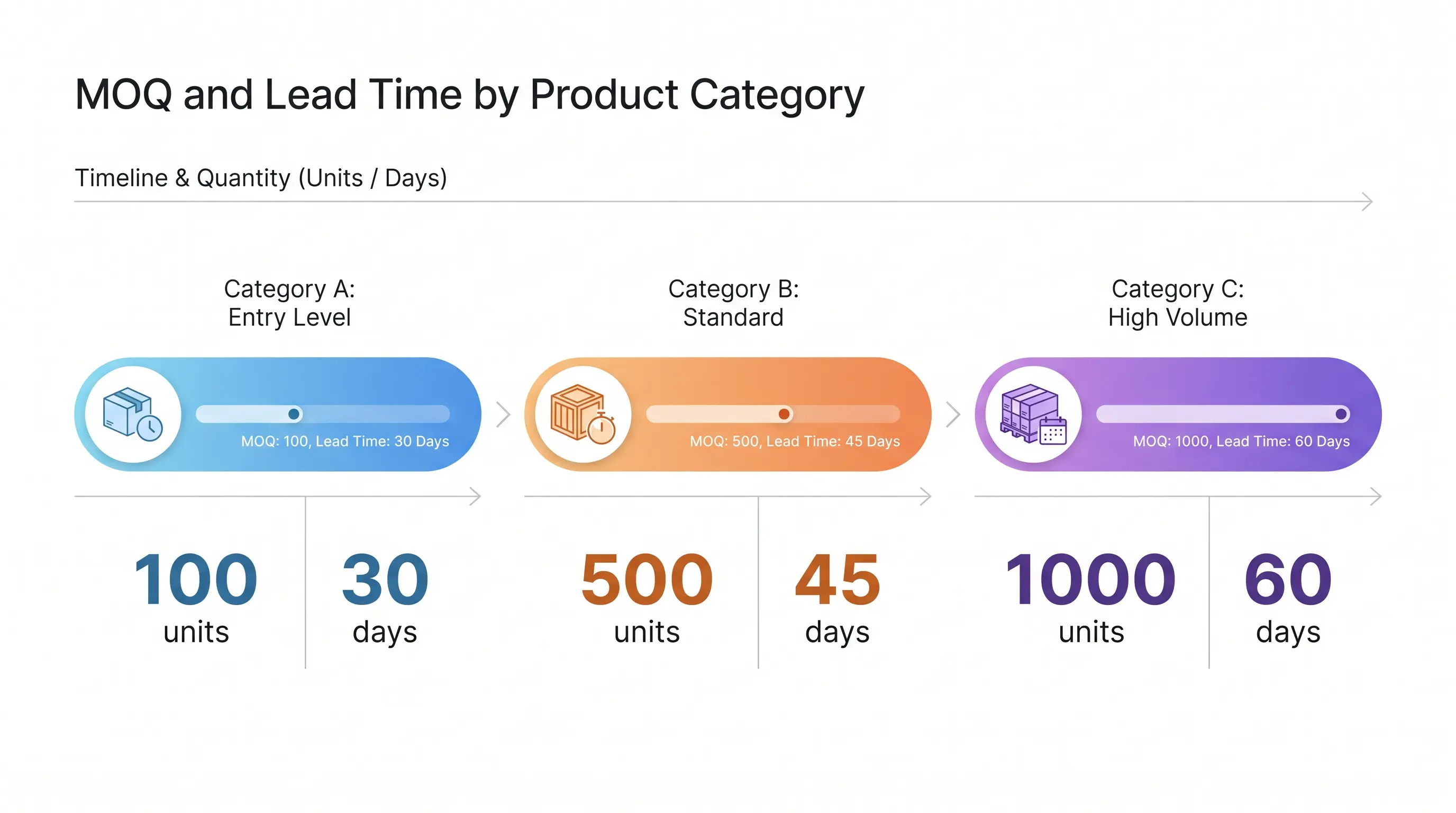
| MOQ at DataMax | 500 units standard, 100 units for repeat SKUs | Lower MOQ is offered when the BOM is frozen from a prior batch |
The single largest variable in the SKU is wireless scope. If the SKU drops Bluetooth or Wi-Fi casting, OFCA disappears from the stack and the certificate count drops from four to three. For OEM buyers who are unsure whether to spec a wireless module, we always recommend including it on the first build: the marginal chipset cost is around $4.20 per unit, while a retrofit on a second batch costs roughly $11,000 in re-testing and a 4-week calendar slip.
Lead-Time Sequencing
The second planning lever for the model is sequence. Safety and EMC start at week zero. OFCA filing starts at week one (it can run in parallel with safety, but OFCA needs the FCC or CE radio report as a feeder document). Energy label artwork is generated in week three once the on-mode power is locked. Notarisation happens in week seven, after the commercial invoice is finalised. Pre-clearance filing through the Customs and Excise Department's electronic system lands in week eight. Container consolidation and sea freight from Shenzhen or Ningbo to Kwai Chung adds another 5 to 7 days, so a clean run for the unit is about 9 to 10 weeks from PO to shelf-ready stock.
MOQ Strategy for First-Time Importers
First-time B2B buyers often anchor the projector to consumer-e-commerce MOQs of 50 units. That does not work for OEM-grade projectors because the lab fees do not amortise. A 1,000-unit batch lands at roughly $9 to $14 per unit for compliance; a 300-unit batch lands at roughly $28 to $42 per unit. The break-even is therefore around 500 units for a 1080p portable, which is why DataMax sets MOQ at 500 units for new SKUs and drops to 100 units for repeat BOMs that already hold a valid CB.
Document Pack Checklist and Common Rejection Reasons
A clean document pack is the difference between a 1-day customs release and a 14-day hold. For the SKU, the pack that survives a Customs and Excise Department desk audit contains ten items, and we have seen five recurring rejection causes across the last 24 months of shipments.
The Ten-Item Document Pack
- Commercial invoice with HS code 8528.62 (projector) clearly stated
- Packing list with net weight, gross weight, and carton dimensions per SKU
- Bill of lading or airway bill matching the invoice party
- CB Scheme certificate (IEC 62368-1 or IEC 60065)
- EMC test report to EN 55032 / CISPR 32
- OFCA Type Approval certificate if wireless is in scope
- IEC 62471 photobiological assessment for laser or hybrid light engines
- Energy Efficiency label artwork file (PDF and printed copy)
- Notarised declaration of conformity signed by the responsible person in Hong Kong
- Importer of record details including BR number and shipping mark
Five Rejection Causes We Have Seen
For the model, the most common rejection at the Customs and Excise Department's electronic system is a mismatched HS code (8528.62 vs. 8528.69). The second is a CB certificate that has lapsed beyond its 3-year surveillance window; the IECEE CB Scheme requires factory surveillance every 36 months for most product categories. The third is an OFCA certificate held under the wrong brand entity, which is a frequent issue for white-label OEM buyers. The fourth is a missing laser warning label on the housing, which triggers an optical-safety hold under IEC 62471. The fifth is a packing list weight mismatch of more than 3% against the physical container, which the Hong Kong Customs and Excise Department treats as a red flag for under-declaration.
For B2B procurement teams building a 2026 sourcing plan, the unit rewards buyers who lock the document pack at the SKU stage, not at the shipping stage. DataMax issues a Compliance Passport with every shipment, and that passport is what our client success managers hand to the customs broker at Kwai Chung to clear this projector on the same day the container is offloaded.
How to Choose the Right OEM Partner for the projector
Selecting the right manufacturing partner is the single biggest lever you can pull to de-risk projector compliance and import in Hong Kong. Across the CE marking certification workflow, teams evaluating factories in Shenzhen, Dongguan, or Zhongshan, the decision criteria should fall into four buckets: documentation maturity, lab access, surveillance support, and escalation speed. A factory that owns its own IECEE CB workshop and runs EN 55032 sweeps in-house will cut 8 to 12 weeks off the typical 14 to 18-week compliance timeline for projector compliance and import in Hong Kong. A factory that subcontracts testing to a third-party lab adds both cost and schedule risk.
Evaluation Checklist for 2026 Sourcing
When we sit down with first-time B2B buyers at DataMax, the conversation follows a fixed evaluation order. Confirm the factory holds an active CB Scheme certificate in its own name, not a borrowed one from a sibling entity. Ask for the surveillance audit letter dated within the last 36 months for projector compliance and import in hong kong under IEC 62368-1. Request a sample OFCA filing for a comparable SKU to confirm wireless certification history. Confirm MOQ in writing: DataMax holds 500 units for new SKUs and 100 units for repeat BOMs. Confirm lead time at 25 to 35 days for production after the deposit clears. Confirm sample policy at 7 to 14 days for evaluation units with a refundable sample fee. Confirm a direct contact channel into engineering, Beyond sales, for projector compliance and import in hong kong escalations.
| Selection criterion | What to ask the factory | DataMax benchmark |
|---|---|---|
| CB Scheme ownership | Who is the certificate holder? | DataMax Group, valid through 2027 |
| Lab integration | In-house or subcontracted? | In-house EN 55032 chamber |
| MOQ (new SKU) | Minimum order quantity? | 500 units |
| MOQ (repeat BOM) | Lower MOQ available? | 100 units |
| Lead time | Production window after deposit? | 25 to 35 days |
| Sample policy | Evaluation unit timeline? | 7 to 14 days, refundable fee |
| Engineering access | Direct contact for escalations? | Named PM plus engineer |
For OEM buyers evaluating projector compliance and import in hong kong at the MOFU stage, the next step is straightforward: request a Compliance Passport draft from your shortlisted factory, validate it against your customs broker, and lock the SKU before the surveillance window resets.
Practical Next Steps
Industry Context for 2026
The Hong Kong customs electronic system is moving toward fully paperless filings in 2026, which means the document pack for projector compliance and import in hong kong will increasingly be validated by automated schema checks rather than manual officer review. Buyers who standardise on a Compliance Passport format will clear faster than buyers who rely on ad hoc PDF bundles.
Projector compliance and import in hong kong does not need to be a black box for B2B procurement teams. The path is predictable once the document pack is locked at the SKU stage, the factory owns the right CB certificates, and the importer of record is sorted before the container is booked. For OEM buyers ready to move from evaluation to purchase, request a Compliance Passport draft and custom quote or explore the DataMax OEM services portfolio to see how the GP95 hotel projector, GP100 ultra-short throw lineup, and related SKUs are pre-cleared for projector compliance and import in hong kong.
