
Geplaatst op: jun. 22, 2026 - 1 Weergaven
Projector Compliance and Import in Pakistan: A 2026 Guide
You have secured a purchase order for 500 smart projectors, your supplier in Shenzhen has confirmed the unit price, and your logistics partner has quoted freight rates. Then your customs broker calls and tells you the shipment is held at Karachi Port because the documentation does not meet Pakistan's import compliance requirements. The cargo sits in a bonded warehouse, storage fees accumulate daily, and your retail launch window shrinks with every hour. This scenario plays out repeatedly for B2B procurement teams that underestimate the regulatory market for electronics entering Pakistan. This guide delivers the specific steps, documentation checklist, and certification standards you need to clear customs without surprises.
Understanding Pakistan's Projector Compliance and Import Regulations
Related resources: ISO 9001 quality system guide
You have secured a purchase order for 500 smart projectors, your supplier in Shenzhen has confirmed the unit price, and your logistics partner has quoted freight rates. Then your customs broker calls and tells you the shipment is held at Karachi Port because the documentation does not meet Pakistan's import compliance requirements. The cargo sits in a bonded warehouse, storage fees accumulate daily, and your retail launch window shrinks with every hour. This scenario plays out repeatedly for B2B procurement teams that underestimate the regulatory market for electronics entering Pakistan. This guide delivers the specific steps, documentation checklist, and certification standards you need to clear customs without surprises.
The core documentation package for projector compliance and import in Pakistan includes the Certificate of Origin, commercial invoice, packing list, bill of lading, and a conformance certificate demonstrating that the product meets applicable safety and performance standards. Without a valid conformance certificate, customs authorities will not release the shipment, regardless of value or quantity.
Key Certification Standards for Projectors
Projectors destined for the Pakistani market must adhere to safety and electromagnetic compatibility standards recognized internationally. The primary references are IEC 60950-1 for information technology equipment safety and CISPR 32 for electromagnetic emissions International Electrotechnical Commission. If your projectors carry CE marking, you have a solid foundation because CE certification aligns closely with these IEC standards, but you must obtain local verification through an accredited testing laboratory.
Pakistan classifies projectors under the broader electronics import regime, which means they must satisfy requirements set by multiple agencies. The Pakistan Standards and Quality Control Authority (PSQCA) enforces technical standards, while the Pakistan Customs appraises goods and validates import permits. For B2B buyers importing projectors, whether for resale distribution or corporate deployment, compliance is not optional—it determines whether your product enters the market or returns to origin.
Documentation Checklist for Smooth Customs Clearance
A complete documentation package reduces clearance time from weeks to days. Prepare the following for each shipment:
The core documentation package for projector compliance and import in Pakistan includes the Certificate of Origin, commercial invoice, packing list, bill of lading, and a conformance certificate demonstrating that the product meets applicable safety and performance standards. Without a valid conformance certificate, customs authorities will not release the shipment, regardless of value or quantity.
Your HS code for projectors typically falls under 8528.69 for video projectors. Classifying the product under an incorrect HS code triggers valuation disputes and requires resubmission, extending clearance timelines significantly. For OEM buyers evaluating suppliers, confirm that your manufacturer provides accurate technical documentation that aligns with the declared HS classification.
Timing and Cost Variables
Projectors destined for the Pakistani market must adhere to safety and electromagnetic compatibility standards recognized internationally. The primary references are IEC 60950-1 for information technology equipment safety and CISPR 32 for electromagnetic emissions International Electrotechnical Commission. If your projectors carry CE marking, you have a solid foundation because CE certification aligns closely with these IEC standards, but you must obtain local verification through an accredited testing laboratory.
Navigating Pakistan's Regulatory Bodies and Certification Process

The Role of PSQCA in Projector Import Compliance
Althoughcal performance, while Pakistan does not mandate specific brightness or resolution standards for import clearance, buyers should confirm that specifications match what was contracted with the OEM supplier. We at DataMax have processed dozens of shipments to Pakistani clients and have seen returns delayed when lumen ratings on invoices did not match physical product labels.
For OEM buyers evaluating suppliers, PSQCA's requirements translate into a practical need: your manufacturer must provide test reports from labs whose credentials are recognized under Pakistan's conformity assessment framework. We at DataMax maintain relationships with multiple accredited testing facilities to ensure our clients' products clear Pakistani customs without modification to the original test documentation.
Working with Accredited Local Testing Laboratories
Pakistan has designated several private and government-affiliated laboratories authorized to conduct conformity assessments for electronics. These labs verify that products meet applicable IEC standards and issue the conformance certificates required for customs clearance. The Pakistan National Accreditation Council (PNAC) maintains the registry of accredited testing facilities, which you can consult before selecting a laboratory partner PNAC Registry.
| Document | Purpose | Common Rejection Reason | |
|---|---|---|---|
| Commercial Invoice | Customs valuation | Mismatched HS code | |
| Bill of Lading | Proof of shipment | Incorrect consignee name | |
| Certificate of Origin | Preferential tariff treatment | Non-certified issuer | |
| Conformance Certificate | Product safety verification | Missing lab accreditation | |
| Product Specification Sheet | Technical verification | Unavailable at inspection | |
| Laboratory Type | Typical Processing Time | Cost Range (USD) | Accreditation Status |
| Government-affiliated | 15-20 working days | 800-1,500 | PNAC accredited |
| Private sector (major) | 10-15 working days | 1,200-2,200 | ILAC recognized |
| Expedited private | 5-7 working days | 2,500-4,000 | Case-by-case |
Your HS code for projectors typically falls under 8528.69 for video projectors. Classifying the product under an incorrect HS code triggers valuation disputes and requires resubmission, extending clearance timelines significantly. For OEM buyers evaluating suppliers, confirm that your manufacturer provides accurate technical documentation that aligns with the declared HS classification.
Timeline and Cost Breakdown for Certification
Obtaining a conformance certificate through an accredited Pakistani laboratory represents one of the more predictable cost elements in your import process. Base laboratory fees typically fall between USD 800-2,200 depending on complexity and turnaround requirements. Beyond the laboratory fee, factor in costs for sample shipping (often two to four units per model), translation services if documentation requires conversion to English or Urdu, and administrative fees charged by your local customs broker for coordinating the testing process.
Import duties for projectors in Pakistan hover around 20% ad valorem plus additional regulatory duties, though the exact rate depends on the final HS code classification and any applicable trade agreements Pakistan Customs Tariff Commission. Anticipate 5-10 working days for standard clearance when documentation is complete, and budget for potential demurrage charges of USD 50-150 per container per day if delays occur.
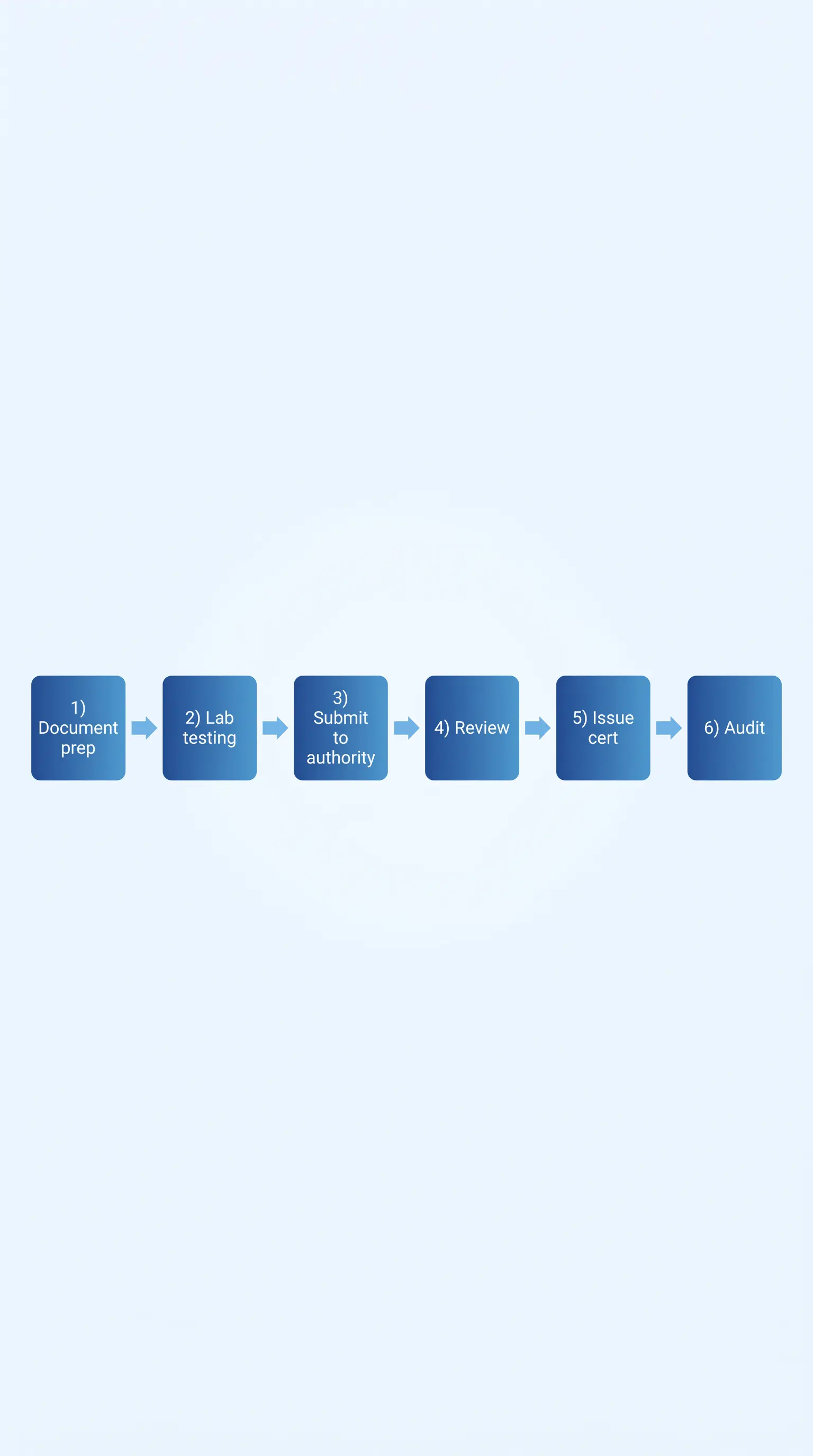
The total certification timeline from laboratory submission to certificate issuance usually spans three to four weeks when including sample transit, testing, review, and documentation processing. Combined with the 5-10 day customs clearance window referenced earlier, you should anticipate four to six weeks from shipment arrival to warehouse availability for documentation-complete imports.
B2B Procurement Best Practices for Pakistani Importers
Supplier Qualification and Due Diligence
Selecting the right OEM partner directly impacts your compliance posture in Pakistan. Beyond verifying product quality and pricing, B2B procurement teams should conduct targeted due diligence on three areas: manufacturing certification portfolio, experience with Pakistani market requirements, and documentation systems for regulatory compliance.
Your supplier qualification checklist should include confirmation of ISO 9001 quality management certification, evidence of prior shipments to Pakistan or similar regulated markets, and demonstrated capability to produce test reports from internationally accredited laboratories. Suppliers lacking experience with Pakistani import requirements may provide documentation that fails local verification, even when the underlying product meets international standards.
We have encountered situations where clients selected suppliers based solely on unit pricing, only to discover during Pakistani customs inspection that the test reports referenced standards versions no longer recognized under current regulations. Spending additional time during supplier selection prevents costly delays and potential shipment returns.
Minimum Order Quantities and Lead Time Expectations
An pakistan standards and quaality Control Authority (PSQCA) serves as the primary regulatory body overseeing product standards for imported electronics including projectors PSQCA Official Website. While PSQCA does not require a separate Pakistani certification for all projector imports, it establishes the framework within which conformance testing must occur. B2B procurement teams should understand that PSQCA recognition means the testing laboratory issuing your conformance certificate must hold accreditation from an internationally recognized body such as ILAC or APLAC.
For OEM partners,aluating suppliers, PSQCA's requirements translate into a practical need: your manufacturer must provide test reports from labs whose credentials are recognized under Pakistan's conformity assessment framework. We at DataMax maintain relationships with multiple accredited testing facilities to ensure our clients' products clear Pakistani customs without modification to the original test documentation.
| Order Type | Typical MOQ | Manufacturing Lead Time | Total Timeline |
|---|---|---|---|
| Standard models | 200-300 units | 30-35 days | 75-85 days |
| Custom branding | 500-1,000 units | 45-60 days | 90-110 days |
| Mixed container | 100-200 units | 35-40 days | 80-90 days |
Buyers requiring smaller quantities should explore consolidation options through freight forwarders who specialize in electronics exports to Pakistan, though this approach may limit customization opportunities and increase per-unit logistics costs.
Quality Control Checkpoints
Pakistan has designated several private and government-affiliated laboratories authorized to conduct conformity assessments for electronics. These labs verify that products meet applicable IEC standards and issue the conformance certificates required for customs clearance. The Pakistan National Accreditation Council (PNAC) maintains the registry of accredited testing facilities, which you can consult before selecting a laboratory partner PNAC Registry.
Each testing process for projectors typically involves three components: electrical safety testing against IEC 60950-1, electromagnetic compatibility assessment per CISPR 32, and documentation review confirming the product matches the test samples submitted. For most projector models, laboratory turnaround time ranges from 10-15 working days, though expedited services may be available at additional cost.
| Laboratory Type | Typical Processing Time | Cost Range (USD) | Accreditation Status |
|---|---|---|---|
| Government-affiliated | 15-20 working days | 800-1,500 | PNAC accredited |
| Private sector (major) | 10-15 working days | 1,200-2,200 | ILAC recognized |
| Expedited private | 5-7 working days | 2,500-4,000 | Case-by-case |
How to Choose a Projector Supplier for Pakistan Import
Budget-conscious importers should note that choosing a government-affiliated laboratory reduces costs but may extend timelines during peak periods. We recommend initiating the testing arrangement before your shipment departs the origin port to overlap processing time with transit duration.
Key Evaluation Criteria for B2B Buyers
When assessing potential partners, request evidence of their experience with Pakistani import regulations rather than generic compliance documentation. Ask suppliers specifically about PSQCA testing coordination, IECEE Certificate of Conformity experience, and their track record with customs documentation for electronics shipments to Pakistan.
Obtaining a conformance certificate through an accredited Pakistani laboratory represents one of the more predictable cost elements in your import process. Base laboratory fees typically fall between USD 800-2,200 depending on complexity and turnaround requirements. Beyond the laboratory fee, factor in costs for sample shipping (often two to four units per model), translation services if documentation requires conversion to English or Urdu, and administrative fees charged by your local customs broker for coordinating the testing process.
For MOFU+BOFU buyers planning multiple shipments, establishing a standing arrangement with one laboratory offers advantages in consistency and potential volume discounts. We have structured such agreements for our regular Pakistani clients, reducing per-shipment certification costs by approximately 15-20% compared to ad-hoc arrangements.
An total certification timeliine from laboratory submission to certificate issuance usually spans three to four weeks when including sample transit, testing, review, and documentation processing. Combined with the 5-10 day customs clearance window referenced earlier, you should anticipate four to six weeks from shipment arrival to warehouse availability for documentation-complete imports.
Contact channel: Initiate supplier evaluation through our DataMax B2B inquiry form with your target specifications, intended order volume, and compliance documentation requirements.
Frequently Asked Questions
What certifications are required to import projectors into Pakistan?
Importing projectors into Pakistan requires PSQCA product certification, IECEE Certificate of Conformity, and type approval from the Pakistan Telecommunications Authority if the device includes wireless connectivity. The combined certification process typically spans 6-10 weeks when properly coordinated with an experienced supplier Pakistan Standards and Quality Control Authority.
How long does the complete import process take from order to delivery?
The end-to-end timeline for importing projectors into Pakistan averages 90-120 days. This includes 30-45 days for manufacturing, 2-3 weeks for certification documentation, 14-28 days for ocean freight, and 3-7 days for customs clearance at Karachi or Lahore ports. First-time buyers should budget an additional 2-3 weeks for documentation verification.
What is the minimum order quantity for commercial projector imports?
Standard consumer projector MOQs range from 200-500 units depending on model specifications and supplier arrangements. Mixed container loads can reduce effective MOQs to 100-200 units for buyers willing to share container space. Custom-branded OEM orders typically require minimum quantities of 500-1,000 units due to setup costs.
Can small businesses import projectors for resale in Pakistan?
Selecting the right OEM partner directly impacts your compliance posture in Pakistan. Beyond verifying product quality and pricing, B2B procurement teams should conduct targeted due diligence on three areas: manufacturing certification portfolio, experience with Pakistani market requirements, and documentation systems for regulatory compliance.
What documentation does Pakistani customs require for projector shipments?
Your supplier qualification checklist should include confirmation of ISO 9001 quality management certification, evidence of prior shipments to Pakistan or similar regulated markets, and demonstrated capability to produce test reports from internationally accredited laboratories. Suppliers lacking experience with Pakistani import requirements may provide documentation that fails local verification, even when the underlying product meets international standards.
How much does import certification cost for projector shipments?
We have encountered situations where clients selected suppliers based solely on unit pricing, only to discover during Pakistani customs inspection that the test reports referenced standards versions no longer recognized under current regulations. Spending additional time during supplier selection prevents costly delays and potential shipment returns.
Final Takeaway
Navigating projector compliance and import in Pakistan requires upfront investment in supplier due diligence and certification coordination. The complexity rewards preparation—buyers who clarify documentation requirements before placing orders consistently achieve faster clearance and lower total landed costs.
Many projector import market in Pakistan operates primarily on containerized shipments, with most B2B transactions structured around full container loads (FCL) of 20ft or 40ft containers. Minimum order quantities typically range from 200-500 units for standard consumer projectors, though this varies significantly by model complexity and customization requirements.
