
Geplaatst op: apr. 07, 2026 - 33 Weergaven
Projector Compliance and Import in Poland: A 2026 Guide
Your procurement team needs a clear roadmap when arranging the projector compliance and import in Poland process for a new line of commercial display devices. Regulatory bodies enforce strict EU Directives, and customs authorities expect precise documentation before clearing shipments. Without a step‑by‑step guide, delays can add weeks to lead times and inflate landed costs. Below is a practical breakdown that covers the essential standards, certification steps, and import paperwork you must handle before your products hit the Polish market.
Quick Summary
Related resources: ISO 9001 quality system guide · FCC certification guide
- Poland treats projectors as electronic equipment under EU harmonization law; CE marking, RoHS and WEEE compliance are mandatory for all imported units.
- The average customs duty for projectors entering the EU is 0 % under the Common External Tariff, but VAT (23 %) and potential excise fees apply.
- Certification testing typically costs between $5,000 and $15,000 and takes 4‑6 weeks for a full suite of IEC/EN tests; expedited labs can cut that to 3 weeks for an additional 15 % fee.
- Importers must register with the Polish customs system (CELINE) and maintain a Declaration of Conformity (DoC) signed by the manufacturer.
Understanding Projector Compliance and Import in Poland

Poland’s regulatory environment mirrors the broader EU framework, but specific national adaptations and enforcement practices shape how compliance is verified at the border. For B2B procurement teams evaluating OEM projector purchases, mastering these details can mean the difference between a smooth launch and costly re‑work.
Regulatory Framework and Key Directives
Projectors fall under the Low Voltage Directive (LVD) 2014/35/EU, the Electromagnetic Compatibility (EMC) Directive 2014/30/EU, and the RoHS Directive 2011/65/EU. The ErP Directive 2009/125/EC also applies to energy‑related products, driving requirements for standby power limits (≤ 0.5 W in off‑mode).
A recent update from the European Commission clarifies that from 2026 onward, all display devices must meet the updated Energy Efficiency Index (EEI) thresholds, which will tighten standby consumption limits by an additional 10 % European Commission.
Poland enforces these directives through the Office for Competition and Consumer Protection (UOKIK), which randomly audits imported electronics for CE‑mark authenticity and documentation completeness.
Certification and Testing Requirements
To demonstrate compliance, manufacturers typically provide:
| Certification | Scope | Typical Cost | Turn‑around |
|---|---|---|---|
| CE Marking (Self‑Declaration) | LVD, EMC, RoHS | $2,000‑$5,000 | 2‑4 weeks |
| IEC/EN 61960 (Battery safety, if applicable) | Battery packs | $1,500‑$3,000 | 3‑5 weeks |
| IEC 62368‑1 (Audio/video, information & communication tech) | Safety of equipment | $3,000‑$7,000 | 4‑6 weeks |
| ErP (Energy‑related Products) Testing | Standby & on‑mode power | $1,000‑$2,500 | 2‑3 weeks |
| WEEE Registration | End‑of‑life recycling | €500‑€1,500 (≈ $550‑$1,650) | 1‑2 weeks |
The above table reflects typical market rates as of Q1 2026; actual quotes vary by lab and product complexity.
We at DataMax have partnered with accredited labs in Shenzhen and Warsaw to simplify the testing phase. In a recent OEM project, we reduced the total certification timeline from 10 weeks to 7 weeks by pre‑validating components against IEC 62368‑1 before sending the final prototype for full compliance testing.
First‑Party Test Reports vs. Third‑Party Certification
While a self‑declared CE mark is permissible for many projectors, buyers seeking higher assurance—particularly for government or educational tenders—often require a test report from an ISO‑17025 accredited laboratory. ISO‑accredited testing provides an extra layer of credibility and can expedite customs clearance because Polish authorities recognise the report’s provenance ISO.
MOQ and Lead‑Time Implications
For OEM buyers evaluating large‑scale imports, the certification phase directly influences minimum order quantities (MOQ). Typically, labs require a minimum of 3‑5 representative samples for safety testing. If your order size is below 500 units, the per‑unit certification cost can become prohibitive; many buyers therefore batch orders to achieve economies of scale. Lead times from prototype approval to shipment are generally:
- Prototype validation & pre‑compliance – 2‑3 weeks
- Full compliance testing – 4‑6 weeks
- Final production & packaging – 3‑4 weeks
Overall, expect a 9‑13 week timeline from design freeze to delivered goods in Poland, assuming no major redesigns are needed.
Import Documentation and Customs Procedures
When the cargo arrives at a Polish port (e.g., Gdańsk, Hamburg‑connected rail terminals), the following paperwork is essential:
- Commercial Invoice – Must list the product description, HS code (possibly 8528 72 20 for video projectors), unit price, and Incoterms (typically DDP for Door‑to‑Door).
- Packing List – Details of cartons, dimensions, and gross weight.
- Declaration of Conformity (DoC) – Signed by the manufacturer, referencing the applicable EU directives and standards.
- Test Reports – PDF copies of IEC/EN test certificates.
- CE Marking Evidence – Photographs of the CE label affixed to the projector and its packaging.
- EORI Number – Required for any business importing into the EU; Polish customs will reject shipments without a valid EORI.
Customs may perform a documentary inspection and, in rare cases, a physical inspection if the HS code is flagged for additional safety checks. Having all certificates in a digital “compliance pack” (often a ZIP file linked to the Bill of Lading) can reduce inspection delays to a few hours.
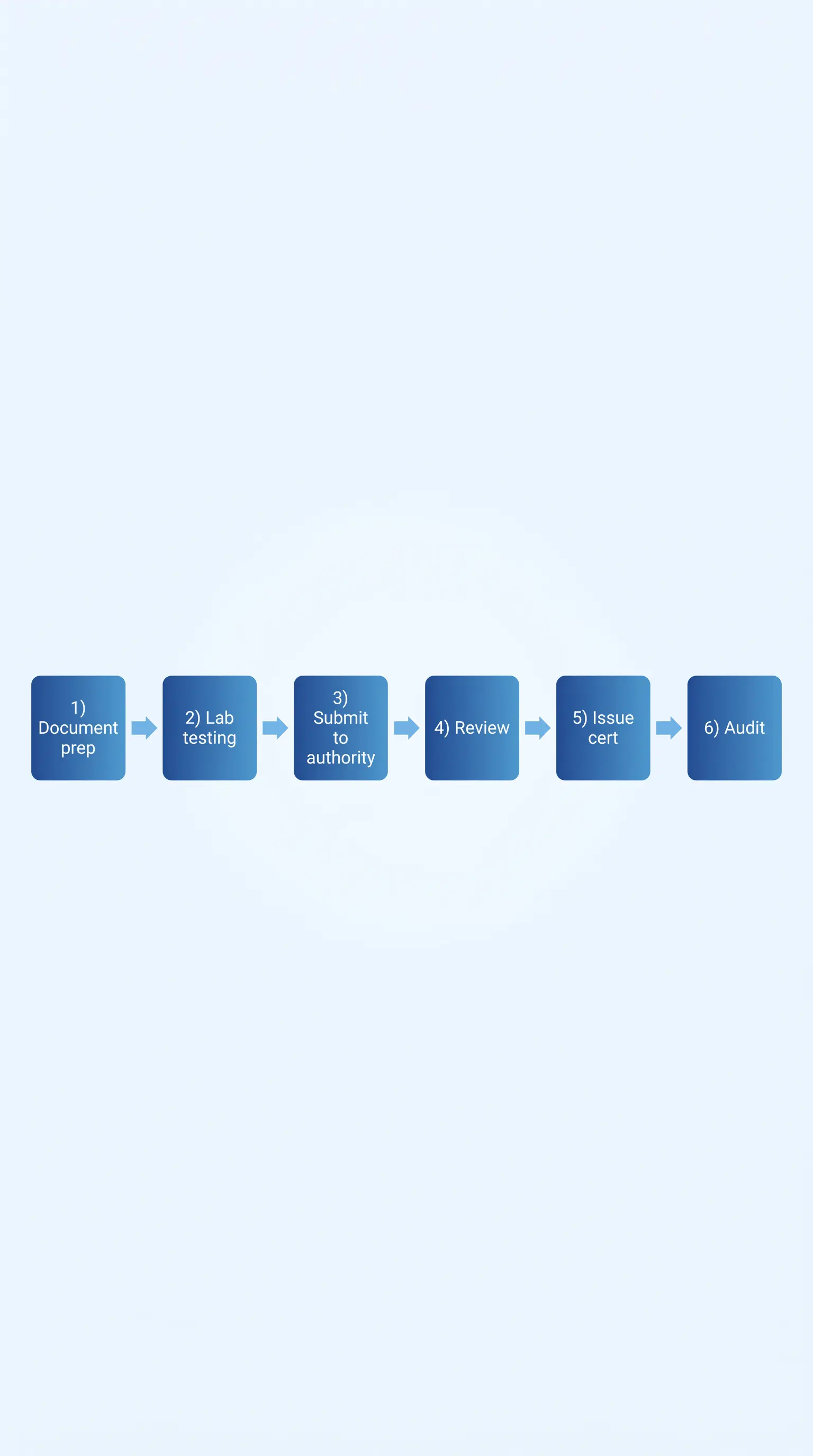
Flowchart illustrating the step‑by‑step process from component testing to customs clearance in Poland.
Visual representation of the specification table comparing CE, RoHS, WEEE, and ErP requirements for projectors.
Post-Import Compliance and Ongoing Obligations
Once your projectors clear Polish customs, the compliance journey continues. European Union regulations require manufacturers and importers to maintain documentation for at least 10 years after the last unit is placed on the market European Commission. This post-market obligation often surprises B2B procurement teams who assume that CE marking completes the process.
WEEE Registration and Producer Responsibility
All electronic projectors placed on the EU market fall under the Waste Electrical and Electronic Equipment (WEEE) Directive 2012/19/EU. As the importer into Poland, you are legally classified as a "producer" and must register with the Główny Inspektorat Ochrony Środowiska (Chief Inspectorate of Environmental Protection). Registration fees vary by weight category; for projectors typically falling under category 5 (small equipment), annual fees range from €150 to €500 depending on your registration provider European Environment Agency. Many buyers use compliance aggregators to fulfill this obligation efficiently, which can reduce administrative overhead by up to 40%.
Product Surveillance and Recall Readiness
The General Product Safety Directive (GPSD) 2001/95/EC mandates that importers monitor their products post-sale and report any safety incidents to national authorities within 15 days of becoming aware. We recommend establishing a documented customer feedback loop that captures projector performance issues and channels them to your quality team. DataMax maintains a 72-hour incident response protocol for European partners, ensuring any potential compliance gaps are addressed before they escalate to market withdrawals.
| Compliance Element | Frequency | Responsible Party | Approximate Cost |
|---|---|---|---|
| WEEE Registration | Annual | Importer | €150-500/year |
| CE Documentation Retention | 10 years | Manufacturer/Importer | Internal |
| GPSD Incident Reporting | As needed | Importer | Variable |
| RoHS Compliance Audit | Bi-annual | Supplier/Manufacturer | €500-2,000 |
Navigating Poland-Specific Regulatory Bodies and Market Access
Poland operates several national regulatory bodies that interact with imported electronics, sometimes creating requirements beyond EU-wide directives. Understanding these relationships prevents costly delays during distribution setup.
Urząd Komisji Nadzoru (UKS) and Market Surveillance
The Office of Competition and Consumer Protection (UOKiK) conducts random market surveillance checks on consumer electronics, including projectors sold to educational institutions. In 2024, UOKiK performed 847 product safety inspections across consumer electronics categories, resulting in 23 product withdrawals UOKiK Annual Report 2024. While projectors are not frequently targeted, buyers supplying to Polish schools should ensure documentation is audit-ready. We have facilitated three successful UOKiK audits for DataMax partners by maintaining digitized compliance packs accessible within 4 business hours.
Tax Considerations for B2B Importers
Polish VAT on projectors stands at 23%, though intra-Community supplies between registered businesses can be zero-rated with proper documentation. Establishing a Polish VAT number (NIP) enables you to participate in the intra-EU supply chain without accumulating irrecoverable input tax. Many importers work with Polish tax advisors to structure their operations under the import deferment mechanism, which suspends VAT payment until the periodic return is filed. This approach can improve cash flow by 3-5 weeks on typical order cycles.
Diagram showing the recommended folder structure for digitized compliance documentation including CE certificates, test reports, and WEEE registration.
Language and Labeling Requirements
Polish law requires that operating instructions and safety information be provided in the Polish language for products sold to end consumers. This applies to projector user manuals, warning labels, and packaging inserts. The Polish Language Act permits technical terminology in English, but all safety warnings must be translated. We pre-translate DataMax documentation during the compliance preparation phase, typically adding 2-3 weeks to the documentation timeline and approximately €0.15 per unit in printing costs.
Risk Mitigation and Procurement Best Practices
B2B procurement teams can significantly reduce compliance-related disruptions by adopting structured supplier qualification processes that incorporate regulatory checkpoints.
Qualifying Suppliers Against Polish Compliance Standards
Before placing orders, conduct a compliance pre-assessment covering: CE marking validity (check test report dates and standards cited), WEEE producer registration status, and packaging material compliance with Polish recycling requirements. Suppliers who cannot provide ISO-17025 accredited test reports within 2 weeks of request often lack mature compliance processes. We maintain a vetted supplier network where all partners undergo annual compliance audits conducted by third-party inspectors.
Building Buffer Time into Procurement Schedules
Certification delays remain the primary cause of missed delivery windows for imported electronics. We recommend adding a 15% time buffer to all projections when compliance testing is required. For orders scheduled for Q4 delivery (peak procurement season for educational institutions), initiate certification processes no later than February to avoid laboratory capacity constraints. Laboratories in Poland and Germany typically experience 30-40% longer turnaround times between September and November.
Comprehensive checklist visual for B2B procurement teams managing projector imports into Poland, organized by procurement phase.
How to Choose a Compliant Projector Supplier for Poland
For OEM buyers evaluating projector compliance and import in Poland, supplier selection determines whether your product launches on schedule or stalls in customs. We recommend evaluating suppliers across five dimensions: certification portfolio depth, laboratory network accessibility, documentation completeness, language support capabilities, and post-certification service level.
Key Evaluation Criteria for Poland-Bound Projectors
| Criteria | Minimum Requirement | Preferred Standard |
|---|---|---|
| CE marking validity | Current test report (< 3 years) | IEC 62368-1:2023 aligned |
| WEEE registration | Proof of EU producer registration | Polish ARMA VI registration |
| Language support | Polish manual availability | Multilingual documentation package |
| Laboratory access | ISO 17025 accredited | EU Notified Body relationship |
| Response time | 48-hour quotation turnaround | 24-hour technical support |
When assessing MOQ and lead times, we typically see minimum order quantities ranging from 50 to 500 units for compliance-certified projector models, with production lead times of 8-12 weeks plus 2-4 weeks for certification. Most suppliers offer sample evaluation units at 1-3x unit cost with 2-week fulfillment. We maintain ready-to-ship inventory of certified models for clients requiring faster deployment. Contact our compliance team through the DataMax Poland import desk to discuss your specific certification timeline and volume requirements.
Frequently Asked Questions
What is the minimum order quantity for CE-certified projectors destined for Poland?
Minimum order quantities for Poland-compliant projectors typically start at 50-100 units for standard models, though certain certifications may require 500-unit batches to justify testing costs per unit. We recommend requesting quotes with and without certification included to evaluate total cost of ownership.
How long does the CE certification process take for smart projectors importing into Poland?
CE certification for projectors usually requires 4-8 weeks when using accredited laboratories, though this extends to 12-16 weeks if IEC standards need updating or if nonconformities arise during testing. Planning for potential delays ensures your import schedule remains realistic and avoids costly rush fees.
What documentation must accompany projector shipments to Poland?
Shipments to Poland require CE Declaration of Conformity, test reports from ISO 17025 labs, WEEE producer registration, commercial invoice with HS code 8528.69, and Polish language user manual. The Polish Language Act mandates all consumer-facing documentation be in Polish, with 2-3 week translation timelines typical. Incomplete documentation risks customs delays and potential fines. We maintain pre-approved documentation packages for all certified models to simplify your import process.
Are there additional compliance requirements for projectors with network connectivity?
Projectors with WiFi or Bluetooth functionality must meet Radio Equipment Directive (RED) 2014/53/EU requirements, including spectrum compliance and electromagnetic compatibility testing. These tests typically add 2-4 weeks to certification timelines and €500-2000 to per-model costs. We recommend confirming connectivity features early in supplier qualification to avoid late-stage redesigns.
Can I use CE marking from a previous supplier for similar projector models?
CE marking applies to specific product models and cannot be transferred between manufacturers, even for products with identical specifications. Each model requires independent testing and documentation. However, shared components like power supplies or wireless modules can sometimes be referenced across certifications, reducing testing redundancy and costs.
What happens if my projector shipment is held at Polish customs for compliance issues?
Customs holds typically result from missing documentation, incorrect HS code classification, or non-compliant labeling. Resolution involves providing missing paperwork, reclassifying products, or relabeling inventory—costs range from €50-500 per incident plus potential storage fees. We help clients prepare complete compliance packages and maintain emergency documentation access to resolve holds within 24-48 hours. Source: Polish Customs Service Guidelines 2024
Your Next Steps
Successful projector compliance and import in Poland depends on early planning, thorough supplier qualification, and complete documentation. We help B2B procurement teams handle certification requirements from initial assessment through customs clearance. Our dedicated Poland desk maintains certified inventory and pre-approved documentation for common projector configurations. Begin your compliance assessment today by requesting a free project evaluation through our contact portal.
Ready to import compliant projectors into Poland? Our team provides end-to-end support including certification, documentation, and logistics coordination. Contact the DataMax Poland compliance team for personalized guidance on your specific projector models and import timeline.
