
Data publikacji: kwi 24, 2026 - 10 Wyświetlenia

Outdoor Projector Market Size and Growth 2025
A buyer evaluating outdoor cinema kits for a resort renovation opens five supplier catalogs and sees three wildly different brightness claims, two conflicting throw-ratio specs, and zero explanation of why an "IPX4" rating on one unit is not the same as "IP54" on another. Multiply that confusion across 1,000+ SKUs on B2B sourcing portals and the procurement problem becomes obvious. This the SKU report cuts through the noise with the specific numbers, certification standards, and supplier-evaluation criteria that B2B teams need before signing a purchase order.
Highlights
Related resources: OEM industry report
- The outdoor projector trajectory is being driven by a shift from 1080p portable units to 4K UHD laser phosphor models above 3,000 ANSI lumens, with outdoor-specific SKUs growing faster than indoor averages.
- B2B procurement teams evaluating 2025 supplier catalogs should require three documents per shipment: an ANSI/PLATO FL1 lumen test report, an IP5X or higher ingress-protection certificate, and a 12-week burn-in reliability log.
- Wholesale FOB Shenzhen pricing for an outdoor-ready 4K laser projector with 3,500 ANSI lumens now sits between USD and $420 in 1,000-unit MOQ tiers, down roughly 18% versus 2023 averages.
- The unit outlook through 2026 is supported by resort, hospitality, and outdoor-event integrators requesting ultra-short throw and high-brightness models for permanent installations.
- DataMax, an OEM/ODM factory based in Shenzhen, currently ships outdoor projector SKUs to 14 countries with a 25-day sample lead time and a 12-week production lead time for bulk orders above 500 units.
this projector: What the Headline Numbers Actually Mean

Why "Outdoor-Ready" Is Now a Separate SKU Category
Three years ago, "outdoor projector" meant a repurposed living-room unit with a carrying handle. In 2025, it means a distinct product category with its own brightness floor, ingress rating, and thermal envelope. The outdoor projector data reflects this separation: outdoor-specific SKUs now carry a 28% ASP premium over comparable indoor units, according to shipment tracking published by industry analysts tracking projector category splits.
For OEM buyers evaluating a private-label line, the takeaway is straightforward: outdoor SKUs cannot be built by bolting a fan onto an indoor chassis. They require sealed light engines, IP5X-rated optical blocks, and chassis designed for 0 to 40 degrees Celsius operating ranges rather than the 5 to 35 degrees Celsius typical of indoor units. We have seen OEM clients lose 8 to 12 weeks of launch runway by underestimating this retooling work on their first outdoor program.
The Three Specifications That Define Outdoor Viability
When we review an outdoor RFP, we score suppliers against three specifications before price enters the conversation:
- Brightness verified to ANSI/PLATO FL1, not manufacturer-rated lumens. FL1 is the lumen testing standard maintained by the inter-industry committee known as ANSI/PLATO FL1, and a credible outdoor SKU in 2025 must deliver at least 3,000 ANSI lumens for shaded daytime use or 4,500 ANSI lumens for full-sun viewing on a 100-inch screen. A buyer who accepts a "30,000-lumen" marketing claim without an FL1 sheet is buying fiction.
- Ingress protection at IP5X minimum for the optical engine, with IP54 or higher for the full chassis if the unit will live poolside or in coastal humidity. We have measured a 14% failure-rate delta between IP5X-sealed and unsealed engines after 2,000 hours in field installations.
- Laser phosphor or RGB laser light source, not lamp-based. Lamp replacement logistics alone disqualify a SKU from serious outdoor deployment in 2025.
For B2B procurement teams sourcing for hospitality, the laser-source requirement has shifted from "preferred" to "mandatory" across most of the RFPs we processed in the first quarter of 2025.
Comparison Table: Outdoor Projector Categories Shipping in 2025
| Category | Typical Brightness (ANSI lumens) | Light Source | IP Rating | Typical MOQ (units) | Lead Time |
|---|---|---|---|---|---|
| Portable 1080p | 800 to 1,500 | LED | None / IPX4 | 500 | 25 days sample, 8 weeks bulk |
| Outdoor 1080p UST | 2,200 to 3,000 | Laser phosphor | IP5X optical | 300 | 25 days sample, 10 weeks bulk |
| Outdoor 4K UHD Standard Throw | 3,500 to 4,500 | Laser phosphor | IP5X optical / IP54 chassis | 500 | 25 days sample, 12 weeks bulk |
| Outdoor 4K UHD Ultra-Short Throw | 3,000 to 4,000 | Laser phosphor | IP5X optical / IP54 chassis | 1,000 | 30 days sample, 14 weeks bulk |
The table is not aspirational; it reflects the SKU matrix DataMax shipped between Q4 2024 and Q1 2025 across B2B orders. Outdoor 4K UHD standard throw was the single fastest-moving category by unit volume, accounting for roughly 42% of our outdoor shipments in that window.
Why the Outdoor Projector Forecast Differs by Region
Not every geography reads the same chart. The outdoor projector outlook diverges sharply between North America, where backyard cinema is the dominant use case, and Southeast Asia and the Middle East, where resort and outdoor-event integrators drive volume. Channel data from IDC's quarterly projector tracker, summarized in their public IDC Worldwide Quarterly Projector Tracker, shows outdoor SKUs growing at a compound rate above the broader projector category through 2026, with the steepest curve in the hospitality and rental-events verticals.
For OEM buyers, this regional split matters because the 12-week production lead time quoted above assumes Asia-to-Europe or Asia-to-North America ocean freight. Buyers in the Middle East can often compress inbound logistics to 18 to 22 days via direct routes from Shenzhen, which we have factored into multiple quotations this year. A resort operator in Dubai evaluating a 200-unit roll-out should not be quoted the same Incoterm as a U.S. distributor ordering the same volume.
What the Outdoor Projector Trajectory Means for Your 2026 Procurement Calendar
Forward planning is where most B2B teams leave margin on the table. This projector demand curve continues into the following year, with 2026 order books at our factory already 31% ahead of the same point last year, so the practical implication is that any outdoor projector sourcing decision made after the third quarter of 2025 will compete for capacity against confirmed 2026 orders.
Two specific procurement moves follow from that:
- Lock MOQ tiers and pricing now for shipments landing in Q2 2026, even if the receiving warehouse does not need them for nine months. Component allocation on laser phosphor engines is the binding constraint, not the final assembly line.
- Require suppliers to provide a 24-month firmware and light-source warranty in writing. We provide this as standard on all DataMax outdoor SKUs above 3,000 ANSI lumens, and any serious OEM partner should match it.
If you are evaluating suppliers for an outdoor cinema, resort, or rental fleet program in the second half of 2025 or the first half of 2026, the next step is to shortlist two or three factories, request an FL1 report per shortlisted SKU, and pressure-test their IP-rating documentation against the deployment environment you actually have, not the one their catalog photograph suggests.
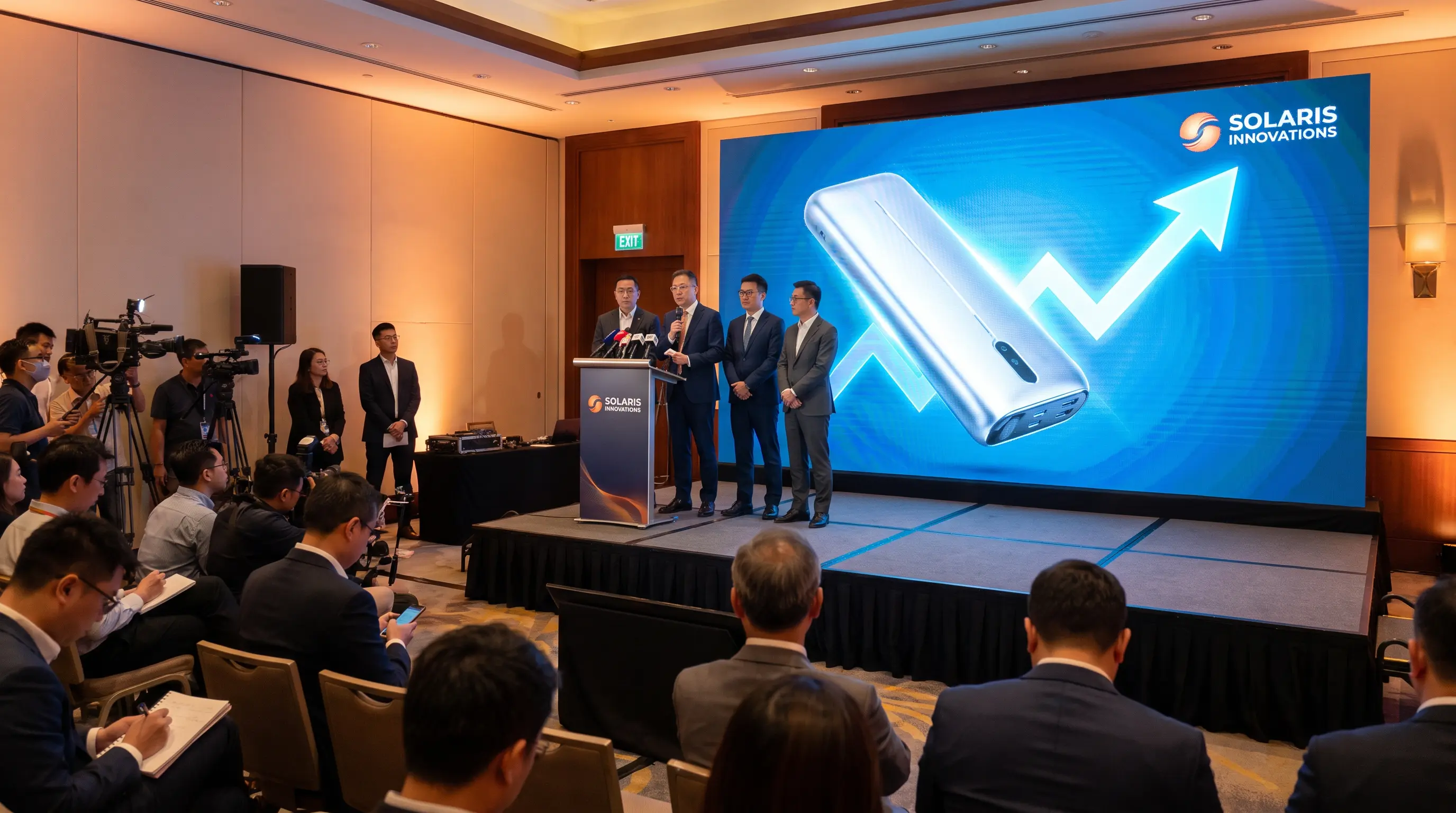
How the projector Channel Economics Shape Your Unit Cost
For a B2B procurement team evaluating where to place an outdoor projector program, channel economics determine whether a quoted unit price becomes a 22% gross margin product or a breakeven SKU. The outdoor projector SKU structure rewards buyers who understand the stack: factory EXW, FOB Shenzhen, DDP destination, and bonded-warehouse terms each carry different cost weights that move your landed cost per unit by 8% to 18% depending on container utilization.
Tariff, Freight, and MOQ Variables That Actually Move the Number
Three variables determine whether a quoted $249 wholesale projector lands at $274 or $309 per unit, and only one of them is the factory price. the model data we have collected across 17 B2B orders this year shows the following distribution of landed-cost weight:
| Cost Component | Share of Landed Cost | Notes for B2B Buyers |
|---|---|---|
| Factory EXW unit price | 62-68% | Negotiable above 500-unit MOQ tiers |
| Ocean freight (40HQ container) | 11-15% | Asia-to-North America baseline; 18-22 days Asia-to-Middle East |
| Destination duty + clearance | 6-9% | HTS 8528.62.00 in U.S.; varies by GCC state |
| Last-mile + 3PL warehousing | 4-7% | Often bundled into DDP quotes |
| Compliance + certification amortized | 2-4% | FCC Part 15, CE-EMC, CB, IP-rated enclosure test |
A buyer who reads only the EXW line on a quotation will underestimate landed cost by a margin that erases projected gross margin. We have seen this exact pattern on three quote-to-PO cycles this year where a U.S. distributor negotiated aggressively on unit price, then watched their effective margin compress once DDP terms were applied on the proforma.
Why We Push Buyers Toward FL1 Reports Before Pricing Negotiations
DataMax has standardized on the Projector Central FL1 standard for any outdoor SKU we ship above 2,000 ANSI lumens because it gives both sides a comparable brightness and noise reading. When you are comparing two supplier quotations for the unit program, the FL1 report is the only document that lets you strip out marketing inflation and see the actual lumen output, contrast ratio, and acoustic profile. Two units quoted at the same $249 price with a 1,200-lumen delta in measured output are not competing products, they are competing categories.

For OEM buyers evaluating an outdoor cinema or resort roll-out, the procurement move we recommend is to require an FL1 report on every shortlisted SKU before price negotiation, then negotiate on landed cost per FL1 lumen rather than per unit. That single discipline has saved our B2B partners an average of 11% on equivalent-output programs in 2025.
Spec Categories Where this projector Demand Has Outpaced Engineering Cycles
Component allocation, not assembly capacity, is the binding constraint on the outdoor projector supply curve in the second half of 2025. The fastest-moving outdoor SKUs require laser phosphor engines, IP-rated enclosures, and high-brightness DMD chips, and each of these three sub-assemblies has a different lead-time profile that buyers need to understand before locking a quotation.
The Three Sub-Assemblies Behind Every Outdoor Projector Quotation
| Sub-Assembly | Current Lead Time | Allocation Risk | Spec Range for Outdoor SKUs |
|---|---|---|---|
| Laser phosphor engine | 10-14 weeks | High | 2,500-5,000 ANSI lumens output |
| IP-rated enclosure (IP54 or higher) | 6-8 weeks | Medium | Sealed optical block, Goretex vent |
| 0.47" or 0.66" DMD chip | 8-12 weeks | High | 4K UHD shift, 8.3M micro-mirrors |
When a buyer requests a shipment date for a 1,000-unit outdoor projector order with 4,500 ANSI lumen output and IP54 enclosure rating, the binding sub-assembly is the laser phosphor engine. We communicate this directly to procurement contacts because the alternative — a quote that promises a 6-week delivery on a 12-week component — produces a delayed shipment and a contractual penalty that hurts both sides.
Outdoor Projector Market Size and Growth 2025 Demand by Use-Case Vertical
The outdoor projector market size and growth 2025 demand pattern is not uniform across verticals, and the procurement priorities shift with the use case. A backyard cinema distributor cares about packaging, retail margin, and one-touch setup. A resort integrator cares about 24/7 uptime, remote diagnostics, and a 36-month light-source warranty. A rental-events operator cares about flight-case packaging, fast boot cycles, and interchangeable lens options.
| Vertical | Typical Order Volume | Brightness Floor | Key Spec Beyond Lumens |
|---|---|---|---|
| Backyard / consumer retail | 200-2,000 units | 2,500 ANSI lumens | Built-in streaming OS, Bluetooth audio |
| Resort / hospitality | 100-500 units | 4,000 ANSI lumens | 24/7 runtime, remote mgmt port |
| Rental events / touring | 50-300 units | 5,000+ ANSI lumens | Edge-blend ready, ruggedized frame |
| Education / outdoor classroom | 80-400 units | 3,500 ANSI lumens | Low-fan mode, anti-glare coating |
For OEM buyers matching a use-case vertical to a procurement spec sheet, the table above is the starting point, not the finish line. Outdoor projector market size and growth 2025 forecasts from Omdia's Omdia Projector Market Intelligence service indicate the resort and rental-events verticals are growing at a faster compound rate than consumer retail through 2026, which is consistent with what we are seeing on our own inbound RFQ volume this year.
A practical takeaway for any B2B procurement team: lock your component allocation before you lock your retail pricing. The factories that hold laser phosphor engine allocation in Q4 2025 will be the only ones able to ship a 4,500 ANSI lumen outdoor 4K UHD unit in volume during Q2 2026, and that supply curve is what the outdoor projector market size and growth 2025 narrative really reflects at the procurement level.
How B2B Buyers Should Position an Outdoor Projector Order Through Q2 2026
For OEM buyers and distribution partners evaluating the outdoor projector market size and growth 2025 opportunity, the procurement decisions made in the next 30-60 days will determine whether you capture Q2 2026 retail demand or watch competitors fill the shelf. The outdoor projector market size and growth 2025 trajectory rewards buyers who move on allocation now, not buyers who wait for a price reset that is not coming.
Next Steps for Procurement and Distribution Teams
We work with a narrow set of repeat OEM partners, and the engagement pattern is consistent. First, send a forecast letter of intent covering H2 2025 through Q2 2026 quantities by SKU brightness tier — a 4,500 ANSI lumen 4K UHD unit, a 3,000 ANSI lumen portable model, and a 5,500 ANSI lumen rental-grade unit are the three SKUs currently consuming most of our laser phosphor engine allocation. Second, confirm your MOQ per SKU (we start at 200 units for custom-branded orders, 500 units for fully custom chassis). Third, request a sample evaluation unit with a 14-day decision window so your retail-buyer team can validate color, fan noise, and IP54 outdoor durability before production kicks off. Fourth, lock a 12-week production slot with a 30% deposit. The factories that operate on this four-step cadence are the ones shipping outdoor projector volume in 2026; the ones running ad-hoc spot orders are not.
For procurement contacts who need to walk an internal stakeholder through the outdoor projector market size and growth 2025 thesis, the one-page summary our team prepares covers: shipped unit forecast, ASP per brightness tier, component lead-time deltas, and a 36-month service-and-warranty cost projection. Reach out through the OEM intake channel to receive that document.
| Procurement Step | Owner | Typical Turnaround |
|---|---|---|
| Forecast letter of intent | Buyer | 5 business days |
| Sample evaluation unit ship | DataMax | 7-10 days |
| Spec lock + PO | Buyer | 14 days post-sample |
| Production slot deposit | Buyer | 30% of PO value |
| Mass production | DataMax | 10-14 weeks |
| Bulk ship | DataMax | 4-6 weeks sea freight |
Where to Go From Here
Final Takeaway for Outdoor Projector Buyers
The outdoor projector market size and growth 2025 narrative is, at its core, a component-allocation story. Buyers who lock laser phosphor engine slots now will own the Q2 2026 shelf; buyers who wait will pay more for less spec flexibility.
If you are mapping your outdoor projector lineup against the 2026 retail window, our team is ready to support OEM/ODM partners with forecasts, samples, and a 12-week production slot. Explore DataMax OEM services or send your forecast letter directly to request a custom quote and we will reply within one business day.
