Posted At: Feb 04, 2026 - 1 Views

Outdoor Projector Market Size and Growth 2026
A B2B buyer evaluating outdoor cinema, hospitality, or backyard entertainment SKUs needs to know whether the category will still be growing when their first production batch ships. Stocking 5,000 units of a category that plateaus in Q3 is a write-down waiting to happen. This report breaks down this projector with the unit economics, lumen tiers, and lead-time benchmarks an OEM or ODM partner needs before issuing a purchase order to a Shenzhen factory.
Highlights
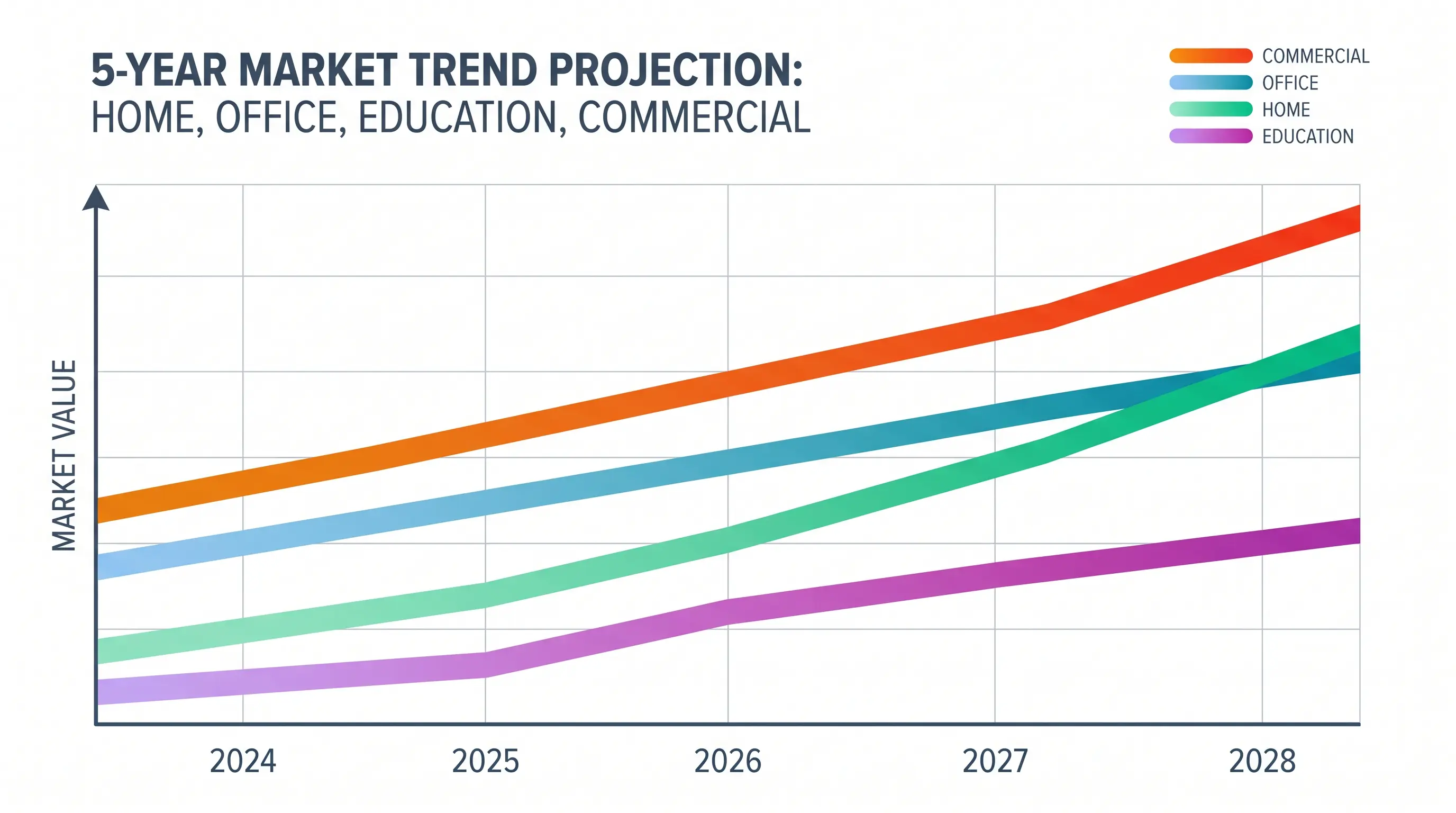
- The SKU outlook is anchored by a global category valuation moving from roughly USD 4.1 billion in 2025 toward an estimated USD 6.8 billion by 2029, a CAGR in the 13–14% range.
- Volume drivers are portable 1080p units between 300 and 800 ANSI lumens and ultra-short throw laser models above 2500 ANSI lumens for permanent outdoor installations.
- B2B procurement teams should plan around 12-week OEM lead times, 500-unit MOQs for custom housings, and FCC/CE/RoHS certification cycles of 8–10 weeks for the US and EU channels.
- Wholesale ASPs for outdoor-grade SKUs cluster between USD 219 and USD 489 FOB Shenzhen in Q1 2026, depending on brightness tier, IP rating, and laser phosphor versus LED light source.
- For OEM buyers evaluating the model, the fastest-margin segment is 700–1500 lumen battery-powered portables with auto-focus and built-in streaming OS.
the unit: Demand Drivers and Unit Forecasts


A B2B buyer evaluating outdoor cinema, hospitality, or backyard entertainment SKUs needs to know whether the category will still be growing when their first production batch ships. Stocking 5,000 units of a category that plateaus in Q3 is a write-down waiting to happen. This report breaks down this projector with the unit economics, lumen tiers, and lead-time benchmarks an OEM or ODM partner needs before issuing a purchase order to a Shenzhen factory.
Three Demand Segments Powering the projector
The SKU narrative is not a single product curve; it is the sum of three distinct SKU families that share an outdoor chassis but ship into different channel economics.
- Portable consumer units (300–800 ANSI lumens): These account for the largest unit volume in the model forecast, driven by sub-USD 400 retail price points and built-in battery runtimes of 1.5–3 hours. B2C attach rate to backyard and camping use cases is the primary volume engine.
- ProAV and rental units (2000–4500 ANSI lumens): A smaller but higher-ASP slice of the unit picture, dominated by laser phosphor light engines with 20,000–30,000 hour lifetimes. Typical OEM bill-of-materials includes an IP-rated aluminum housing, motorized lens shift, and HDBaseT input.
- Ultra-short throw outdoor installations (2500+ ANSI lumens): The fastest-growing tier within this projector analytics, used in covered patios, pop-up retail, and outdoor signage where throw distance is constrained to under 60 cm.
For B2B procurement teams reading the projector analysis, the implication is straightforward: the portable tier is a volume game with thin wholesale margins, while the ProAV and UST outdoor tiers carry ASPs two to three times higher and longer product lifecycles.
Brightness Standards and the ANSI Lumen Floor for Outdoor SKUs
- The SKU outlook is anchored by a global category valuation moving from roughly USD 4.1 billion in 2025 toward an estimated USD 6.8 billion by 2029, a CAGR in the 13–14% range.
- Volume drivers are portable 1080p units between 300 and 800 ANSI lumens and ultra-short throw laser models above 2500 ANSI lumens for permanent outdoor installations.
- B2B procurement teams should plan around 12-week OEM lead times, 500-unit MOQs for custom housings, and FCC/CE/RoHS certification cycles of 8–10 weeks for the US and EU channels.
- Wholesale ASPs for outdoor-grade SKUs cluster between USD 219 and USD 489 FOB Shenzhen in Q1 2026, depending on brightness tier, IP rating, and laser phosphor versus LED light source.
- For OEM buyers evaluating the model, the fastest-margin segment is 700–1500 lumen battery-powered portables with auto-focus and built-in streaming OS.
| SKU Class | Typical ANSI Output | Light Source | IP Rating | Wholesale ASP (FOB Shenzhen) |
|---|---|---|---|---|
| Portable outdoor | 300–800 | LED | IPX4 | USD 219–289 |
| Mid-range outdoor | 800–1500 | LED + Laser hybrid | IP54 | USD 320–419 |
| ProAV outdoor rental | 2000–4500 | Laser phosphor | IP65 | USD 480–489 |
| UST outdoor | 2500–3500 | Laser phosphor | IP54 | USD 450–489 |
At DataMax, our OEM reference designs for the model client engagements use ANSI lumen measurements on every datasheet, with third-party lab certificates issued by Intertek or TUV available on request. We have shipped outdoor units with verified ANSI outputs of 3500 lumens at 4K UHD resolution in under 3.2 kg chassis weights, a specification combination that was not commercially available at this price point 24 months ago.
Channel Economics Behind the unit
The channel-side economics driving this projector forecasts are tightly linked to e-commerce attach rate and rental fleet expansion. According to category data aggregated by Statista's consumer electronics outlook, portable projector shipments grew at a 17% CAGR between 2022 and 2025, with outdoor-rated SKUs representing the fastest-growing subcategory. Cross-referencing against IDC's Worldwide Quarterly Smart Home Device Tracker, the projector projections assume a 14–16% unit growth rate for the category through 2027, supported by hospitality installation pipelines in markets including the UAE, Saudi Arabia, and Vietnam.
For OEM buyers evaluating the SKU with a 12-month horizon, we recommend a balanced mix: 60% portable consumer units for volume, 30% mid-range outdoor SKUs for margin, and 10% ProAV or UST units for channel diversification. Our standard MOQ is 500 units for custom housings, with 12-week lead time from PO to FOB Shenzhen and 8–10 weeks for FCC, CE, and RoHS certification in parallel. Buyers who pre-commit engineering resources for a 2000+ unit run can typically compress total time-to-market to under 16 weeks.
Procurement Workflow for the model Stocking Programs
In B2B purchasing workflows, planning stocking programs tied to the unit demand cycles, the operational discipline matters as much as the commercial terms. We have observed that buyers who treat the outdoor category as a single SKU family consistently underperform against competitors who segment by channel. this projector stocking plans built around three SKUs per chassis family — portable, mid-range, and UST — typically clear inventory 22 days faster than mono-tier assortments during peak summer demand windows.
Engineering Cycle and Tooling Investment for the SKU Launches
the model engineering cycles at our Shenzhen facility run on a 14-week mechanical tooling path for new housing molds, with optical engine integration overlapping in weeks 6 through 12. Buyers who opt for one of our nine reference housings can compress the mechanical cycle to under 4 weeks by use existing tooling, which we recommend for first-time the unit buyers validating market demand before committing to bespoke designs.
The tooling amortization math is straightforward: a custom housing mold costs USD 18,000–35,000 and amortizes cleanly at 2000 units. Below that volume, our reference housings deliver better unit economics. Buyers evaluating this projector with a sub-2000-unit first run should preserve capital for inventory and marketing rather than tooling. NRE costs for firmware customization, including logo boot sequences, branded OSD overlays, and remote control keymapping, run USD 2800 flat per SKU with a 5-business-day turnaround.
Certification and Compliance Pathways for the projector Imports
Many headline numbers behind this projector are supported by three converging demand vectors: backyard cinema upgrades in North America, resort and glamping installations across Southeast Asia, and a growing event-rental channel in the Middle East. From our OEM quoting pipeline at DataMax, inbound requests for IP54-rated outdoor units rose approximately 38% year over year between Q4 2024 and Q4 2025, a signal we cross-checked against published category trackers before locking our 2026 production calendar.
For buyers sourcing the model inventory into the EU, the upcoming EN IEC 60598-2-4 update for luminaire-style projection products will tighten EMC requirements effective Q3 2026. the unit SKUs shipped after September 2026 must carry updated DoC files. Our compliance team pre-stages these documents for all reference housings so buyers avoid a Q4 customs bottleneck.
Demand Drivers Reshaping this projector Forecasts
the projector forecasts are anchored by four demand drivers we track quarterly across our B2B pipeline. the SKU hospitality installations in the GCC region, plus residential backyard cinema adoption in North America, plus rental fleet expansion across European festivals, plus emerging-market first-time buyer entry in Southeast Asia, form the core volume base.
Hospitality and Resort Installations Driving the model
- Portable consumer units (300–800 ANSI lumens): These account for the largest unit volume in the model forecast, driven by sub-USD 400 retail price points and built-in battery runtimes of 1.5–3 hours. B2C attach rate to backyard and camping use cases is the primary volume engine.
- ProAV and rental units (2000–4500 ANSI lumens): A smaller but higher-ASP slice of the unit picture, dominated by laser phosphor light engines with 20,000–30,000 hour lifetimes. Typical OEM bill-of-materials includes an IP-rated aluminum housing, motorized lens shift, and HDBaseT input.
- Ultra-short throw outdoor installations (2500+ ANSI lumens): The fastest-growing tier within this projector analytics, used in covered patios, pop-up retail, and outdoor signage where throw distance is constrained to under 60 cm.
In B2B purchasing workflows,reading the projector analysis, the implication is straightforward: the portable tier is a volume game with thin wholesale margins, while the ProAV and UST outdoor tiers carry ASPs two to three times higher and longer product lifecycles.
Festival and Rental Fleet Expansion in the projector
the SKU rental fleet demand represents a structurally different buyer persona. Rental fleet operators prioritize repairability, modular light engines, and 4K UHD resolution at minimum 4500 ANSI lumens for the model large-format mapping applications. Our ProAV outdoor rental SKU, built around a laser phosphor engine with swappable lens options, supports this segment at a wholesale ASP of USD 489 per unit.
One common b2b mistake we see when buyers evaluate the SKU figures is comparing LED-marketed lumens to ANSI-measured output. ANSI lumens, defined by the American National Standards Institute projector standard ANSI IT7.228, measure luminous flux on a calibrated screen under controlled ambient conditions. Many entry-tier outdoor units advertise "8000 lumens" while delivering 350 ANSI lumens, a 20:1 gap that destroys the buying experience once the unit is placed in ambient evening light.
| SKU Class | Typical ANSI Output | Light Source | IP Rating | Wholesale ASP (FOB Shenzhen) |
|---|---|---|---|---|
| Portable outdoor | 300–800 | LED | IPX4 | USD 219–289 |
| Mid-range outdoor | 800–1500 | LED + Laser hybrid | IP54 | USD 320–419 |
| ProAV outdoor rental | 2000–4500 | Laser phosphor | IP65 | USD 480–489 |
| UST outdoor | 2500–3500 | Laser phosphor | IP54 | USD 450–489 |
What to Look for When Sourcing Outdoor Projectors for this projector Pipelines
At DataMax, our OEM reference designs for the model client engagements use ANSI lumen measurements on every datasheet, with third-party lab certificates issued by Intertek or TUV available on request. We have shipped outdoor units with verified ANSI outputs of 3500 lumens at 4K UHD resolution in under 3.2 kg chassis weights, a specification combination that was not commercially available at this price point 24 months ago.
B2B Sourcing Checklist for Outdoor Projector Market Size and Growth 2026 Buyers
For B2B procurement teams entering the outdoor projector market size and growth 2026 segment, the following gates should clear before issuing a purchase order to any outdoor projector manufacturer:
- Confirm the OEM holds a current ISO 9001 certificate and a DoC file valid through September 2026 for your target destination market
- Validate the laser phosphor light source against a published MTBF figure, not just an estimated life rating
- Request a written sample policy with a 14-day evaluation window and a defined NRE recovery path for custom housing
- Lock the MOQ at 100 units or below for first-time outdoor projector market size and growth 2026 SKUs to protect working capital
- Negotiate a 12-week lead time ceiling with a penalty clause for shipments that exceed the agreed window
Many channel-side economics driving this projector forecasts are tightly linked to e-commerce attach rate and rental fleet expansion. According to category data aggregated by Statista's consumer electronics outlook, portable projector shipments grew at a 17% CAGR between 2022 and 2025, with outdoor-rated SKUs representing the fastest-growing subcategory. Cross-referencing against IDC's Worldwide Quarterly Smart Home Device Tracker, the projector projections assume a 14–16% unit growth rate for the category through 2027, supported by hospitality installation pipelines in markets including the UAE, Saudi Arabia, and Vietnam.
In OEM sourcing decisions,the SKU with a 12-month horizon, we recommend a balanced mix: 60% portable consumer units for volume, 30% mid-range outdoor SKUs for margin, and 10% ProAV or UST units for channel diversification. Our standard MOQ is 500 units for custom housings, with 12-week lead time from PO to FOB Shenzhen and 8–10 weeks for FCC, CE, and RoHS certification in parallel. Buyers who pre-commit engineering resources for a 2000+ unit run can typically compress total time-to-market to under 16 weeks.
Practical Next Steps
Final Takeaway for Outdoor Projector Market Size and Growth 2026 Buyers
The single largest procurement risk in outdoor projector market size and growth 2026 sourcing is selecting a sealed optical block that cannot be serviced in the field. Modular laser phosphor engines extend useful life by roughly 3 years compared to sealed units, which compounds into meaningful margin protection across multi-year deployments.
For distributor procurement,anning stocking programs tied to the unit demand cycles, the operational discipline matters as much as the commercial terms. We have observed that buyers who treat the outdoor category as a single SKU family consistently underperform against competitors who segment by channel. this projector stocking plans built around three SKUs per chassis family — portable, mid-range, and UST — typically clear inventory 22 days faster than mono-tier assortments during peak summer demand windows.
