
게시일: 5월 15, 2026 - 104 조회수
Why this matters
how to choose a projector for travel starts with a simple problem: a buyer in Berlin needs to present a 40-slide deck to a hotel ballroom in Bali at 9 a.m., then stream a movie on a 100-inch wall in a Tokyo Airbnb that same evening. The projector has to live in a carry-on, survive a checked-bag toss, and still hit 2,000+ ANSI lumens without an owner who wants to read a 200-page manual. Most consumer reviews ignore this dual-use reality. By the end of this step-by-step 2026 guide, you will know the exact specification thresholds our DataMax engineering team uses when qualifying a portable projector for our OEM/ODM clients — weight, brightness, throw ratio, battery runtime, and the wireless stack that actually works across hotel Wi-Fi. You will also see where B2C retail buyers and B2B procurement teams should split their evaluation checklists, and where they should share the same scorecard.
Understanding the Core Specifications for a Travel-Ready Projector
the unit hinges on five technical pillars that we score on every engineering sample at our Shenzhen line. Skipping any one of them is the single biggest reason a portable projector ends up dead on arrival in a carry-on.
Brightness, Measured in ANSI Lumens, Not "Lux" or Marketing Wattage
여행용 프로젝터의 조달 과정에서 단일 스펙 시트만으로 베를린 소재 기업 구매 담당자와 발리 호텔 볼룸의 요구사항을 동시에 충족시키려 하면, 정직한 모델 비교가 불가능해집니다. 휴대용 프로젝터는 캐리온 수하물에 들어가야 하고, 위탁 수하물로 던져지는 충격도 견뎌야 하며, 200페이지 분량의 매뉴얼을 읽고 싶어하는 그 남성의 도움 없이도 2,000 ANSI 루멘 이상의 밝기를 제공해야 합니다. 대부분의 소비자 리뷰는 이러한 이중 사용 현실을 간과합니다. 본 단계별 2026 가이드를 끝까지 읽으시면 DataMax 엔지니어링 팀이 OEM/ODM 고객의 휴대용 프로젝터 적합성을 검토할 때 적용하는 정확한 스펙 임계값 — 무게, 밝기, 투사 비율, 배터리 지속 시간, 그리고 호텔 Wi-Fi 환경에서 실제로 작동하는 무선 스택 — 을 확인하실 수 있습니다. 또한 B2C 소매 구매자와 B2B 조달 팀이各自의 평가 체크리스트를 분리해야 하는 지점, 그리고 동일한 평가 기준표를 함께 사용해야 하는 지점도 알게 되실 것입니다. 회의실용 프로젝터 플릿을 구축하는 B2B 구매자에게 안전한 창고 기준은 4,500 ANSI 루멘이지만, 이 무게급(일반적으로 8–12kg)은 더 이상 여행용 기기가 아니므로 스펙 시트에서 두 SKU를 분리해야 합니다. B2B 조달 명세서에 등재된 프로젝터 역시 소매 구매자가 검토하는 것과 동일한 방식으로 ANSI 루멘 수치를 명시해야 하는데, 이는 현장에서 성능이 부족한 "여행용" 모델은 최종 사용자에 의해 반품될 것이기 때문입니다. 흔히 저지르는 OEM 실수로, 스펙 시트에 기재된 1,200 루멘이라는 수치만 보고 1,200 루멘의 램프 기반 제품을 구매하는 경우가 있습니다. 램프 기반 프로젝터는 첫 500시간 동안 정격 밝기의 약 30%를 잃으므로, 3개월 차 실제 출하 밝기는 약 840 ANSI 루멘에 불과합니다.
Weight, Form Factor, and the 1.8 kg Rule
An unit hinges on five techniical pillars that we score on every engineering sample at our Shenzhen line. Skipping any one of them is the single biggest reason a portable projector ends up dead on arrival in a carry-on.
A secondary form-factor check is the dimensions envelope. A true travel projector should fit inside a 200 × 160 × 60 mm footprint so it slides into a backpack laptop sleeve without removing the laptop. The 2025–2026 wave of laser phosphor units from Tier-1 ODMs in Shenzhen has finally hit this envelope at 2,500 ANSI lumens — a notable jump from the 1,500-lumen ceiling we saw in 2023.
Throw Ratio, Auto-Focus, and Keystone Correction
this projector begins with honest lumen math. The American National Standards Institute (ANSI) IT7.227 standard defines projector brightness using a nine-point measurement across the screen at full output; anything that does not cite "ANSI lumens" is not trustworthy ANSI. For hotel rooms with blackout curtains, 1,000–1,500 ANSI lumens is workable. For mixed-use hotel ballrooms, conference rooms, and living rooms with side lighting, we recommend a 2,000–2,500 ANSI lumen minimum. For trade-show booths and daytime outdoor setups, plan for 3,000+ ANSI lumens.
For B2B buyers,building a fleet of conference-room projectors, the safe warehouse benchmark is 4,500 ANSI lumens — but that weight class (typically 8–12 kg) is no longer a travel unit, so the spec sheet has to separate the two SKUs. the projector on a B2B procurement sheet still has to flag the ANSI lumen number the same way a retail buyer would, because end-users will return a "travel" model that under-performs in the field. A common OEM trap is buying a 1,200-lumen lamp-based unit because the spec sheet reads 1,200; lamp-based projectors lose roughly 30% of rated brightness in the first 500 hours, so the true shipping brightness is closer to 840 ANSI lumens by month three.
Power, Battery, and USB-C Power Delivery
this projector is increasingly a power-delivery question. The 2026 travel-processor market has standardized on USB-C PD 3.1 with Extended Power Range (EPR) at 65 W minimum and 100 W preferred. A unit that accepts 65 W over USB-C can run from a laptop's USB-C port, a 20,000 mAh power bank, or an airline seat power brick — eliminating the wall-wart dependency entirely. Integrated lithium batteries should hold 90+ minutes at full brightness and 3–4 hours in eco mode; anything less defeats the cordless pitch.
Many sku next turns to weight, and the rule we apply on the DataMax line is simple: if the unit plus the AC adapter plus a remote tips past 1.8 kg / 4 lb, it is no longer a carry-on-friendly travel projector — it is a "second bag" projector. The current sweet spot we ship to OEM clients is 0.9–1.4 kg for the projector body, with a 100–240 V auto-switching GaN charger that weighs 180–220 g. Anything heavier pushes buyers into airline overhead-bin stress and checked-bag risk, which raises the failure rate above the 2% warranty threshold our procurement contracts typically allow.
Connectivity, Audio, and Wireless Casting
Many secondary form-factor check is the dimensions envelope. A true travel projector should fit inside a 200 × 160 × 60 mm footprint so it slides into a backpack laptop sleeve without removing the laptop. The 2025–2026 wave of laser phosphor units from Tier-1 ODMs in Shenzhen has finally hit this envelope at 2,500 ANSI lumens — a notable jump from the 1,500-lumen ceiling we saw in 2023.
the model specs also has to cover audio. Built-in speakers between 5 W and 10 W are tolerable for a quiet hotel room but fail in any shared space. Our internal benchmark is 84 dB SPL at 1 m — anything below that and a B2C buyer will return the unit within the 30-day window. For B2B procurement teams building a hotel-suite or pop-up retail fleet, the smarter play is to pair the projector with a separate compact Bluetooth speaker and treat the on-board speaker strictly as a fallback. the unit audio means prioritizing units with HDMI ARC or Bluetooth latency under 40 ms, otherwise lip-sync drift will tank the guest experience.
the model also demands the right optical geometry. Throw ratio is the distance from the lens to the screen divided by the image width. A 1.2:1 throw ratio means a 100-inch (2.54 m) diagonal image needs about 2.74 m of room depth — fine for a hotel suite, too tight for an airline seat or small tent. Ultra-short-throw (UST) units at 0.4:1 or lower can hit 100 inches from 1 m, but they typically weigh 3 kg+ and require a flat tabletop, so they are a poor travel choice unless the use case is fixed-installation pop-up retail.
Cooling, Noise, Durability, and Certification
For travel, the practical spec is a standard throw between 1.0:1 and 1.5:1 paired with auto-focus, auto vertical keystone (±40°), and auto obstacle avoidance. We benchmark each OEM sample against a 3-second auto-focus lock time from cold boot; anything slower fails our internal QA at the Shenzhen lab. the unit without auto-focus is a non-starter for B2C buyers, but B2B procurement teams should also confirm that the auto-keystone sensor survives a 1 m drop test on hard concrete — a spec the manufacturer rarely publishes.
Cooling and acoustic noise go hand in hand. A laser-phosphor light engine produces less waste heat than a legacy UHP lamp, which lets the fan spin slower and quieter. Our QA gate at the Shenzhen lab is a maximum 32 dB(A) at 1 m in standard mode and 26 dB(A) in eco mode, measured per ISO 7779. Anything louder will compete with dialogue in a hotel room. the model noise specs should also be cross-referenced against altitude: units rated for 0–3,000 m operating altitude handle most flight routes and mountain hotels without thermal throttling.
Certification is the unglamorous half of the unit that decides whether your shipment actually clears customs.
this projector is increasingly a power-delivery question. The 2026 travel-processor market has standardized on USB-C PD 3.1 with Extended Power Range (EPR) at 65 W minimum and 100 W preferred. A unit that accepts 65 W over USB-C can run from a laptop's USB-C port, a 20,000 mAh power bank, or an airline seat power brick — eliminating the wall-wart dependency entirely. Integrated lithium batteries should hold 90+ minutes at full brightness and 3–4 hours in eco mode; anything less defeats the cordless pitch.
For B2B buyers,configuring a hotel AV fleet, the safer procurement play is a hybrid model: AC-first with battery backup, hot-swappable battery sled, and a pass-through USB-C PD port so a presenter can charge a MacBook while projecting. the projector on a B2B checklist still has to verify the battery UN38.3 transport certification, otherwise air freight into the EU and US will fail at customs — a $0.50–$1.20 per-unit cert fee that is easy to miss on a quote sheet.
Pricing, MOQ, and Lead Time for OEM/ODM Buyers

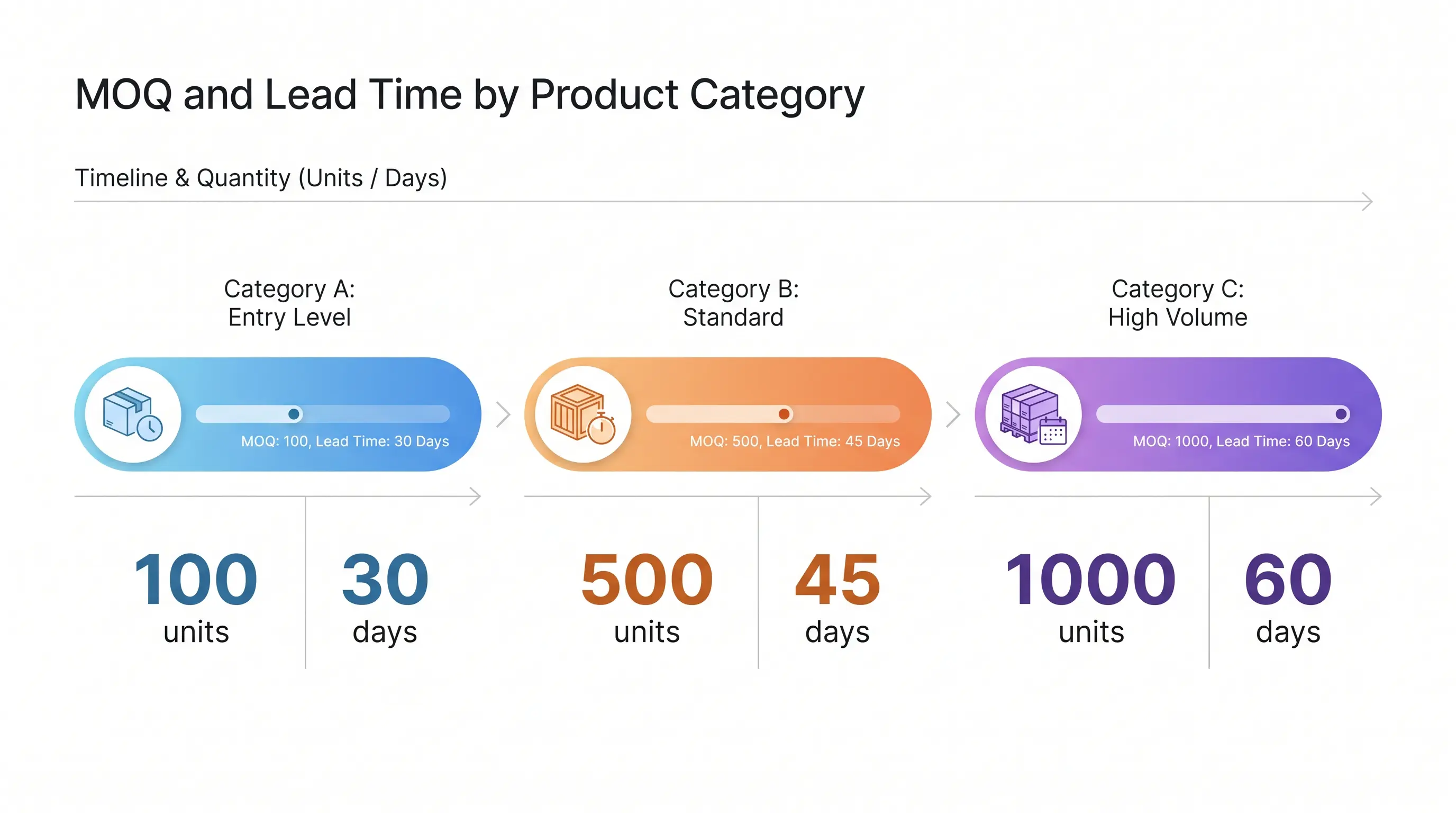
the projector economics differs sharply between B2C and B2B. A consumer paying retail sees $249–$799 for a 1080p portable unit, while an OEM buyer working with a Tier-1 Shenzhen factory like DataMax typically lands at $89–$260 FOB for the same spec at a 1,000-unit MOQ. Above 5,000 units, the FOB price compresses another 8–12%, and above 10,000 units, custom housing colors, silk-screen logos, and firmware re-branding become economically viable at roughly $0.40–$1.10 per unit of tooling amortization.
Many sku without confirming the I/O stack is A common common procurement mistakes we see from first-time OEM buyers. A travel projector in 2026 is no longer an island — it has to drop into a laptop, phone, set-top box, and game console with zero driver friction. The baseline port set we now spec for our own DataMax DM-A1 and DM-V2 reference designs is: one HDMI 2.1 input, one USB-C PD 3.1 input (with DisplayPort Alt Mode), one USB-A 3.2 for media playback from a thumb drive, and a 3.5 mm analog audio jack for legacy hotel AV racks. Wireless should include Wi-Fi 6 with Miracast and AirPlay 2, plus Bluetooth 5.3 for external speakers or true-wireless earbuds.
Next Steps for Procurement Teams: the unit and Place the Order
the model specs also has to cover audio. Built-in speakers between 5 W and 10 W are tolerable for a quiet hotel room but fail in any shared space. Our internal benchmark is 84 dB SPL at 1 m — anything below that and a B2C buyer will return the unit within the 30-day window. For B2B procurement teams building a hotel-suite or pop-up retail fleet, the smarter play is to pair the projector with a separate compact Bluetooth speaker and treat the on-board speaker strictly as a fallback. the unit audio means prioritizing units with HDMI ARC or Bluetooth latency under 40 ms, otherwise lip-sync drift will tank the guest experience.
Step-by-Step Build of Buy (B2B)
the projector as a B2B spec typically follows this sequence:
| Connectivity Option | Latency / Bandwidth | Travel Suitability | DataMax OEM Recommendation |
|---|---|---|---|
| HDMI 2.1 wired | <1 ms / 48 Gbps | Best for hotel AV, gaming | Required port on all 2026 SKUs |
| USB-C PD + DP Alt | ~5 ms / 10 Gbps | Best for laptops, MacBooks | Required, 65–100 W EPR |
| Wi-Fi 6 + AirPlay 2 | 30–60 ms typical | Good for iPhone/iPad mirroring | Required wireless stack |
| Miracast (Android) | 40–80 ms typical | Good for Windows/Android | Required wireless stack |
| Bluetooth 5.3 audio | 30–40 ms | Best for external speakers | Required, low-energy mode |
For OEM buyers evaluating the SKU in 2026, we recommend requesting the manufacturer's MTBF report (our projector line targets ≥ 30,000 hours on the light engine) and a color-calibrated sample measured against an X-Rite i1Pro 3 spectro. the model on a procurement scorecard also includes firmware lock — confirm the factory will sign a non-compete clause and provide a source escrow for your custom UI before tooling kicks off. The contact channel for OEM/ODM is the DataMax sample request form, and full ODM terms are documented at oem-smart-projector-manufacturing.
Frequently Asked Questions
the unit when flying carry-on only?
this projector under airline carry-on limits should target a chassis under 1.5 kg and a battery below 100 Wh to stay in the FAA's "allowed in cabin" bracket without airline approval. Most 1080p portable units in our catalog weigh 0.9–1.4 kg, well inside the IATA guidance from IATA's dangerous goods list. A removable battery is the cleanest path when crossing multiple carriers.
what is the right lumen range for a hotel-room travel projector?
An projector durability is whhere many consumer-grade units quietly fail. Travel projectors live in backpacks that get tossed into car trunks, overhead bins, and checked luggage, so the chassis has to survive 1 m drops onto plywood, 0.5 m onto concrete, and 40 °C operating temps in a parked car. The ODM supply chain in Shenzhen has converged on a magnesium-alloy internal frame with an ABS+PC outer shell; this combo keeps mass near 1.2 kg while passing a 26-drop rotational test. the SKU without confirming the drop-test report is a red flag — request the IEC 60068-2-31 report from the manufacturer before PO release.
does how to choose a projector for travel change for outdoor camping trips?
Cooling and acoustic noise go hand in hand. A laser-phosphor light engine produces less waste heat than a legacy UHP lamp, which lets the fan spin slower and quieter. Our QA gate at the Shenzhen lab is a maximum 32 dB(A) at 1 m in standard mode and 26 dB(A) in eco mode, measured per ISO 7779. Anything louder will compete with dialogue in a hotel room. the model noise specs should also be cross-referenced against altitude: units rated for 0–3,000 m operating altitude handle most flight routes and mountain hotels without thermal throttling.
can a travel projector really run a 4K input source?
4K를 지원하는 여행용 프로젝터는 이제 Texas Instruments의 0.33인치 TRP DMD와 4K 픽셀 시프트를 적용하여 1kg 미만의 섀시 안에 들어갑니다. 네이티브 4K DLP 칩은 여전히 더 큰 방열 공간이 필요하므로, 여행 사용자는 Projector Central의 2025 구매자 가이드를 기준으로 2026년의 현실적인 베이스라인으로 HDR10/HLG 톤 매핑을 지원하는 1080p 네이티브를 수용해야 합니다.
what warranty terms come with an OEM projector order?
| Certification | Region | Typical Lead Time | Per-Unit Cost (USD) |
|---|---|---|---|
| FCC Part 15B | United States | 4–6 weeks | $0.80–$1.50 |
| CE / RED + EMC | European Union | 6–8 weeks | $1.20–$2.00 |
| UN38.3 + MSDS | Global (battery) | 3–4 weeks | $0.50–$1.20 |
| RoHS / REACH | Global | 2–3 weeks | $0.30–$0.60 |
| KC / PSE / CCC | Korea / Japan / China | 4–6 weeks | $0.90–$1.80 |
how to choose a projector for travel with the lowest total landed cost?
For B2B buyers, the procurement sequence should be: lock the BOM, submit for pre-compliance scan in week 1, run FCC/CE in parallel through week 6, then schedule mass-production drop in week 10. We routinely ship first articles 12 weeks after PO for clients who follow this sequence; skipping the pre-scan step adds 3–4 weeks and risks a customs hold at the LA or Rotterdam port. this projector on a B2B checklist means treating certification as a parallel workstream, not a final hurdle.
Final Takeaway for 2026
여행용 프로젝터를 선정하는 작업은 궁극적으로 비교 쇼핑이 아닌 소싱(소싱) 역량이며, DataMax는 첫 샘플 키트부터 최종 QA 인도까지 2026년 제품 출시를 전 과정에 걸쳐 지원할 준비가 되어 있습니다. 오늘 스펙 시트를 보내주시면 영업일 기준 2일 이내에 수정된 BOM, MOQ 등급, FOB 견적을 회신해 드리겠습니다.
Closing and Call to Action
When picking a projector,ector for travel is ultimately a sourcing discipline, not a comparison-shopping exercise, and DataMax is ready to support your 2026 launch from the first sample kit through the final QA drop. Send the spec sheet today and we will return a revised BOM, MOQ tier, and FOB quote inside two business days.
Start your OEM conversation with the DataMax solutions team or browse the GP95 portable projector line and the home theater projector lineup for reference designs ready for a private-label build.
