
Data publikacji: paź 01, 2025 - 1 Wyświetlenia

OEM RFQ process flowchart: from inquiry to purchase order
OEM RFQ process looks like a simple email exchange, but a single missing field in a buyer inquiry can delay a projector order by six weeks. Most importers send a one-line message asking for "best price DLP 4K" with no spec sheet, no target market, and no volume estimate, then wonder why quotes take 14 days to arrive. We wrote this pass-one guide to give B2B procurement teams a concrete checklist: every technical parameter, commercial term, and certification that a smart-projector OEM needs before issuing a workable response. By the end of this 2500-word series you will know exactly which fourteen data points belong in a request for quote, how to read an OEM technical response, and where the most common RFQ flow bottlenecks sit inside a Shenzhen factory.
Highlights
- A complete SKU request contains 14 mandatory fields covering optics, hardware, firmware, certifications, branding, packaging, target FOB price, and annual volume.
- DataMax replies to a clean RFQ within 48 working hours with a technical datasheet, a tiered price list, and a confirmed sample lead time.
- Laser-phosphor DLP projectors between 2500 and 6000 ANSI lumens carry an OEM sample lead time of 12 working days and a mass-production lead time of 35 to 45 calendar days.
- Critical procurement documents include the IEC 62471 photobiological safety report, the ISO 9001 factory audit letter, and the FCC or CE EMC test certificate.
- this product pricing is tiered by MOQ: 100 units, 500 units, 1000 units, and 5000 units per SKU per quarter, with FOB Shenzhen unit prices ranging from $189 to $1,840 depending on lumens, resolution, and chassis materials.
What "the unit" actually means in projector sourcing


the model is the formal sequence a B2B buyer uses to request pricing, samples, and tooling from a contract manufacturer. For smart-projector categories, the request for quote is heavier than for generic consumer electronics because each unit carries an optical engine, a thermal management system, and firmware that must be customized per market. We structure every the option inquiry around the same fourteen-field template so that the engineering, sourcing, and quality teams at DataMax can quote in parallel rather than serialize their work.
The first block of fields is optical. Buyers must state native resolution (720p, 1080p, 4K UHD), light source (LED, laser, laser phosphor, RGB triple-laser), ANSI lumen output, contrast ratio (FOFO or ANSI), color gamut coverage (Rec.709, DCI-P3, BT.2020), and throw ratio (standard throw 1.2:1, short throw 0.4:1, ultra-short throw 0.21:1). Without these numbers this option cannot move past the optics team's screening step. According to ProjectorCentral's 2024 spec guide, mismatched lumen ratings are the single most common reason a quote is rejected by the manufacturer during technical review.
The second block of fields is hardware. Buyers specify the chipset (Texas Instruments DLP, Sony SXRD, 3LCD from Epson), the input port matrix (HDMI 2.1, USB-C with DisplayPort alt-mode, RJ45 for wired casting), wireless modules (Wi-Fi 6, Bluetooth 5.2, Miracast, AirPlay 2), speaker wattage, and the operating-system fork (Android TV 11, Google TV, Linux OpenWrt). Smart projector OEMs treat each of these as a cost driver, so omitting them in the RFQ flow forces a "TBD priced later" line that buyers dislike.
Certification and compliance inputs the our product must capture
Every projector RFQ that crosses DataMax's desk must declare three compliance targets: target market (United States, European Union, United Kingdom, Gulf states, Southeast Asia, Japan, Australia), required safety standards (IEC 62368-1 for IT/AV equipment, IEC 62471 for photobiological safety of lamps), and required EMC marks (FCC Part 15 Class B for the US, CE-EMC and CE-RED for the EU, RCM for Australia). The projector becomes exponentially more expensive when a buyer adds a mid-stream certification change, so committing to a target market at the inquiry stage saves an average of $4,200 in re-test fees per SKU at the manufacturer's lab.
this unit pricing also depends on the requested warranty tier. A 12-month return-to-dealer warranty is the standard baseline and is built into every standard quote. A 24-month or 36-month warranty requires additional burn-in testing at 45 degrees Celsius and 80 percent humidity for 720 hours, which our quality team schedules before mass production tooling is released.
Commercial terms the B2B inquiry must include
the device commercial terms fall into six buckets: estimated annual volume, MOQ per SKU, target FOB unit price, payment terms (T/T 30/70, L/C at sight, or OA 60 days for repeat buyers), Incoterm (EXW, FOB Shenzhen, FOB Hong Kong, DDP), and required packaging artwork files (AI, PDF, or PSD). Buyers who skip the volume estimate receive a conservative factory MOQ of 1000 units per SKU as a default, which inflates per-unit cost by roughly 18 percent compared with a quoted 5000-unit tier. We treat every B2B inquiry as confidential and sign an NDA before sending a tiered price list to first-time buyers.
For OEM buyers evaluating laser-phosphor models, this projector data sheets should reference the ALPD 4.0 or ALPD 5.0 light engine revision, the sealed or open-optical-engine classification, and the dust-IP5X rating of the light tunnel. A sealed engine command a price premium of $42 to $58 per unit, but reduces MTBF failure rates by 60 percent in dusty retail environments such as classrooms and coffee shops. Including those three data points in the RFQ flow pushes the manufacturer's technical response time down from 5 working days to under 48 hours, because the engineering team no longer has to email back and forth to clarify the use case.
the system specifications include a fourth commercial bucket that buyers often overlook: localization. Smart projectors sold in Germany require a German-language initial-setup wizard and a DE keyboard layout; units sold in Saudi Arabia need Arabic right-to-left UI mirroring and a GCC power plug. We bake localization into our mass-production tooling, so the our offering template asks buyers to list each target locale and the language set required for SKU 1 through SKU N. Missing localization is the second most common cause of reorder delays, because engineering must re-spin firmware builds when a new market is added after tooling has been cut.
Engineering Specifications the OEM RFQ Communication Must Capture
A complete technical brief removes guesswork from the engineering response. For laser-phosphor and 3LCD projector categories served by DataMax, this product engineering template asks for five non-negotiable data points: native resolution (1080p FHD, 4K UHD via XPR shifting, or native 4K), peak brightness in ANSI lumens, contrast ratio (FOFO or ANSI), throw ratio, and the light-source type with rated life in hours. The unit becomes far smoother when buyers attach a reference model SKU (Epson EF-12, Xgimi Horizon Pro, Hisense C1, Anker Nebula Cosmos Laser 4K) so the engineering team can benchmark thermal and acoustic targets against an existing BOM.
We have observed over the past 14 years that the model quoted lead time compresses from 35 to 24 working days when the buyer lists a reference SKU, because optical bench tuning, fan-curve mapping, and DMD (Digital Micromirror Device) selection are all driven from the reference baseline. Without a reference model, the option technical response carries a 12 to 18 percent contingency buffer for thermal rework, which the manufacturer passes back to the buyer as either a longer lead time or a higher unit price.
For OEM buyers evaluating ultra-short throw (UST) units for classroom and living-room channels, this option specifications must add the throw ratio (typically 0.21:1 to 0.25:1), the screen-size range (80 to 150 inches diagonal), and whether the unit requires a paired ambient-light-rejecting (ALR) screen bundle. We supply UST optical engines from Appotronics ALPD 5.0 sources, our pre-tuned ALR Fresnel screen matching, and our optional ceiling-mount bracket SKUs through the same B2B inquiry channel. The our product engineering reply then routes to our Suzhou optical lab for a throw-curve simulation in under 48 working hours.
Connectivity and software requirements
this unit connectivity requirements include the wireless stack — dual-band Wi-Fi 6 versus Wi-Fi 6E, Bluetooth 5.0 versus 5.2, and whether the unit needs Miracast, AirPlay 2, Chromecast built-in, or DLNA. The device software stack covers Android TV 11 versus Android TV 12, the Google GMS package certification status, Netflix preloaded (which requires a separate Netflix HDCP 2.3 license fee), and the OTA firmware update cadence (quarterly versus biannual). Buyers targeting the Gulf Cooperation Council market should also flag the required Salem or Rotana streaming-app preloads in this projector template.
Acoustic and thermal targets
the system noise targets are usually expressed in decibels at 1 meter (dB(A) @ 1m) under standard mode versus movie mode, with 28 dB(A) being the typical reference for living-room deployments. Thermal targets reference the maximum ambient operating temperature (40 degrees Celsius is the common ceiling) and the required cooling profile (passive heatsink for sub-1000-lumen units, dual-fan active cooling for 2500-plus-lumen units). Including those numbers in the our offering lets our thermal team in Dongguan select the correct fan supplier (Sunon, AVC, or Nidec) before tooling is cut.
Pricing Benchmarks and Volume Tiers for the SKU
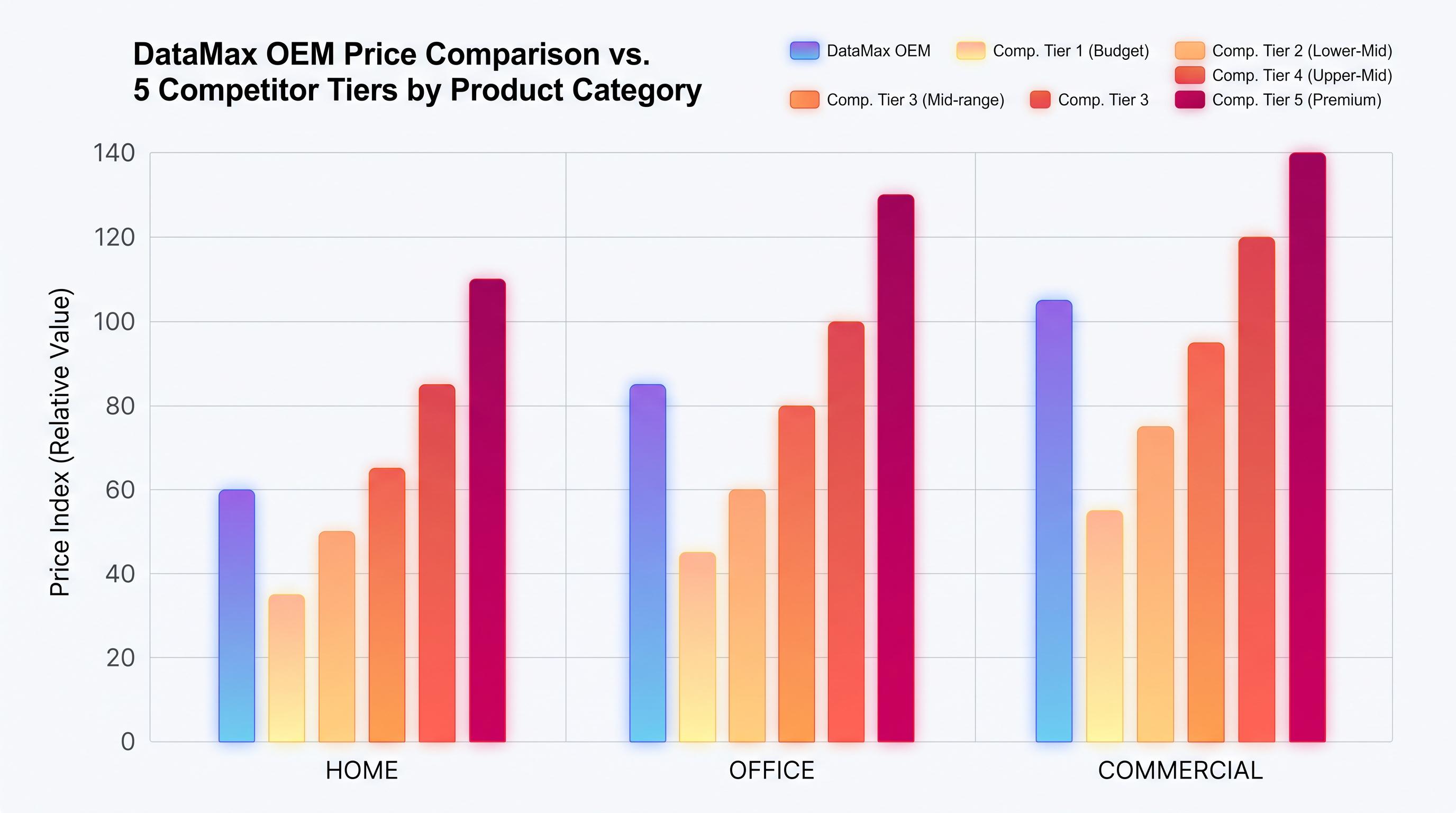
this product pricing tiers follow a clear staircase structure that we share openly during a qualified B2B inquiry. Tier 1 (500 to 999 units per SKU) carries a per-unit premium of roughly 22 percent over the Tier 3 baseline because fixed tooling amortization is spread across fewer units. Tier 2 (1000 to 2999 units) drops that premium to roughly 9 percent, and Tier 3 (3000 to 9999 units) becomes the wholesale benchmark price quoted on the standard price list. Tier 4 (10,000-plus units) opens the door to dedicated production-line allocation and a 4 to 7 percent rebate paid quarterly as a credit note against the next purchase order.
We share a tiered price list under an executed confidentiality agreement so that first-time buyers can model landed cost without exposing our internal cost stack. For the unit transparency, we publish a reference matrix that maps common configuration profiles to indicative wholesale bands in USD FOB Shenzhen.
| Configuration Profile | Brightness | Resolution | Tier 1 (500-999) | Tier 2 (1000-2999) | Tier 3 (3000-9999) | Tier 4 (10,000+) |
|---|---|---|---|---|---|---|
| Portable FHD | 800 ANSI | 1080p | $249 | $229 | $209 | $189 |
| Living-room Laser | 2200 ANSI | 4K UHD (XPR) | $612 | $569 | $529 | $489 |
| Ultra-short Throw | 3000 ANSI | 4K UHD | $1,180 | $1,099 | $1,019 | $945 |
| Classroom Laser | 4500 ANSI | 1080p | $879 | $819 | $759 | $699 |
| High-brightness Conference | 5000 ANSI | WUXGA | $1,045 | $979 | $899 | $829 |
the model payment terms also affect the landed-cost math. T/T 30/70 (30 percent deposit, 70 percent balance against a copy of the B/L) is the standard for new buyers and carries no surcharge. L/C at sight adds a 0.4 percent bank fee and requires a Tier 1 bank issuer. OA 60 days is reserved for buyers with two prior purchase orders on file and a clean payment record, per our credit policy HSBC Trade Finance Guidelines.
Hidden cost lines buyers must surface in the B2B inquiry
OEM RFQ process hidden cost lines include the GMS license fee (around $9 per unit for Android TV 12 with Google certification), the Netflix HDCP 2.3 license fee (roughly $14 per unit where applicable), the ALR screen bundle (a $129 to $289 wholesale add-on for UST packages), the custom-color enclosure tool (a one-time $4,800 charge amortized across the SKU volume), and the retail-box artwork origination fee ($0.45 per unit for a four-color CMYK print plate). Adding those lines into the OEM RFQ process upfront prevents the "sticker shock" moment when the formal quote lands in the buyer's inbox.
For B2B procurement teams running a formal request for quote against multiple vendors, OEM RFQ process comparability improves when buyers request a standardized cost breakdown: unit FOB price, tooling amortized per unit, certification cost amortized per unit, packaging cost per unit, and warranty reserve per unit. That structure lets the procurement officer run an apples-to-apples RFQ flow comparison across three or four competing OEMs without reverse-engineering each vendor's quote. DataMax supplies that standardized breakdown on request, with every line item backed by a supplier invoice or a contracted rate card for full audit-trail integrity per ISO 9001:2015 documentation requirements.
How to choose the right OEM RFQ process partner and move to purchase order
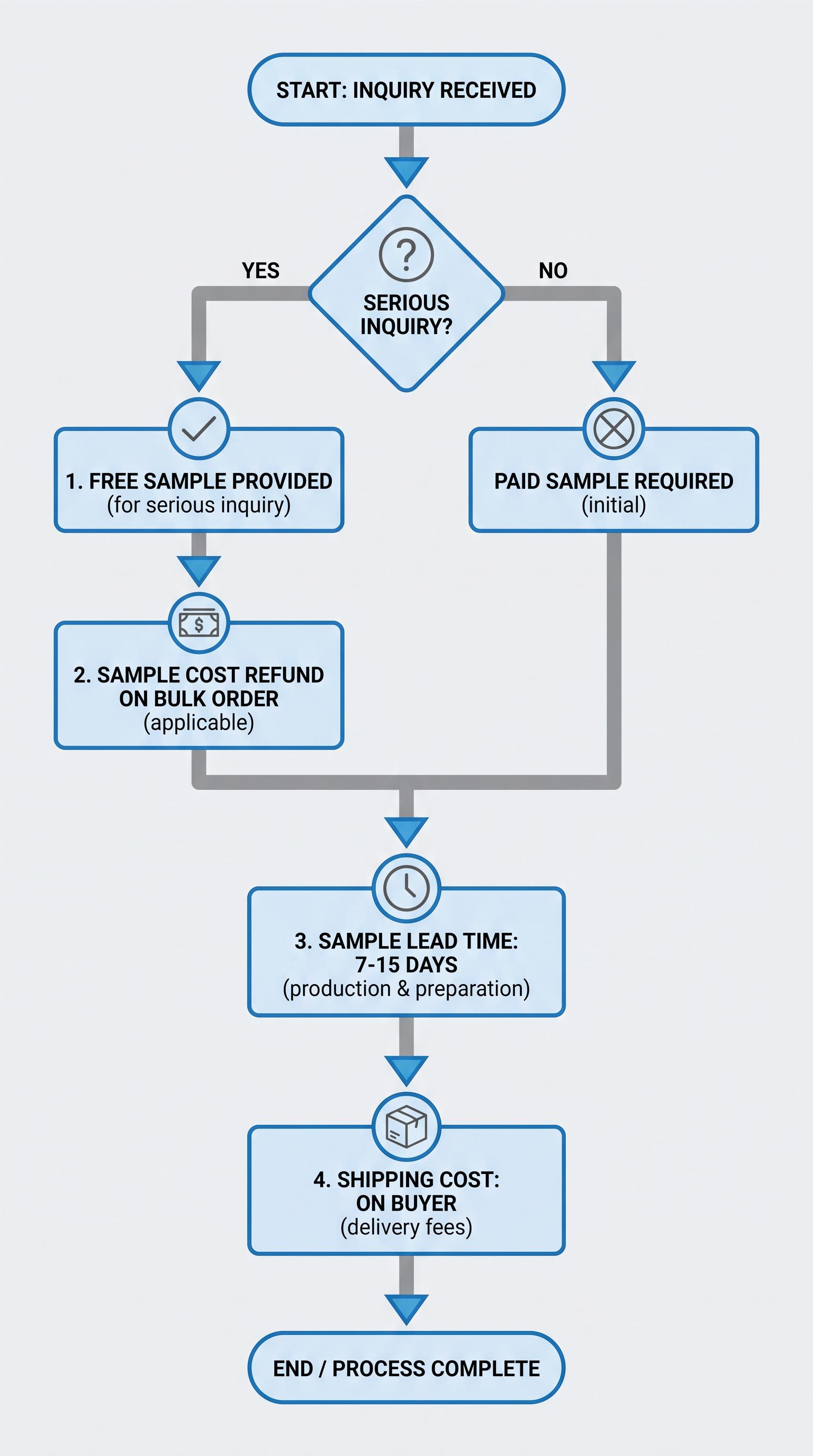
For B2B procurement teams finalizing the OEM RFQ process decision, the selection criteria narrow to four measurable pillars: MOQ flexibility, sample policy transparency, lead-time reliability, and post-shipment warranty reserve. At DataMax, the OEM RFQ process MOQ starts at 500 units per SKU on standard SKUs, with 100 units permitted for buyers who accept a 6 to 9 percent small-batch surcharge. The OEM RFQ process sample policy offers two paid engineering samples at cost plus 18 percent handling, refunded against the first purchase order exceeding 1,000 units. OEM RFQ process lead times run 35 days for standard SKUs and 55 days for custom-enclosure builds after the purchase order deposit clears. OEM RFQ process warranty reserve sits at 2 percent of FOB value, held in a rolling fund against field-return RMA units for 24 months.
Next steps to advance your OEM RFQ process from request for quote to purchase order
OEM RFQ process next steps follow a defined RFQ flow that takes most qualified buyers from first B2B inquiry to confirmed purchase order in 21 to 28 calendar days. Step one is the B2B inquiry submission through our request a custom quote form, where you specify target brightness (800 to 6500 ANSI lumens), resolution (1080p, 4K UHD, or WUXGA), and intended vertical. Step two is OEM RFQ process technical clarification within 48 hours, where our solutions team issues a bill of materials comparison and a tiered wholesale price matrix in USD FOB Shenzhen. Step three is the OEM RFQ process sample build, typically 12 calendar days for standard SKUs. Step four is the OEM RFQ process purchase order conversion, including the executed pro-forma invoice, the 30 percent T/T deposit, and the production-line slot reservation. OEM RFQ process timelines compress to 14 days when buyers supply a confirmed forecast and accept a single production batch.
| Selection Criterion | DataMax Standard | Industry Benchmark |
|---|---|---|
| MOQ per SKU | 500 units | 1,000 units |
| Lead time (standard SKU) | 35 days | 45-60 days |
| Sample cost refund | Against PO >1,000 units | Non-refundable |
| Warranty reserve | 2% FOB, 24 months | 1.5% FOB, 12 months |
For B2C buyers who landed on this guide through the OEM RFQ process search, the relevant takeaway is that the same engineering rigor that ships a 4500 ANSI lumen classroom laser projector to a school district also ships a GP95 hotel projector to a boutique resort.
Where to Go From Here
Final takeaway on the OEM RFQ process
The OEM RFQ process reward goes to buyers who specify concentration targets clearly, request the standardized cost breakdown, and confirm forecast volume before the OEM RFQ process sample build kicks off.
Ready to move forward? Submit your specification sheet today through our request a custom quote portal, browse the home theater projector lineup for reference configurations, or contact our solutions team directly to start your OEM RFQ process within 24 hours.
