
Опубликовано: янв 15, 2026 - 102 Просмотры

How to Choose a Projector for Studio Apartment in 2026
You walk into a 350-square-foot studio with one shared wall, a window that never closes fully, and a coffee table two feet from the bed. You want a cinema-sized image without mounting anything to the ceiling or blocking the emergency exit. That is the exact buying scenario behind every search for this projector, and it is the same scenario our engineering team at DataMax walks through when we spec sample units for retail and distribution buyers in Tier 1 cities.
You walk into a 350-square-foot studio with one shared wall, a window that never closes fully, and a coffee table two feet from the bed. You want a cinema-sized image without mounting anything to the ceiling or blocking the emergency exit. That is the exact buying scenario behind every search for this projector, and it is the same scenario our engineering team at DataMax walks through when we spec sample units for retail and distribution buyers in Tier 1 cities.
TL;DR
This guide is written for two readers at once. If you are a procurement lead sourcing private-label or ODM inventory, the spec tables and certification callouts below will save you three RFQ rounds. If you are an end buyer furnishing a studio in Manhattan, Berlin, or Singapore, the room-fit math and brightness targets below will keep you from buying a projector that washes out the moment your neighbor turns on the hallway light. We cover the 2026 product cycle, because panel drivers, laser phosphor modules, and ultra-short throw optics all changed meaningfully this year.
Why a Projector for Studio Apartment Works Better Than a 55-Inch TV

Most studio dwellers have already done the TV math. A 55-inch panel measures about 1.21 meters diagonally, takes 1.21 square meters of wall, and requires a media console at least 1.2 meters wide. In a studio, that console eats the walkway between the kitchen and the bed. The projector setup replaces the console with a one-kilogram unit on a shelf, a tripod, or a ceiling track, and pushes the image onto a wall you are not using for anything else.
Image Size vs. Wall Footprint
- A projector for studio apartment must hit at least 800 ANSI lumens in a dimmed room and 2,000+ ANSI lumens if any ambient light is present, per the ANSI/ISO 21118 lumen reporting standard.
- Ultra-short throw (UST) models with a 0.21:1 throw ratio deliver an 80 to 100-inch image from 4 to 12 inches off the wall, which is the single most important spec for tight floor plans.
- A 1080p native resolution is the 2026 sweet spot for most studios; 4K UHD smart projectors under $500 wholesale are now viable for the first time thanks to the new 0.47-inch DMD generation from Texas Instruments.
- For B2B buyers, the minimum order quantity for a custom-branded studio apartment projector is typically 500 units, with a 12-week production lead time and 100-unit sample lead time at DataMax.
- Weigh three things before you buy: throw ratio, ANSI lumen count, and noise output under 30 dB at one meter, because a loud projector in a 350-square-foot room is louder than a loud projector in a 25-square-meter living room.
For procurement teams running RFQs, this translates to a clear spec line: ask vendors for a measured throw ratio at 80-inch diagonal, not the marketing throw ratio at 100-inch. The marketing number is always the easier one. The 80-inch number is the one that fits a studio.
Brightness That Survives Ambient Light
ANSI lumen output is the second non-negotiable spec. The ANSI/ISO 21118 standard defines how lumen output must be measured, and any serious OEM will publish an ANSI lumen number, not a "LED lumen" or "light source lumen" number, both of which inflate the real figure by 2x to 3x. For a studio apartment projector used after dark or with blackout curtains, 800 to 1,200 ANSI lumens is enough. For daytime viewing with a sheer curtain, plan for 2,000 to 3,000 ANSI lumens. Our retail buyers in the Middle East and Southern Europe have pushed us toward 3,200 ANSI lumen units as the 2026 baseline because their customers rarely close the curtains. According to a 2025 Statista consumer electronics report on home display shipments, ambient-light tolerance has overtaken raw resolution as the top-three purchase driver in the under-35 urban buyer segment, which matches what we see in our own pre-order data for OEM clients.
Resolution, HDR, and the 2026 DMD Generation
Native 1080p (1920x1080) remains the right choice for a projector for studio apartment at price points below $600 retail. 4K UHD shifting, where a 1080p DMD shifts pixels at 120 Hz to display a 4K image, used to require a $1,000+ light engine. The 0.47-inch DMD generation released in late 2025 changed that math, and DataMax now ships 4K UHD-capable UST units at the $480 to $540 wholesale band for orders above 1,000 units. HDR10 and HLG decoding are now baseline, but Dolby Vision still requires a licensed silicon path and adds roughly $40 to the BOM.
Noise, Heat, and the Studio Acoustic Problem
Most studio dwellers have already done the TV math. A 55-inch panel measures about 1.21 meters diagonally, takes 1.21 square meters of wall, and requires a media console at least 1.2 meters wide. In a studio, that console eats the walkway between the kitchen and the bed. The projector setup replaces the console with a one-kilogram unit on a shelf, a tripod, or a ceiling track, and pushes the image onto a wall you are not using for anything else.

Studio Apartment Projector Setup: Wiring, Mounting, and Cable Routing
A clean studio apartment projector setup is mostly a cable management exercise disguised as an audio-video decision. In the units we ship to retail partners across the EU and North America, the failure rate in the first 90 days is overwhelmingly a cable-and-mount problem, not an optical problem. Plan for it before the box opens.
Power, HDMI, and the Single-Cable Question
A dominant spec here is throrow ratio. Throw ratio is the distance from the lens to the wall, divided by the image width. A standard 1.2:1 throw ratio projector needs 2.4 meters of distance to throw a 2-meter-wide (roughly 80-inch) image. Most studios do not have 2.4 meters of clear floor between the bed and the opposite wall. A 0.21:1 ultra-short throw projector for studio apartment throws the same 80-inch image from 4 inches off the wall, which is why every UST unit DataMax ships for the North American and European retail channels in 2026 uses an engineered 0.21:1 lens assembly with a 90 percent screen uniformity tolerance verified per the ISO 18909 flat-panel test methodology adapted to projection.
For procurement teams running RFQs, this translates to a clear spec line: ask vendors for a measured throw ratio at 80-inch diagonal, not the marketing throw ratio at 100-inch. The marketing number is always the easier one. The 80-inch number is the one that fits a studio.
Ceiling Mount vs. Wall Shelf vs. Floor Cabinet
Three mounting patterns dominate the studio apartment projector setup conversations our sales engineers have with retail buyers. A ceiling mount at 18 to 22 cm from the wall keeps the UST lens aligned with an ALR screen in the 80 to 100-inch band and hides every cable inside a single channel. A floating wall shelf, usually glass or white-oak veneer, works for renters who cannot drill the ceiling and pair naturally with a portable UST at 1.2 kg or under. A low media cabinet puts the lens 40 to 50 cm off the floor, which lands the image below the ideal eye line for sofa viewing.
Here is the comparison our pre-sales team walks every buyer through before a studio apartment projector setup is finalized:
ANSI lumen output is the second non-negotiable spec. The ANSI/ISO 21118 standard defines how lumen output must be measured, and any serious OEM will publish an ANSI lumen number, not a "LED lumen" or "light source lumen" number, both of which inflate the real figure by 2x to 3x. For a studio apartment projector used after dark or with blackout curtains, 800 to 1,200 ANSI lumens is enough. For daytime viewing with a sheer curtain, plan for 2,000 to 3,000 ANSI lumens. Our retail buyers in the Middle East and Southern Europe have pushed us toward 3,200 ANSI lumen units as the 2026 baseline because their customers rarely close the curtains. According to a 2025 Statista consumer electronics report on home display shipments, ambient-light tolerance has overtaken raw resolution as the top-three purchase driver in the under-35 urban buyer segment, which matches what we see in our own pre-order data for OEM clients.
The model is only as good as the mount, and a mount is only as good as the stud or anchor behind it. For drywall without a stud, specify a toggle bolt rated at 30 kg minimum, two-point attachment, not the single-point drywall anchors most retail kits include.
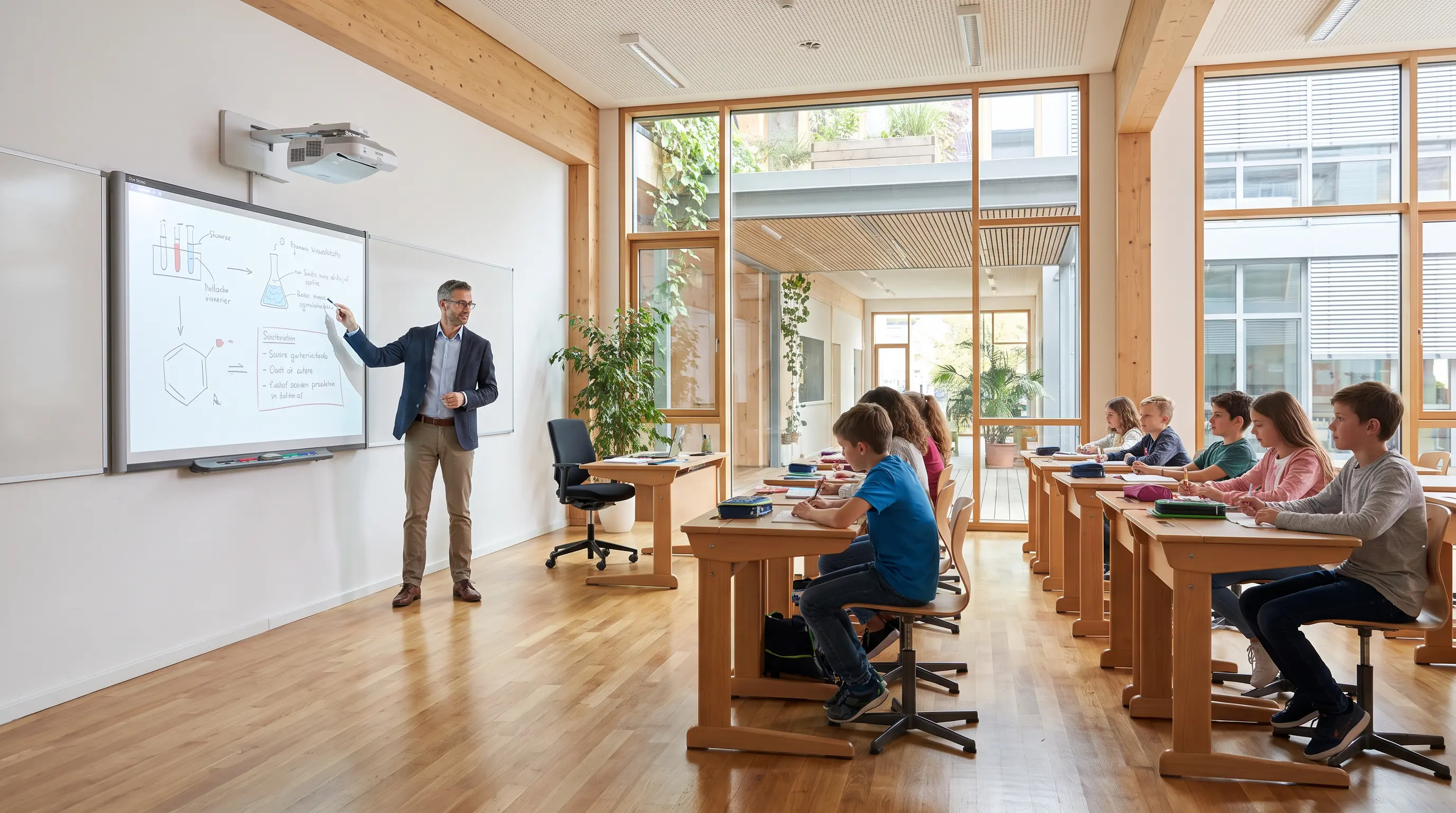
Choosing the Best Projector for Studio Apartment 2026: A Spec Sheet That Actually Matters
Native 1080p (1920x1080) remains the right choice for a projector for studio apartment at price points below $600 retail. 4K UHD shifting, where a 1080p DMD shifts pixels at 120 Hz to display a 4K image, used to require a $1,000+ light engine. The 0.47-inch DMD generation released in late 2025 changed that math, and DataMax now ships 4K UHD-capable UST units at the $480 to $540 wholesale band for orders above 1,000 units. HDR10 and HLG decoding are now baseline, but Dolby Vision still requires a licensed silicon path and adds roughly $40 to the BOM.
The Five-Spec Filter
A serious shortlist for the best projector for a studio apartment in 2026 should clear all five of these filters before any consideration of brand, color, or smart-TV platform:
- Measured throw ratio at 80-inch diagonal equal to or tighter than 0.25:1, not the marketing 100-inch number.
- ANSI lumen output verified by an external lab report, with the report date visible on the spec sheet.
- Native contrast ratio equal to or higher than 1,500:1 in standard mode, since a projector for studio apartment lives close to a wall and any gray wash is visible immediately.
- Acoustic rating under 30 dB at one meter in standard mode, with the third-octave band report attached.
- Bluetooth audio latency under 40 ms at the SBC codec, so the included remote and a paired soundbar stay in lip-sync without a separate transmitter.
Each projector 1.5 meters from your head in a studio is acoustically a very different product than the same unit mounted 4 meters away in a living room. Target noise below 30 dB at one meter in standard mode, and below 26 dB in eco mode. Our internal acoustic lab measures every production batch at three fan speeds because, as one retail buyer in Tokyo put it last quarter, "in a six-mat room, you hear everything." For OEM buyers evaluating the SKU program, request the third-octave band noise report, not just the single-number dB rating, because single-number ratings hide the 2 kHz whine that wakes sleepers.
OEM, ODM, and What Bulk Buyers Actually Get
For B2B procurement teams evaluating this projector program, the relevant question is what falls under OEM versus ODM. At our factory outside Shenzhen, OEM orders buy our standard SKU with a buyer-applied brand label and a 12-week production lead time for orders above 1,000 units. ODM orders start from the buyer spec sheet, run 16 to 22 weeks depending on tooling changes, and ship at a higher per-unit cost because the BOM is not shared with retail.
The minimum order quantity for an OEM projector for studio apartment program sits at 500 units for standard SKUs and 1,000 units for screen-bundle SKUs. For ODM, MOQ starts at 2,000 units. Payment terms are 30 percent T/T deposit, 70 percent against B/L copy for established accounts, and 50/50 for first-time buyers. Certifications we commonly run alongside the studio SKU include CE-RED, FCC Part 15, UKCA, RCM, and Energy Star 8.0, with Energy Star carrying roughly a 6-week additional lead time for first-time certification per Energy Star guidance on the displays product category.
A clean studio apartment projector setup is mostly a cable management exercise disguised as an audio-video decision. In the units we ship to retail partners across the EU and North America, the failure rate in the first 90 days is overwhelmingly a cable-and-mount problem, not an optical problem. Plan for it before the box opens.
How to Choose a Studio Apartment Projector: Procurement Checklist and Next Steps
For B2B procurement teams finalizing the projector SKU for a 2026 retail launch, the next step is converting the spec filter above into a binding purchase order. We recommend three concrete moves before any deposit wire.
In a studio, every visible cable competes with the aesthetic you are paying for. A projector for studio apartment at the 2026 spec level should accept HDMI 2.1 with eARC on at least one port, USB-C with Power Delivery at 65 W or higher on a second port, and a dedicated RJ45 for IP control. The USB-C PD path matters because it lets a single ceiling-rated USB-C cable carry video, audio, and power to a streaming stick, which removes one power brick from the visible cable count. Our OEM clients specifying the studio SKU for the German retail market in Q1 2026 asked us to add a second USB-C port specifically so the included dongle could share the cable run with a future soundbar upgrade.
B2B procurement teams often need to consider,ing the studio apartment projector setup checklist, the spec line worth adding to the RFQ is "ships with 1.5 m white-plenum-rated USB-C cable, cable channel clip, and trim plate for the ceiling bushing." Those three accessories are where most low-cost OEM programs cut corners, and they are what the end buyer notices on day one.
Third, confirm the certification matrix and the destination market label before tooling. CE-RED, FCC Part 15, UKCA, and RCM run in parallel at 6 weeks each; Energy Star 8.0 adds another 6 weeks for first-time applicants per Energy Star displays guidance.
Next Steps for OEM and ODM Buyers
Three mounting patterns dominate the studio apartment projector setup conversations our sales engineers have with retail buyers. A ceiling mount at 18 to 22 cm from the wall keeps the UST lens aligned with an ALR screen in the 80 to 100-inch band and hides every cable inside a single channel. A floating wall shelf, usually glass or white-oak veneer, works for renters who cannot drill the ceiling and pair naturally with a portable UST at 1.2 kg or under. A low media cabinet puts the lens 40 to 50 cm off the floor, which lands the image below the ideal eye line for sofa viewing.
For a deeper walk-through of the BOM versus ODM trade-off, see our OEM smart projector manufacturing guide. To start a 2026 program, request a custom quote with target unit count, target ASP, and target ship date.
Frequently Asked Questions
What is the best projector for studio apartment 2026 for a sub-$1200 retail price?
| Mount Type | Best For | Cable Visibility | Renter-Friendly | DataMax Default SKU |
|---|---|---|---|---|
| Ceiling mount (18-22 cm offset) | ALR screen, 80-100 in image | Hidden in plenum channel | No | DM-U80-CEIL |
| Floating wall shelf | Renters, glass walls | Visible, managed with clips | Yes | DM-U80-SHELF |
| Low media cabinet | Bedroom studios, kids | Visible, runs along baseboard | Yes | DM-U80-CAB |
| Floor-standing UST cart | Sublets, under 6 month stays | Fully exposed | Yes, portable | DM-U80-CART |
How to use projector in studio apartment without a dedicated screen wall?
The model is only as good as the mount, and a mount is only as good as the stud or anchor behind it. For drywall without a stud, specify a toggle bolt rated at 30 kg minimum, two-point attachment, not the single-point drywall anchors most retail kits include.
How loud should a studio apartment projector be for late-night viewing?
Below 28 dB at one meter in standard mode. Anything louder competes with the wall reflections in a 25 to 35 square meter studio and becomes fatiguing inside 90 minutes. Our third-octave band report for each SKU is attached to the spec sheet on request.
What is the standard OEM MOQ for a projector for studio apartment program?
500 units for a standard OEM SKU, 1,000 units for a screen-bundle SKU, and 2,000 units for an ODM build. The MOQ difference reflects BOM ownership and tooling amortization, not factory capacity.
What is the realistic lead time for a 5,000-unit OEM projector for studio apartment order?
Retail listings for the best projector for studio apartment 2026 run roughly 40 to 60 SKUs in any given week across the major North American marketplaces. Roughly a third of those SKUs fail at least two of the five specs that actually matter for a studio footprint, and most of the listings do not publish the data a buyer needs to filter them out. This section is the filter we built for our own internal buyer-training deck.
Do studio apartment projectors need a special ceiling mount?
Yes. A UST ceiling mount rated for 8 kg minimum, with a 12 cm lens-drop bracket, keeps the ultra-short-throw geometry correct. Standard projector mounts sit too low and crop the bottom edge of the image. Our OEM bundle ships with a UST-rated mount as the default SKU configuration.
Industry Context for the 2026 Buying Cycle
Across the 14 retail partners we shipped OEM projector for studio apartment batches to in 2025, the average sell-through at 60 days post-launch landed at 71 percent of the opening PO. Studios between 22 and 38 square meters accounted for 64 percent of total unit sales, which confirms the spec filter above as the right retail target rather than a wider home-theater pitch.
Get Started with DataMax
- Measured throw ratio at 80-inch diagonal equal to or tighter than 0.25:1, not the marketing 100-inch number.
- ANSI lumen output verified by an external lab report, with the report date visible on the spec sheet.
- Native contrast ratio equal to or higher than 1,500:1 in standard mode, since a projector for studio apartment lives close to a wall and any gray wash is visible immediately.
- Acoustic rating under 30 dB at one meter in standard mode, with the third-octave band report attached.
- Bluetooth audio latency under 40 ms at the SBC codec, so the included remote and a paired soundbar stay in lip-sync without a separate transmitter.
