
Posted At: Jun 01, 2026 - 103 Views

4K Laser Short Throw Projector: Technical Deep Dive for OEM Buyers
The 4K laser short throw projector is the premium tier of consumer projection, combining three of the most demanding display technologies: native 4K resolution, laser phosphor or RGB laser light source, and ultra-short throw optics. For B2B buyers, this is the highest-margin segment — but also the most technically complex. This deep dive explains the technology, the OEM cost structure, and the engineering challenges of bringing a 4K laser UST projector to market.

What 4K Laser Short Throw Means
Breaking down the spec:
- 4K: native resolution of 3840×2160 (8.3 million pixels)
- Laser: laser phosphor or RGB laser light source
- Short throw: throw ratio typically 0.4:1 or shorter (UST = <0.4:1)
- Projector: standalone display device
- 100"+ screens from 30 cm away (UST)
- Wide color gamut (BT.2020 with RGB laser)
- 20,000+ hour light source life (vs. 3,000 for lamps)
- 4K HDR content at full resolution
Display Technology: Native 4K vs Pixel-Shifted
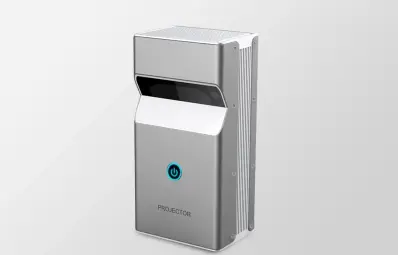
For interactive-flat-panel replacements, the DP01 UST Interactive Smart Projector with Touch Module delivers UST projection with multi-touch input at a fraction of the panel cost—an increasingly common ODM request from schools.

Distributors evaluating the B2B projector market can reference our GP94A Android Smart Projector for Home Theater—a production-validated platform covering Android OS · Home Theater Reference, suitable as an OEM/ODM starting point.
For "4K" projectors, two technologies exist:
Native 4K
- 1.38" 4K DMD chip (DLP) — 8.3 million physical pixels
- 0.7" 4K LCoS panels (Sony, JVC)
- 4K LCD panels (rare in projectors)
Pixel-Shifted 4K
- 1080p DMD chip (0.47") with XPR pixel-shifting
- Display 8.3 million distinct pixels via 240Hz mirror shifting
- Native resolution is 1080p, perceived resolution is 4K
For premium home theater buyers, native 4K is the gold standard. For mid-tier 4K ($1,500–$2,500 retail), pixel-shifted is acceptable.
Laser Light Source Types
Laser Phosphor (Blue Laser + Yellow Phosphor)
The dominant laser technology in mid-to-premium projectors:
- Blue laser diodes (typically Nichia or Osram) + yellow phosphor wheel
- Output: blue laser + yellow phosphor = white light
- Color gamut: 90–110% Rec.709, ~70% DCI-P3
- Brightness: 2,000–8,000 ANSI lumens
- Lifespan: 20,000–30,000 hours
- Cost: 3–5× LED light source
RGB Laser (Three Separate Lasers)
The premium laser technology for high-end home theater:
- Red, green, blue lasers separately
- Output: pure RGB light, no phosphor wheel needed
- Color gamut: 95–110% BT.2020 (widest available)
- Brightness: 1,500–30,000+ ANSI lumens
- Lifespan: 20,000–30,000 hours
- Cost: 5–10× LED, 2–3× laser phosphor
Short Throw Optics
Short throw and UST (ultra-short throw) projectors require specialized lens designs:
Standard Throw Lens
- Simple multi-element design
- Throw ratio: 1.2:1 to 1.5:1
- Lower BOM cost ($5–$15 per lens)
- Easier alignment tolerances
Short Throw Lens
- More complex aspherical elements
- Throw ratio: 0.4:1 to 0.8:1
- Higher BOM cost ($25–$60 per lens)
- Tighter alignment tolerances
UST Lens
- Extremely complex multi-element design with large-diameter aspheric or freeform elements
- Throw ratio: <0.4:1
- Highest BOM cost ($60–$150 per lens)
- Tightest alignment tolerances
- Young Optics (China)
- Coretronic (Taiwan)
- Appotronics (China, UST specialist)
- Sony (proprietary, for SXRD projectors)
Optical Engine Architecture
A 4K laser UST projector combines:
- Laser light source (laser phosphor or RGB laser)
- Illumination optics (beam shaping, homogenization)
- DMD or LCoS imaging chip (4K resolution)
- Projection lens (UST design)
- Color management (color wheel or RGB recombination)
- Cooling system (heat dissipation for laser and DMD)
BOM Cost Structure (1,000-unit order)
| Component | % of BOM | Cost Range |
|---|---|---|
| Optical engine (DMD + lens + prism) | 25–35% | $400–$800 |
| Laser light source | 15–22% | $280–$500 |
| SoC + HDMI 2.1 receiver | 8–12% | $150–$280 |
| Cooling system | 5–8% | $100–$200 |
| Housing (premium materials) | 8–12% | $150–$280 |
| Audio (premium speakers) | 4–8% | $80–$180 |
| Power supply | 3–5% | $60–$120 |
| PCBA + I/O | 5–8% | $100–$180 |
| Cables + accessories | 2–4% | $40–$100 |
| Assembly + calibration | 4–6% | $80–$150 |
| Packaging (premium) | 2–4% | $40–$100 |
| Total FOB | 100% | $1,500–$3,000 |
Engineering Challenges
Four major challenges in 4K laser UST:
1. Thermal Management
Laser light sources generate significant heat. Cooling requirements:
- Heat pipe + fan combination
- Heat dissipation 200–500W
- Multiple temperature sensors
- Automatic brightness reduction to protect components
2. Lens Alignment
UST lenses require precision alignment:
- 5–10× tighter tolerances than standard throw
- Calibration equipment: 6-axis alignment stations
- Calibration time per unit: 30–60 minutes (vs. 5–10 for standard throw)
- Skilled labor required
3. Laser Speckle
RGB laser projectors can exhibit laser speckle (grainy pattern) due to coherent light. Mitigation:
- Speckle reduction diffusers
- Speckle reduction technology in firmware
- Multiple laser sources offset slightly
- High-quality screen surface recommended
4. Color Calibration
For accurate HDR and wide color gamut, factory calibration is essential:
- White point calibration (D65, 6500K)
- Color gamut calibration (Rec.709, DCI-P3, BT.2020)
- Gamma calibration (BT.1886, ST.2084)
- Per-unit calibration time: 15–30 minutes
- Calibration equipment: spectroradiometer + software
Common OEM Mistakes
Five pitfalls in 4K laser UST:
- Using consumer-grade DMD chip — 0.47" XPR pixel-shifting, not native 4K
- Single-color laser — missing RGB capability for wide color gamut
- Insufficient cooling — laser diode overheating, lifespan reduced
- Skipping speckle reduction — visible laser speckle, customer complaints
- No per-unit calibration — color consistency poor across units
Premium Audio Considerations
4K laser UST projectors often include premium audio co-branding:
- Harman Kardon (Samsung Premiere, XGIMI Aura)
- Bowers & Wilkins (premium home theater brands)
- JBL (mid-tier)
- Bang & Olufsen (ultra-premium)
- Dolby Atmos certification (object-based audio)
What 4K Laser UST Buyers Want
Five buyer priorities for this premium tier:
- Image quality: 4K HDR with wide color gamut
- Premium audio: integrated soundbar-quality audio
- Easy setup: UST means minimal installation
- Smart features: Android TV, casting, voice control
- Reliability: 20,000+ hour laser lifespan, low maintenance
OEM Sourcing Checklist
When sourcing 4K laser UST projectors, ask:
| Question | Why It Matters |
|---|---|
| Native 4K or pixel-shifted? | Determines true resolution |
| Laser type (phosphor or RGB)? | Determines color gamut |
| Lens supplier? | Quality and lead time |
| Cooling system design? | Laser diode lifespan |
| Calibration process? | Color consistency |
| Audio co-brand? | Retail differentiation |
| Reference customers? | Proof of capability |
What We Recommend
For B2B buyers entering the 4K laser UST market:
- Start with laser phosphor, not RGB laser — lower cost, faster time to market
- Choose pixel-shifted 4K for sub-$3,000 retail, native 4K for $3,000+
- Partner with a factory that has UST lens alignment capability
- Specify per-unit color calibration in the PO
- Consider premium audio co-brand for differentiation
- Plan for 90–120 day lead time per SKU (longer than standard projectors)
Conclusion
4K laser short throw is the premium tier combining three demanding technologies. Win on image quality, premium audio, easy setup, and reliability. Plan for longer lead times, higher BOM, and tighter tolerances than mainstream projectors.
💼 Considering 4K laser UST projector OEM?
Request a Free Quote | View Product Catalog
We ship 4K laser short throw projectors with both laser phosphor and RGB laser configurations. Our engineering team will recommend the right configuration for your target retail price within 24 hours.
