
Posted At: Jun 16, 2025 - 1 Views
B2B Projector Brand Exclusivity: How to Negotiate
You have a purchase order for 5,000 projector units, your marketing team has finalized the spec sheet, and your legal department is reviewing the supplier contract. The problem: three factories have quoted the same hardware configuration, and two of them are pitching the same brand exclusivity clause that could lock you into a 24-month minimum commitment with hidden escalation terms. You need a clear framework to evaluate which exclusivity structure protects your investment and which one creates downstream risk. This guide walks you through the procurement mechanics, contract levers, and negotiation tactics that DataMax has refined across 200+ B2B projector brand exclusivity arrangements since 2018.
Related resources: request a custom OEM quote · OEM projector manufacturing guide
Understanding B2B Projector Brand Exclusivity Frameworks
B2B projector brand exclusivity arrangements govern whether a factory can supply the same branded or co-branded projector configuration to other buyers in your target market. The structure of these agreements directly impacts your margin, your competitive positioning, and your supply chain resilience.
Exclusivity Scope: Territory, Product Line, and Channel
You have a purchase order for 5,000 projector units, your marketing team has finalized the spec sheet, and your legal department is reviewing the supplier contract. The problem: three factories have quoted the same hardware configuration, and two of them are pitching the same brand exclusivity clause that could lock you into a 24-month minimum commitment with hidden escalation terms. You need a clear framework to evaluate which exclusivity structure protects your investment and which one creates downstream risk. This guide walks you through the procurement mechanics, contract levers, and negotiation tactics that DataMax has refined across 200+ B2B projector brand exclusivity arrangements since 2018.
Channel exclusivity is equally critical. If a factory grants you exclusive rights to sell a specific projector model under your brand through online channels, that does not automatically prevent them from supplying the same SKU to a competitor who sells exclusively through retail stores. Always map the exclusivity clause to your actual distribution strategy.
Product line exclusivity covers whether the factory can modify the projector spec and sell the revised version to other buyers. Without explicit language protecting derivative products, a factory can introduce a marginally upgraded model that undercut your positioning while technically honoring the original exclusivity agreement.
Minimum Order Quantity and Lead Time Implications
B2B projector brand exclusivity arrangements govern whether a factory can supply the same branded or co-branded projector configuration to other buyers in your target market. The structure of these agreements directly impacts your margin, your competitive positioning, and your supply chain resilience.
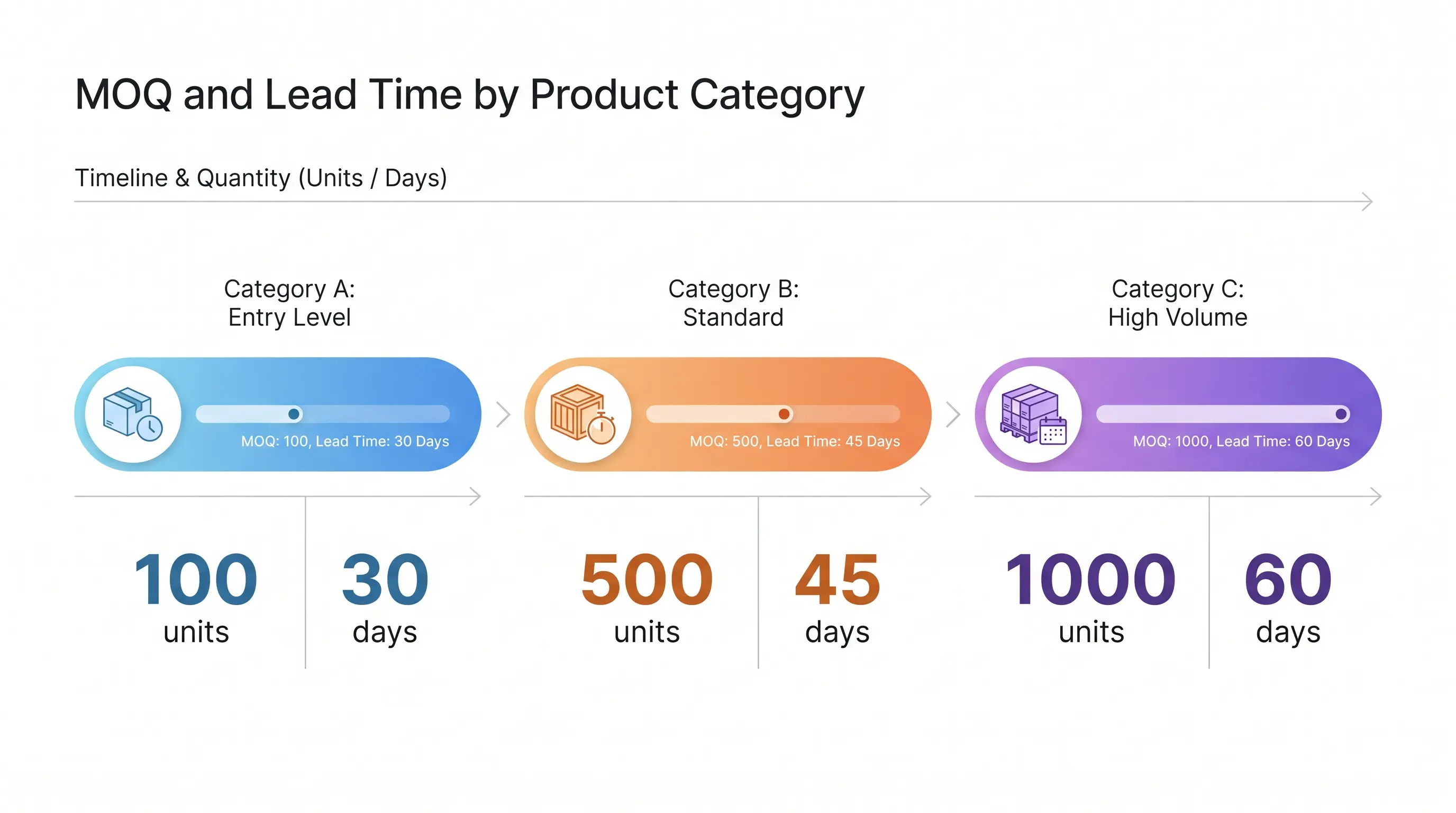
Lead times under exclusivity arrangements also extend by 15-25% compared to stock orders, because factories must reserve production capacity and component allocation. DataMax maintains safety stock of critical optical components specifically to mitigate these lead time extensions for exclusivity partners.
Every first dimension is geographic scope. A factory may grant exclusivity for a specific country, region, or global market. DataMax typically negotiates regional exclusivity with a right of first refusal for expansion markets, which gives you flexibility without paying for a worldwide lockup you may never use.
Certification and Compliance Requirements in Exclusivity Contracts
Channel exclusivity is equally critical. If a factory grants you exclusive rights to sell a specific projector model under your brand through online channels, that does not automatically prevent them from supplying the same SKU to a competitor who sells exclusively through retail stores. Always map the exclusivity clause to your actual distribution strategy.
Product line exclusivity covers whether the factory can modify the projector spec and sell the revised version to other buyers. Without explicit language protecting derivative products, a factory can introduce a marginally upgraded model that undercut your positioning while technically honoring the original exclusivity agreement.
For OEM buyers evaluating long-term brand strategy, the certification market directly affects time-to-market. A well-structured exclusivity agreement with a factory like DataMax can reduce your certification timeline by 30-40% because we maintain pre-certified platforms that only require minor modifications for market-specific compliance.
Negotiating Exclusivity Pricing and Cost Structures
Exclusivity agreements almost always require higher MOQs than standard procurement. Industry data from Statista's 2025 B2B Electronics Supply Chain Report indicates that exclusivity MOQs typically run 40-60% above standard batch sizes for consumer electronics components. For projectors specifically, expect MOQs between 1,000 and 3,000 units per model, depending on optical engine complexity.
Tiered Pricing Models for Exclusivity Arrangements
Lead times under exclusivity arrangements also extend by 15-25% compared to stock orders, because factories must reserve production capacity and component allocation. DataMax maintains safety stock of critical optical components specifically to mitigate these lead time extensions for exclusivity partners.
According to Forrester's 2025 B2B Manufacturing Procurement Insights, successful exclusivity negotiations in consumer electronics average 18-22% total cost reduction from initial factory quotes when buyers combine multi-year commitments with flexible SKU planning.
Total Cost of Ownership Beyond Unit Pricing
| Parameter | Standard Procurement | Exclusivity Arrangement |
|---|---|---|
| MOQ (1080p model) | 500 units | 1,200 units |
| MOQ (4K model) | 300 units | 1,000 units |
| Lead time (stock) | 21 days | 35-45 days |
| Component allocation | Shared pool | Reserved capacity |
| Tooling customization | Limited | Full ODM option |
A practical cost comparison helps clarify the financial market:
| Cost Category | Standard Procurement | Exclusivity Arrangement |
|---|---|---|
| Unit cost (1080p) | $185 | $210-225 |
| Tooling amortization | None | $15,000-25,000 (one-time) |
| Quality inspection | Standard rate | Premium inspection package |
| Expedited shipping | Available | Reserved capacity priority |
| Engineering support | Limited | Dedicated account manager |
Managing Exclusivity Relationships and Exit Strategies
In B2B contexts,r brand exclusivity deals that span multiple markets, certification requirements add a layer of complexity. Each target market may require different compliance marks: CE for Europe, FCC for the United States, CCC for China, and PSE for Japan. The exclusivity agreement should specify which party bears the certification costs and whether the factory can reuse existing certifications for your branded version.
Building Long-term Supplier Partnerships
Intellectual property provisions deserve particular attention. When you commission a custom projector configuration under an exclusivity agreement, clarify whether the tooling, firmware, and optical designs revert to you or remain the factory's property upon contract termination. DataMax recommends securing a technology license that grants perpetual rights to the design files, even if the exclusivity period expires.
In OEM sourcing decisions,long-term brand strategy, the certification market directly affects time-to-market. A well-structured exclusivity agreement with a factory like DataMax can reduce your certification timeline by 30-40% because we maintain pre-certified platforms that only require minor modifications for market-specific compliance.
Contract Termination and IP Reversion Clauses
Every exclusivity agreement must address the scenario where the partnership concludes. Without explicit termination language, you risk losing access to tooling, custom firmware, and design documentation that represent substantial investment. Your contract should specify exactly how intellectual property transfers upon termination, whether through outright ownership transfer, technology licensing continuation, or phased reversion schedules that protect both parties' interests.
Exclusivity pricing in the B2B projector market rarely follows a simple per-unit model. When you engage a factory for brand exclusivity, expect negotiations to cover tooling amortization, component reservation fees, and volume-based tier breaks that differ substantially from standard wholesale pricing.
For OEM buyers evaluating exclusivity as a long-term brand strategy, the relationship management framework matters as much as the contractual terms. A well-managed exclusivity partnership builds sustainable competitive advantage, while poorly managed relationships create dependency without corresponding brand value.
How to Choose Your B2B Projector Brand Exclusivity Partner
Most factories, including those in Shenzhen's manufacturing corridor, structure exclusivity contracts using three-tier pricing. The first tier covers the tooling investment recovery period, typically the first 12-18 months, where unit costs run 25-35% higher to offset upfront customization expenses. The second tier represents stabilized pricing during the active exclusivity window, while the third tier kicks in when orders exceed pre-negotiated volume thresholds, open up volume discounts that can partially offset initial premium costs.
Key Selection Criteria Checklist
According to Forrester's 2025 B2B Manufacturing Procurement Insights, successful exclusivity negotiations in consumer electronics average 18-22% total cost reduction from initial factory quotes when buyers combine multi-year commitments with flexible SKU planning.
Look for factories offering clear sample evaluation periods—typically 2-4 weeks—and transparent MOQ structures that scale with your business growth.
| Selection Factor | What to Verify |
|---|---|
| MOQ | Starting quantities, volume discounts, scaling options |
| Lead time | Standard vs. expedited timelines, capacity buffers |
| Sample policy | Cost, quantity limits, evaluation period |
| Quality | Inspection rates, defect tolerances, certifications |
| IP protection | Exclusivity documentation, trademark safeguards |
We recommend requesting at least three supplier comparisons before making your final decision.
Frequently Asked Questions
What minimum order quantity (MOQ) should B2B projector buyers expect for brand exclusivity arrangements?
When evaluating exclusivity arrangements, procurement teams must account for hidden cost factors that extend beyond the per-unit invoice. Tooling maintenance fees, quality inspection costs, and logistics premiums for reserved capacity shipments accumulate throughout the exclusivity period. DataMax has found that clients who budget 12-15% above initial unit pricing for ancillary exclusivity costs avoid budget overruns and maintain healthier supplier relationships.
How long do projector OEM production lead times typically run for exclusive brand orders?
Standard lead times for exclusive projector production range from 45-60 days after sample approval, with additional time for tooling customization if applicable. Rush orders typically add 15-25% to per-unit costs. Building buffer time into your launch calendar prevents stockout scenarios during peak demand periods. Always confirm capacity availability before finalizing order timelines.
What IP protections should brands negotiate in projector exclusivity contracts?
| Cost Category | Standard Procurement | Exclusivity Arrangement |
|---|---|---|
| Unit cost (1080p) | $185 | $210-225 |
| Tooling amortization | None | $15,000-25,000 (one-time) |
| Quality inspection | Standard rate | Premium inspection package |
| Expedited shipping | Available | Reserved capacity priority |
| Engineering support | Limited | Dedicated account manager |
Can B2B buyers switch projector manufacturers after signing exclusivity agreements?
Yes, but transition terms depend on contract duration and negotiated exit clauses. Most exclusivity agreements include 30-90 day notice periods and address tooling ownership, component inventory disposition, and IP reversion schedules. Always negotiate these provisions before signing—retrospective changes become significantly more difficult once manufacturing relationships are established.
What quality inspection standards apply to private label projector manufacturing?
Sustained success with brand exclusivity requires more than contractual safeguards. Building genuine supplier partnership value ensures factories prioritize your orders and remain transparent about capacity challenges that could disrupt your supply chain.
What communication channels should B2B projector buyers establish with manufacturing partners?
Dedicated account managers or project coordinators provide primary communication pathways, with email, scheduled video calls, and project management platform integration. We recommend establishing escalation procedures for urgent production issues and setting response time expectations—typically 24-48 hours for standard inquiries and same-day acknowledgment for quality concerns.
Final Takeaway
B2B procurement teams who treat exclusivity as purely transactional often face production delays, quality inconsistencies, or sudden price adjustments. We recommend quarterly business reviews with your factory partner that cover forecast accuracy, market trend analysis, and collaborative product roadmap planning. These reviews create accountability and give factories like DataMax visibility into your growth trajectory, enabling proactive capacity planning rather than reactive crisis management.
Get Started with DataMax
Ready to explore your projector brand's manufacturing options? DataMax offers comprehensive OEM/ODM services tailored to your specific volume requirements and timeline.
Explore our OEM services or request a custom quote to discuss your exclusivity requirements with our manufacturing team.
Strategic Timeline for B2B Projector Brand Exclusivity Implementation

Implementing b2b projector brand exclusivity requires a structured 6-9 month roadmap from evaluation through full production. We recommend breaking this into phases: supplier assessment (4-8 weeks), contract negotiation (4-6 weeks), IP protection (8-12 weeks), and pilot production (4-6 weeks).
Phase Milestones
An institute for supply managgement's 2025 Supplier Relationship Management Report found that B2B buyers who conducted structured quarterly reviews with exclusivity partners reduced supply disruptions by 34% compared to those with purely transactional relationships.
During pilot production, establish clear quality benchmarks your manufacturing partner must meet before scaling volumes. This approach minimizes risk while preserving the competitive advantages that b2b projector brand exclusivity delivers. For OEM buyers evaluating manufacturing partners, timeline discipline ensures your b2b projector brand exclusivity arrangement remains aligned with market windows. Source Name
Ready to begin your journey? Our team guides you through each phase. Contact us to schedule a consultation or explore our OEM services for more details.
