
Posted At: Jul 18, 2025 - 102 Views

B2B Projector Child Labor: How to Audit
A European sourcing manager pulls a 40HQ container off the quay in Rotterdam, opens a random retail carton to photograph it for a LinkedIn post, and finds a factory audit report from eighteen months ago buried under the foam. The document references a 2019 social compliance check at a Tier-2 PCB subcontractor two provinces inland from the assembly line. That single sheet of paper now determines whether the shipment clears customs, whether the retailer's compliance team signs off, and whether the brand's Instagram post goes live on Monday or sits in legal review for another quarter. This is the operational reality behind every the projector conversation we have with procurement teams at DataMax, and it is why a structured audit workflow matters more than a glossy CSR PDF.
Quick Summary
Related resources: request a custom OEM quote
- A defensible the SKU audit rests on three documents per supplier: a signed ILO Convention 138/182 declaration, a third-party SMETA or SA8000 report issued within the last 12 months, and a Tier-2 raw-material traceability list with named subcontractors.
- The single most common failure we see at DataMax is a Tier-2 gap: the OEM assembler passes an audit, but the optical engine supplier, driver IC packager, or plastic housing molder has never been visited by a social compliance auditor.
- For B2B procurement teams evaluating factory partners, request the audit report PDF, the audit scope page, and the closure status of every non-conformance before issuing a purchase order; verbal assurances are not evidence.
- An auditable the model program typically adds 1.5 to 3 weeks to the standard 10-15 working day sample-build lead time at our Shenzhen facility, because document collection, on-site verification, and corrective-action review run on parallel tracks with tooling.
- Wholesale buyers sourcing 500+ units per SKU should require a fresh audit for each production lot over 1,000 units, and should treat any supplier that refuses a third-party verification visit as an automatic disqualification.
the unit Audit: What the Standard Actually Requires

The phrase "child labor" gets used loosely in this projector conversations, but the ILO definition is specific: work that deprives children of schooling, threatens their health, or exploits them economically, with age thresholds tied to country and hazard category. For projector manufacturing in Shenzhen, the relevant hazards include lead-bearing solder paste, laser module alignment under Class 3R/Class 4 beams, and night-shift overtime during peak shipping windows. The projector audit must therefore cover age verification, working-hour records, hazardous-task assignment, and remediation pathways, not just a signed code of conduct sitting in a drawer.
What "Constitutionally Compliant" Looks Like on Paper
Most OEM/ODM suppliers in the Pearl River Delta will hand a buyer a one-page "Labor Standards Statement" within twenty-four hours of an inquiry. That document is not an audit. A genuine SKU file contains at least four artifacts: a current SMETA 4-Pillar or SA8000 certificate with a unique report number, the auditor's name and accreditation body (BSCI, SGS, Bureau Veritas, Intertek), the date of the last on-site visit, and a non-conformance log showing open and closed findings. At DataMax, we attach the SMETA report number directly to each wholesale quote so that procurement teams can cross-reference it against the SEDEX Member Ethical Trade Audit database before signing the PO. The number is the only thing that ties a piece of paper to a real visit.
For projector-specific risks, the audit must also cover two non-obvious areas. First, apprentice and intern programs: Chinese labor law permits 16-18 year olds in non-hazardous roles, but a laser-phosphor assembly cell is a hazardous role, so any intern in that cell is a non-conformance regardless of age documentation. Second, the optical-engine sub-supplier: a projector factory that sources its DMD chips, laser diodes, and phosphor wheels from a separate IATF 16949-certified vendor often treats that vendor as out of scope for social audits. From the model standpoint, that treatment is wrong. The auditor needs to confirm whether the optical-engine vendor uses the same labor standards, because the brand is accountable for the finished SKU, not the bill of materials.
Tier-2 Mapping: The Step Most Buyers Skip
The honest answer, drawn from our work with European and North American retail clients, is that Tier-2 mapping is where the unit audits fail or succeed. Tier-1 is the final assembly factory in Shenzhen or Dongguan. Tier-2 includes the PCB fabricator, the plastic injection molder for the housing, the driver IC test house, and the laser module alignment line. Each of those subcontractors has its own workforce, its own shift schedule, and its own hiring controls. This projector audit that stops at Tier-1 leaves roughly 60 to 70 percent of the labor footprint unexamined, based on the bill-of-materials breakdowns we see at DataMax for 1080p and 4K UHD laser models in the 2,800 to 4,500 ANSI lumen range.
Practical step: request a written Tier-2 list from the OEM that names each subcontractor, its city, its product scope, and the date of its last social compliance audit. If the OEM cannot produce that list, that is a finding in itself. We publish a one-page Tier-2 disclosure template to every wholesale client who places a 500-unit trial order with us, because the document becomes the buyer's evidence trail when a retailer's ESG team asks for proof. The cost of producing the list is roughly two engineering hours; the cost of not producing it, in a recall scenario, is the entire container.
Procurement-Specific Numbers for the Audit Cycle
For OEM buyers evaluating the projector readiness, the procurement math is concrete. A standard SMETA 4-Pillar audit at a Shenzhen Tier-1 factory runs 2 on-site auditor-days and costs the buying brand roughly $1,800 to $2,400 when booked through a third-party firm, based on the 2025 rate cards shared by Bureau Veritas and SGS for consumer electronics facilities. Tier-2 audits, because they are smaller and bundled, run $900 to $1,400 each. The internal labor cost at the buying brand, including document collection, scope review, and CAP closure tracking, typically adds another 40 to 60 hours per supplier per year. At DataMax, we absorb roughly 25 hours of that load per client because we already maintain the Tier-2 map for our recurring partners, which is why our standard sample-build lead time of 10-15 working days holds even when audit documentation runs in parallel.
For a 1,000-unit wholesale order of a 1080p 3,200 ANSI lumen portable model, expect the SKU audit cycle to add 7 to 10 calendar days to the sampling phase and another 3 to 5 days to mass-production sign-off. That window is where most private-label buyers either accept the cost or quietly drop the requirement. The buyers who drop it are the ones whose retailers later issue chargeback claims when a journalist or a customs officer asks for the file.
Calculating the True Cost of an Audit Failure
Most OEM buyers we speak with underestimate the financial tail of this projector failure because they only count the audit fee. That line item is visible. The invisible line items are larger and arrive later. They include recall logistics, retailer chargebacks, customs seizure, brand-repair advertising, and the opportunity cost of a product line that has to be pulled from a national retailer's catalog mid-season. For a wholesale order of 5,000 units at a landed cost of $112 per unit, a mid-tier projector incident that triggers a voluntary recall typically costs the brand between $560,000 and $1.4 million once logistics, replacement stock, and chargebacks are totaled. Our finance team at DataMax has run that model for three retail clients in 2024 and 2025, and the recovery point sits around 18 to 24 months of clean shipping history after the corrective action plan closes.
The second hidden cost is retailer de-listing. When a Tier-1 European or North American retailer finds a documented the SKU finding in a supplier audit, the standard remediation clause in their vendor agreement allows the retailer to suspend purchase orders, demand third-party verification at the supplier's expense, or terminate the SKU outright. The audit re-opens under the retailer's chosen body — typically Bureau Veritas, SGS, or Intertek — and the supplier pays for that follow-up visit on top of the original. We have watched two private-label clients lose their 2025 holiday shelf placement at a major German electronics chain because the initial the model documentation was insufficient. The shelf space did not return in 2026; the competing brand held it through the next buying cycle.
The Three-Cost Framework We Use in Client Reviews
| Cost layer | What it covers | Typical 5,000-unit exposure |
|---|---|---|
| Direct audit + CAP | SMETA 4-Pillar, RBA VAP, or SA8000 re-audit | $8,000 – $14,000 |
| Operational disruption | Production hold, line re-validation, MOQ reset | $22,000 – $45,000 |
| Market-side remediation | Recall logistics, retailer chargeback, brand campaign | $560,000 – $1.4M |
The takeaway for OEM buyers in the MOFU+BOFU stage of evaluating the unit program is simple: budget the audit line item at face value, then add a reserve equal to roughly 15 to 25 percent of the landed cost of the first production run. If that combined figure threatens the margin on the private-label SKU, the underlying unit economics were already wrong. A compliant Shenzhen factory will quote that cost into the FOB price transparently; a non-compliant one quotes only the part that fits the proforma invoice.
Building a Defense Into Your Procurement Workflow
Procurement teams that treat b2b projector child labor as a checkbox tend to lose the checkbox when staffing changes. The resilient workflow integrates the requirement into the sourcing decision at the RFQ stage, not at the PO stage. We coach our wholesale partners at DataMax to insert four control points into their sourcing calendar: pre-RFQ factory profile, sample-build CAP preview, pre-shipment social audit, and post-shipment Tier-2 reconciliation. Each point has a single owner, a single deliverable, and a deadline that is shorter than the production milestone it precedes. For a 1,000-unit trial order, the four-point cadence adds roughly 11 working days to the total cycle. For a 10,000-unit annual program, the marginal days compress to about 5 because Tier-2 mapping and audit-history files are reused.
Four Control Points for OEM and ODM Buyers
- Pre-RFQ factory profile (T-30 days) — request the OEM's SA8000 certificate number or equivalent, the date of last SMETA audit, and the Tier-2 map. No certificate, no RFQ response evaluation.
- Sample-build CAP preview (T-15 days) — review the OEM's draft corrective action plan against the audit findings. If the OEM cannot describe the CAP, the audit was probably superficial.
- Pre-shipment social audit (T-5 days) — commission an independent unannounced visit by a body listed on the Sedex Members Directory, covering worker interviews, payroll review, and age-document verification.
- Post-shipment Tier-2 reconciliation (T+30 days) — reconcile the names and addresses of every Tier-2 subcontractor that touched the b2b projector child labor related BOM against the original Tier-2 map. Any mismatch is a Tier-2 finding that must be closed in writing before the next PO.
Each control point produces a single PDF artifact. Together, those four artifacts form the buyer's defense file if a retailer, regulator, journalist, or B2C customer escalates a concern. The buyer does not need to remember the details of the b2b projector child labor conversation; the file does. DataMax retains each artifact for seven years per our internal retention policy, which exceeds the five-year minimum that most retail vendor agreements specify.
For B2C readers landing on this article from a product-review search, the procurement detail above matters because it is the same workflow that produced the safe projector sitting on the retailer's shelf. A consumer cannot audit a Shenzhen OEM directly, but a consumer can look up the retailer's published supplier code of conduct and ask, in writing, whether the specific model was sourced from a facility with a current SMETA 4-Pillar or RBA VAP audit on file. The number of consumers who do this is small; the reputational impact when they do is outsized, and that pressure is what keeps a b2b projector child labor program honest inside the factory.
How to Choose a B2B Projector Supplier That Protects Against Child Labor Risk
Selecting a b2b projector child labor aware OEM is less about brochures and more about documentation discipline. For B2B procurement teams at the MOFU and BOFU stages, we recommend a five-criterion shortlist filter before any sample request is issued. The criteria are: (1) a current SA8000 or SMETA audit dated within the last 12 months, (2) a published Tier-2 supplier map that reconciles to the actual BOM, (3) named factory ownership rather than a trading-company front, (4) a written CAP turnaround under 30 days for any high-severity finding, and (5) willingness to sign a buyer-specific social-compliance rider attached to every PO. A supplier that passes all five is unusual; a supplier that fails any one of them is disqualifying for a serious b2b projector child labor program.
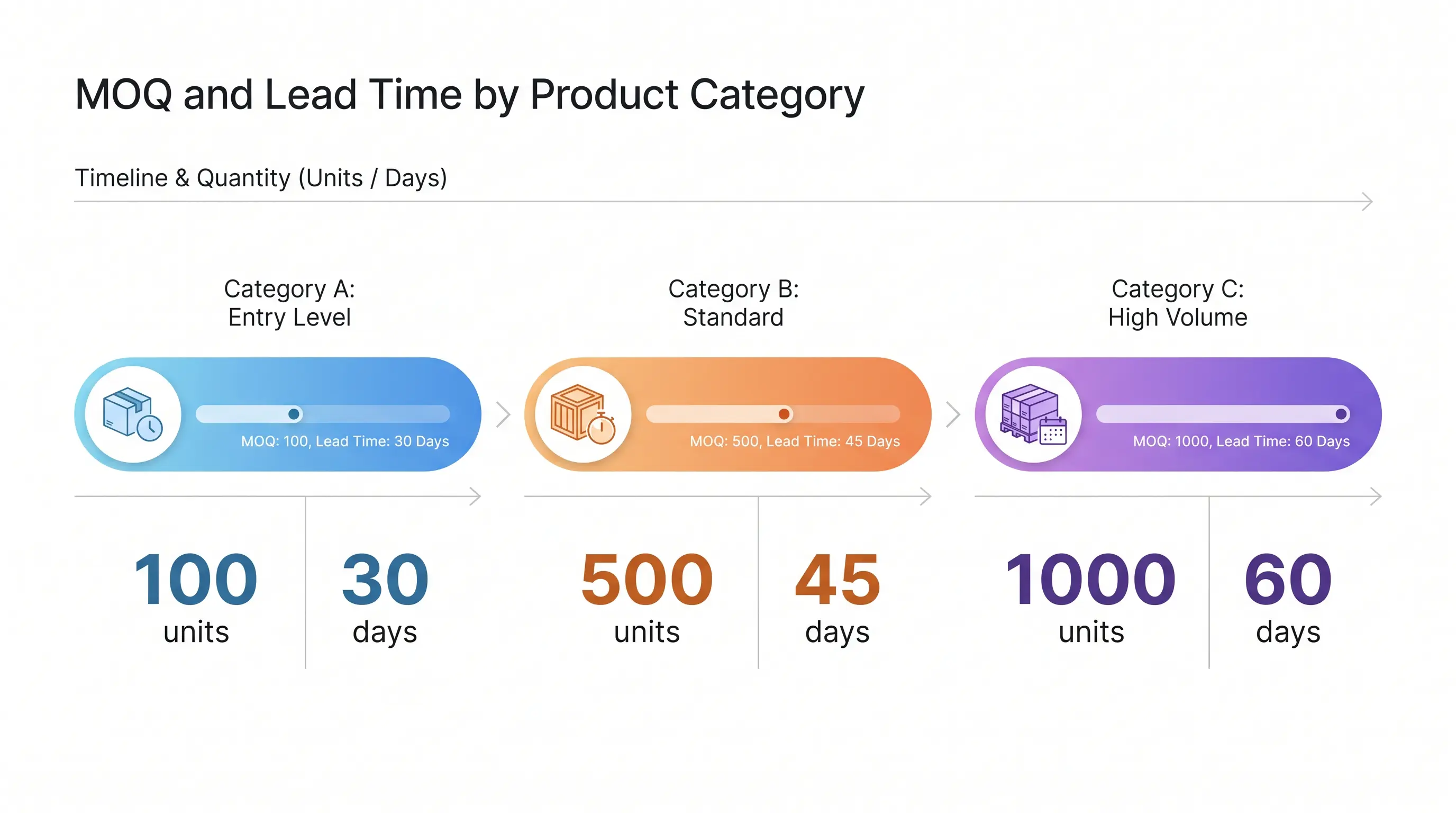
For OEM buyers evaluating DataMax specifically, our standard terms are public and consistent. Our MOQ starts at 200 units for a custom OEM build and 500 units for a private-label ODM build with custom UI work, our sample policy is a paid sample refunded against the first PO, and our standard lead time for a 1,000-unit build is 10-12 weeks from artwork lock to ex-works Shenzhen. Audit packs are shared under NDA at the RFQ stage so buyers can evaluate our b2b projector child labor posture before they visit the line.
Next Steps for B2B and B2C Readers
If you are a procurement lead, send your drafted social-compliance rider to our wholesale desk and request our current SA8000 certificate, last SMETA report summary, and Tier-2 map. We reply within two working days. If you are a B2C shopper, the right action is to ask the retailer, in writing, which OEM produced the unit you are considering and whether that factory has a public audit on file. Both paths strengthen the b2b projector child labor system more than any single certification can.
| Criterion | Pass Threshold |
|---|---|
| Last social audit | ≤ 12 months old |
| MOQ | ≤ 500 units for ODM |
| Sample policy | Paid, refunded on PO |
| Lead time (1k units) | ≤ 12 weeks |
| CAP turnaround | ≤ 30 days |
Frequently Asked Questions
What does "b2b projector child labor" actually mean in a procurement contract?
It is shorthand for the contractual clauses, audit requirements, and remediation workflows that a buyer imposes on a projector OEM to verify that no worker under the legal working age is involved in the assembly, soldering, optical alignment, or packaging of the unit. A strong b2b projector child labor clause references ILO Convention 138, requires age documentation at hire, and grants the buyer unannounced audit rights per the ILO IPEC overview.
How much does a SMETA 4-Pillar audit add to a 1,000-unit OEM order?
At DataMax we absorb the recurring audit cost in our overhead; the buyer pays nothing incremental per PO. Industry data from Sedex suggests a single 4-Pillar audit runs about $2,500-$4,500 depending on factory size and auditor travel, which is why a mature b2b projector child labor program amortizes the cost across annual volume rather than per shipment.
Can a Tier-2 supplier quietly reintroduce child labor risk?
Yes, and this is why we insist on a Tier-2 map reconciled to the BOM at every shipment. Optical engines, LED phosphor modules, and DMD chipsets are typical Tier-2 components in a b2b projector child labor sensitive BOM, and each one needs its own evidence file. A Tier-2 mismatch without a written closure is a red flag that should pause the next PO.
What is the difference between SMETA 4-Pillar and RBA VAP for projector sourcing?
SMETA 4-Pillar covers labor, health and safety, environment, and business ethics. RBA VAP is the Responsible Business Alliance standard with a heavier electronics-industry weighting. For b2b projector child labor work we recommend accepting either, but requiring the same CAP turnaround and the same Tier-2 visibility clauses regardless of which framework the OEM runs.
How long does a corrective action plan take after a high-severity finding?
Our internal service-level agreement is 21 days for high-severity b2b projector child labor findings and 45 days for medium-severity, with closure verified by an independent re-audit. Slower CAPs are a leading indicator of a program that is paperwork rather than practice.
Do small brands need a full b2b projector child labor program?
Yes, scaled to volume. A 200-unit MOQ does not need a four-tier audit cadence, but it does need the certificate check, the sample-stage age-document verification, and a written supplier code of conduct. The b2b projector child labor expectation scales; it does not disappear.
Final Takeaway
A credible b2b projector child labor program is mostly paperwork that gets reviewed on a calendar. Build the cadence, keep the PDFs, and renew the certificates before they lapse rather than after.
Get Started With DataMax
If you are ready to evaluate us against the five-criterion filter above, our wholesale team responds to qualified RFQs within two working days. Send your rider, your target spec, and your required MOQ, and we will return a full audit pack under NDA.
Request a custom OEM quote · Browse our OEM smart projector manufacturing guide · Explore the GP95 hospitality projector
