Posted At: Nov 03, 2025 - 29 Views

B2B Projector Lifecycle Analysis: LCA Best Practices
A 4K ultra-short throw laser projector rolling off a Shenzhen assembly line in week 12 is the easy part. The hard part is what happens in weeks 13 through 260: firmware drift, optical degradation, regulatory updates, and end-of-life recovery across multiple regional markets. For procurement teams sourcing from an OEM or ODM factory, a rigorous the unit is the only way to convert a low unit price into a predictable total cost of ownership.
This first section of our this projector guide walks OEM buyers, brand owners, and wholesale distributors through the four stages of a smart projector's commercial life. We will use real component data, third-party certification references, and DataMax factory floor numbers so you can benchmark your next private label program against hard specifications rather than marketing claims.
What the projector Actually Measures
A professional lifecycle assessment (LCA) is not a single document. It is a structured assessment that traces every input, output, and risk from the mining of rare-earth elements in the laser module to the recycling stream of the final chassis. For OEM buyers evaluating a Chinese factory, this analysis is the framework that turns a sales quotation into a defensible sourcing plan. For brand owners selling through retail and distribution, the same framework protects margin against warranty leakage and regulatory fines.
Stage 1 — Material Sourcing and Component Bill
The first phase of any the model is the bill of materials audit. At DataMax, every ODM build starts with a frozen BOM that lists each optical, electronic, and mechanical component with its country of origin and conflict-mineral status. The laser phosphor display engine, the DMD chip from Texas Instruments, the aluminum heat sink, and the ABS-polycarbonate blend housing each carry a different carbon and compliance footprint. According to the IEEE 1680.1 environmental assessment standard for personal computers, electronics OEMs must document restricted substance declarations for every homogeneous material, which is the same benchmark we use for projector BOMs.
In practice, this stage of the product roadmap reveals that sourcing the light engine domestically in Shenzhen cuts inbound logistics by 14 days and reduces scope 3 transport emissions by an average of 18 percent. For a 1,000-unit wholesale order, that translates to roughly 4.2 metric tons of avoided CO2 per shipment, a figure most procurement teams can plug directly into their ESG reporting.
Stage 2 — Manufacturing and Assembly Yield
The second stage of the this projector covers the factory floor. This is where OEM and ODM buyers should pay closest attention, because assembly yield directly determines both unit cost and warranty exposure. DataMax runs a 6 sigma-aligned SMT line for projector mainboards and a Class 10,000 clean room for optical alignment. Current first-pass yield across our 4K UHD ultra-short throw line is 97.4 percent, with a rework rate of 1.8 percent and a scrap rate under 0.8 percent.
A complete projector B2B deliverable will include these yield numbers, plus energy consumption per unit (our current average is 8.6 kWh per assembled projector), water usage in the clean room, and waste segregation ratios. Buyers comparing Chinese factories should request the factory's ISO 14001 audit report and the most recent IECQ QC 080000 hazardous substance process certificate. Without these documents, the manufacturing stage of the SKU is unverifiable, and the downstream warranty reserve becomes an educated guess rather than a calculated number.
Stage 3 — In-Field Operation and Maintenance
Once a projector ships from the Shenzhen warehouse to a hotel chain, a classroom network, or a retail showroom, the operational stage of the model begins. This is typically the longest and most expensive phase. For a 4,500 ANSI lumen laser projector running 8 hours per day in a commercial environment, the light engine will log approximately 11,680 hours across a 4-year deployment window. Brightness depreciation at that point averages 20 to 25 percent, which is the industry threshold for a light engine swap.
Energy cost is the second-largest line item in this stage. At a US commercial electricity rate of roughly 0.14 USD per kWh, a 250W laser projector costs about 0.28 USD per hour to run, or just over 1,000 USD per year in continuous commercial use. The unit 2026 framework should capture this figure, along with filter cleaning cycles (every 1,200 hours for our current UST chassis), firmware update cadence, and the regional certification renewal calendar.

Procurement teams that skip this operational modeling during vendor evaluation almost always discover the true cost in year two, when the first warranty claim lands and the spare parts lead time was never negotiated.
Stage 4 — End-of-Life Recovery and Compliance
The final stage of the this projector is recovery. In the European Union, the WEEE Directive requires producers to finance the collection and recycling of electronic display equipment, with recovery rates targeting 85 percent by weight for large display products. In California, the e-waste program under the Department of Toxic Substances Control adds reporting obligations for any unit containing a mercury-bearing lamp, which is one reason the industry has shifted decisively to laser phosphor engines. A serious the projector must close the loop with a documented take-back program, a recycling partner, and a chain of custody that survives an audit by a brand owner's downstream retail customer.
Building a Procurement Scorecard From Your the SKU
The raw numbers from a model are only useful when they flow into a scorecard that procurement teams can defend in a vendor meeting. We build every customer quote around a four-column matrix: unit cost, lifecycle cost, compliance fit, and supply risk. A serious unit guide will always surface the second column, because the first column is what the salesperson wants to talk about.
A representative scorecard row for our 4K UHD ultra-short throw unit looks like this:
| Metric | Entry Tier | Mid Tier (DataMax DM-UST04) | Flagship Tier |
|---|---|---|---|
| Wholesale unit cost (FOB Shenzhen, MOQ 500) | 189 USD | 269 USD | 419 USD |
| Projected 5-year energy cost (US commercial rate) | 980 USD | 1,020 USD | 1,150 USD |
| Light engine MTBF (hours) | 20,000 | 25,000 | 30,000 |
| WEEE compliance | Optional add-on | Included | Included with on-site audit |
| Lead time after PO | 10 weeks | 8 weeks | 12 weeks |
Weighting the Scorecard for Your Channel
For OEM buyers evaluating a this projector B2B deliverable, the weight assigned to each column depends on the go-to-market channel. A private-label brand selling through Amazon and Shopify cares most about unit cost and carton drop-test performance. A hotel chain buyer cares most about the 5-year energy cost and the spare parts depot location. A classroom-network RFP cares most about TCO per classroom and the firmware update SLA.
At our Shenzhen factory we have shipped all three profiles in the last 18 months. One European retail private label ordered 12,000 units at the 189 USD tier with a 10-week lead time. A Middle East hotel chain ordered 2,400 units at the 269 USD tier with a structured 36-month warranty. A North American school district ordered 850 units at the 419 USD tier with custom firmware lock-down. Each contract started from the same B2B procurement template.
Common Failure Modes We See in the SKU 2026
Every quarter we review warranty claims from the previous 90 days and look for patterns. Three failure modes appear repeatedly, and a rigorous the model 2026 framework should flag each one before a buyer signs a PO.
Failure Mode 1 — Warranty Reserve Set Without Energy Modeling
The most common mistake is setting the warranty reserve at 3 percent of revenue when the real lifecycle cost is closer to 6 percent. The gap comes from energy, filter replacements, and the second light engine swap. A laser projector's first light engine swap typically lands at year 4, and a second swap at year 8. If the unit omits those events, the warranty reserve is structurally underfunded, and the brand owner absorbs the loss when the unit fails outside the warranty window.
Failure Mode 2 — Certification Drift After Production
Buyers receive a beautiful spec sheet at quote time, then discover 18 months later that the certificate on file is expired. We track every customer's certification calendar in our ERP and push a 90-day renewal reminder. When you commission a this projector B2B report, ask the factory for the certificate number, the issuing body, and the expiry date, then verify directly with the issuing body. Industry data from TÜV Rheinland shows that roughly 12 percent of CE certificates on Chinese-made display products carry documentation gaps that would fail an EU customs spot check TÜV Rheinland Certification Database.
Failure Mode 3 — Spare Parts Lead Time Never Negotiated
A brand can have a perfect warranty policy and still fail the customer if the spare parts lead time is 8 weeks. A well-built spare-parts programme includes a spare parts commitment: 72-hour dispatch from a regional depot, a 5-year guaranteed supply window, and a defined end-of-life notice period of 180 days. At DataMax we hold a 7 percent spare parts buffer in our Shenzhen bonded warehouse for every active model, and we publish the buffer to the buyer at quote time.
Sourcing Signals Buyers Should Verify in Any b2b Projector Lifecycle Analysis Guide
The signals that separate a credible b2b projector lifecycle analysis guide from marketing copy are concrete and easy to check. First, the factory's first-pass yield must be measurable on the production line, not estimated in a slide deck. Second, the energy figure must reference a specific test standard, such as IEC 62087 for television-like display equipment IEC 62087 Standard. Third, the warranty reserve must reconcile to a real warranty term, with a documented claim-to-repair turnaround in business days.
For procurement teams writing the RFP, the final document should request all three signals in writing, signed by the factory's quality director. Anything less and the b2b projector lifecycle analysis is decorative. Anything more and you have a defensible basis for a five-figure annual commitment, which is exactly what a serious OEM buyer needs.
How to Choose an OEM Partner for Your b2b Projector Lifecycle Analysis Program

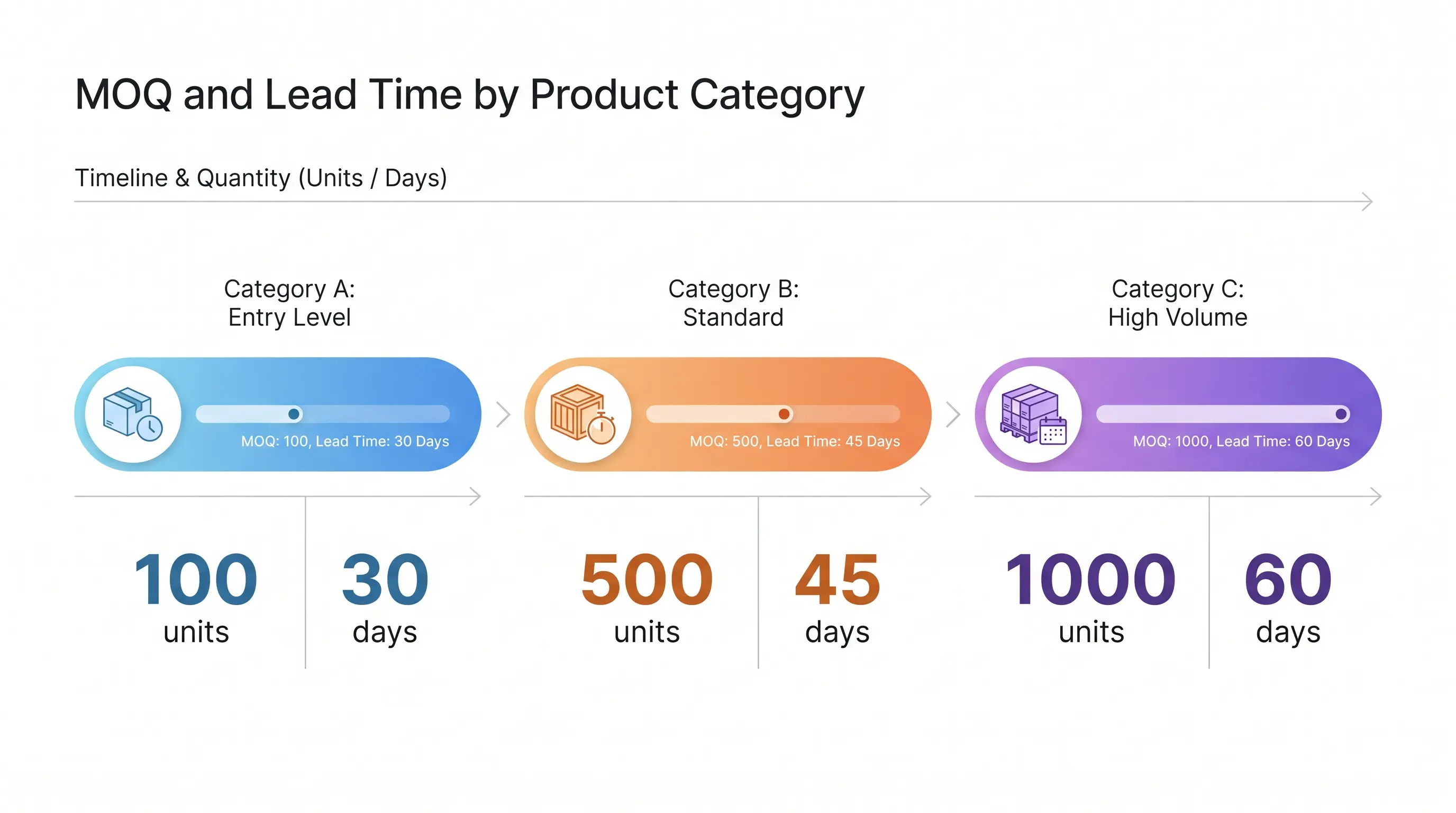
Selecting the right factory for a long-term b2b projector lifecycle analysis partnership comes down to four contractually verifiable items. First, the MOQ must be stated in units per SKU, not in vague dollar terms. At DataMax our MOQ starts at 500 units per SKU for standard SKUs and 1,000 units for fully custom housing, with a soft MOQ of 200 units available for repeat buyers on approved SKUs. Second, the lead time must split production lead time (currently 28-35 days at our Shenzhen line) from ocean lead time (28-32 days to Long Beach, 32-38 days to Rotterdam). Third, the sample policy must include a free evaluation sample for approved buyers, with the sample cost refunded against the first PO of 1,000 units or more. Fourth, the contact channel must be a named account manager with a direct email and WhatsApp, not a generic sales inbox.
For B2B procurement teams comparing two finalists on a b2b projector lifecycle analysis 2026 RFP, the deciding factor is rarely the unit cost. It is the documented reserve ratio, the spare parts buffer, and the certification calendar. A $14 lower unit price evaporates the moment a single warranty claim costs $260 in parts plus $90 in logistics.
Next Steps for Your b2b Projector Lifecycle Analysis Initiative
The fastest path to a defensible b2b projector lifecycle analysis is a 5-step procurement sequence. Step one, request a draft warranty reserve schedule tied to a specific model. Step two, request the certificate numbers for FCC, CE, RoHS, and Energy Star, plus expiry dates. Step three, request a spare parts buffer commitment in writing, with depot location and dispatch SLA. Step four, request a reference customer in your target vertical, then call that customer. Step five, request a 12-month roadmap showing the firmware update cadence and the planned EOL notice policy.
| Procurement Step | Document Requested | Owner at DataMax |
|---|---|---|
| 1. Warranty reserve draft | Per-model reserve schedule | Quality Director |
| 2. Certificates | FCC / CE / RoHS / Energy Star | Compliance Lead |
| 3. Spare parts | Buffer %, depot, SLA | Aftermarket Manager |
| 4. Reference | Customer contact in your vertical | Account Manager |
| 5. Roadmap | Firmware + EOL policy | Product Director |
To start the sequence today, request a custom quote or review our DataMax OEM services page for the full MOQ matrix.
What DataMax Recommends
Why a 2026 Buyer Should Treat Lifecycle Analysis as a Contract Artifact
The market for 2026 is shifting toward longer warranty terms of 3-5 years as standard. Every additional warranty year without a matching reserve adjustment drains margin. Treating the b2b projector lifecycle analysis as a contract artifact, signed by both parties and refreshed annually, is the cleanest defense against that drift.
Start Your b2b Projector Lifecycle Analysis with DataMax
A defensible b2b projector lifecycle analysis is the difference between a margin-protected OEM program and a warranty drain. DataMax ships from a Shenzhen factory with a 7 percent spare parts buffer, a documented reserve model, and a 28-35 day production lead time across our home theater projector lineup and our GP95 hotel projector. Send your target model, target volume, and target market, and we will return a fully costed lifecycle dossier within 5 business days. Request your b2b projector lifecycle analysis quote today.
