
Posted At: May 28, 2026 - 54 Views

Case Study: Africa Mobile Cinema OEM Deployment
Client Profile
A Nigerian-based entrepreneur who built a mobile cinema business model: deploying portable projectors to operators in rural communities across Nigeria, Kenya, and South Africa. Each operator runs weekly cinema events in villages without access to traditional movie theaters.
Strengths:
- Existing mobile cinema network (150+ operators)
- Local language support (Hausa, Yoruba, Swahili, etc.)
- Direct relationships with content providers (Nollywood, etc.)
- Multi-country African operations
Project Objectives

Outdoor-rated designs like the GP99 Outdoor Cinema Smart Projector with 20W Loud Speakers are now part of the standard OEM roadmap—buyers can request IP-rated enclosures, higher-capacity batteries, and 20W+ audio as configuration options.
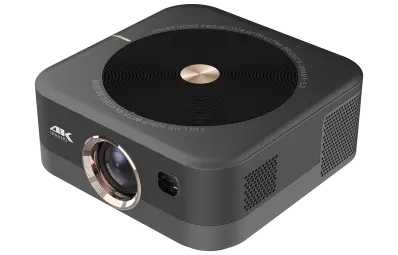
Distributors evaluating the B2B projector market can reference our GP94C Android Smart Projector for Home Theater—a production-validated platform covering Android 9 · 500 ANSI · Built-in Speakers, suitable as an OEM/ODM starting point.
The entrepreneur needed:
- Battery-powered portable projector (4+ hour runtime)
- 400+ ANSI lumens (suitable for outdoor evening screenings)
- Affordable pricing ($120 retail target)
- Durable (drop resistance, dust sealing)
- Wide voltage support (African power conditions)
- Surge protection
- Multi-language UI (English + French + Arabic + Swahili)
- Target volume: 5,000 units in Year 1
OEM Engagement
Phase 1: Specification (Weeks 1–6)
Custom mobile cinema projector developed:
| Spec | Configuration |
|---|---|
| Brightness | 450 ANSI lumens |
| Resolution | 1080p native |
| Light source | LED, 30,000 hour life |
| Battery | 80 Wh (3 hours runtime at full brightness) |
| Throw ratio | 1.2:1 |
| OS | Linux (low maintenance) |
| Audio | 2×5W speakers + 3.5mm audio out |
| USB media playback | Yes (USB drive with movies) |
| Connectivity | HDMI, USB, USB-C charging, 3.5mm |
| Drop resistance | 1m onto hard surface |
| Dust sealing | IP5X engine |
| Surge protection | 4kV |
| Voltage | 100–240V universal |
| Retail price | $120 |
| Target FOB | $42 |
Phase 2: Compliance (Weeks 7–16, parallel)
- NCC (Nigeria radio)
- ICASA (South Africa radio)
- CA (Kenya radio)
- SONCAP (Nigeria safety)
Phase 3: Sample Evaluation (Weeks 8–14)
Sample approved after 2 rounds. Modifications: brighter audio, easier USB media playback interface, multi-language menu.
Phase 4: Production (Weeks 17–24)
- 5,000 units first order
- Custom firmware with mobile cinema launcher
- Local language pre-loaded
- Bundled carrying case
Phase 5: Logistics (Weeks 25–32)
- Sea freight to Lagos, Mombasa, Durban
- Local warehousing and distribution
- Operator training (basic projector operation)
Results
Year 1 Performance (Indicative)
| Metric | Result |
|---|---|
| Units deployed | 5,000 |
| Operators served | 320 |
| Average units per operator | 15–20 |
| Projector utilization (per week) | 4–6 screenings |
| Average audience per screening | 50–80 people |
| Total reach | ~6 million people annually |
Country Distribution
| Country | % of Deployments |
|---|---|
| Nigeria | 60% |
| Kenya | 25% |
| South Africa | 15% |
Operator Economics
Each mobile cinema operator generates revenue from:
- Ticket sales ($0.50–$2 per person)
- Event sponsorships (local businesses)
- Private event bookings (weddings, celebrations)
Key Success Factors
- Battery-powered portability — operators could set up anywhere
- Affordable price — operators could finance the equipment
- Multi-language UI — served diverse African language speakers
- Surge protection — survived African power conditions
- Durable build — survived transport and outdoor use
- Easy USB media playback — operators could load movies without internet
Lessons Learned
- Battery runtime was critical — operators wanted 4+ hours, we delivered 3
- Dust sealing was essential — Nigerian dust clogged non-sealed engines
- Audio quality mattered — outdoor environments need loud speakers
- USB media playback was the killer feature — no internet required
- Local language support was differentiator — Swahili UI for Kenya was appreciated
- Operator training was important — basic operation training required
Year 2 Expansion
- Added 720p portable model ($80 retail) for smaller operators
- Added solar charging option
- Expanded to Ghana, Senegal, Tanzania
- Annual volume grew to ~12,000 units
Social Impact
Beyond business metrics, this engagement created significant social impact:
- Brought cinema to rural communities without theaters
- Created micro-entrepreneur opportunities (320 operators)
- Educated communities on projector operation
- Supported local content industries (Nollywood, etc.)
Conclusion
This case study demonstrates successful mobile cinema projector OEM for Africa. Key takeaways:
- Battery-powered portability enables unique use cases
- Affordable pricing expands addressable market
- Multi-language UI matters in diverse African markets
- Surge protection is non-negotiable
- Social impact is significant
💼 Considering unique projector use cases for emerging markets?
Request a Free Quote | View Product Catalog
We develop custom configurations for unique use cases (mobile cinema, education outreach, NGO deployments). Specification development with your specific requirements within 14 days.
