
Posted At: May 25, 2026 - 61 Views

Case Study: India OEM Partner Smart Projector Launch
Client Profile
An India-based consumer electronics company that had previously focused on mobile accessories and smart home devices. The company wanted to expand into smart projectors, leveraging its existing distribution network across India and its relationships with Indian e-commerce platforms.
Strengths:
- Existing distribution across 50+ Indian cities
- Indian e-commerce platform partnerships (Amazon India, Flipkart)
- Hindi + English customer support
- Local brand recognition
Project Objectives
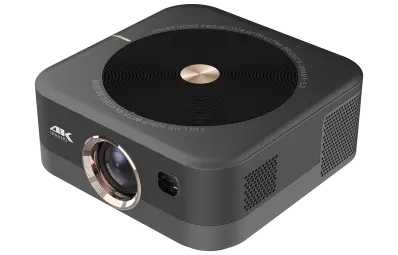
Distributors evaluating the B2B projector market can reference our GP94C Android Smart Projector for Home Theater—a production-validated platform covering Android 9 · 500 ANSI · Built-in Speakers, suitable as an OEM/ODM starting point.

Buyers looking for a turnkey smart OS reference should evaluate the GP95-GTV 400 ANSI Full-Sealed Smart Projector with Google TV Built-In. Google TV is licensed and pre-integrated, eliminating months of middleware work for ODM projects.
The company wanted to launch a smart projector line for the Indian market:
- 1080p resolution
- 600 ANSI lumens (suitable for typical Indian home lighting)
- Android TV with GMS
- Multi-language UI (Hindi + English + Tamil + Bengali)
- Heat resistance (Indian climate)
- Dust sealing (Indian air quality)
- Surge protection (Indian power conditions)
- Target retail: ₹18,000 (~$220)
- Target BOM: <$70 FOB
- Target annual volume: 10,000 units
OEM Engagement
Phase 1: Market-Specific Spec (Weeks 1–6)
Indian market required unique considerations:
| Spec | Indian Market Adaptation |
|---|---|
| Operating temperature | 0–45°C (vs. 0–35°C standard) |
| Power surge protection | 4kV surge (vs. 1kV standard) |
| Dust sealing | IP5X engine (vs. unsealed standard) |
| Multi-language UI | Hindi + English + Tamil + Bengali |
| Plug | Type D (BS 546, 3-pin, 6A) |
| Voltage | 230V / 50Hz |
Phase 2: Compliance (Weeks 7–18, parallel)
- BIS registration (IS 616)
- MTCTE certification (WiFi/Bluetooth)
- WPC approval (for specific frequency bands)
- Indian Responsible Person (IRP) service
- E-waste EPR registration with CPCB
Phase 3: Sample Evaluation (Weeks 7–12)
Sample arrived at week 8, tested by Indian team. Heat test (40°C for 4 hours) passed. Surge protection test (4kV) passed. Hindi UI verified.
Phase 4: Production (Weeks 19–26)
- 3,000-unit first order
- Custom India-specific firmware (Hindi UI, Indian apps pre-installed)
- Type D plug
- BIS mark on product and packaging
- Indian manual (Hindi + English)
- Indian packaging (with BIS mark, MRP label)
Phase 5: Logistics (Weeks 27–32)
- Sea freight to Nhava Sheva (Mumbai) port
- Customs clearance with Indian broker
- Bonded warehousing in Mumbai
- Distribution to 50+ Indian cities
Results
Year 1 Performance (Indicative)
| Metric | Result |
|---|---|
| Units sold | 8,500 |
| Average retail price | ₹18,000 (~$220) |
| Gross margin | 65% |
| Customer rating (Amazon IN) | 4.2 / 5 |
| Return rate | 8% |
| Warranty claims | 5% |
Geographic Distribution
| Region | % of Sales |
|---|---|
| North India | 35% |
| South India | 25% |
| West India | 25% |
| East India | 15% |
Channel Mix
| Channel | % of Sales |
|---|---|
| Amazon India | 55% |
| Flipkart | 30% |
| Own e-commerce | 10% |
| Offline retail | 5% |
Key Success Factors
- India-specific adaptations — heat, dust, surge protection mattered
- Hindi + regional language UI — resonated with Tier 2/3 city buyers
- Indian Responsible Person — smooth BIS registration
- Multi-channel distribution — Amazon + Flipkart + own store
- Type D plug — common mistake by foreign brands, this OEM got it right
- Indian power surge testing — passed 4kV surge test, no field failures
Lessons Learned
- Indian climate is harsher than expected — 45°C operating temperature pushed components to limits
- Power surge protection was non-negotiable — Indian grid is unstable
- BIS registration took 14 weeks — longer than EU CE certification
- Hindi UI drove Tier 2/3 city sales — buyers preferred Hindi over English
- Indian consumer service expectations are high — fast replacement required
- EPR registration was straightforward — CPCB process well-documented
Year 2 Expansion
- Added 4K model at ₹45,000 (~$550)
- Added portable battery model at ₹12,000 (~$150)
- Annual volume grew to 25,000 units
- Expanded offline retail presence (Croma, Reliance Digital)
Conclusion
This case study demonstrates successful India OEM partner engagement. Key takeaways:
- India-specific adaptations (heat, dust, surge) matter
- Multi-language UI (Hindi + regional) expands addressable market
- BIS + MTCTE compliance is non-negotiable
- Type D plug is mandatory
- Multi-channel distribution (online + offline) is essential
💼 Considering India projector OEM partnership?
Request a Free Quote | View Product Catalog
We support India-specific adaptations (heat, dust, surge, Type D plug), BIS + MTCTE compliance, and Hindi + regional language UI. Sample with Indian-market configuration within 14 days.
