
Posted At: Apr 24, 2026 - 73 Views

Classroom Projector Bulk: A B2B Guide for Education Procurement
The education market is one of the most demanding projector segments: tight budgets, intensive use, dusty environments, and procurement processes that can take 6–18 months. For B2B buyers, classroom projector bulk orders offer volume (often 500–10,000 units per district or university) but require careful spec alignment, TCO modeling, and long-term support planning. This guide explains what schools actually need, how to spec for the classroom environment, and how to source OEM projectors for education.
The Education Market in 2026
Market dynamics:
- K-12 segment: ~30 million classrooms globally, projector penetration 40–60% (declining)
- Higher education: ~150,000 lecture halls, projector penetration 70–80% (stable)
- Corporate training: ~500,000 training rooms, projector penetration 50–60% (stable)
- Refresh cycle: 6–10 years (longer than consumer)
- Key buyers: school districts, ministries of education, universities, AV integrators
- Sales cycle: 6–18 months (tender-based)
- Existing projector mounts (no installation cost to switch)
- Large classroom sizes (50+ seats)
- Budget-constrained schools
- High ceiling installations
- Dust-sensitive classroom environments
What Classroom Buyers Want
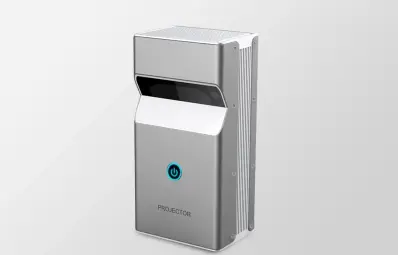
For education and corporate training buyers, the DP01 UST Interactive Smart Projector with Touch Module is purpose-built: ultra-short-throw with an integrated touch module, eliminating the need for separate interactive whiteboards.

For entry-level home cinema projects, the GP94A Android Smart Projector for Home Theater gives distributors an Android-native reference design—lightweight, low-heat, and easy to localize under private label.
Five buyer priorities:
- Low total cost of ownership (TCO) — purchase + maintenance + replacement over 5–10 years
- Reliability — minimal downtime during school hours
- Dust resistance — chalk dust, classroom dust, ceiling-mount accumulation
- Easy maintenance — filter cleaning, lamp replacement, remote management
- Safety — secure ceiling mount, anti-theft features
The Spec Sweet Spot for Classroom
For typical K-12 classroom (25–40 seats, 8 hours/day, 200 days/year):
| Specification | Recommended Value |
|---|---|
| Brightness | 3,500–4,500 ANSI lumens |
| Resolution | 1080p or WXGA (1280×800) |
| Light source | Laser phosphor (20,000+ hour life) |
| Throw ratio | 0.4:1 – 0.6:1 (short throw) |
| Operating system | Linux (low maintenance) or AOSP Android |
| Connectivity | HDMI, VGA, USB, LAN, RS232 |
| Filter | Easy-clean filter or sealed engine |
| Mount | Ceiling mount included |
| Warranty | 3-year onsite (US) / 5-year onsite (EU) |
| Noise | <35 dB at full brightness |
| Specification | Recommended Value |
|---|---|
| Brightness | 5,000–8,000 ANSI lumens |
| Resolution | WUXGA or 4K |
| Light source | Laser phosphor |
| Throw ratio | 1.2:1 – 2.0:1 (long throw) |
| Connectivity | HDBaseT, LAN, RS232, HDMI, USB-C |
| Special features | Lens shift, edge blending, network management |
| Warranty | 5-year onsite |
Why Short Throw Is Critical for Classrooms
Short throw (0.4:1 – 0.6:1) is the right choice for most classrooms for three reasons:
- No shadow on screen — teacher walks in front of screen without casting shadow
- Reduced glare — projector closer to screen means less direct eye exposure to light beam
- Easier installation — wall-mount rather than ceiling-mount (or simple ceiling mount at front of room)
Dust Resistance and Sealed Engines
Classroom projectors face dust challenges:
- Chalk dust (still used in many schools)
- Paper dust (from handouts, books)
- Construction dust (during school renovations)
- HVAC dust (from building air systems)
- Sealed optical engine — no filter needed, dust cannot enter (preferred for low maintenance)
- Easy-clean filter — user-serviceable filter, cleaning every 500–1,000 hours
Light Source: Why Laser Wins for Classrooms
| Light Source | Classroom Fit |
|---|---|
| Lamp | Acceptable but requires lamp replacement every 3,000–5,000 hours |
| LED | Good for portable use, lower brightness ceiling |
| Laser phosphor | Best fit — 20,000+ hours, no lamp replacement, instant on/off |
Total Cost of Ownership: 10-Year Model
For a single K-12 classroom projector over 10 years:
| Cost Component | Lamp Projector | LED Projector | Laser Projector |
|---|---|---|---|
| Purchase | $700 | $900 | $1,400 |
| Lamp replacement (×3) | $720 | $0 | $0 |
| Filter replacement (×4) | $160 | $0 | $0 |
| Service calls (est.) | $400 | $200 | $150 |
| Energy (10 yr) | $720 | $290 | $480 |
| Disposal (end of life) | $50 | $50 | $50 |
| 10-year TCO | $2,750 | $1,440 | $2,080 |
OEM Cost for Classroom Projectors
| Class | FOB Cost (1,000 units) | Lead Time |
|---|---|---|
| K-12 classroom (3,500 ANSI, short throw, laser) | $280–$420 | 40–55 days |
| Lecture hall (6,000 ANSI, laser, lens shift) | $680–$1,200 | 45–65 days |
| Training room (4,000 ANSI, standard throw) | $320–$480 | 35–50 days |
Tender Requirements
Government and education tenders often have specific requirements:
| Requirement | Why It Matters |
|---|---|
| Country of origin certification | Local content rules |
| Environmental certifications | ENERGY STAR, EPEAT |
| Recycled content | Some tenders require % of recycled plastics |
| Take-back program | Producer responsibility for end-of-life |
| Local service partner | Some tenders require in-country service |
| Security clearance | Government / military education |
| Specific certifications | BIS (India), CCC (China), KCC (Korea) |
| Warranty terms | Often 3-year onsite minimum |
The Multi-Year Frame Agreement
Large education buyers (school districts, ministries, universities) often establish multi-year frame agreements with OEM suppliers:
- Volume commitment: 1,000–10,000 units over 3–5 years
- Pricing: fixed or capped pricing per year
- Service: extended warranty, on-site support
- Refresh: option to add new models in year 2–5
How to Sell to Education Buyers
| Channel | Strengths | Weaknesses |
|---|---|---|
| Direct (school district sales) | High margin, deep relationships | Long sales cycle |
| AV integrators | Technical installation, established trust | Margin sharing |
| Government tenders (RFP) | Volume, official channels | Bureaucracy, low margin |
| Reseller / distribution | Broad reach | Lower margins |
| Education technology conferences (BETT, ISTE) | Visibility, networking | High marketing cost |
Common Classroom OEM Mistakes
Five pitfalls:
- Consumer-grade Android — Google Play and consumer apps are not appropriate in classroom environments
- Cheap plastic chassis — does not survive 5+ years of classroom use
- No remote management — fleet of 100+ projectors cannot be managed without centralized tools
- Insufficient brightness — 2,500 ANSI is too dim for typical lit classrooms
- Short warranty — schools need 3+ year warranty to budget effectively
What We Recommend for Classroom OEM Buyers
- Target laser phosphor short throw as the core configuration
- Specify sealed engine to minimize maintenance
- Plan for 3-year onsite warranty as standard
- Bundle remote management (PJLink, HTTP API) for IT integration
- Offer multi-year frame agreement pricing for large buyers
- Include educational software (interactive whiteboard, wireless casting) as value-add
Conclusion and Next Step
Classroom projector bulk is a high-volume, long-lifecycle segment with strict TCO requirements. Win on dust resistance, laser light source, short throw, and remote management. Plan for multi-year engagements and tender-based selling.
💼 Need classroom projector OEM service?
Request a Free Quote | View Product Catalog
We ship classroom-grade short throw and standard throw projectors with sealed laser engines, PJLink, RS232, and 3-year warranty. Engineering team will recommend the right configuration for your K-12, higher-ed, or training market within 24 hours.
