
Posted At: Apr 21, 2026 - 56 Views

HDR10 vs HLG Projector: HDR Format Support for OEM Buyers
HDR support is now a baseline expectation for any premium projector, but not all HDR is the same. The HDR10 vs HLG projector decision affects BOM cost, content compatibility, retail positioning, and certification requirements. This guide explains the two dominant HDR formats in projectors, plus HDR10+ and Dolby Vision where relevant, and gives B2B buyers a practical framework for choosing the right HDR profile.
What HDR Actually Means in a Projector
HDR (High Dynamic Range) is a display technology that expands the range between the darkest and brightest parts of the image, producing more detail in shadows, more pop in highlights, and more realistic color. HDR in projectors is more challenging than in TVs because projectors are limited by their light output — a 500-lumen projector cannot produce the same peak brightness as a 1,500-lumen TV.
In practice, HDR in projectors produces a more subtle improvement than HDR in TVs. But it still matters for premium positioning and content compatibility.
The Four HDR Formats

Buyers looking for a turnkey smart OS reference should evaluate the GP95-GTV 400 ANSI Full-Sealed Smart Projector with Google TV Built-In. Google TV is licensed and pre-integrated, eliminating months of middleware work for ODM projects.
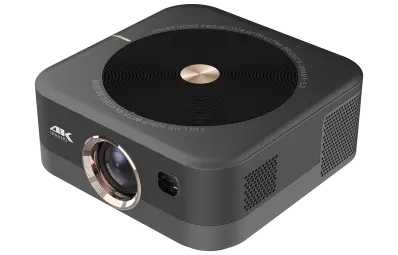
Distributors evaluating the B2B projector market can reference our GP94C Android Smart Projector for Home Theater—a production-validated platform covering Android 9 · 500 ANSI · Built-in Speakers, suitable as an OEM/ODM starting point.
HDR10
- Open standard, no licensing fees
- Static metadata — brightness and color values are set once for the entire content
- 10-bit color depth (1.07 billion colors)
- BT.2020 color space (wide color gamut)
- SMPTE ST 2084 perceptual quantizer (PQ) transfer function
- Used by: 4K Blu-ray, Netflix, Prime Video, YouTube, Disney+, Apple TV+, most streaming services
- SoC requirement: most modern projector SoCs (Amlogic, Rockchip, MediaTek) support HDR10 natively
HLG (Hybrid Log-Gamma)
- Open standard, developed by BBC and NHK
- No metadata — backward compatible with SDR (Standard Dynamic Range) signals
- Backward compatible — an HLG signal displays on SDR displays with reasonable quality
- Used by: live broadcast TV, BBC, NHK, DirecTV, satellite and cable TV
- SoC requirement: minimal additional support beyond HDR10
HDR10+
- Proprietary format, royalty-free but Samsung/Amazon/Philips controlled
- Dynamic metadata — brightness and color values adjusted scene-by-scene or frame-by-frame
- Used by: Amazon Prime Video, some 4K Blu-rays, select streaming services
- SoC requirement: HDR10+ requires licensed hardware + metadata processing
- Adoption: limited compared to HDR10
Dolby Vision
- Proprietary format, licensed by Dolby
- Dynamic metadata + 12-bit color depth
- Used by: Netflix, Disney+, Apple TV+, select 4K Blu-rays
- SoC requirement: Dolby Vision requires licensed chip and significant SoC capability
- Cost adder: $5–$15 per unit (Dolby license) plus SoC capability
Format Support Comparison
| Format | Open / Proprietary | Metadata | Content Sources | Projector Support |
|---|---|---|---|---|
| HDR10 | Open | Static | All major streaming | Universal |
| HLG | Open | None | Live TV, BBC, NHK | Common |
| HDR10+ | Proprietary | Dynamic | Amazon Prime Video | Limited |
| Dolby Vision | Proprietary | Dynamic | Netflix, Disney+ | Rare (premium only) |
SoC and Hardware Requirements
HDR support depends on three things in the projector:
- SoC capability — the chip must decode the HDR metadata and apply the PQ transfer function. Modern Amlogic, Rockchip, and MediaTek SoCs all support HDR10 and HLG. HDR10+ and Dolby Vision require specific licensed models.
- Display pipeline — the optical engine must support wide color gamut (BT.2020 / DCI-P3). LED and laser projectors can achieve BT.709 and DCI-P3; RGB laser can approach BT.2020.
- Brightness headroom — HDR requires brightness above the SDR baseline to show the expanded dynamic range. A 200-lumen projector will display HDR content, but the benefit will be minimal. A 1,000+ lumen laser projector will show meaningful HDR improvement.
BOM and OEM Cost Impact
| HDR Profile | BOM Cost Adder | Notes |
|---|---|---|
| No HDR | $0 (baseline) | SDR only |
| HLG only | $0–$2 | Minimal SoC capability required |
| HDR10 | $2–$5 | Standard on modern SoCs |
| HDR10 + HLG | $3–$6 | Default for 4K-capable platforms |
| HDR10+ | $5–$12 | HDR10+ licensing + dynamic metadata |
| Dolby Vision | $8–$20 | Dolby license + licensed SoC |
Retail Channel Expectations
| Channel | Expected HDR Profile |
|---|---|
| Amazon (US, EU) | HDR10 at $400+ retail; Dolby Vision optional above $1,000 |
| Best Buy (US) | HDR10 at $500+; Dolby Vision above $1,500 |
| MediaMarkt (EU) | HDR10 + HLG standard; Dolby Vision for premium |
| Walmart (US) | HDR10 acceptable at $300+ |
| Costco | HDR10 + HLG standard at $400+ |
| Education tenders | HDR not required (rare in classroom content) |
| Hotel chains | HDR10 in premium rooms only |
Content Reality Check
What HDR content is actually available to your customer?
- HDR10 content: abundant. Netflix, Prime Video, Disney+, Apple TV+, YouTube, 4K Blu-ray
- HLG content: limited to live broadcasts, BBC iPlayer, NHK, DirecTV 4K
- HDR10+ content: limited (some Amazon originals, some 4K Blu-rays)
- Dolby Vision content: substantial (Netflix originals, Disney+, Marvel shows, Apple TV+)
What We Recommend for Common OEM Programs
| Program | Recommended HDR Profile |
|---|---|
| Entry-level consumer ($200–$300 retail) | HLG only |
| Mid-range home theater ($300–$500) | HDR10 + HLG |
| Premium home theater ($500–$1,000) | HDR10 + HLG + HDR10+ |
| Ultra-premium ($1,000+) | HDR10 + HLG + Dolby Vision |
| Conference room | HDR10 only (or none) |
| Education | HLG only or none |
| Outdoor portable | HLG only |
How to Validate HDR in a Sample Unit
When testing a projector sample for HDR support, check these real-world scenarios:
| Test | What You Want to See |
|---|---|
| Netflix HDR content (Squid Game, Stranger Things) | "HDR" badge displayed, expanded shadows and color |
| Prime Video HDR content (The Boys, Reacher) | HDR badge, visible highlight detail |
| YouTube HDR | HDR badge, smooth highlight transitions |
| 4K HDR Blu-ray (USB playback) | Full 4K HDR rendering |
| HDR10 to SDR fallback | Graceful transition, no artifacts |
| HLG broadcast (if available) | HLG detected, proper rendering |
| Dolby Vision content (if supported) | Dolby Vision badge, dynamic metadata |
Conclusion and Next Step
The HDR10 vs HLG projector decision is mostly about HDR10 — because HDR10 is what 90% of your customers' content uses. HLG is a near-free addition for broadcast compatibility. HDR10+ and Dolby Vision are reserved for premium positioning where the BOM adder is justified.
💼 Need HDR support details for our projectors?
Request a Free Quote | View Product Catalog
We ship HDR10, HDR10 + HLG, HDR10+ and Dolby Vision configurations across our LED and laser platforms. Our engineering team will recommend the right HDR profile for your retail price band within 24 hours.
