
Posted At: Apr 22, 2026 - 74 Views
Home Theater Projector Wholesale: How to Win in Consumer Home Cinema
The consumer home theater market is one of the largest and most competitive projector segments, with annual global volume exceeding 8 million units. For B2B buyers, home theater projector wholesale offers strong unit economics — but the market is also crowded, retailer-led, and unforgiving on quality. This guide explains what works in home theater, what does not, and how to source OEM/ODM projectors that sell.
The Home Theater Market in 2026
Key market dynamics:
- Premium tier ($500+ retail): growing 12–18% YoY, dominated by RGB laser and 4K HDR
- Mid-tier ($200–$500 retail): stable, dominated by 1080p LED and entry-level 4K
- Entry tier (<$200 retail): declining as consumers shift to TVs or premium tiers
- Brand leaders: XGIMI, JMGO, Anker Nebula, Dangbei, BenQ, Epson
- White-label and emerging brands: ~40% of unit volume (OEM/ODM opportunity)
What Home Theater Buyers Want
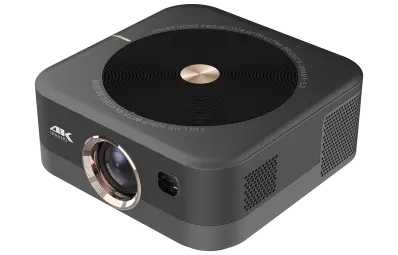
For OEM buyers building a home-theater line, our GP94C Android Smart Projector for Home Theater is a production-ready reference—500 ANSI lumen output with Android OS and built-in stereo speakers. It's a practical baseline for white-label adaptation.

For entry-level home cinema projects, the GP94A Android Smart Projector for Home Theater gives distributors an Android-native reference design—lightweight, low-heat, and easy to localize under private label.
Five buyer priorities (based on retail sales data):
- Image quality — brightness, color, HDR, motion handling
- Smart features — built-in apps, voice control, casting
- Ease of use — auto-focus, auto-keystone, simple remote
- Aesthetic design — looks good in living room (not industrial)
- Reliability — does not break in year 1
| Buyer Priority | OEM Spec to Focus |
|---|---|
| Image quality | ANSI lumens, color gamut, HDR support, native contrast |
| Smart features | Android with GMS, Google Assistant, casting |
| Ease of use | TOF autofocus, auto-keystone, obstacle avoidance |
| Aesthetic design | Premium housing materials, color choices, minimalist design |
| Reliability | Quality components, robust QC, 2-year warranty |
The Spec Sweet Spot
For mid-tier home theater OEM (target $300–$500 retail):
| Specification | Recommended Value |
|---|---|
| Native resolution | 1080p or pixel-shifted 4K |
| Brightness | 600–1,200 ANSI lumens |
| Light source | LED (cost) or laser (premium) |
| Operating system | Android 11/12 with GMS |
| HDR | HDR10 + HLG |
| Connectivity | WiFi 6, BT 5.0, HDMI 2.1, USB-C |
| Audio | 2×5W speakers minimum, Dolby Audio |
| Throw ratio | 1.2:1 standard or 0.8:1 short |
| Auto features | TOF autofocus, auto-keystone, screen fit |
| Voice control | Google Assistant |
| Dimensions | Portable (<3 kg) or compact (<5 kg) |
| Specification | Recommended Value |
|---|---|
| Native resolution | Pixel-shifted 4K or native 4K |
| Brightness | 1,500–2,500 ANSI lumens |
| Light source | Laser phosphor or RGB laser |
| HDR | HDR10 + HLG + HDR10+ |
| Color gamut | ≥95% DCI-P3 |
| Throw ratio | Standard or short |
| Speakers | Premium (Harman Kardon, Bowers & Wilkins co-branded possible) |
BOM Cost Breakdown
For a mid-tier 1080p LED home theater projector (1,000-unit order):
| Component | % of BOM | Notes |
|---|---|---|
| Optical engine (DMD + lens) | 25–30% | 0.33" or 0.47" DMD |
| Light source (LED) | 12–18% | RGB LED or blue+pumped |
| SoC + WiFi/BT module | 10–15% | Amlogic or Rockchip |
| PCB + components | 8–12% | Power, I/O, audio |
| Housing (plastic + metal) | 8–12% | Injection molded |
| Speakers + audio | 4–6% | 2× 5W typical |
| Power supply | 4–6% | 100–240V input |
| Cables + accessories | 2–4% | HDMI, power, remote |
| Assembly labor | 4–6% | SMT + assembly |
| Packaging | 2–4% | Retail box + inserts |
| Total unit BOM | 100% | $48–$72 typical FOB |
What Retailers Want
Amazon
- 4K expected at $400+ retail
- Native Google Play (GMS) expected
- Quick sample-to-listing cycle (60–90 days)
- High review velocity (need 50+ reviews in first 60 days)
- Competitive pricing ($X.99 price points)
Best Buy / MediaMarkt / Currys
- Premium positioning
- 4K and HDR support required
- Brand presence (advertising, social media)
- Strong warranty terms (2-year minimum)
- Demo units available for store displays
Walmart / Costco
- Value positioning at lower price points
- Reliability over features
- High volume commitments
- Quality consistency across shipments
Specialty AV Retailers
- Premium positioning
- Color accuracy (calibration reports)
- Lens quality
- ISF certification (for high-end)
- Detailed spec sheets
Common OEM Mistakes in Home Theater
Five pitfalls:
- Over-specifying brightness — 2,000 ANSI at $300 retail is suspicious; retail testing will catch mismatches
- Skipping auto-focus / auto-keystone — consumers expect "set and forget"; missing these kills reviews
- Weak audio — built-in speakers matter; consumers use them for casual viewing
- Boring design — industrial-looking projectors don't sell in living rooms
- Cheap remote control — a flimsy remote damages the premium perception
Branding and Differentiation Strategies
How OEM/ODM buyers differentiate in a crowded market:
Strategy 1: Visual Design
Custom housing color, premium finishes (soft-touch, brushed aluminum), minimalist design language. Tools investment: $30,000–$80,000 for full custom tooling.
Strategy 2: Software
Custom launcher, branded streaming service partnerships, voice assistant integration. Investment: $5,000–$20,000 for full custom firmware.
Strategy 3: Audio Partnership
Co-branded speakers (Harman Kardon, JBL, Bose, Bang & Olufsen). Royalty: typically 3–8% of unit cost. Investment: $20,000–$50,000 setup + ongoing royalties.
Strategy 4: Content Partnerships
Pre-installed streaming apps, exclusive content offers, bundled subscriptions. Investment: variable.
Strategy 5: Marketing
Brand storytelling, YouTube reviews, influencer partnerships, retail presence. Investment: $50,000–$500,000+ annually.
The Lifecycle Reality
A home theater projector has a typical lifecycle:
- Year 1: peak sales, marketing investment highest
- Year 2: stable sales, firmware updates
- Year 3: declining sales, retailer clearance
- Year 4+: end-of-life, spare parts support only
What We Recommend for First-Time Home Theater OEM Buyers
A practical 90-day launch plan:
- Week 1–2: select 2–3 reference models from OEM catalog, request samples
- Week 3–4: test samples, approve preferred model
- Week 5–6: lock specs, sign PO, pay deposit
- Week 7–10: production (1,000–2,000 units)
- Week 11: pre-shipment inspection
- Week 12–14: ocean transit
- Week 15: receive inventory, list on Amazon, fulfill retailer POs
- Week 16+: marketing, reviews, scale
Conclusion and Next Step
Home theater projector wholesale is a competitive but high-opportunity segment. Win on image quality, smart features, ease of use, design, and reliability. Match the spec to the retail price point. Plan for 3+ year firmware support.
💼 Ready to launch a home theater projector brand?
Request a Free Quote | View Product Catalog
We ship mid-tier and premium home theater OEM projectors with Android, GMS, auto-focus, and premium audio options. Our engineering team will recommend the right configuration for your target retail price within 24 hours.
