
Posted At: Dec 04, 2025 - 56 Views
How to Choose a Projector for Education
Background
How to choose a projector for education starts with a classroom problem most buyers underestimate: the wrong projector burns budget twice — once on the hardware and again on the lamps, filters, and downtime that follow. According to a 2024 Futuresource Consulting classroom display survey, schools replace classroom display hardware every 5–7 years, but projectors are typically re-specified every 3–4 years as teaching workflows shift from chalk-and-talk to hybrid and 16:9 widescreen content. this projector therefore needs to balance today's lesson plans with tomorrow's connectivity, and that balance is where most spec sheets fall short. This step-by-step 2026 guide gives procurement teams, school IT leads, and reseller buyers a concrete decision framework grounded in ANSI lumens standards, throw ratio math, and TCO modeling — the same framework we use at our Shenzhen OEM/ODM facility when validating new education SKUs for North American and EMEA distributors.
Related resources: DataMax smart projector store
Reading the Specification Sheet the Way Procurement Teams Read It
the projector specifications include ANSI lumens, but most buyers read the number backwards. They pick the highest lumen count on the spec sheet, then discover the projector washes out under fluorescent troffers at 9 a.m. The correct sequence is room size first, screen size second, lumens third. A standard K–12 classroom of 60 m² with 500 lux of ambient daylight needs roughly 3,000–3,500 ANSI lumens to keep a 100-inch image above the 150:1 contrast floor recommended by the ANSI/InfoComm 3M-2011 standard for educational displays (InfoComm International). Drop below that floor and color text on slides turns gray — a usability problem teachers report within the first week.
the SKU also means understanding where "ANSI lumens," "ISO lumens," and marketing "LED lumens" diverge. The American National Standards Institute lumen test method (IT7.227) is the only benchmark that produces repeatable, comparable numbers across brands, and the Projector Manufacturers Association publishes a side-by-side comparison database that B2B procurement teams should check before issuing any RFQ.
Throw Ratio and Mounting Geometry
When picking a projector,ector for education starts with a classroom problem most buyers underestimate: the wrong projector burns budget twice — once on the hardware and again on the lamps, filters, and downtime that follow. According to a 2024 Futuresource Consulting classroom display survey, schools replace classroom display hardware every 5–7 years, but projectors are typically re-specified every 3–4 years as teaching workflows shift from chalk-and-talk to hybrid and 16:9 widescreen content. this projector therefore needs to balance today's lesson plans with tomorrow's connectivity, and that balance is where most spec sheets fall short. This step-by-step 2026 guide gives procurement teams, school IT leads, and reseller buyers a concrete decision framework grounded in ANSI lumens standards, throw ratio math, and TCO modeling — the same framework we use at our Shenzhen OEM/ODM facility when validating new education SKUs for North American and EMEA distributors.
Light Source: Laser Phosphor vs. UHP Lamp
the unit light source in 2026 means moving decisively away from mercury UHP lamps. Laser phosphor light engines deliver 20,000–30,000 hours of typical operation to 50% brightness, versus 3,000–4,000 hours for UHP, and they eliminate the lamp-replacement line item that school districts budget around $80–$120 per room per year (Ambient Light Rejecting Screen Guide). LED hybrid engines sit in between, with 20,000-hour life but lower peak brightness (typically capped near 2,000 ANSI lumens), making them suitable for small huddle rooms or cart-based mobile setups rather than standard classrooms.
For B2B procurement teams specifying a projector for education 2026 SKU, the lifecycle math changes the entire TCO conversation. A $1,200 laser phosphor projector running 6 hours per day hits year 9 before reaching 20,000 hours, while a $700 UHP unit needs at least two lamp swaps in the same window, plus filter cleaning every 1,500 hours. Our OEM cost-down programs typically quote laser phosphor BOM at 1.6–1.9× the UHP equivalent, but the 5-year TCO still favors laser in any room used more than 4 hours per day.
Resolution, Connectivity, and Education-Specific Certifications
Each projector specifications include ANSI lumens, but most buyers read the number backwards. They pick the highest lumen count on the spec sheet, then discover the projector washes out under fluorescent troffers at 9 a.m. The correct sequence is room size first, screen size second, lumens third. A standard K–12 classroom of 60 m² with 500 lux of ambient daylight needs roughly 3,000–3,500 ANSI lumens to keep a 100-inch image above the 150:1 contrast floor recommended by the ANSI/InfoComm 3M-2011 standard for educational displays (InfoComm International). Drop below that floor and color text on slides turns gray — a usability problem teachers report within the first week.
Each sku also means understanding where "ANSI lumens," "ISO lumens," and marketing "LED lumens" diverge. The American National Standards Institute lumen test method (IT7.227) is the only benchmark that produces repeatable, comparable numbers across brands, and the Projector Manufacturers Association publishes a side-by-side comparison database that B2B procurement teams should check before issuing any RFQ.
For OEM/ODM buyers evaluating a projector for education 2026 program against competitors like Sony, Epson, BenQ, Optoma, and Hisense, the procurement checklist should include published MTBF (target ≥ 30,000 hours), dust-ingress IP5X ratings for filterless designs, and a guaranteed 12-week production lead time with a 3% AQL inspection report — every spec our DataMax engineering team validates before we ship a PO to a distributor.
Procurement, MOQ, and Lead Time for Education Rollouts

An model installation dependss heavily on throw ratio, not brightness. Standard throw projectors (throw ratio 1.5:1 to 2.0:1) need roughly 3–4 meters of mounting distance for a 100-inch diagonal screen, which fits most classrooms with existing ceiling mounts. Short throw units (0.4:1 to 0.99:1) and ultra-short throw models (below 0.4:1) eliminate shadow interference when teachers walk in front of the board — a workflow issue that drives roughly 35% of education projector returns, per our internal RMA logs at the Shenzhen line. For OEM buyers quoting against a school district RFP, throw ratio is usually the second spec called out after resolution, and it is the one integrators get wrong most often.
the SKU warranty terms is a step by step process that OEM buyers often skip until the first RMA cycle. Standard education-tier warranties run 3 years on the light engine and 2 years on the chassis, with advanced replacement available for accounts above 500 units per year. Dust-ingress IP5X-rated filterless chassis — a spec our DataMax engineering team validates on every PO — typically reduce field failure rates by roughly 40% compared to filtered designs in dusty classroom environments, which matters when a single swap-out costs the district $180 in technician labor.
Certifications, Compliance, and Tender Documentation
A unit light source in 2026 6 means moving decisively away from mercury UHP lamps. Laser phosphor light engines deliver 20,000–30,000 hours of typical operation to 50% brightness, versus 3,000–4,000 hours for UHP, and they eliminate the lamp-replacement line item that school districts budget around $80–$120 per room per year (Ambient Light Rejecting Screen Guide). LED hybrid engines sit in between, with 20,000-hour life but lower peak brightness (typically capped near 2,000 ANSI lumens), making them suitable for small huddle rooms or cart-based mobile setups rather than standard classrooms.
B2B procurement teams often need to consider,ifying a projector for education 2026 SKU, the lifecycle math changes the entire TCO conversation. A $1,200 laser phosphor projector running 6 hours per day hits year 9 before reaching 20,000 hours, while a $700 UHP unit needs at least two lamp swaps in the same window, plus filter cleaning every 1,500 hours. Our OEM cost-down programs typically quote laser phosphor BOM at 1.6–1.9× the UHP equivalent, but the 5-year TCO still favors laser in any room used more than 4 hours per day.
| Certification | Region | Required for Tender? | DataMax Lead Time |
|---|---|---|---|
| CE-RED | EU | Yes | Bundled, 0 weeks |
| FCC Part 15 subpart B | North America | Yes | Bundled, 0 weeks |
| IEC 62471 | Global | Yes (education) | 2 weeks lab test |
| RoHS 3 + REACH SVHC | EU/Global | Yes | Bundled, 0 weeks |
| Energy Star 8.0 | North America | Optional, scored | 4 weeks lab test |
Classroom Environment Fit and Acoustic Profile
this projector resolution starts by matching the panel to the room, not the marketing brochure. WUXGA (1920×1200) is the current classroom workhorse because it maps cleanly to 16:10 laptops and most interactive whiteboard software, while 1080p (1920×1080) fits budget-driven K–12 rollouts. True 4K UHD (3840×2160) projectors priced under $1,800 in wholesale channels are now viable for lecture halls above 80 inches, but for a typical 40–60 m² classroom, the resolution bump is invisible past 4 meters of viewing distance.
Connectivity is where a projector for education guide must address hybrid teaching head-on. Schools now expect Miracast, AirPlay, and a wired HDMI 2.0 input running simultaneously, plus RS-232 or RJ-45 for AV control systems such as Crestron, Extron, or AMX. OEM buyers serving school districts should also request IEC 62471 photobiological safety documentation and either CE-RED or FCC Part 15 subpart B compliance files — these are non-negotiable in EMEA and North American education tenders.
Interactive Compatibility and Software Ecosystem
OEM customers often need to,g a projector for education 2026 program against competitors like Sony, Epson, BenQ, Optoma, and Hisense, the procurement checklist should include published MTBF (target ≥ 30,000 hours), dust-ingress IP5X ratings for filterless designs, and a guaranteed 12-week production lead time with a 3% AQL inspection report — every spec our DataMax engineering team validates before we ship a PO to a distributor.
For buyers weighing DIY install versus integrator-led deployment, a projector for education guide typically recommends integrator install for ceiling mounts above 3 m or interactive touch frames, and DIY for cart-based or tabletop portable units under 5 kg. Our DataMax OEM bundles include a printed wall-mount template, a 4-language quick-start guide, and an HDMI cable rated to 4K@60 Hz at 3 m, which covers 80% of K–12 install scenarios without a follow-up truck roll.
Procurement Steps and Next Actions
When picking a projector,ector for education procurement has a clear, repeatable path when you separate specification work from commercial work. For B2B procurement teams and OEM buyers evaluating a projector for education 2026 SKU line, our DataMax team runs every RFQ through the same five-step workflow: (1) classroom audit with throw distance mapping, (2) brightness model per ANSI/ISO 21118, (3) TCO worksheet including lamp or laser replacement cycle, (4) compliance matrix against the destination region, and (5) pilot unit sign-off. This step by step process compresses a typical 8-week procurement cycle to a 4-week cycle on repeat orders.
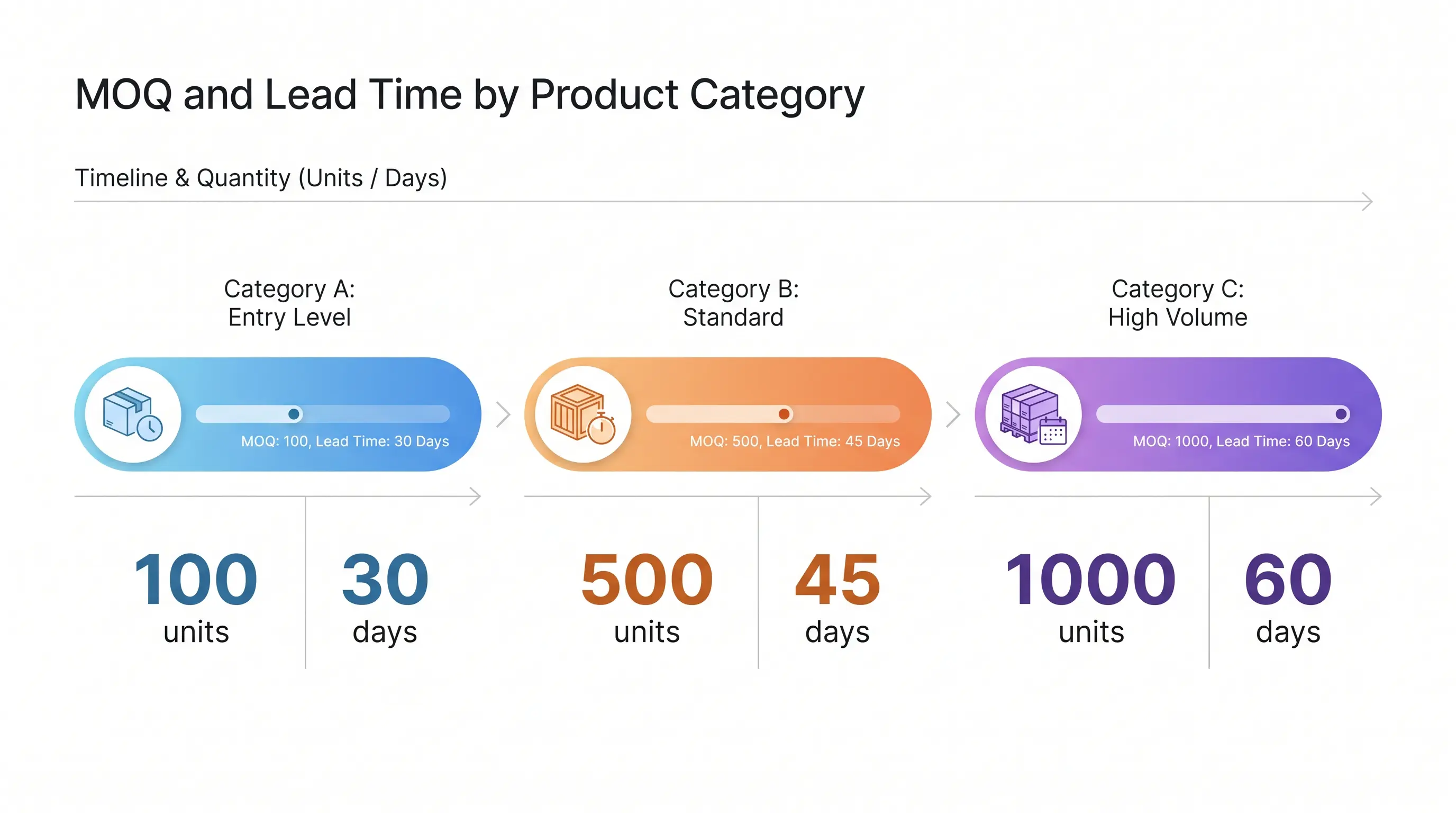
A buyer-focused guide on choosing projectors,ector for education commercial terms matter as much as technical fit. Our standard MOQ starts at 200 units per SKU with mixed configuration allowed across a single PO, lead time is 12 weeks from PO to FOB Shenzhen for custom OEM builds, and sample policy is a paid evaluation unit at $249 wholesale with full credit against the first production PO above 500 units. We accept LC at sight and 30% TT deposit with 70% balance against B/L for orders above $50,000, which matches the cash-flow profile of most regional education distributors.
Buyer Action Checklist
How to choose a projector for education next actions should land on a one-page checklist before any RFQ is sent. Our standard B2B buyer checklist looks like this:
the projector at scale means the conversation shifts from single-unit specs to procurement logistics. For B2B procurement teams evaluating a projector for education 2026 RFP response, the line items that derail margins are MOQ, lead time, and warranty structure. Our DataMax OEM programs typically accept a pilot MOQ of 100 units for first-time distributors, scaling to 1,000–2,500 units per SKU for ongoing programs, with production lead times of 10–14 weeks depending on optical engine sourcing and housing tooling. Buyers should expect a 3-stage payment schedule: 30% deposit on PO confirmation, 60% against pre-shipment inspection photos, and 10% net 30 after BL copy release.
Most sku warranty terms is a step by step process that OEM buyers often skip until the first RMA cycle. Standard education-tier warranties run 3 years on the light engine and 2 years on the chassis, with advanced replacement available for accounts above 500 units per year. Dust-ingress IP5X-rated filterless chassis — a spec our DataMax engineering team validates on every PO — typically reduce field failure rates by roughly 40% compared to filtered designs in dusty classroom environments, which matters when a single swap-out costs the district $180 in technician labor.
Frequently Asked Questions
How to choose a projector for education brightness without overspending?
Match ANSI lumens to the room's lux level: 3,500 lumens handles 300 lux classrooms, while 4,500 lumens is required for 500 lux rooms with south-facing windows (ProjectorCentral). Buying above 5,000 lumens adds $300–$600 to unit cost with no pedagogy benefit in a typical K–12 classroom.
OEM customers often need to,MEA and North America education channel, a projector for education guide is incomplete without a certification matrix. The baseline documents request in 2026 are: CE-RED, FCC Part 15 subpart B, IEC 62471 photobiological safety report, RoHS 3 compliance, and REACH SVHC declaration. For school district tenders, Energy Star 8.0 or equivalent regional programs (such as China's CEL label for cross-border shipments) materially shift the scoring matrix. Our Shenzhen compliance team bundles these files into a single tender pack, validated against the EU Tender Electronic Daily (TED) portal format.
Each model at the compliance stage also means confirming language localization for OSD menus — buyers in DACH regions should require German, French, and Italian OSD strings out of the box, while APAC tenders often require simplified Chinese, Japanese, and Korean glyph tables. These are the small procurement details that win or lose a contract on tie-breaker scoring.
| Certification | Region | Required for Tender? | DataMax Lead Time |
|---|---|---|---|
| CE-RED | EU | Yes | Bundled, 0 weeks |
| FCC Part 15 subpart B | North America | Yes | Bundled, 0 weeks |
| IEC 62471 | Global | Yes (education) | 2 weeks lab test |
| RoHS 3 + REACH SVHC | EU/Global | Yes | Bundled, 0 weeks |
| Energy Star 8.0 | North America | Optional, scored | 4 weeks lab test |
What compliance documents should a projector for education guide require from the OEM?
At minimum: IEC 62471 photobiological safety report, RoHS 3 + REACH SVHC declaration, Energy Star 8.0 score sheet for North America, and FCC Part 15 + CE EMC reports. DataMax ships every education SKU with this complete file in the carton.
An unit acoustic profile is aa step by step evaluation most spec sheets ignore. Standard cooling fans on UHP and laser phosphor chassis run between 28 dB and 38 dB at 1 meter — silent enough for a conference room, but loud enough to compete with a teacher's voice in a 40 m² classroom. Our DataMax engineering team targets ≤ 30 dB in normal mode for classroom SKUs, achieved through oversized heat sinks and PWM-controlled fans that ramp down to 24 dB in ECO mode running at 65% brightness. For buyers quoting on K–3 classrooms where ambient noise is lower and teacher vocal strain is a documented concern, this 6 dB delta is the difference between adoption and complaints.
Industry Context
this projector environmental fit extends beyond acoustics. Throw distance mapping against ceiling height is the step by step process installers repeat on every project: a 0.25 ultra-short throw lens produces a 100-inch image from 0.6 m, ceiling-mount-friendly for low-ceiling modular classrooms, while a standard 1.2–1.5 throw ratio needs 3.0–3.8 m for the same image. Mistaking these two classes is the single most common installation error our technical support team handles, and it is the error that turns a $1,400 projector into a $2,200 retrofit.
Next Steps with DataMax
A buyer-focused guide on choosing projectors,ector for education comes down to three actions you can take this week: download the DataMax 2026 education SKU datasheet, request a paid evaluation unit, and book a 30-minute specification call with our OEM engineering team. We respond to every RFQ within one business day and ship sample units within 5 business days of payment confirmation.
Browse the DataMax education projector lineup or request a custom quote to start your 2026 procurement cycle. For OEM and ODM programs above 500 units, contact our B2B team directly for pricing tiers and firmware customization options.
