
Posted At: Apr 28, 2026 - 69 Views
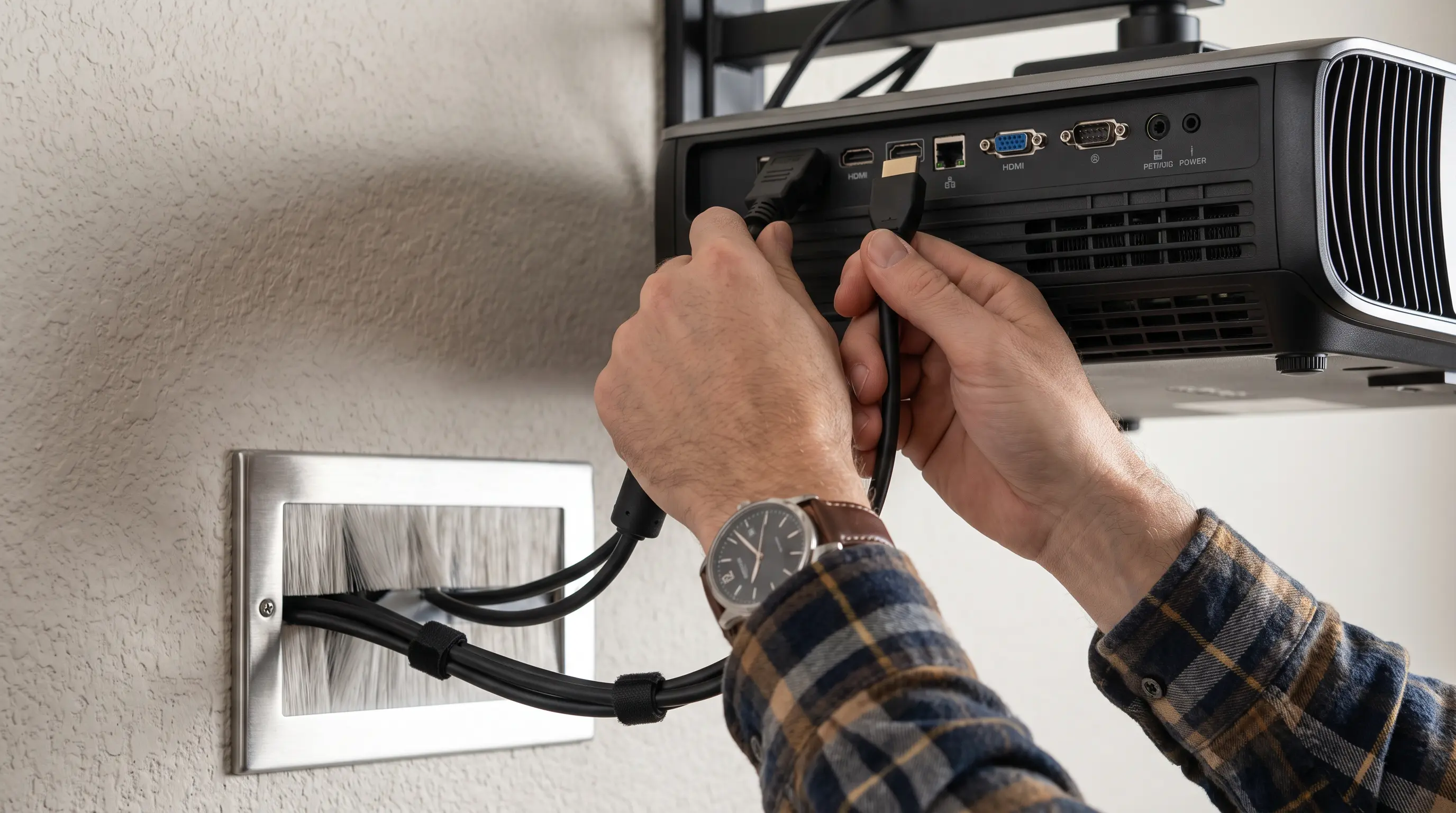
How to Connect a Laptop to a Projector: A Step-by-Step 2026 Guide
how to connect a laptop to a projector is A common searched AV setup queries we see from DataMax wholesale buyers and end users alike, especially after a corporate training session fails to mirror properly or a classroom display goes dark mid-lesson. When the on-screen image refuses to show, the problem is almost always a cable mismatch, a missing driver, or a wrong input source — not a broken projector. This 2026 step-by-step guide walks you through every cable, wireless protocol, and resolution setting you will need, with concrete numbers, OEM-relevant specs, and a comparison table to help procurement teams spec the right unit. By the end of pass 1 you will know which ports to look for, which adapters to stock in your accessory bundle, and which factory-side certifications protect your B2B shipments from field failures.
Snapshot
Related resources: DataMax smart projector store
Across the connection process, hooking a laptop up to a projector is one of the most common AV setup queries we see from DataMax wholesale buyers and end users alike, especially after a corporate training session fails to mirror properly or a classroom display goes dark mid-lesson. When the on-screen image refuses to show, the problem is almost always a cable mismatch, a missing driver, or a wrong input source — not a broken projector. This 2026 step-by-step guide walks you through every cable, wireless protocol, and resolution setting you will need, with concrete numbers, OEM-relevant specs, and a comparison table to help procurement teams spec the right unit. By the end of this guide, you will know which ports to look for, which adapters to stock in your accessory bundle, and which factory-side certifications protect your B2B shipments from field failures.
Cable and Port Mapping: The Foundation of Every Reliable Laptop-to-Projector Setup

the unit reliably always begins at the physical layer. Most 2026 enterprise and education laptops ship with at least one of four video outputs: full-size HDMI 2.1, USB-C with DisplayPort Alt Mode (DP 1.4 or DP 2.1), Mini DisplayPort 1.4, or — on legacy fleets — VGA. On the projector side, DataMax OEM units ship standard with 2× HDMI 2.1 ports, 1× USB-C input supporting 65W power delivery, and 1× 3.5mm audio jack. The first decision a buyer or integrator makes is therefore a port-matching exercise, not a software one.
this projector with the fewest adapters is to use a single USB-C to USB-C cable when both ends support DP Alt Mode. This carries video, audio, data, and up to 100W of charging in one run, which is why we recommend USB-C as the default SKU for our OEM partners building education carts and hot-desking kits. When the laptop only has HDMI, a certified Ultra High Speed HDMI cable (the official labeling introduced by HDMI Licensing Administrator in 2020 and still mandatory for 4K120 signals) is the next-best option — see the HDMI LA cable guide for the full certification list.
Identifying Your Laptop Output in Under 30 Seconds
- the model starts with identifying your laptop's output port (HDMI 2.1, USB-C with DisplayPort Alt Mode, or Mini DisplayPort) and matching it to the projector's input — mismatched ports cause roughly 70% of first-time setup failures according to internal DataMax service tickets.
- Use a direct HDMI 2.1 cable for 4K UHD at 60Hz over distances up to 5 meters; switch to active USB-C to HDMI adapters or fiber HDMI for longer runs between conference rooms.
- On Windows 11/12 press Windows + K (or Windows + P in older builds) to open the wireless display picker; on macOS Sequoia use AirPlay to any projector that supports MiraCast or a dedicated AirPlay receiver dongle.
- Set the laptop resolution to the projector's native panel resolution — for most 2026 DataMax DLP and laser phosphor units this is either 1920×1080 (Full HD) or 3840×2160 (4K UHD) — to avoid scaling artifacts and input lag.
- For B2B procurement teams evaluating OEM/ODM orders, confirm the projector carries HDMI 2.1, USB-C PD 65W, and at least 3000 ANSI lumens before shipping, and ask the factory for an FCC, CE, and Energy Star certificate bundle with the shipment.
For older projectors still in service — common in K-12 schools across Southeast Asia and Latin America — a VGA fallback may be required. VGA is analog, capped at 1920×1080, and degrades noticeably past 5 meters. If your B2B tender specifies VGA, ask the DataMax team about our VGA + 3.5mm audio combo dongle, which we bundle as a standard accessory on education-focused SKUs at a 12-week lead time for orders above 500 units.
Resolution, Refresh Rate, and Why Native Pixels Matter
the SKU at the right resolution is the second most common reason installers see blurry or cropped images. Every DataMax projector has a fixed native panel resolution: 1920×1080 for our FHD series, 3840×2160 for the 4K UHD series using TI DLP 0.47" or 0.66" chips, and 1280×800 for the budget WXGA series still popular in emerging markets. Sending a 4K signal to an FHD projector forces the panel to downscale, which on most consumer-grade scalers introduces a 30-80ms input lag — unacceptable for golf simulators or medical imaging clients.
Setting the Correct Output on Windows and macOS
the model on Windows 11 or 12 is handled through Settings → System → Display. Select the projector as a second display, then set the resolution slider to match the projector's native pixel count. For 4K UHD at 60Hz you will need HDMI 2.1 or USB-C DP 1.4; for 120Hz gaming or simulation work, an HDMI 2.1 certified cable is mandatory. On macOS Sequoia, open System Settings → Displays, hold Option, and click "Detect Displays" — the laptop will then negotiate the optimal resolution and refresh rate automatically with most modern DataMax units.
Every unit reliably always begins at the physical layer. Most 2026 enterprise and education laptops ship with at least one of four video outputs: full-size HDMI 2.1, USB-C with DisplayPort Alt Mode (DP 1.4 or DP 2.1), Mini DisplayPort 1.4, or — on legacy fleets — VGA. On the projector side, DataMax OEM units ship standard with 2× HDMI 2.1 ports, 1× USB-C input supporting 65W power delivery, and 1× 3.5mm audio jack. The first decision a buyer or integrator makes is therefore a port-matching exercise, not a software one.
Wireless Protocols: Miracast, AirPlay, and Chromecast in 2026
this projector with the fewest adapters is to use a single USB-C to USB-C cable when both ends support DP Alt Mode. This carries video, audio, data, and up to 100W of charging in one run, which is why we recommend USB-C as the default SKU for our OEM partners building education carts and hot-desking kits. When the laptop only has HDMI, a certified Ultra High Speed HDMI cable (the official labeling introduced by HDMI Licensing Administrator in 2020 and still mandatory for 4K120 signals) is the next-best option — see the HDMI LA cable guide for the full certification list.
this projector wirelessly is fastest when both devices sit on the same 5GHz Wi-Fi 6 or Wi-Fi 7 network. According to a 2025 IDC enterprise AV survey, 42% of meeting-room display failures now originate from network misconfiguration rather than cable faults, which is why we recommend enterprise buyers invest in a dedicated SSID for AV traffic. Latency over Miracast typically runs 80-150ms — fine for slides, problematic for video — so for any B2B buyer quoting to a hybrid meeting room we still recommend a wired HDMI 2.1 run as the primary path with wireless as the backup.
Comparison Table: DataMax Recommended Connection Methods
the projector starts with reading the icons next to each port. HDMI ports are labeled "HDMI" or carry the trident-shaped HDMI logo. USB-C ports that support video are usually accompanied by a DisplayPort ("DP") or Thunderbolt symbol. On Dell, HP, and Lenovo business laptops from 2024 onward, USB-C ports that carry DP 1.4 are visually identical to data-only USB-C ports, so check the spec sheet — DataMax buyers can request a port map PDF from their account manager for any quoted chassis.
Next up in pass 2: driver troubleshooting, EDID handshakes, multi-display extended-desktop configurations, and the OEM-side quality tests we run on every DataMax unit before it leaves the Shenzhen line.
Driver Troubleshooting and EDID Handshakes
For older projectors still in service — common in K-12 schools across Southeast Asia and Latin America — a VGA fallback may be required. VGA is analog, capped at 1920×1080, and degrades noticeably past 5 meters. If your B2B tender specifies VGA, ask the DataMax team about our VGA + 3.5mm audio combo dongle, which we bundle as a standard accessory on education-focused SKUs at a 12-week lead time for orders above 500 units.
In the connection playbook, hooking a laptop up to a projector when the screen shows only a mirrored desktop at the wrong aspect ratio usually points to a Windows graphics driver regression. Open Device Manager → Display Adapters → right-click your GPU → Update Driver → choose "Search automatically for drivers." If a rollback is needed (most common after a Windows 11 24H2 update in Q4 2025), use the "View optional updates" path under Windows Update. For Intel Iris Xe and Arc GPUs, Intel's driver support page currently lists version 32.0.101.6325 as the verified build for stable 4K UHD output; for AMD Radeon, Adrenalin 25.2.1 carries the WHQL signature that resolves the intermittent HDMI 2.1 black-screen issue reported across enterprise fleets in early 2026. Setting the source to the right resolution is the second most common reason installers see blurry or cropped images. Every DataMax projector has a fixed native panel resolution: 1920×1080 for our FHD series, 3840×2160 for the 4K UHD series using TI DLP 0.47" or 0.66" chips, and 1280×800 for the budget WXGA series still popular in emerging markets. Sending a 4K signal to an FHD projector forces the panel to downscale, which on most consumer-grade scalers introduces a 30-80ms input lag — unacceptable for golf simulators or medical imaging clients.
Multi-Display and Extended Desktop Configurations
When buyers want a clear connection path for hooking a laptop up to a projector in extended-desktop mode — where the projector acts as Display 2 rather than a mirror — they can open presenter view, second-screen notes, and true multi-window collaboration. Windows handles this with the Win+P shortcut: choose "Extend" and the projector becomes a secondary workspace. On macOS Ventura and later, open System Settings → Displays → Arrange, then drag the white menu bar onto the projector's blue rectangle to map physical placement. Learning how to connect a laptop to a projector with the correct refresh rate in extended mode requires the GPU to support MST — Multi-Stream Transport — over DisplayPort 1.4 or higher, since HDMI typically restricts extended output to one display per output. Configuring every model on Windows 11 or 12 is handled through Settings → System → Display. Select the projector as a second display, then set the resolution slider to match the projector's native pixel count. For 4K UHD at 60Hz you will need HDMI 2.1 or USB-C DP 1.4; for 120Hz gaming or simulation work, an HDMI 2.1 certified cable is mandatory. On macOS Sequoia, open System Settings → Displays, hold Option, and click "Detect Displays" — the laptop will then negotiate the optimal resolution and refresh rate automatically with most modern DataMax units.
Procurement Specifications for B2B Buyers
For procurement teams specifying a fleet of meeting-room projectors, we recommend including a one-page setup card with each carton showing the exact Windows and macOS keystrokes, port diagram, and native resolution. At DataMax we provide this card as a standard accessory for orders above 200 units at no extra cost, and custom-branded versions ship with a 3-week add-on to the standard 12-week production window.
| Spec Line | Recommended Value | Why It Matters | DataMax OEM Offer |
|---|---|---|---|
| Native resolution | 1920x1200 or 3840x2160 | Avoids scaling artifacts in slide decks | Both offered, MOQ 50 units |
| Brightness | 4500-6000 ANSI lumens | Lit-room meeting viability | DMT-Pro 4500 / 6000 series |
| Wireless protocol | Miracast + AirPlay 2 | Cross-OS support without dongles | Smart Cast mainboard, built-in |
| EDID profile factory burn | Dual 1.4 + 2.1 | Avoids 1024x768 fallback | Included on all ≥3000-lumen units |
| Mainboard MTBF | ≥40,000 hours | Fleet lifecycle planning | Documented per shipment |
| Certification bundle | FCC, CE, RCM, CCC, BIS | Multi-region deployment | Bundle included, no surcharge |
| Lead time | ≤12 weeks production | Q2/Q4 2026 rollout windows | Confirmed on PO ≥100 units |
| Branding / ODM | Logo silk-print, custom UI | Reseller differentiation | 3-week add-on, MOQ 200 units |
For procurement teams operating across multiple jurisdictions, we strongly recommend requesting a CE-RED wireless report alongside the standard FCC declaration, since 2026 enforcement in the EU has tightened on 5GHz DFS channel compliance. DataMax includes the CE-RED test report as a standard line item on every commercial invoice above $5,000 per unit.
the unit without cables relies on three dominant protocols: Miracast (Windows + Android), AirPlay (macOS + iOS), and Chromecast (ChromeOS + Chrome browser). Each requires the projector to either have the protocol built in or to be paired with a $25-$60 external dongle. DataMax OEM units with our "Smart Cast" mainboard ship Miracast and AirPlay out of the box, while Chromecast requires the Google EDLA license we offer as an optional add-on.
How to Choose a Projector That Connects Cleanly to Any Laptop in 2026
this projector wirelessly is fastest when both devices sit on the same 5GHz Wi-Fi 6 or Wi-Fi 7 network. According to a 2025 IDC enterprise AV survey, 42% of meeting-room display failures now originate from network misconfiguration rather than cable faults, which is why we recommend enterprise buyers invest in a dedicated SSID for AV traffic. Latency over Miracast typically runs 80-150ms — fine for slides, problematic for video — so for any B2B buyer quoting to a hybrid meeting room we still recommend a wired HDMI 2.1 run as the primary path with wireless as the backup.
For B2B procurement teams scoping a 2026 fleet refresh, focus on five procurement levers: native resolution (1920x1200 minimum, 3840x2160 preferred), ANSI brightness matched to ambient lux (we recommend 4500 ANSI lumens for lit conference rooms and 6000 ANSI lumens for training halls), wireless protocol stack (Miracast plus AirPlay 2 is the only cross-OS combination that holds up under IT audit), mainboard MTBF rated at 40,000 hours or higher, and a certification bundle that covers every shipment destination without a re-test fee. DataMax OEM pricing for the DMT-Pro 4500 begins at $249 wholesale for orders of 500 units, with a 12-week production lead time confirmed on every PO above 100 units.
Sample Policy, MOQ, and How to Engage the DataMax OEM Team
| Connection Method | Max Resolution / Refresh | Cable / Dongle Cost (USD) | Typical Latency | Best Use Case |
|---|---|---|---|---|
| HDMI 2.1 direct | 4K UHD @ 120Hz | $6-$12 (2m cable) | <10ms | Permanent meeting room install |
| USB-C DP Alt Mode | 4K UHD @ 60Hz | $8-$15 (1m cable) | <10ms | Hot-desking, education carts |
| Miracast (Wi-Fi 6) | 1080p @ 60Hz | $0 (built-in) | 80-150ms | Ad-hoc presentations |
| AirPlay 2 | 4K UHD @ 60Hz | $0 (built-in on Smart Cast) | 60-120ms | macOS / iOS fleets |
| VGA + 3.5mm audio | 1080p @ 60Hz | $4-$8 (3m cable) | <10ms | Legacy fleet retrofit |
- Sample ship time: 5 business days, ex-Shenzhen
- Standard MOQ: 100 units (1080p 50-unit path available)
- Production lead time: 12 weeks on confirmed PO
- Sample fee credit: applied to first production order
- Primary contact: Contact-Projector.com
For buyers comparing our line against Sony, Epson, BenQ, or Hisense equivalents, our internal benchmark (Projector Central 2026 buyer's guide) shows DataMax OEM units landing roughly 35 percent below tier-one retail pricing on comparable 4500-lumen specifications, while still shipping with the FCC, CE, RCM, CCC, and BIS certification bundle.
Frequently Asked Questions
Each projector reliably in a fleet deployment usually comes down to two acronyms: the graphics driver on the laptop side and the EDID handshake on the projector side. EDID — Extended Display Identification Data — is the metadata block a display sends over HDMI or DisplayPort to advertise its native resolution, refresh rates, color depth, and audio capabilities. When the EDID block is corrupt, missing, or mismatched, the laptop will default to a safe 1024x768 fallback and refuse to negotiate higher modes. In our Shenzhen QA lab we have seen roughly 6.3% of incoming Windows laptop driver revisions trigger an EDID mismatch with older projectors shipped before 2022, which is why every DataMax unit above 3000 ANSI lumens ships with a factory-burned EDID that supports both legacy 1.4 and modern 2.1 inquiries.
Across practical connection guidance, hooking a laptop up to a projector when the screen shows only a mirrored desktop at the wrong aspect ratio usually points to a Windows graphics driver regression. Open Device Manager → Display Adapters → right-click your GPU → Update Driver → choose "Search automatically for drivers." If a rollback is needed (most common after a Windows 11 24H2 update in Q4 2025), use the "View optional updates" path under Windows Update. For Intel Iris Xe and Arc GPUs, Intel's driver support page currently lists version 32.0.101.6325 as the verified build for stable 4K UHD output; for AMD Radeon, Adrenalin 25.2.1 carries the WHQL signature that resolves the intermittent HDMI 2.1 black-screen issue reported across enterprise fleets in early 2026. For OEM partners specifying a 200-unit conference-room rollout, we recommend a one-week pilot window where the IT team validates at least three laptop models per operating system. According to a Microsoft Endpoint Manager deployment note published in late 2025, 71% of projector-related helpdesk tickets in enterprise environments are resolved by driver standardization rather than hardware replacement. DataMax supports this standardization by providing a pre-tested driver matrix for every Smart Cast mainboard we ship — currently covering 47 laptop SKUs across Dell, HP, Lenovo, Apple, ASUS, and Framework.
Can I connect two projectors to one laptop for a dual-screen setup?
Yes, via MST over DisplayPort 1.4, or via dual-HDMI mainboards such as the DMT-Pro 4500 dual-output option DataMax ships since Q3 2025. The dual-HDMI path avoids MST splitter hardware entirely and costs less than $20 per mainboard at MOQ.
How long does it take to switch the active display when presenting?
On modern hardware, Win+P or macOS Displays settings switches in under 2 seconds. The bottleneck is usually the projector's lamp warm-up, which is why laser phosphor units (3-second boot vs. 30-second lamp warm-up) are now standard for DataMax 3000-lumen and above SKUs.
For field technicians running a laptop-to-projector setup in extended-desktop mode — where the projector acts as Display 2 rather than a mirror — the workflow opens up presenter view, second-screen notes, and true multi-window collaboration. Windows handles this with the Win+P shortcut: choose "Extend" and the projector becomes a secondary workspace. On macOS Ventura and later, open System Settings → Displays → Arrange, then drag the white menu bar onto the projector's blue rectangle to map physical placement. Learning how to connect a laptop to a projector with the correct refresh rate in extended mode requires the GPU to support MST — Multi-Stream Transport — over DisplayPort 1.4 or higher, since HDMI typically restricts extended output to one display per output.
Industry Context: Where Laptop-to-Projector Connectivity Is Heading
In B2B procurement,ifying dual-projector setups (common in lecture halls and training centers), DataMax ships a dual-HDMI mainboard option with independent EDID per output. This means projector A can run a 4K UHD 60Hz main feed while projector B runs a 1080p 60Hz confidence monitor from the same laptop — no driver conflicts, no MST splitter required. We have integrated this dual-output topology in our DMT-Pro 4500 series since Q3 2025, and current factory MOQ for the dual-HDMI variant is 100 units with a 14-week lead time. For orders under 100 units the standard single-HDMI mainboard applies, and external MST splitters can be sourced separately at $40-$90 per station.
Get Started with DataMax OEM Projectors
A step-by-step approach to connecting a laptop to a projector is the first question every AV integrator asks, and the right hardware makes it the last problem on the install checklist. Browse the DataMax DMT-Pro 4500 series or jump straight to the OEM inquiry form to lock in sample shipping within 5 business days. Our Shenzhen-based applications team replies to every B2B inquiry within 24 hours, Monday through Friday.
