
Posted At: Apr 14, 2026 - 81 Views

Laser vs LED vs Lamp Projector: Choosing the Right Light Source for Your OEM Line
For B2B buyers building a projector line, the laser vs LED vs lamp projector decision determines your retail price band, your warranty exposure, your customer's replacement cost, and your own service-and-support burden. Each light source technology has matured along a different curve, and the right choice depends on the use case you are targeting. This guide compares the three on cost, brightness, lifespan, color, and OEM availability — and gives you a practical recommendation framework.
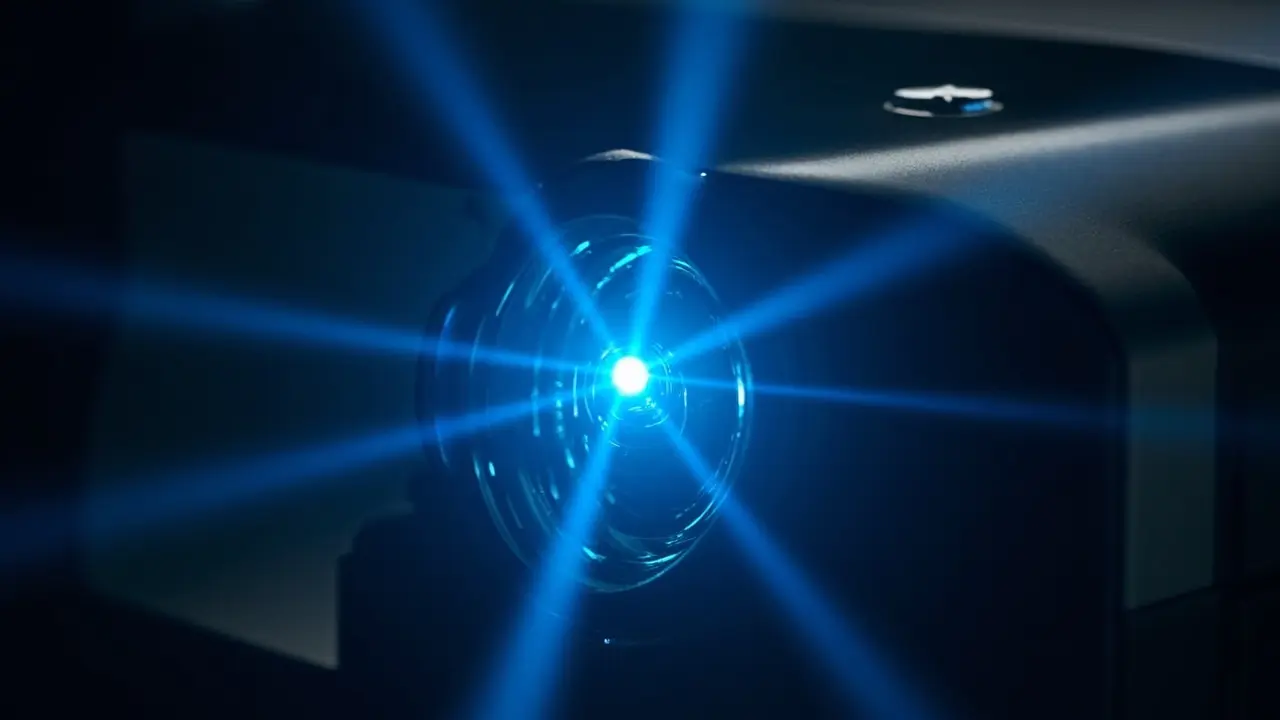
How Each Light Source Works
Lamp (UHP / UHE / Metal Halide)
Traditional projectors use a high-pressure mercury vapor lamp, typically branded UHP (Ultra High Performance) by Philips or UHE by Epson. The lamp is a sealed bulb that produces white light by arc discharge. Lamps require warm-up and cool-down cycles, lose brightness over time, and must be replaced every 2,000–5,000 hours.
Lamp projectors dominated the industry from the 1990s through the 2010s. They remain relevant in high-brightness large-venue installations (10,000+ ANSI lumens) where laser and LED have not yet reached cost parity.
LED (Light Emitting Diode)
LED projectors use high-power LEDs as the light source — typically a red, green, and blue LED (or a blue LED with yellow phosphor). LED projectors are compact, instant-on, instant-off, and last 20,000–30,000 hours. The color gamut is wide (especially with RGB LED), but the brightness ceiling is lower than laser at any given price point.
LED is the dominant light source in portable, consumer, and entry-level home theater projectors. Our catalog of LED projectors spans from pocket-sized 100-lumen units to 1,500-lumen home theater models.
Laser (Laser Phosphor / RGB Laser)
Laser projectors use blue laser diodes (typically Nichia or Osram) either directly (RGB laser for premium models) or with a yellow phosphor wheel (laser phosphor for mainstream models). Laser delivers the highest brightness, the longest lifespan (20,000–30,000+ hours), and the widest color gamut when properly engineered.
Laser is now the standard for high-end home theater, conference room, education, and large-venue installations. The cost premium versus LED has narrowed significantly since 2020.
Brightness Comparison

Buyers looking for a turnkey smart OS reference should evaluate the GP95-GTV 400 ANSI Full-Sealed Smart Projector with Google TV Built-In. Google TV is licensed and pre-integrated, eliminating months of middleware work for ODM projects.
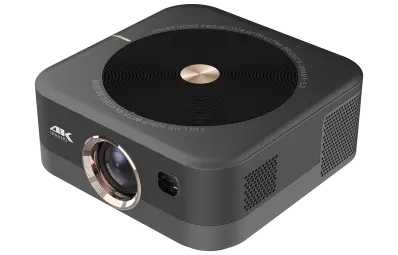
Distributors evaluating the B2B projector market can reference our GP94C Android Smart Projector for Home Theater—a production-validated platform covering Android 9 · 500 ANSI · Built-in Speakers, suitable as an OEM/ODM starting point.
| Light Source | Typical Brightness Range (ANSI Lumens) | Best-Fit Use Case |
|---|---|---|
| Lamp (UHP) | 2,000–30,000+ | Large venue, pro-AV |
| LED | 100–3,000 | Portable, home theater, education |
| Laser phosphor | 2,000–10,000 | Conference, education, large venue |
| RGB laser | 1,500–30,000+ | Premium home theater, pro-AV |
Lifespan and Replacement Cost
| Metric | Lamp | LED | Laser |
|---|---|---|---|
| Lifespan (eco mode) | 3,000–5,000 hr | 20,000–30,000 hr | 20,000–30,000 hr |
| Lifespan (full brightness) | 2,000–3,000 hr | 15,000–20,000 hr | 15,000–25,000 hr |
| Replacement cost (per lamp) | $80–$300 | N/A (sealed light engine) | N/A (sealed light engine) |
| Total cost over 20,000 hr | $1,600–$6,000 (4–6 lamps) | $0 | $0 |
Color and Image Quality
| Attribute | Lamp | LED | Laser Phosphor | RGB Laser |
|---|---|---|---|---|
| Color gamut (typical) | 70–85% Rec.709 | 90–110% Rec.709 | 90–110% Rec.709 | 95–110% BT.2020 |
| Color brightness | High | High (RGB LED) | High | Very high |
| Color consistency over life | Declines gradually | Very stable | Very stable | Very stable |
| Brightness over life | Declines 30–50% | Declines 10–20% | Declines 10–20% | Declines 10–20% |
Power Consumption and Thermal Behavior
| Attribute | Lamp (300W typical) | LED (60–120W typical) | Laser (100–250W typical) |
|---|---|---|---|
| Power consumption (full brightness) | High | Low | Moderate |
| Heat output | High | Low | Moderate |
| Fan noise | 35–45 dB | 25–35 dB | 30–40 dB |
| Instant on/off | No (warm-up required) | Yes | Yes |
OEM Cost Comparison
Realistic OEM unit cost (FOB Shenzhen, 1,000-unit order):
| Class | Lamp | LED | Laser Phosphor | RGB Laser |
|---|---|---|---|---|
| 1080p portable, 500 ANSI | — | $48–$72 | — | — |
| 1080p home theater, 1,500 ANSI | $80–$120 | $110–$160 | $115–$180 | $260–$380 |
| 1080p conference, 4,000 ANSI | $320–$480 | — | $380–$520 | — |
| 4K HDR home theater, 2,500 ANSI | $480–$680 | $620–$820 | $580–$780 | $880–$1,200 |
Use Case Recommendations
| Scenario | Recommended Light Source | Rationale |
|---|---|---|
| Pocket / portable (< 500 ANSI) | LED | Compact, low power, long life |
| Home theater premium ($500+ retail) | RGB laser or laser phosphor | Color, lifespan, brightness |
| Conference room 1080p | Laser phosphor | Low maintenance, fast on/off |
| Education K-12 | Laser phosphor | Dust-resistant, long life, low TCO |
| Education higher-ed | Laser phosphor or LED | Long life, campus standard |
| Large venue (5,000+ ANSI) | Laser phosphor or RGB laser | Brightness, color, lifespan |
| Outdoor portable | LED | Sealed, low power |
| Gaming projector | LED or laser | Low latency, instant on |
What Buyers Should Ask Their OEM Factory
Five questions that separate credible factories from risky ones:
- What is the exact light source spec? — lamp wattage, LED type (RGB vs. blue+pumped phosphor), laser diode manufacturer
- What is the brightness half-life? — the hour mark at which output drops to 50% of initial
- Is the light engine sealed? — sealed engines are dust-resistant, important for classroom and conference use
- What is the warranty on the light source? — typically 3 years or 10,000 hours for laser/LED, 1 year or 2,000 hours for lamp
- What is the failure rate in the field? — ask for a reliability report from any factory you are evaluating
The Operational Cost Angle
For B2B buyers selling into education, corporate, or hospitality channels, total cost of ownership (TCO) is a more compelling argument than unit price. A simple TCO model for a conference room projector running 8 hours per day, 250 days per year, over 5 years:
| Cost Component | Lamp Projector | LED Projector | Laser Projector |
|---|---|---|---|
| Unit cost (×1 unit) | $400 | $320 | $480 |
| Lamp replacements (×3) | $540 | $0 | $0 |
| Service calls (estimated) | $200 | $50 | $80 |
| Energy (5 yr, kWh @ $0.12) | $540 | $220 | $360 |
| 5-yr TCO per unit | $1,680 | $590 | $920 |
Conclusion and Next Step
The laser vs LED vs lamp projector decision is not a one-size-fits-all answer. LED wins for portable and consumer. Laser wins for high-brightness, low-maintenance, and color-critical applications. Lamp persists in large-venue pro-AV where raw brightness at low cost matters more than lifespan.
💼 Need a light source recommendation for your projector line?
Request a Free Quote | View Product Catalog
We ship LED, laser phosphor, and RGB laser projectors across all price bands. Our engineering team will recommend the right light source for your target market, retail price, and operational use case within 24 hours.
