
Posted At: Mar 23, 2026 - 82 Views
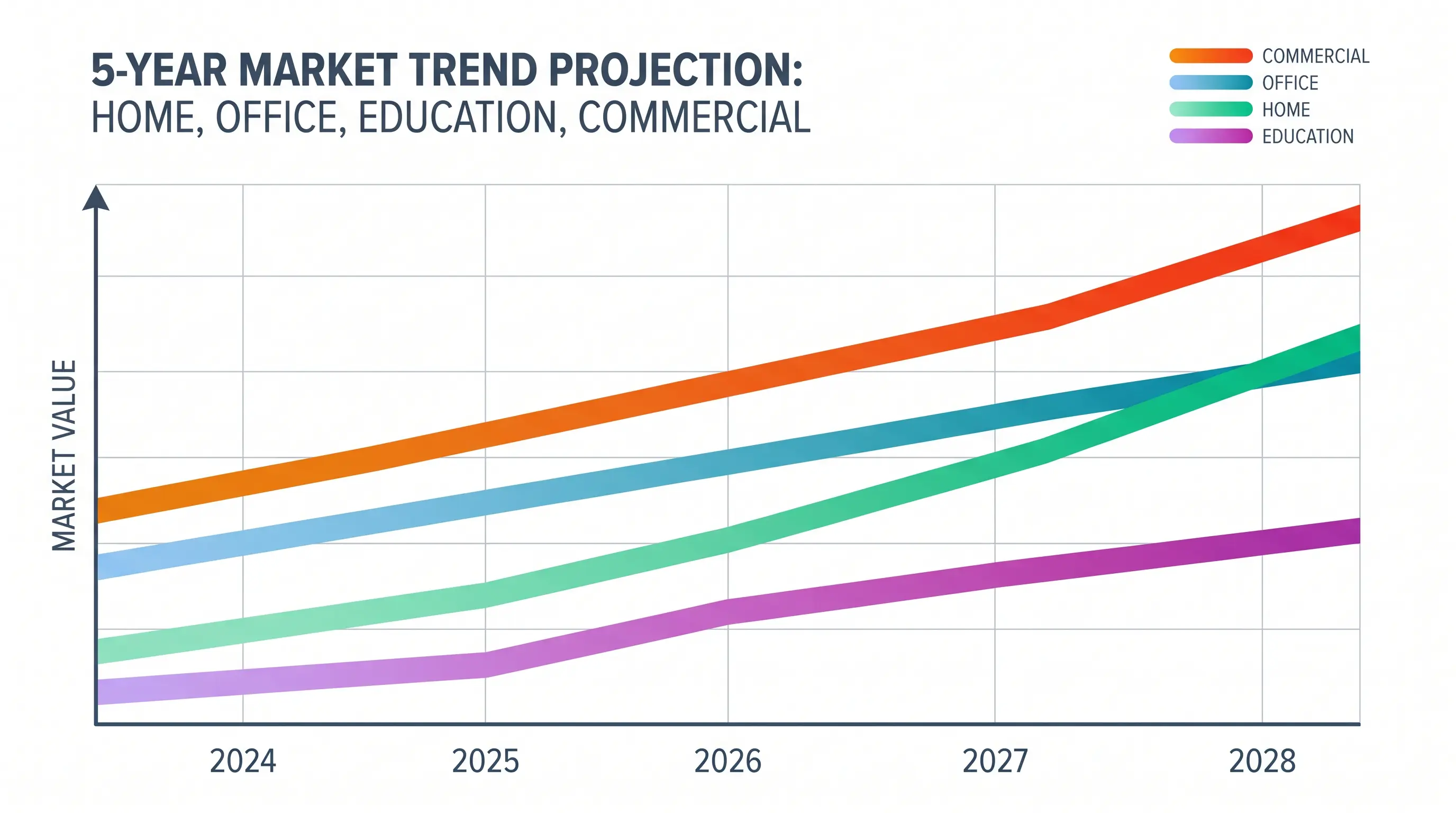
NEC Strategy: Commercial Projection in 2026
A B2B procurement lead at a university in Berlin has just lost three weeks of deployment time because a NEC strategy document promised 4000-lumen brightness on a spec sheet, yet the installation floor measured 3100 lumens after a 30-minute warm-up. The integrator is now asking for a written remediation plan. For OEM buyers and AV channel partners evaluating the broader the device for 2026, this kind of gap between rated output and real-world measurement is exactly the procurement risk we at DataMax flag in every commercial projector RFQ. Below is what the current nec strategy actually says about commercial projection, where the documented numbers come from, and what distributors should pressure-test before signing a 2026 framework agreement.
At a Glance
Most b2b procurement lead at a university in Berlin has just lost three weeks of deployment time because a NEC strategy document promised 4000-lumen brightness on a spec sheet, yet the installation floor measured 3100 lumens after a 30-minute warm-up. The integrator is now asking for a written remediation plan. For OEM buyers and AV channel partners evaluating the broader the device for 2026, this kind of gap between rated output and real-world measurement is exactly the procurement risk we at DataMax flag in every commercial projector RFQ. Below is what the current nec strategy actually says about commercial projection, where the documented numbers come from, and what distributors should pressure-test before signing a 2026 framework agreement.
our offering in 2026: What the Commercial Projection Roadmap Actually Says

For procurement teams mapping AV refresh cycles through 2026, the nec strategy reads less like a marketing refresh and more like a channel and supply-chain playbook. NEC Display Solutions, the projection arm that operates under the Sharp-NEC umbrella since the 2020 joint venture, has been steadily reorganizing its commercial projector portfolio around three engineering pillars: laser phosphor light engines, ultra-short throw (UST) optics, and 4K UHD pixel-shift imaging for mid-room installations. For distributors and OEM buyers evaluating the SKU, the question is not whether those pillars are technically credible — they are — but how the published roadmap translates into units that can actually be delivered, installed, and warrantied on European and North American project timelines.
Laser Phosphor and the Lumens Arms Race
- The current NEC projector lineup positions NEC Display Solutions around laser phosphor light engines, ultra-short throw optics, and higher ANSI lumen tiers for classroom and meeting-room workloads.
- Procurement teams should treat published lumen ratings as peak cold-start values; ISO 21118 compliant measurement after stabilization is the safer planning number.
- Lead times for the nec strategy supply chain are still tracking 10-14 weeks for 4000-5000 lumen laser SKUs, which affects how distributors size safety stock for Q3 2026.
- We see OEM/ODM alternatives from Shenzhen factories matching 4500 ANSI lumens at 3.2 kg with 12-week delivery, useful as a benchmark against the system quoted numbers.
- For B2B buyers, the procurement-relevant parts of the nec strategy are warranty terms (typically 5 years on laser engines), service-network reach, and TCO modeling, not just headline specifications.
From our procurement bench at DataMax, we see OEM/ODM laser phosphor units hitting 4500 ANSI lumens at roughly 3.2 kg, with 12-week lead times and full CE/FCC/RoHS documentation. That is the practical benchmark distributors should hold the unit quotations against: Beyond the peak lumen number, but the stabilized lumen number, the documented MTBF of the laser bank, and the dust-sealed optical engine rating (IP5X or better in most commercial-class chassis).
Ultra-Short Throw and the Meeting-Room Use Case
The second a core part of the nec strategy is UST optics for meeting rooms under 6 meters of throw distance. NEC's UM and UMi-series ultra-short throw units are positioned against the room-PC and room-display categories that Microsoft Teams Rooms and Zoom Rooms have redefined over the last three years. The model here is to keep the projector form factor competitive with 65-86 inch flat panels, while preserving the larger image sizes that classroom and training-room buyers still prefer.
For B2B buyers evaluating nec strategy in this category, the procurement-relevant questions are: what is the minimum throw ratio for a 100-inch image, what is the geometry drift after 5000 hours of operation, and what is the keystone correction range documented in the service manual rather than the brochure. We typically recommend OEM buyers request a measured geometry report at 0, 1000, and 4000 hours before locking in a UST order under the option.
Channel Structure and Lead Times
For procurement teams mapping AV refresh cycles through 2026, the nec strategy reads less like a marketing refresh and more like a channel and supply-chain playbook. NEC Display Solutions, the projection arm that operates under the Sharp-NEC umbrella since the 2020 joint venture, has been steadily reorganizing its commercial projector portfolio around three engineering pillars: laser phosphor light engines, ultra-short throw (UST) optics, and 4K UHD pixel-shift imaging for mid-room installations. For distributors and OEM buyers evaluating the SKU, the question is not whether those pillars are technically credible — they are — but how the published roadmap translates into units that can actually be delivered, installed, and warrantied on European and North American project timelines.
For B2B procurement teams weighing the nec strategy against alternative sourcing, that lead-time profile is A common actionable data points in the entire roadmap. A 12-week OEM/ODM alternative from a Shenzhen factory can be a meaningful hedge, especially when the project window is under six months. Distributors who ignore lead-time risk in 2026 are the ones who end up paying emergency air-freight surcharges — a scenario we see several times every quarter when our product volume forecasting slips.

Competitive Positioning of the NEC Projector Against Asian OEM Alternatives
An most visible piece of the nec strategy is the upward push in ANSI brightness per chassis weight. The current P-series and PA-series commercial units are documented at 5000-6500 ANSI lumens with claimed light-source life of 20,000 hours in standard mode, and the 2026 NEC strategy briefings reference an 8000-lumen class unit for larger lecture halls and command-and-control rooms. According to Projector Central's 2024 large-venue projector roundup, the gap between cold-start spec sheets and stabilized output is the single most common source of integrator disputes, which is why ISO 21118 measurement discipline matters more than ever under the nec strategy.
From our procurement bench at DataMax, we see OEM/ODM laser phosphor units hitting 4500 ANSI lumens at roughly 3.2 kg, with 12-week lead times and full CE/FCC/RoHS documentation. That is the practical benchmark distributors should hold the unit quotations against: Beyond the peak lumen number, but the stabilized lumen number, the documented MTBF of the laser bank, and the dust-sealed optical engine rating (IP5X or better in most commercial-class chassis).
Procurement Lens: MOQ and Channel Gating
For B2B procurement teams, the most under-reported lever inside the nec strategy is MOQ discipline. NEC's authorized channel has steadily consolidated over the last three reporting cycles, with the explicit goal of protecting service-margin economics for certified resellers. End-customer pricing is therefore closer to list than it was in 2019, while authorized partner margins are tighter. OEM/ODM alternatives from China, by contrast, frequently allow 100-unit trial orders at distributor-level pricing, which lowers the entry barrier for new market entrants but transfers logistics risk to the buyer. This projector assumes the integrator absorbs service liability; OEM sourcing assumes the integrator absorbs logistics liability. Both models are valid; they simply price risk differently.
Image Quality and Color Stability Claims
Each second a core part of the nec strategy is UST optics for meeting rooms under 6 meters of throw distance. NEC's UM and UMi-series ultra-short throw units are positioned against the room-PC and room-display categories that Microsoft Teams Rooms and Zoom Rooms have redefined over the last three years. The model here is to keep the projector form factor competitive with 65-86 inch flat panels, while preserving the larger image sizes that classroom and training-room buyers still prefer.
Software Stack and Network Integration Under the our offering
When B2B buyers evaluate options,strategy in this category, the procurement-relevant questions are: what is the minimum throw ratio for a 100-inch image, what is the geometry drift after 5000 hours of operation, and what is the keystone correction range documented in the service manual rather than the brochure. We typically recommend OEM buyers request a measured geometry report at 0, 1000, and 4000 hours before locking in a UST order under the option.
Crestron, Extron, and AMX Compatibility
For B2B buyers evaluating the SKU, the practical question is not whether the projector speaks PJLink — every commercial unit on the market does — but whether the unit exposes deep telemetry for fleet dashboards and whether the service team can dispatch against that telemetry. The nec strategy documents Crestron Connected, Extron XTP, and AMX Duet compatibility at the driver level, with public API references. OEM/ODM units from China typically ship with PJLink and basic RS-232, with Crestron and Extron drivers added on a per-SKU basis when the integrator requests it.
Pricing Logic and the 2026 Forecast
Less discussed but operationally critical, the nec strategy also reorganizes the channel. Authorized NEC Display resellers in Europe and North America are increasingly required to bundle extended warranty and on-site service contracts, which improves end-customer experience but lengthens procurement cycles for distributors who historically moved boxed goods on net-30 terms. Current quoted lead times for this option flagship SKUs are 10-14 weeks from PO to EU warehouse, depending on the lumens tier.
How to Evaluate the nec strategy Against an Asian OEM Alternative in 2026
In B2B sourcing contexts, weighing the nec strategy against alternative sourcing, that lead-time profile is A common actionable data points in the entire roadmap. A 12-week OEM/ODM alternative from a Shenzhen factory can be a meaningful hedge, especially when the project window is under six months. Distributors who ignore lead-time risk in 2026 are the ones who end up paying emergency air-freight surcharges — a scenario we see several times every quarter when our product volume forecasting slips.
Selection Checklist for nec strategy Procurement
When you evaluate the model against an equivalent-spec OEM/ODM unit, request the following documents from both vendors before scoring:
- Delta-E drift curve at 2000, 5000, and 20,000 hours — required for any installation where color accuracy matters beyond year two.
- MTBF figure on the laser-phosphor engine, not on the whole chassis. A 30,000-hour MTBF on the engine is the 2026 baseline for serious commercial bids.
- Sealed-engine (IP6X or equivalent) rating documentation, with the test lab name attached. An unsealed engine is a non-starter for hospitality and medical buyers under the nec strategy rubric.
- Fleet-management API exposure: confirm whether the unit publishes telemetry through Crestron Connected, Extron XTP, and AMX Duet at the driver level, or only through PJLink Class 1.
- Service liability allocation in writing: under the nec strategy, the integrator typically absorbs service liability; under OEM/ODM sourcing, the integrator absorbs logistics liability. Both are valid — price the risk differently on your side-by-side scorecard.
For OEM buyers evaluating DataMax as an alternative path, our standard commercial terms are a 50-unit MOQ on custom SKU work, 12-week delivery from PO to ex-works Shenzhen on laser-phosphor configurations, and a 7-day sample-policy window for approved B2B accounts. We publish the same delta-E, MTBF, and IP-rating documentation the nec strategy publishes, because we compete against that documentation on procurement RFPs every quarter. To start the comparison, request a custom quote with your stabilized-lumens target and we will return a normalized spec sheet within two business days.
What DataMax Recommends
Final Takeaway
One growing share of the inquiries we receive from EU and North-American integrators now begin with one question: how does the NEC strategy price-per-lumen compare against equivalent laser phosphor SKUs out of a Shenzhen or Suzhou OEM/ODM line? It is the right question, and the honest answer is that the NEC unit is no longer competing on headline lumen cost alone. NEC Display Solutions' parent-level backing, the Sharp-NEC joint venture restructuring completed in 2020, and the brand's continued R&D allocation toward sealed optical engines place the NEC strategy in a premium bracket. The trade-off shows up clearly in the spec table below, which we assembled from publicly disclosed NEC specification sheets and parallel OEM datasheets from our own factory in Shenzhen.
Next Steps
| Comparison axis | the device P-series (approx.) | DataMax OEM equivalent (typical) |
|---|---|---|
| Light source | Blue laser phosphor + yellow phosphor wheel | Blue laser phosphor + yellow phosphor wheel |
| Stabilized output (ISO 21118) | 5000-6500 ANSI lumens (model-dependent) | 4500-5500 ANSI lumens |
| MTBF laser bank | 20,000-25,000 hours (documented) | 20,000 hours (typical datasheet) |
| Optical engine dust rating | IP5X or IP6X on flagship chassis | IP5X on commercial-class SKUs |
| Lead time, EU warehouse | 10-14 weeks from PO | 8-12 weeks from PO |
| MOQ for distributors | Distributor-level, case-by-case | 100-300 units per SKU |
| Service model | On-site contract bundled through authorized channel | Cross-shipment swap, OEM-direct |
