
Posted At: Jun 10, 2026 - 11 Views
Optical Engine Design & Cost: A B2B Technical Guide
The optical engine is the heart of any projector, integrating the DMD chip, lens system, prism, and light source into the assembly that produces the image. For B2B buyers, understanding optical engine design and cost is essential to evaluating OEM partners, optimizing BOM, and ensuring image quality. This technical guide explains the components, design considerations, and cost structure of projector optical engines.
What an Optical Engine Does
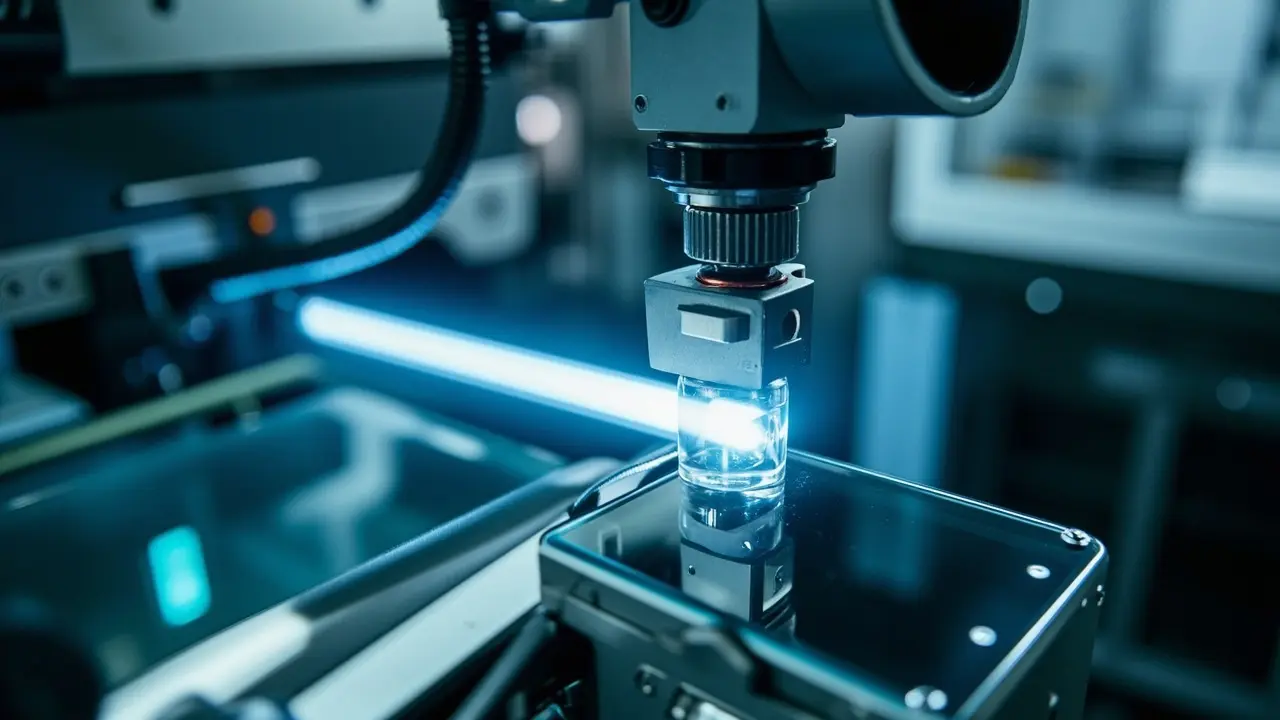
The optical engine takes light from the light source, modulates it with the imaging chip (DMD, LCD, or LCoS), and projects it through the lens onto the screen. Five sub-systems work together:
- Light source (LED, laser, or lamp)
- Illumination optics (beam shaping, homogenization)
- Color management (color wheel or RGB recombination)
- Imaging chip (DMD, LCD, or LCoS)
- Projection lens (focuses modulated light onto screen)
DMD Chip Selection

On the high-brightness side, the GP98 12400 Lumens Smart Projector for Meeting Rooms is our flagship reference platform for ODM partners—laser-phosphor light source with a sealed optical block.
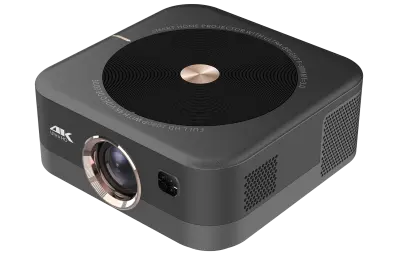
Distributors evaluating the B2B projector market can reference our GP94C Android Smart Projector for Home Theater—a production-validated platform covering Android 9 · 500 ANSI · Built-in Speakers, suitable as an OEM/ODM starting point.
The Digital Micromirror Device (DMD) is the dominant imaging chip in consumer projectors. Made exclusively by Texas Instruments, DMD chips vary by:
| DMD Size | Native Resolution | Pixel Pitch | Typical Application |
|---|---|---|---|
| 0.23" | 960×540 (qHD) or 1920×1080 via XPR | 5.4 µm | Pocket / entry mini |
| 0.33" | 1920×1080 (1080p native) | 7.6 µm | Mid-tier portable |
| 0.47" | 1920×1080 (1080p native or 4K XPR) | 5.4 µm (XPR) / 7.6 µm (native) | Mainstream consumer |
| 0.66" | 1920×1200 (WUXGA) | 13.6 µm | Commercial / premium home |
| 1.38" | 3840×2160 (4K native) | 7.9 µm | Premium home theater |
- 0.23" 1080p XPR: $5–$15
- 0.33" 1080p: $12–$25
- 0.47" 1080p: $15–$30
- 0.47" 4K XPR: $25–$60
- 0.66" WUXGA: $40–$80
- 1.38" 4K: $150–$300
Projection Lens
The projection lens determines throw ratio, image quality, and BOM cost:
Standard Throw Lens (1.2:1 – 1.5:1)
- Multi-element glass design (6–8 elements)
- Aspherical elements for distortion correction
- Manual or motorized zoom
- Cost: $5–$15 per unit in volume
Short Throw Lens (0.4:1 – 0.8:1)
- More complex (8–10 elements)
- Larger front element
- Tighter tolerances
- Cost: $25–$60 per unit in volume
Ultra-Short Throw (UST) Lens (< 0.4:1)
- Freeform or large aspheric elements
- 10+ elements with precision alignment
- Specialty optical houses (Young Optics, Coretronic, Appotronics)
- Cost: $60–$150 per unit in volume
Light Source Integration
The light source couples into the optical engine via:
LED Coupling
- Single white LED + reflector
- RGB LED (3 separate LEDs, no color wheel)
- Coupling lens or light pipe
- Heat dissipation via heat sink
Laser Coupling
- Blue laser + phosphor wheel (laser phosphor)
- RGB laser (3 separate lasers)
- Beam homogenization via integrator rod or fly-eye lens
- Speckle reduction (for RGB laser)
Lamp Coupling
- UHP lamp + reflector
- Elliptical reflector for efficient coupling
- UV/IR filtering
- Cooling via dedicated fan
- BOM cost (LED cheapest, RGB laser most expensive)
- Lifespan (lamp shortest, laser longest)
- Color gamut (RGB best, white LED worst)
- Brightness ceiling (lamp highest at low cost)
Color Management
Three approaches to color in projectors:
Color Wheel (Single DMD)
- Spinning wheel with red, green, blue, white (or other) segments
- Sequential color display
- "Rainbow effect" possible on some viewers
- Lowest cost
3-Chip DLP
- Three DMD chips, one per primary color
- Dichroic prism splits white light into RGB
- No rainbow effect
- Higher cost (3× DMD chips)
3-LCD
- Three LCD panels, one per primary color
- Dichroic mirrors split light
- No rainbow effect
- Lower cost than 3-chip DLP
Optical Engine Subassembly Cost
Total optical engine cost (1,000-unit volume, USD):
| Component | Cost Range | % of Engine |
|---|---|---|
| DMD chip | $15–$60 | 20–35% |
| Projection lens | $10–$80 | 12–25% |
| Prism (for 3-chip) | $8–$30 (if used) | 5–15% |
| Color wheel (if used) | $3–$12 | 3–6% |
| LED/Laser module | $15–$120 | 15–30% |
| Heat sink + cooling | $3–$10 | 3–6% |
| Housing + assembly | $5–$15 | 5–10% |
| Calibration + testing | $3–$8 | 3–6% |
| Total optical engine | $60–$300 | 100% |
For a premium 4K laser UST, optical engine is $250–$500 in volume.
OEM Design Trade-offs
Common design trade-offs OEM buyers face:
| Decision | Trade-off |
|---|---|
| DMD size | Larger = better image quality, higher cost |
| Throw ratio | Shorter = more flexible placement, higher cost |
| Light source | Brighter = better daylight performance, higher cost |
| Color wheel vs 3-chip | 3-chip = no rainbow, higher cost |
| Zoom lens vs fixed | Zoom = installation flexibility, higher cost |
Calibration and Alignment
Optical engine assembly requires precision alignment:
Required Calibrations
- DMD position (X, Y, Z, rotation)
- Lens centering
- Focus uniformity across image
- Color balance (white point)
- Convergence (for 3-chip designs)
Calibration Equipment
- 6-axis alignment stations
- Integrating sphere for lumen measurement
- Spectroradiometer for color measurement
- Resolution chart for focus check
- High-speed camera for shake/vibration check
Calibration Time
- Standard throw: 5–10 minutes per unit
- Short throw: 15–20 minutes per unit
- UST: 30–60 minutes per unit
Common Optical Engine Failures
Five modes of failure:
- Dust on DMD — particles on DMD surface visible on screen
- Lens misalignment — focus not uniform, image distorted
- Color wheel malfunction — image flickering, color shift
- Light source degradation — brightness drops over time
- Thermal failure — engine overheats, image degrades
The Clean Room Requirement
Optical engine assembly requires clean room environment:
- Class 10,000 (ISO 7) minimum for DMD area
- Class 1,000 (ISO 6) preferred for DMD loading
- Temperature: 20–24°C
- Humidity: 40–60% RH
- Static control (ESD) measures
OEM Sourcing Checklist
When sourcing optical engines, verify:
- ✅ In-house optical design capability
- ✅ In-house assembly capability (or specialized supplier)
- ✅ Clean room facilities
- ✅ Calibration equipment (integrating sphere, spectroradiometer)
- ✅ Experienced optical engineers on staff
- ✅ Reference products in market
- ✅ Quality testing per unit (not just sample)
- ✅ ISO 9001 certification
What We Recommend for Optical Engine OEM
- Use mainstream DMD chips (0.33" or 0.47" 1080p) for the best BOM/performance balance
- Standard throw lens unless short throw or UST is required
- LED or laser phosphor for mainstream consumer
- Color wheel acceptable for consumer (rainbow effect is rare in modern designs)
- Specify clean room assembly in your RFQ
- Verify per-unit calibration in the QC process
Conclusion
Optical engine design and cost is the most complex aspect of projector manufacturing. OEM buyers should understand DMD selection, lens design, light source integration, and the cost structure to make informed sourcing decisions. Partner factories with in-house optical capability and proper clean room facilities are essential.
💼 Need optical engine OEM service?
Request a Free Quote | View Product Catalog
We design and assemble optical engines in-house with Class 10,000 clean room facilities. Engineering team will recommend the right optical configuration for your target price and use case within 24 hours.
