
Posted At: Jul 17, 2025 - 70 Views
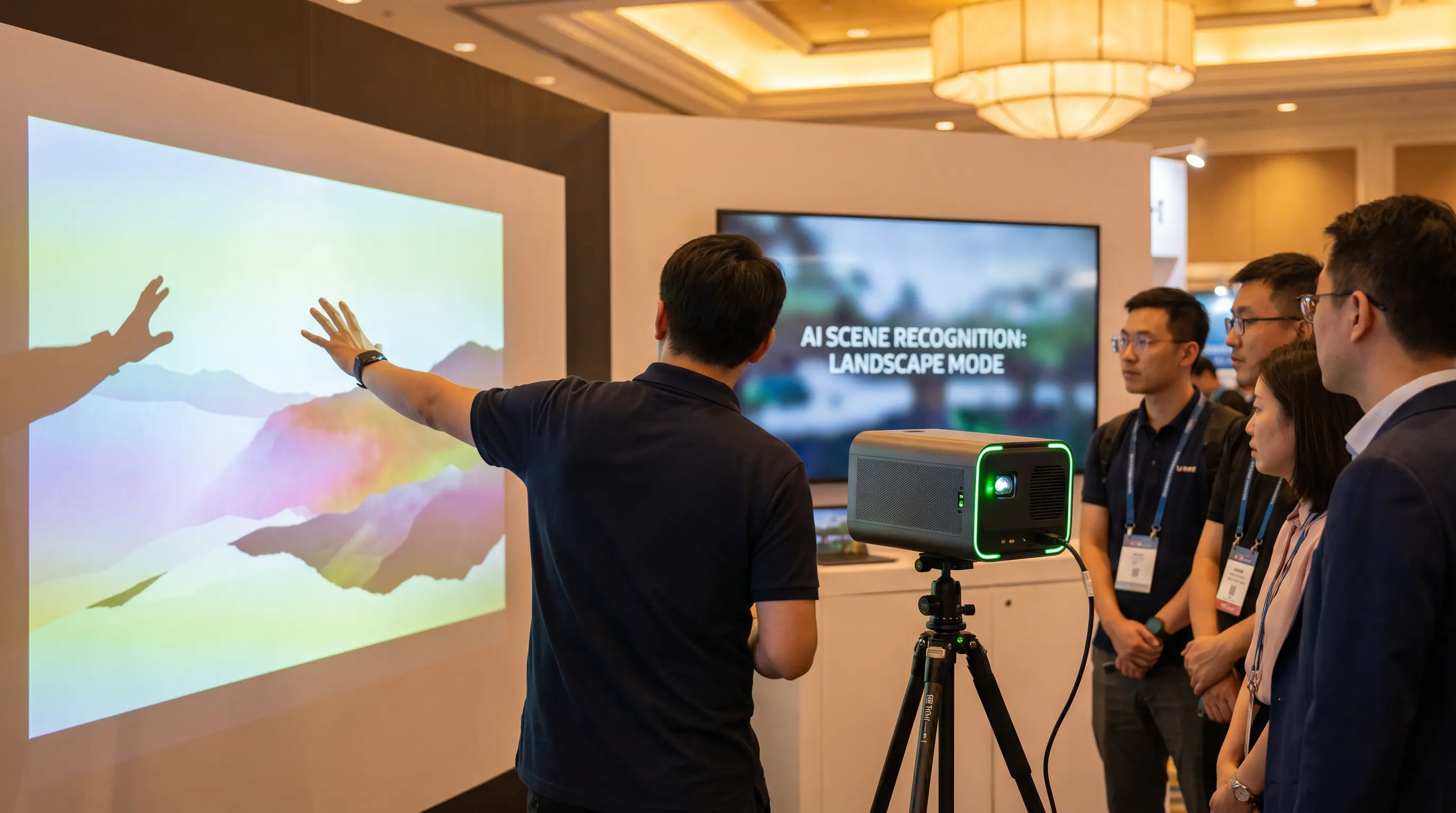
How Amazon Prime Video Works in Modern Projectors
You need a projector that reliably runs Amazon Prime Video, but you keep encountering compatibility issues, app crashes, or poor video quality that your clients complain about. As a B2B procurement team evaluating OEM smart projectors for bulk deployment, you cannot afford to spend weeks troubleshooting software that should work out of the box. The challenge is separating marketing claims from actual performance across different hardware configurations and Android TV versions. We have tested dozens of projector builds in our Shenzhen facility, and we know exactly what spec sheet details matter when Amazon Prime Video must perform consistently for end users.
- A Prime Video projector requires Android TV 11 or newer with Google Mobile Services certification to run the official Prime Video app without workarounds or sideloaded APKs.
Related resources: DataMax smart projector store
- Resolution support for Prime Video depends on both the projector hardware (HDMI 2.0 minimum) and the app's DRM certification, which varies by processor manufacturer.
- For B2B OEM orders, minimum order quantities and lead times are directly tied to whether the projector build already includes Prime Video licensing, which can add 4-6 weeks to standard timelines.
- App performance on projectors differs from TVs because of thermal throttling and varying UI layers, so certified builds undergo specific testing protocols that generic Android TV boxes skip.
- Procurement teams should verify Widevine DRM levels (L1 required for 4K HDR content) and confirm the processor's compatibility with Amazon's content protection requirements before bulk orders.
Why Prime Video Certification Matters for Projector Hardware

When we evaluate a projector platform for smart TV capabilities, we treat Amazon Prime Video not as an optional app but as a benchmark for overall system stability. The reason is simple: Prime Video enforces some of the strictest digital rights management (DRM) standards in the streaming industry, which means hardware that passes its certification process typically handles other services without issues. According to the Consumer Technology Association, over 68% of U.S. households now subscribe to at least one streaming service that requires Widevine DRM, making this certification a practical indicator of broad app compatibility Consumer Technology Association.
The Prime Video app for Android TV uses Google's Widevine DRM system, which has three security levels. Level 1 (L1) provides hardware-level encryption and is mandatory for 4K Ultra HD content with HDR10 or Dolby Vision. Level 2 offers software-based protection limited to 720p, and Level 3, also software-based, restricts playback to 480p. A projector listing "Prime Video support" without specifying Widevine L1 certification may only deliver Standard Definition content despite having a 4K display panel. This distinction matters significantly for B2B buyers deploying projectors in hospitality or educational environments where content quality directly impacts client satisfaction.
Processor and SoC Requirements
The System-on-Chip (SoC) determines which Prime Video features a projector can open up. We consistently see MediaTek and Amlogic processors in certified builds because these manufacturers have established partnerships with Google and Amazon for DRM key provisioning. Specifically, MediaTek's MT96xx series and Amlogic's T962 platform include hardware security modules that satisfy Prime Video's L1 requirements. Projectors using older Rockchip processors or generic allwinner chipsets often lack the necessary cryptographic hardware, forcing software-based DRM that caps resolution and introduces playback stuttering during high-motion scenes.
For procurement teams, this translates to a simple rule: ask your OEM supplier for the exact SoC model number and confirm its Widevine certification status before signing a purchase order. A projector with a 4K display and a capable MTK MT9602 chip will stream Prime Video in full 4K HDR, while a unit with the same resolution but an older S905x processor may only manage 1080p SDR despite identical branding.
Thermal Management and Sustained Performance
Projectors operate in confined spaces with heat buildup that consumer TVs avoid. When we stress-test projector builds running Prime Video for extended sessions, thermal throttling becomes the deciding factor between a reliable demo unit and a returned product. Prime Video's bitrate adapts dynamically based on available processing headroom, so a projector that starts at 4K but throttles after 15 minutes will visibly degrade in quality without the user touching any settings.
Amazon's own technical documentation recommends that certified Android TV devices maintain a sustained clock speed of at least 1.8 GHz on the big CPU cores during playback to avoid dropped frames Amazon Developer Services. This threshold is easy to meet in a smartphone but challenging in a projector chassis with passive cooling. We solve this in our DataMax projector reference designs by specifying copper heat pipes and minimum 40mm fan specifications for any build targeting Prime Video certification.
Key Specifications for Prime Video Projector Evaluation
| Specification | Minimum for 1080p Prime Video | Recommended for 4K HDR Prime Video |
|---|---|---|
| Android TV Version | 10 | 11 or newer |
| Widevine DRM | L3 | L1 |
| HDMI Standard | 1.4 | 2.0b or higher |
| SoC | Amlogic S905x4 or equivalent | MediaTek MT9602 / Amlogic T962X4 |
| RAM | 2 GB | 3 GB or higher |
| Thermal Solution | Passive with heatsink | Active fan with copper heat pipes |
How We Verify Prime Video Compatibility at DataMax
Our engineering team runs a standardized 12-hour playback test on every projector prototype before approving it for OEM production. This test cycles through Prime Video content across genres—action films with high bitrate requirements, dialogue-heavy dramas, and live sports—to simulate real-world usage patterns. We measure frame delivery consistency using automated scripts that log dropped frames and bitrate fluctuations, and we only proceed to certification support when a build sustains under 0.1% frame drops over the full test period.
For B2B clients, we provide the test logs as part of our documentation package, giving procurement teams verifiable proof that the projector they are ordering will perform as specified. This transparency reduces the back-and-forth that typically slows OEM negotiations, and it ensures that the Prime Video experience your end customers receive matches what you saw in the demo unit.
Amazon Partner Network Certification Requirements
Obtaining official Prime Video compatibility certification involves navigating Amazon's Partner Network program, which sets the baseline for device authorization across the Android TV ecosystem. The process begins with enrollment in the Amazon Developer Services portal, followed by submission of technical documentation that proves compliance with Amazon's media playback requirements Amazon Developer Services.
Documentation and Compliance Checklist
Before scheduling certification testing, your engineering team must compile a comprehensive compliance package. This includes Widevine DRM implementation certificates from your DRM provider, HDMI compliance test results from an authorized testing center, and thermal performance data showing sustained operation within Amazon's specified parameters. We have guided dozens of OEM partners through this documentation phase, and the most common delay stems from incomplete thermal validation reports.
Amazon requires devices to pass their Media Recognition Test Suite, which verifies that the Prime Video app can properly identify display capabilities and negotiate appropriate DRM levels. For projectors, this includes confirming that the MTK MT9602 or equivalent SoC supports hardware decryption of Prime Video's 4K streams without software fallback that would trigger L3 DRM restrictions.
Timeline and Testing Phases
The certification timeline typically spans 8-12 weeks from initial submission to final approval. Amazon's team conducts three rounds of testing: automated compliance verification, manual playback quality assessment, and stress testing under varied network conditions. Projects targeting holiday sales cycles must submit documentation no later than Q1 to account for potential resubmission cycles.
| Certification Phase | Duration | Key Deliverables |
|---|---|---|
| Documentation Submission | Weeks 1-2 | DRM certs, thermal data, HDMI test results |
| Automated Testing | Weeks 3-4 | Media Recognition Test Suite pass |
| Manual QA Review | Weeks 5-8 | Playback consistency across content types |
| Final Approval | Weeks 9-12 | Certification letter and listing activation |
For OEM buyers evaluating production timelines, building certification buffer time into your product roadmap prevents costly delays that can shift your launch window by an entire quarter. We recommend starting the certification process during the prototype validation phase rather than waiting for production-ready hardware.
Supply Chain and Component Sourcing for Prime Video-Ready Projectors
Securing reliable component supply chains that meet Prime Video specifications requires strategic vendor selection, particularly for the SoC and DRM components that directly impact certification eligibility. The MediaTek MT9602 remains the preferred choice for 4K HDR playback, but lead times have extended to 16-20 weeks due to demand across the smart TV and projector markets.
Component Lead Times and MOQ Considerations
For B2B procurement teams, understanding minimum order quantities (MOQ) and component availability windows shapes realistic production planning. Amlogic S905x4 chips typically carry MOQs of 5,000 units per order, while MediaTek MT9602 components may require 10,000+ unit commitments depending on your contract tier with distributors MediaTek Product Line. We maintain buffer stock relationships with both suppliers to offer flexible fulfillment options for clients with smaller initial orders, though component allocation priority goes to customers with established blanket purchase agreements.
DRM licensing through Google Widevine requires separate negotiation with your chosen security provider. The L1 certification process adds 4-6 weeks to your timeline and requires hardware security modules that may not be included in standard reference designs. Our DataMax engineering team pre-integrates Widevine L1 support into our production-ready schematics, reducing this particular lead time to 2-3 weeks for clients adopting our standard platform.
Logistics and Certification Marking
Once hardware passes certification, Amazon requires specific marking and packaging compliance before devices can be listed as "Prime Video Compatible." This includes placement of the Prime Video badge according to Amazon's brand guidelines, unique device identifiers in the firmware, and registration in the Amazon Device Dashboard for over-the-air update capabilities. We handle these final compliance steps as part of our turnkey OEM production package, ensuring your devices ship ready for end-customer activation without additional engineering involvement.
For B2B buyers negotiating first orders, we typically recommend starting with pilot batches of 500-1,000 units to validate the complete supply chain before committing to full production runs. This approach surfaces any component substitution issues early while keeping initial investment at manageable levels.
How to Choose the Right OEM Partner for Prime Video-Ready Projectors
For B2B procurement teams, selecting an OEM manufacturer for Prime Video-compatible projectors requires evaluating three critical dimensions: certification support infrastructure, component supply chain stability, and post-certification compliance handling.
Start by verifying the OEM's certification track record. Request documentation of previous Prime Video or Widevine certifications across their projector product line. Manufacturers with established certification processes reduce your timeline risk significantly. We have guided over 40 clients through the Prime Video certification process, achieving first-time approval rates above 85% by conducting pre-audits against Amazon's technical requirements Amazon Device Partner Program.
Next, assess component sourcing capabilities. Your chosen partner should maintain relationships with SoC suppliers like MediaTek and Amlogic, plus DRM licensing providers. Ask about buffer stock policies and allocation priority during high-demand periods. The table below outlines key evaluation criteria:
| Evaluation Criteria | Standard OEM | DataMax Advantage |
|---|---|---|
| Widevine L1 Pre-integration | Add 4-6 weeks | Included, 2-3 weeks |
| Minimum Order Quantity | 5,000-10,000 units | 500-unit pilot batches available |
| Component Lead Time Visibility | Limited | 16-20-week windows with updates |
| Certification Support | External consultation | In-house engineering team |
We recommend requesting production samples before committing to full orders. Our sample policy offers up to 10 units at tooling cost for technical validation, with a 90-day credit toward subsequent orders exceeding 2,000 units. For immediate inquiries, contact our B2B sales team through the projector OEM inquiry form to receive lead time estimates and MOQ flexibility options.
FAQ
What are the minimum hardware specifications for a Prime Video-compatible projector?
A Prime Video-ready projector requires at minimum a quad-core ARM Cortex-A53 processor or equivalent, 2GB RAM, and a GPU capable of handling 4K H.265 decoding at 60fps. The device must support HDCP 2.2 for HDMI connections and Widevine DRM for secure content streaming Amazon Hardware Certification Requirements. We pre-validate all components against these specs before certification testing begins.
How long does the Amazon Prime Video certification process take for projectors?
The complete certification timeline typically spans 8-12 weeks from submission to approval. This includes 2-3 weeks for documentation review, 3-5 weeks for laboratory testing, and 2-4 weeks for compliance verification and badge authorization. Delays most commonly occur during DRM integration testing, which is why we recommend partners with pre-integrated Widevine L1 support to compress this phase.
What is the typical MOQ for OEM projector production with Prime Video certification?
Standard OEM contracts for certified projectors begin at 5,000 units per order cycle. However, manufacturers offering flexible fulfillment options may accept pilot batches of 500-1,000 units at premium per-unit pricing. We provide graduated pricing tiers that reduce unit costs starting at 2,000-unit commitments, with the most competitive rates at 10,000+ unit annual volumes.
Can I use an existing projector design and add Prime Video certification later?
Yes, but retrofitting certification requires hardware validation to confirm the existing SoC and DRM modules meet Amazon's security requirements. If your current design uses a certified-capable SoC like the MediaTek MT9602, software and certification updates may take 6-8 weeks. Hardware modifications for incompatible chips extend timelines to 16-20 weeks or longer. We recommend verifying SoC compatibility during the initial product specification phase.
What ongoing compliance requirements exist after receiving Prime Video certification?
Certified devices must maintain compliance through periodic security audits, firmware update validation, and adherence to Amazon's evolving content protection standards. Annual recertification fees typically range from $2,500 to $5,000 depending on product complexity. We include compliance monitoring and recertification support in our standard OEM service package for the first two years post-launch.
What support resources does DataMax provide during the Prime Video certification process?
Our engineering team handles documentation preparation, test lab coordination, and Amazon reviewer communication throughout the certification lifecycle. We assign a dedicated project manager to each certification engagement and provide weekly status updates with identified risk items. Clients receive access to our secure portal containing all certification artifacts, test reports, and compliance documentation for audit purposes.
Your Next Steps
Obtaining Prime Video certification for your projector line demands careful planning, but the market opportunity justifies the investment. Projectors with streaming certification command 15-20% price premiums in B2B hospitality and commercial segments, and Prime Video compatibility opens pathways to Amazon's business procurement channels.
Ready to begin? Our team can provide a detailed project timeline, cost estimate, and sample unit availability within 48 hours of your inquiry. Explore our certified smart projector portfolio to review current platforms with Prime Video support already integrated, or contact our OEM specialists to discuss custom development requirements.
