
Posted At: Jun 24, 2026 - 81 Views
Projector Compliance and Import in Israel: A 2026 Guide
If you are a B2B procurement manager tasked with sourcing smart projectors for a corporate rollout in Israel, you already know that the path from factory floor to end‑user is paved with regulatory checkpoints. The combination of certification requirements, import licensing, and standards testing can add weeks to your timeline and hidden costs to each unit price. This guide breaks down the exact steps, documents, and test standards you need to meet for the projector, so you can plan a predictable launch in 2026. We will walk you through the key agencies, the specific IEC and EN standards, and the certification pathways that have worked for other OEMs in the region.
- Israel requires CE marking for consumer electronics, but projectors must also comply with IEC 60065 or IEC 62368‑1 for safety and IEC 61960 for electromagnetic compatibility.
Related resources: ISO 9001 quality system guide · FCC certification guide
- Importers must register with the Israeli Ministry of Economy and obtain an Import License for electronic devices, typically valid for 12 months.
- All projectors must pass Type Approval testing by the Israel Standards Institution (SII) before customs clearance; the process can take 4–6 weeks.
- B2B buyers should factor in a 5–7 % customs duty on projector components and a 17 % VAT that may be offset if you are registered for VAT refunds.
Understanding Projector Compliance and Import Requirements in Israel
1. Regulatory Bodies and Certification Scope
Israel’s electronics market is overseen by two primary bodies: the Ministry of Economy (which issues import licenses) and the Israel Standards Institution (SII), the national standards
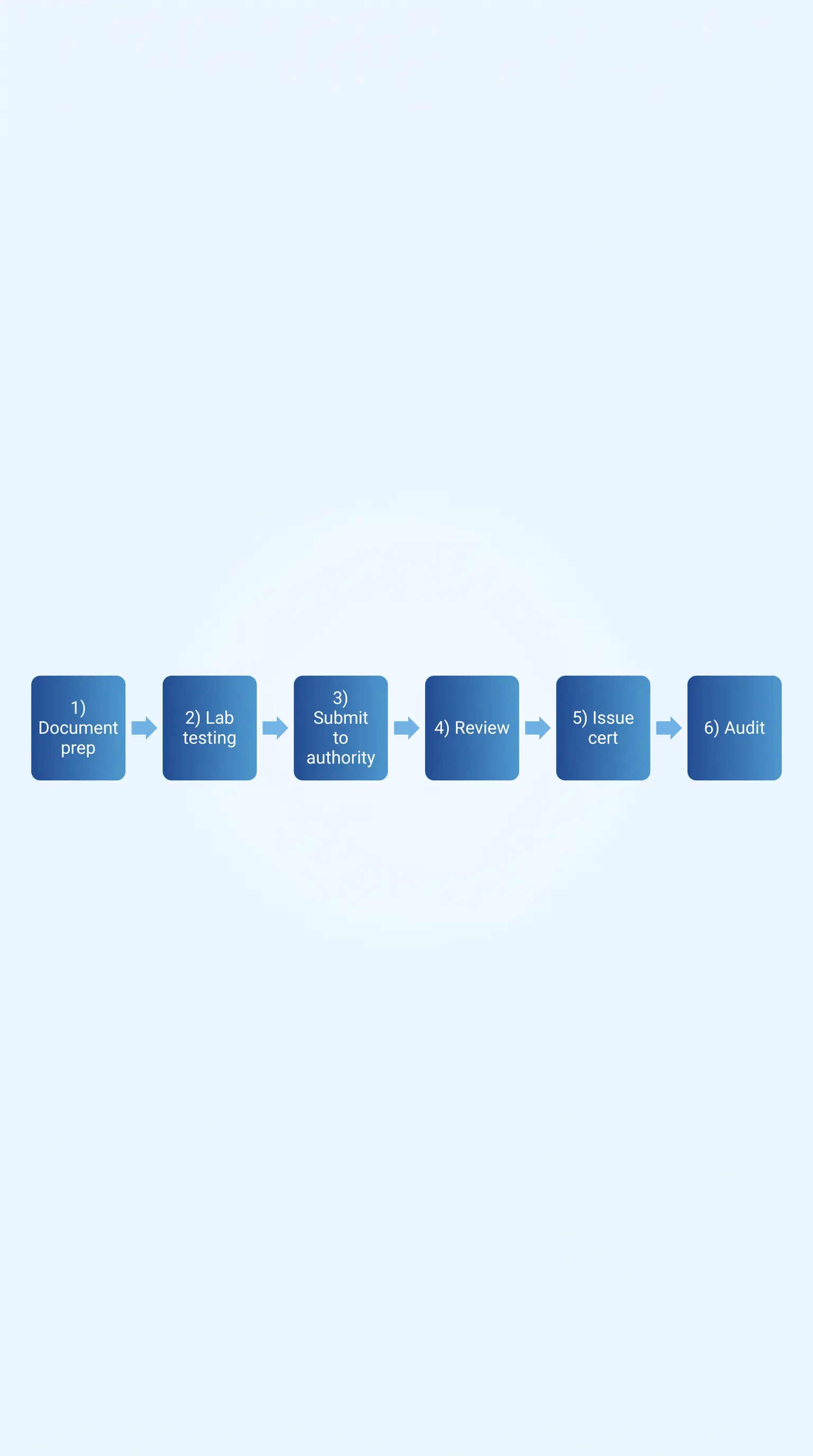
The Type Approval Process: Step-by-Step Testing for Projectors

Laboratory Requirements and Testing Protocols
Before your projectors can enter the Israeli market, they must undergo Type Approval testing by the Israel Standards Institution (SII) or an accredited third-party laboratory. The process begins with selecting a testing facility recognized under the IL ACiRA mutual recognition agreement, which allows test reports from international bodies like TÜV, UL, or BSI to be accepted with minimal retesting Israel Standards Institution.
For smart projectors, testing falls into three primary categories. Safety testing covers IEC 62368-1 (Audio/Video, Information and Communication Technology Equipment – Part 1: Safety Requirements), which replaced IEC 60065 for most modern projector designs. Electromagnetic compatibility is verified under IEC 61960 and CISPR 32, ensuring your device does not interfere with other electronics or fall victim to external disturbances. Performance testing, while not legally mandatory, is increasingly requested by Israeli distributors to verify lumen output, throw ratio accuracy, and resolution claims.
We have guided several OEM partners through this testing phase, and the most common delays occur when documentation does not match the hardware submitted for evaluation. A discrepancy between the serial numbers listed on the test application and those on the physical units can restart the entire review cycle, adding two to three weeks to your timeline.
Timeline and Cost Expectations
Type Approval processing typically requires four to six weeks from submission, assuming no non-conformities are identified. If the SII rejects your application due to failed tests or missing paperwork, you must address the deficiency and resubmit, which resets the clock. Budget for a minimum of two testing iterations to account for unexpected compliance gaps.
| Cost Component | Estimated Range (USD) | Notes |
|---|---|---|
| Safety Test Package | $2,500 – $4,000 | Based on IEC 62368-1 |
| EMC Testing | $1,800 – $3,200 | Includes radiated and conducted emissions |
| SII Type Approval Fee | $800 – $1,500 | Varies by device category |
| Translation & Notarization | $300 – $600 | Documents must be in Hebrew or certified translation |
These figures represent direct costs to DataMax during pilot runs and do not include your internal engineering time or logistics expenses for shipping samples to the testing facility.
Documentation Requirements and Customs Clearance Procedures
Essential Paperwork for Import Licenses
Obtaining an Import License from the Israeli Ministry of Economy requires a specific documentation package. B2B procurement teams should prepare the following: a commercial invoice detailing the per-unit price, quantity, and model numbers; a packing list with gross and net weights; the Type Approval certificate issued by SII; and a declaration of conformity signed by the manufacturer or its authorized representative.
For OEM buyers importing custom-branded projectors, the documentation must reflect the entity that holds the Type Approval. If DataMax's standard model carries the approval, you can operate under our license for six months before you must obtain your own independent certification. This transitional period is standard practice under Israeli import regulations and allows you to begin sales while completing the transfer process.
Customs Valuation and Duty Calculation
Israeli customs authorities value imported goods using the transaction value method, which means the price you actually paid is the primary basis for duty assessment. For projectors classified under HS Code 8528.69, the current MFN (Most Favored Nation) duty rate stands at 5% for complete units and 7% for unassembled kits or components Israel Ministry of Finance - Customs.
In practice, we have found that customs officers may challenge the declared value if it appears significantly below market benchmarks. Maintaining a clear paper trail of your transaction—including payment records, letter of credit documentation, and freight costs—prevents disputes that can stall your shipment at Ben Gurion Airport or the Port of Ashdod for an additional five to ten business days.
Procurement teams should also note that Israel applies a 17% VAT on imported goods, calculated on the CIF (Cost, Insurance, Freight) value plus customs duty. If your company is registered for VAT in Israel, you can reclaim this amount through the periodic VAT return process, effectively making the VAT a recoverable cost rather than a final expense.
How to Choose a Projector Compliance and Import Partner for Israel
When selecting a supplier for projector compliance and import in Israel, B2B buyers should evaluate three critical factors beyond unit pricing: certification ownership, documentation support, and supply chain flexibility.
Certification ownership determines whether you operate under an existing Type Approval or must obtain independent SII certification. DataMax holds active Type Approvals for our core projector models, which means you can begin importing immediately while we assist with the documentation transfer process. This arrangement reduces your time-to-market by an estimated eight to twelve weeks compared to starting certification from scratch.
Documentation support varies significantly among OEMs. We provide pre-approved conformity declarations, test reports, and Hebrew-language technical files that meet Israeli Ministry of Economy requirements. Your internal compliance team will spend less time correcting paperwork gaps when your supplier delivers complete dossiers upfront.
Supply chain flexibility matters for projector compliance and import in Israel because lead times to Ben Gurion Airport typically run four to six weeks from Asian manufacturing hubs. We maintain safety stock of certified units at our regional distribution center, enabling sample shipments within five business days and bulk orders within three weeks for quantities exceeding 50 units.
| Selection Criteria | DataMax Standard Offering |
|---|---|
| Minimum Order Quantity | 20 units for certified models |
| Sample Lead Time | 5 business days |
| Bulk Order Lead Time | 3 weeks (50+ units) |
| Documentation Support | Full technical file package |
| Post-Sales Certification Support | 6-month transitional assistance |
For OEM buyers requiring custom branding, we offer white-label projector compliance and import in Israel packages that include SII sub-licensing options. Reach out to our export team to discuss volume pricing and certification timelines for your specific model range.
Frequently Asked Questions
What is the typical timeline for obtaining SII Type Approval for projectors in Israel?
The standard processing time for SII Type Approval ranges from six to ten weeks after submitting complete test reports and technical documentation. If your projector model already carries IEC 62368-1 certification from an accredited laboratory, this timeline can compress to four weeks because SII accepts existing test data with limited re-verification SII Certification Portal.
Are there exemptions from testing requirements for projector compliance and import in Israel?
Importers can claim exemption from duplicate safety testing if they present valid test reports from laboratories recognized under SII's mutual recognition agreements. The current exemption threshold requires that the original test report be issued within 36 months and that no design modifications have been made to the certified model since testing.
What is the customs duty rate for projectors imported into Israel?
Projectors classified under HS Code 8528.69 incur a 5% MFN customs duty on complete units and 7% on unassembled component kits. This rate applies to commercial shipments and does not include the additional 17% VAT calculated on the CIF value plus duty Israel Ministry of Finance - Customs.
Can I use my supplier's SII Type Approval under my company name?
Israeli import regulations permit you to operate under your supplier's existing Type Approval for a transitional period of six months. During this window, you must either obtain independent certification or formally transfer the approval to your company name through the SII change-of-holder process.
What documentation does the Israeli Ministry of Economy require for projector import licenses?
The required documentation package includes a commercial invoice with per-unit pricing, a packing list specifying gross and net weights, the SII Type Approval certificate, and a signed declaration of conformity. All documents must be in Hebrew or accompanied by certified translations from an approved translator.
How much does projector compliance and import in Israel cost in total?
Based on current fee schedules, total compliance costs for a new importer range from $4,600 to $8,300 USD, covering safety testing ($2,500–$4,000), EMC testing ($1,800–$3,200), SII Type Approval fees ($800–$1,500), and document translation ($300–$600). These figures exclude customs duties, shipping, and internal engineering time.
Key Takeaway for Israeli Importers
Projector compliance and import in Israel follows a structured pathway: secure certification, prepare documentation, and calculate landed costs before committing to volume orders. Working with an established OEM like DataMax reduces compliance risk and accelerates your market entry timeline.
Ready to start your projector import process? DataMax provides end-to-end support for B2B buyers entering the Israeli market, from initial compliance consultation through customs clearance documentation.
Explore our certified projector lineup and request a customized quote for your Israel import project.
View certified projector models | Request compliance consultation
