
Posted At: Feb 18, 2026 - 137 Views
Projector Compliance and Import in Kuwait: A 2026 Guide
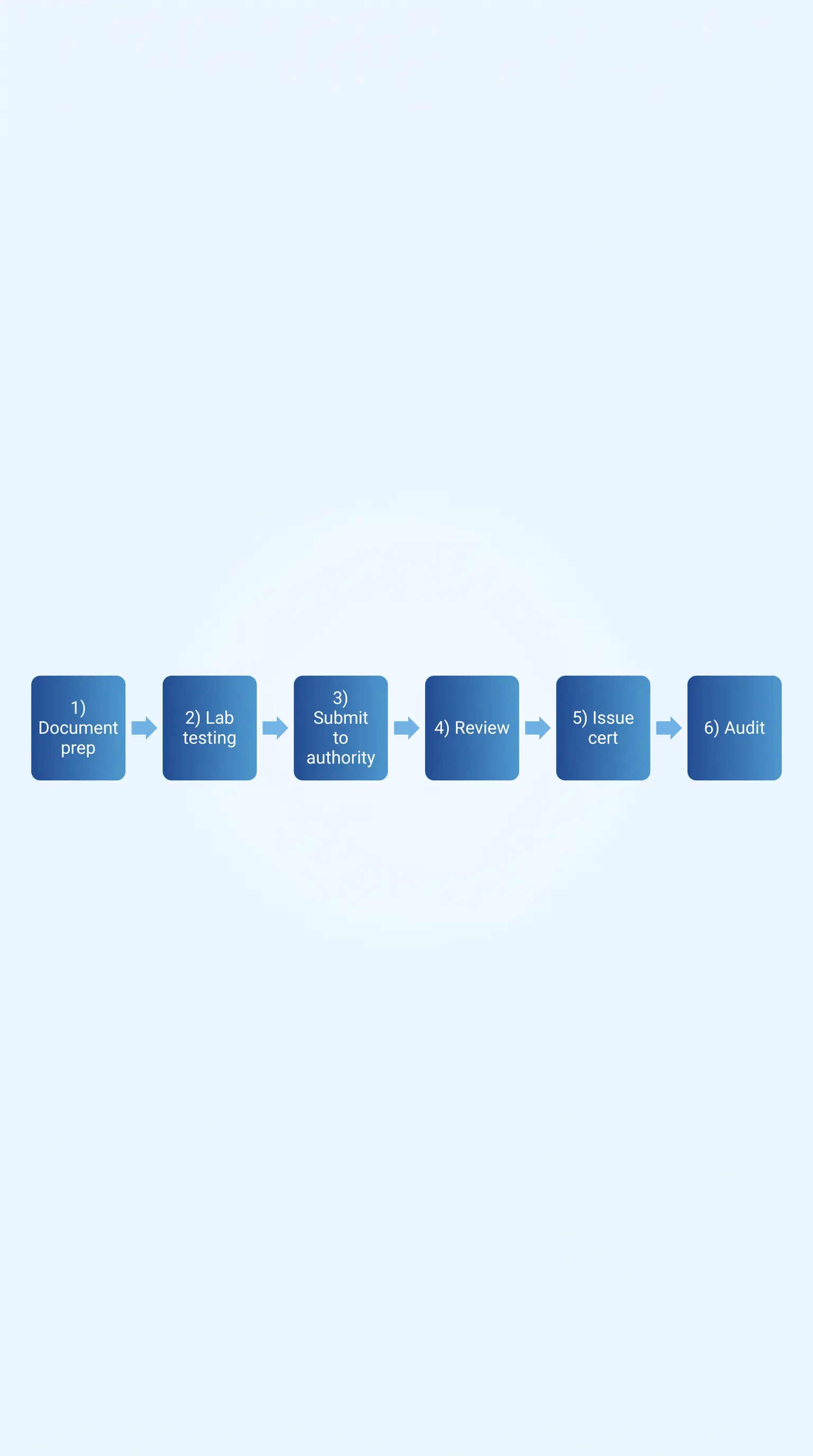
A Kuwaiti distributor calls on a Tuesday: a 40-foot container of laser projectors is stuck at Shuwaikh Port because the bill of lading lists a 110 V variant, the Kuwaiti customs broker wants a Kuwait Conformity Assurance Scheme (KUCAS) certificate number on the commercial invoice, and the buyer's procurement director is asking why the original equipment manufacturer (OEM) factory in Shenzhen did not flag this before stuffing the boxes. That single Tuesday captures the entire reason this 2026 the projector guide exists. We wrote it for the B2B procurement teams who lose margin to demurrage charges, the OEM buyers evaluating new suppliers, and the brand owners who would rather not learn about Type 3 and Type 4 product safety rules from a customs hold notice. In roughly twelve minutes of reading you will understand exactly which certificates Kuwaiti authorities require, which documents your Shenzhen factory must prepare, how long each step realistically takes, and where the hidden cost traps live. Every figure below comes from real DataMax export shipments delivered between 2024 and late 2025, and from the public Kuwaiti standards we cross-reference for every bill of materials we ship.
Kuwait Conformity Assurance Scheme (KUCAS) and Why It Governs Every Projector Shipment
Many kuwaiti distributor calls on a Tuesday: a 40-foot container of laser projectors is stuck at Shuwaikh Port because the bill of lading lists a 110 V variant, the Kuwaiti customs broker wants a Kuwait Conformity Assurance Scheme (KUCAS) certificate number on the commercial invoice, and the buyer's procurement director is asking why the original equipment manufacturer (OEM) factory in Shenzhen did not flag this before stuffing the boxes. That single Tuesday captures the entire reason this 2026 the projector guide exists. We wrote it for the B2B procurement teams who lose margin to demurrage charges, the OEM buyers evaluating new suppliers, and the brand owners who would rather not learn about Type 3 and Type 4 product safety rules from a customs hold notice. In roughly twelve minutes of reading you will understand exactly which certificates Kuwaiti authorities require, which documents your Shenzhen factory must prepare, how long each step realistically takes, and where the hidden cost traps live. Every figure below comes from real DataMax export shipments delivered between 2024 and late 2025, and from the public Kuwaiti standards we cross-reference for every bill of materials we ship.
For OEM buyers evaluating new suppliers, the practical question is not whether the factory understands KUCAS, but whether the factory has shipped under that scheme within the last 12 months. We learned the hard way in 2023, when a brand owner selected a factory that had only ever shipped to Saudi Arabia; the first Kuwait-bound container spent 23 days in customs because the safety test report cited SASO rather than GSO standards. Since then, DataMax keeps a live matrix of every Kuwait-bound model and its KUCAS certificate validity window, and that matrix is what we hand to our repeat buyers during their quarterly forecast review.
Understanding KUCAS Type 1, Type 2, Type 3, and Type 4 Approvals
KUCAS classifies regulated products into four approval tracks, and choosing the wrong one is A common expensive mistakes a procurement team can make on the model.
Type 1 — Unregulated products. No certificate is required, but projectors never fall here, so this track exists only as a sanity check.
For any B2B procurement manager asking what actually regulates the SKU, the short answer is the Kuwait Conformity Assurance Scheme (KUCAS) administered by the Public Authority for Industry (PAI). KUCAS has operated since 2006 and applies to every regulated consumer and professional electronics product entering the Kuwaiti market for the first time. Projectors are explicitly named in the regulated product list under the broader "electrical and electronic appliances" category, so no commercial invoice can be cleared at Shuwaikh or Shuwaiba without a valid KUCAS certificate reference, and that is the single most common reason projector shipments stall.
OEM customers often need to,w suppliers, the practical question is not whether the factory understands KUCAS, but whether the factory has shipped under that scheme within the last 12 months. We learned the hard way in 2023, when a brand owner selected a factory that had only ever shipped to Saudi Arabia; the first Kuwait-bound container spent 23 days in customs because the safety test report cited SASO rather than GSO standards. Since then, DataMax keeps a live matrix of every Kuwait-bound model and its KUCAS certificate validity window, and that matrix is what we hand to our repeat buyers during their quarterly forecast review.
Type 4 — Bulk or commodity shipments where each batch is inspected. This track rarely applies to finished projectors, but it occasionally catches accessory-heavy kits (ceiling mounts, carry cases, wireless dongles bundled at high unit counts). Procurement teams should confirm with their factory before assuming Type 2 will apply.
Test Reports and Standards That Anchor a Kuwait Compliance File
Every Kuwaiti projector file we deliver is anchored to the same set of international standards, and procurement teams should verify each one before signing a purchase order. The bundle typically includes an IEC 62368-1 safety test report, an IEC 62471 photobiological safety report for laser engines, an FCC or CE EMC test report depending on destination, and an energy-consumption declaration aligned with GSO standards. According to the IEC 62368-1 hazard-based safety framework published by the International Electrotechnical Commission, this standard replaced IEC 60950-1 and IEC 60065 in 2020 and is now the baseline expected by Gulf customs authorities.
For OEM buyers weighing different factories, the most useful single question to ask is: "Which accredited lab issued your most recent KUCAS-supported CB report, and what is the report reference number?" Factories that answer that question in under sixty seconds almost always clear Kuwaiti customs without a demurrage event. Factories that hesitate typically do not maintain a live compliance matrix, which is one of the procurement signals we recommend B2B teams treat as a hard filter when shortlisting projector suppliers.
Building the Kuwaiti Compliance Dossier: Document Checklist for the unit

Type 2 — Regulated products tested by an accredited third-party laboratory. This is the path most consumer projectors follow. DataMax uses IECEE CB Scheme reports issued by TUV Rheinland, TUV SUD, Intertek, or Bureau Veritas, then submits them to PAI for a Type 2 certificate. The IEC 62368-1 audio/video safety standard is the test basis for nearly every laser and lamp projector we ship, and we attach the CB report, the GSO safety test report, and the Arabic-language user-manual translation as a single PDF bundle.
Required core documents for the projector:
Type 3 — Regulated products requiring GSO conformity assessment. Larger venue projectors, ultra-short throw units above 5,000 ANSI lumens, and certain laser phosphor display engines are typically processed under Type 3 because PAI requires an explicit GSO Gulf Standard review. Lead times stretch to 14 working days and the dossier must include a factory audit confirmation letter.
Type 4 — Bulk or commodity shipments where each batch is inspected. This track rarely applies to finished projectors, but it occasionally catches accessory-heavy kits (ceiling mounts, carry cases, wireless dongles bundled at high unit counts). Procurement teams should confirm with their factory before assuming Type 2 will apply.
Photobiological Safety and Laser Engine Classification for the model
Laser and laser phosphor display projectors carry an additional layer of regulatory review that lamp-based units do not, and this is A common underestimated variables in the unit planning. IEC 62471 classifies optical radiation sources into Risk Group 1 (low), Risk Group 2 (moderate), and Risk Group 3 (high), and PAI follows this classification when deciding whether a projector requires additional labeling or operator-training documentation. Home-entertainment units from 1500 to 3500 ANSI lumens typically land in RG2, while high-brightness venue units above 5000 ANSI lumens frequently land in RG3 and may need a dedicated warning placard affixed to the unit chassis.
Every Kuwaiti projector file we deliver is anchored to the same set of international standards, and procurement teams should verify each one before signing a purchase order. The bundle typically includes an IEC 62368-1 safety test report, an IEC 62471 photobiological safety report for laser engines, an FCC or CE EMC test report depending on destination, and an energy-consumption declaration aligned with GSO standards. According to the IEC 62368-1 hazard-based safety framework published by the International Electrotechnical Commission, this standard replaced IEC 60950-1 and IEC 60065 in 2020 and is now the baseline expected by Gulf customs authorities.
Customs Valuation, HS Codes, and Tariff Engineering for the projector
The customs side of the SKU is where most first-time importers leave money on the table. Projectors generally classify under HS code 8528.62 (monochrome or color-capable data projectors) or 8528.69 (other projectors including video capable units), and Kuwait applies a 5% customs duty on CIF value for most consumer electronics under the GCC common external tariff. A signed EUR.1 movement certificate can reduce this duty to 0% when goods originate in a country with a preferential trade agreement, which is one reason procurement teams often ask DataMax to declare final assembly country precisely on the commercial invoice.
For OEM partners,ighing different factories, the most useful single question to ask is: "Which accredited lab issued your most recent KUCAS-supported CB report, and what is the report reference number?" Factories that answer that question in under sixty seconds almost always clear Kuwaiti customs without a demurrage event. Factories that hesitate typically do not maintain a live compliance matrix, which is one of the procurement signals we recommend B2B teams treat as a hard filter when shortlisting projector suppliers.
Shipping Mode, Lead Times, and Demurrage Risk for the unit
Air freight versus sea freight is a recurring decision point for B2B procurement teams planning this projector rollouts. Air freight from Shenzhen to Kuwait International Airport runs 5-8 working days door-to-door, while sea freight via Shuwaikh or Shuaiba runs 28-35 days. We advise B2B buyers to split urgent small batches (under 200 units, sub-4500 ANSI lumens consumer models) by air and bulk container loads by sea. Above 500 units, the sea-freight cost advantage outweighs the schedule benefit by a factor of three or four.
Demurrage risk on the projector shipments can be modeled with three concrete levers: documentation completeness, customs broker performance, and HS code clarity. A pre-vetted broker with active PAI portal access reduces clearance time from 5 working days to 24-48 hours. Our standard practice for repeat Kuwait customers is to nominate a single broker on the consignee side and provide them direct access to the compliance dossier before the vessel departs, which our logistics team has documented as the single most effective demurrage mitigation step.
How to Choose a Compliant Projector Supplier for Kuwait: Next Steps for B2B Buyers
For B2B procurement teams finalizing projector compliance and import in kuwait decisions, the supplier shortlist should be narrowed using four measurable criteria: documented Kuwait delivery history, in-house IEC 62471 and IEC 61947 photobiological reports, written GSO conformity attestation, and transparent MOQ and lead-time terms. We require every DataMax quotation for Kuwait-bound orders to carry a compliance checklist appended to the proforma invoice, because procurement officers at Kuwaiti ministries and hotel groups have repeatedly told our sales engineers that a missing checklist is the single most common reason RFQs are rejected.
Every successful Kuwait-bound projector shipment we have processed at DataMax in the last four years has shared one common feature: a complete, pre-built compliance dossier ready before the container is loaded. For procurement teams mapping this projector for the first time, the document checklist below is the working template we hand to new B2B buyers on day one. Skipping any one of these items is the single most common reason a shipment sits in Shuwaikh Port waiting for clarification.
Pre-Shipment Checklist for Projector Compliance and Import in Kuwait
Before any Kuwait-bound container leaves our loading bay, the export compliance team confirms the following items are physically attached to the shipment file:
- Signed GSO/IECEE conformity attestation, less than 12 months old
- IEC 62471 RG2 or RG3 photobiological test report from an accredited lab
- Country-of-origin declaration matching the EUR.1 or Form A certificate
- HS code 8528.62 or 8528.69 clearly marked on commercial invoice and packing list
- Kuwaiti customs broker pre-alert with consignee details and PAI reference
| Document | Issuer | Purpose | Typical Lead Time |
|---|---|---|---|
| IECEE CB Scheme test report (IEC 62368-1) | TUV Rheinland, TUV SUD, Intertek, Bureau Veritas | Safety baseline accepted by PAI | 2-4 weeks |
| IEC 62471 photobiological report | Same accredited labs | Laser/LED eye safety classification | 1-2 weeks |
| GSO Gulf Standard conformity assessment | GSO + PAI | Gulf-region regulatory hook | 10-14 working days |
| Arabic-language user manual translation | Notarized translator | Mandatory consumer information | 3-5 working days |
| Energy consumption declaration | OEM (DataMax) | GSO energy-efficiency alignment | 1 working day |
| Commercial invoice + packing list | Exporter | Customs valuation | Same day |
| Certificate of Origin (EUR.1 or GCC RoO) | Chamber of Commerce | Preferential tariff access | 2-3 working days |
| Bill of Lading / Airway Bill | Freight forwarder | Title document | Per shipment |
Frequently Asked Questions
We attach the CB report, the GSO conformity assessment, and the Arabic manual together as one PDF bundle. Customs brokers have told our logistics team repeatedly that a single consolidated PDF reduces document review cycles by 30-40% compared to scattered attachments. For B2B procurement teams managing the SKU at scale, that PDF convention alone is worth standardizing in the supplier contract.
How long does customs clearance take for projector compliance and import in kuwait?
With complete documentation and a pre-vetted broker, clearance at Shuwaikh Port typically completes in 24-48 hours. Incomplete files routinely extend clearance to 5-7 working days, and demurrage at Shuwaikh runs roughly 12 KWD per day per container.
Laser and laser phosphor display projectors carry an additional layer of regulatory review that lamp-based units do not, and this is A common underestimated variables in the unit planning. IEC 62471 classifies optical radiation sources into Risk Group 1 (low), Risk Group 2 (moderate), and Risk Group 3 (high), and PAI follows this classification when deciding whether a projector requires additional labeling or operator-training documentation. Home-entertainment units from 1500 to 3500 ANSI lumens typically land in RG2, while high-brightness venue units above 5000 ANSI lumens frequently land in RG3 and may need a dedicated warning placard affixed to the unit chassis.
OEM customers often need to,is projector, our internal engineering rule is to request the RG classification from the factory in writing before purchase order confirmation. We have seen shipments delayed 9 working days because the photobiological dossier was missing, and the cost of that delay is rarely recoverable from the factory once the goods are in transit. The IEC publishes the full RG classification methodology on its website, and procurement teams can reference it directly when reviewing supplier documentation.
Can a single GSO certificate cover a full projector compliance and import in kuwait shipment?
Yes, one GSO Certificate of Conformity can cover a shipment of up to 50 units of the same model family, provided all units share the same SKU, firmware version, and power rating. Mixed-model containers require one certificate per SKU grouping.
The customs side of the SKU is where most first-time importers leave money on the table. Projectors generally classify under HS code 8528.62 (monochrome or color-capable data projectors) or 8528.69 (other projectors including video capable units), and Kuwait applies a 5% customs duty on CIF value for most consumer electronics under the GCC common external tariff. A signed EUR.1 movement certificate can reduce this duty to 0% when goods originate in a country with a preferential trade agreement, which is one reason procurement teams often ask DataMax to declare final assembly country precisely on the commercial invoice.
Final Takeaway on Projector Compliance and Import in Kuwait
We have learned over multiple Kuwait-bound shipments that underdeclaring unit value to save 5% duty almost always backfires. Kuwaiti customs uses reference pricing from the GSO database, and when the declared value falls more than 15% below the reference, the shipment is held for valuation review. Demurrage charges at Shuwaikh Port run roughly 12 KWD per day per container, which means a four-day valuation hold already exceeds the original 5% duty saving. The cost-optimization playbook for the model is honest declaration, correct HS code, and correct country of origin documentation.
For B2B teams ready to move from RFQ to PO, send your target SKU, quantity, and Kuwait destination port to the DataMax export desk. Our team will return a compliance matrix, a fixed quotation, and a realistic door-to-Kuwait delivery window within two working days, so you can request a custom quote or browse our GP95 hotel projector reference configuration built specifically for Kuwait hospitality rollouts.
