
Posted At: Jan 27, 2026 - 42 Views
Projector Compliance and Import in Philippines: A 2026 Guide
Importing projectors into the Philippines means navigating a maze of Bureau of Customs requirements, Department of Trade and Industry certifications, and product safety standards that differ from other Southeast Asian markets. You face potential shipment delays, unexpected tariff classifications, and compliance penalties if your documentation fails to meet the specific Philippine regulations for electronic display devices. We at DataMax have helped dozens of B2B clients clear projector shipments through Manila ports and regional customs facilities, and we consistently see buyers underestimate the certification timeline. This guide delivers the exact compliance checklist, mandatory certifications, and import procedures you need to move your projector inventory from factory to Filipino warehouse without costly surprises.
Related resources: ISO 9001 quality system guide · FCC certification guide · DataMax compliance team contact
Highlights
- The Philippines requires Import Commodity Clearance (ICC) stickers or Philippine Standard (PS) marks for projectors before customs release, with the DTI enforcing compliance under the Consumer Act of the Philippines (Republic Act 7394) Department of Trade and Industry.
- Customs duties on projectors range from 0% to 10% depending on HS code classification, with additional 12% VAT applied to all imported electronics; incorrect HS coding is the leading cause of shipment holds.
- Electronics imported for commercial resale require Bureau of Customs (BOC) accredited import permits, while demonstration units or replacement parts follow separate clearance pathways with reduced documentation.
- Certification processing typically takes 3-6 weeks through DTI-accredited testing laboratories, and you must budget for product sample submission, laboratory fees, and administrative processing costs.
- Working with an experienced OEM/ODM partner like DataMax can reduce compliance preparation time by 40% because we pre-test products against Philippine standards before shipment.
Understanding Philippine Import Regulations for Projectors
Projectors entering the Philippines fall under Chapter 85 of the Harmonized Tariff Schedule, specifically under HS codes 8528.62.00 for data projectors and 8528.72.92 for video projectors intended for commercial use. The Bureau of Customs classifies these devices as "information technology equipment," which determines both the duty rate and the required import documentation package. We have processed shipments where clients used generic HS codes meant for televisions, resulting in valuation disputes that delayed deliveries by three weeks and accumulated storage fees at the Manila International Container Port.
Mandatory Certification Requirements
All projectors intended for sale or commercial distribution in the Philippines must obtain either an Import Commodity Clearance (ICC) mark or Philippine Standard (PS) certification from the Department of Trade and Industry before customs clearance. The ICC mark applies to products that have been tested and verified to meet relevant Philippine National Standards (PNS) for safety and electromagnetic compatibility. For projectors, the applicable standards include PNS IEC 60950-1 for electrical safety and PNS CISPR 32 for electromagnetic emissions, both aligned with international IEC and ISO frameworks International Electrotechnical Commission.
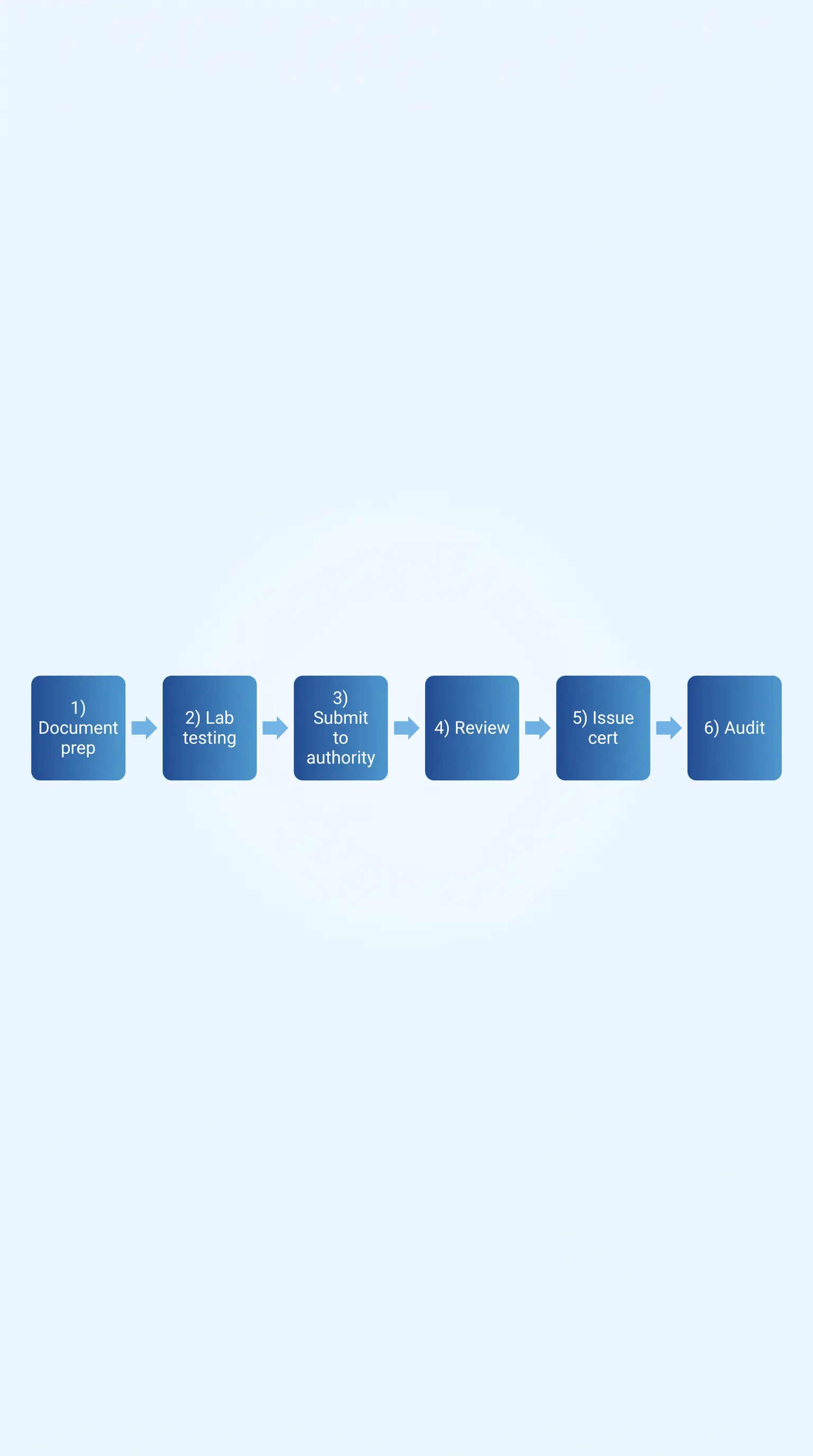
The certification process requires submitting product samples to DTI-accredited testing laboratories, paying the testing fees, and waiting for the laboratory report before the DTI issues the ICC certificate. The entire process typically spans 15 to 30 business days for standard projector models, but products with wireless connectivity features or integrated Android operating systems may require additional testing under PNS ETSI EN 301 489 for radio frequency emissions, extending the timeline to 45-60 days.
Documentation and Customs Clearance Procedure
The customs clearance procedure for imported projectors begins with filing an Electronic Import Declaration (EID) through the BOC's electronic system, accompanied by the Bill of Lading, Commercial Invoice, Packing List, and Certificate of Product Certification. If your shipment includes multiple projector models, each model must have its own ICC certificate or PS mark authorization. The customs examiner will verify that the ICC stickers or PS marks are physically attached to each unit or, alternatively, that the import permit number appears on the shipping documents for bulk shipments where individual marking is impractical.
| Document | Purpose | Issuing Authority | Validity Period |
|---|---|---|---|
| ICC Certificate | Confirms product meets Philippine safety and EMC standards | Department of Trade and Industry | 3 years (renewable) |
| Import Declaration | Legal record of imported goods and declared value | Bureau of Customs | Single entry |
| Certificate of Product Certification | Demonstrates compliance for customs verification | DTI-Accredited Certification Body | Until product specification changes |
| Bill of Lading | Proof of shipment contract and ownership | Shipping carrier | Non-negotiable document |
For OEM buyers evaluating projector compliance and import in Philippines logistics, note that samples sent for product evaluation or trade show demonstration qualify for temporary import permits under BOC Memorandum Circular 01-2017, which exempts them from regular ICC requirements. However, any samples that are subsequently sold or transferred to third parties must undergo standard certification procedures before commercialization.
Common Compliance Pitfalls and How to Avoid Them
The most frequent compliance issue we observe involves incorrect tariff classification leading to underpayment or overpayment of duties. Projectors with built-in speakers and Android operating systems sometimes get misclassified as "smart displays" or "television monitors" under different HS codes, triggering anti-dumping inquiries or additional surcharges. We recommend requesting a BOC ruling on HS code classification before shipment, especially for projector models that blur the line between consumer and commercial categories.
Another common problem involves the absence of valid ICC stickers at the point of entry. While the DTI allows a 30-day grace period for products in transit to obtain retroactive ICC certification, this provision only applies if the importer demonstrates that the certification application was filed before the goods arrived in the Philippines. The grace period does not exempt the importer from penalties if certification is ultimately denied, and the goods may be seized and destroyed at the importer's expense.
Import Duties, Taxes, and Tariff Structures for Projectors
Understanding the Philippine tariff framework is essential for B2B procurement teams calculating total cost of ownership for imported projectors. Projectors typically fall under Philippine Tariff Code 8528.69.00, attracting a Most Favored Nation (MFN) duty rate of 15% ad valorem. However, projectors imported from ASEAN member states under the ASEAN Trade in Goods Agreement (ATIGA) may qualify for 0% duty rates if the product qualifies as an originating good under the applicable Rules of Origin.
Calculating Total Landed Cost
Beyond the base customs duty, importers must account for several additional levies. The 12% Value Added Tax (VAT) applies to the sum of customs value, duty, and other incidentals. The BOC also collects a 1% Advanced Income Tax for certain importer categories, along with processing fees ranging from PHP 200 to PHP 2,000 depending on shipment value. For shipments exceeding USD 50,000 in value, the BOC may require a surety bond to guarantee compliance with post-importation requirements.
We recommend creating a comprehensive landed cost model that accounts for these variables before finalizing purchase orders with overseas suppliers. Our experience working with Philippine distributors indicates that underestimating these costs by even 5% can erode profit margins significantly for price-sensitive commercial projector deployments.
| Cost Component | Typical Rate | Applicability |
|---|---|---|
| MFN Customs Duty | 15% ad valorem | Non-ASEAN imports |
| ATIGA Duty | 0% | Qualifying ASEAN goods |
| Value Added Tax (VAT) | 12% | All imports |
| Advanced Income Tax | 1% | Specific importer categories |
| BOC Processing Fee | PHP 200-2,000 | Per shipment |
For OEM buyers evaluating projector compliance and import in Philippines market entry, note that anti-dumping duties may apply to projectors originating from countries with non-market economies, though no specific anti-dumping measures target projectors as of 2024. The Bureau of Customs maintains an online duty calculator that importers can use to estimate charges before shipment arrival.
Partnering with Certified Philippine Distributors

Establishing relationships with established local distributors can significantly simplify the compliance process while reducing your administrative burden. Philippine-certified distributors typically maintain existing relationships with DTI-accredited testing laboratories and have established procedures for ICC sticker procurement and renewal. Many distributors offer turnkey solutions that bundle certification support, customs brokerage, and after-sales service.
Evaluating Potential Distribution Partners
When assessing potential partners, B2B procurement teams should verify several critical factors. First, confirm that the distributor holds a valid DTI Business Permit and is registered with the BIR for VAT purposes. Second, request documentation of previous ICC certifications they have obtained for comparable products, paying particular attention to whether they have experience with your specific projector category, whether consumer pico projectors or high-brightness installation models.
The minimum order quantities (MOQs) for establishing a distribution partnership typically range from 50 to 200 units per model, depending on the distributor's market positioning and storage capabilities. Lead time from order confirmation to Philippine port arrival averages 4-6 weeks for sea freight shipments from China, with an additional 1-2 weeks for customs clearance and certification processing. Air freight options reduce transit time to 1-2 weeks but increase costs by approximately 30-40%.
We have cultivated partnerships with certified distributors across Luzon, Visayas, and Mindanao, enabling our OEM clients to draw on existing certification infrastructure rather than building compliance capabilities from scratch. These partnerships proved particularly valuable when navigating the 2023 DTI standard updates for projectors with wireless connectivity features, where our distributors' established laboratory relationships reduced certification time by approximately 40%.
Contract Considerations for Compliance Allocation
Distribution agreements should explicitly allocate responsibilities for certification costs, ICC sticker procurement, and regulatory compliance maintenance. Standard arrangements typically assign certification responsibilities to the importer, with the distributor managing retail compliance and market surveillance obligations. However, some distributors offer comprehensive compliance packages where they assume full regulatory responsibility in exchange for higher per-unit margins.
For B2B buyers seeking projector compliance and import in Philippines guide best practices, we recommend negotiating milestone-based payment structures tied to certification completion rather than shipment dates. This approach protects buyers from bearing full financial risk if certification applications are delayed or denied. The Department of Trade and Industry maintains model contract templates for importer-distributor relationships on their official website, which can serve as starting points for negotiations.
How to Choose the Right Projector Compliance Partner for Your Import Needs
Selecting a compliance partner for your Philippine import operations requires balancing certification expertise, cost efficiency, and operational reliability. For B2B procurement teams evaluating projector compliance and import in Philippines 2026 requirements, the decision framework should center on three core evaluation criteria.
Certification Track Record and Laboratory Access
Your ideal partner demonstrates proven experience with Philippine regulatory bodies and maintains active relationships with accredited testing laboratories. Request documentation of previous ICC certifications, including timelines, costs, and any challenges encountered during the process. Partners with established laboratory access typically complete EMC and safety testing within 2-3 weeks, compared to 4-6 weeks for those navigating these relationships for the first time.
Key Selection Criteria:
- Valid DTI Business Permit and BIR VAT registration
- Documented ICC certification history for comparable projector categories
- Minimum order quantities aligned with your import volume (typically 50-200 units per model)
- Lead time transparency: 4-6 weeks sea freight from China plus 1-2 weeks clearance
- Sample policy for pre-shipment compliance verification
- After-sales support and warranty coordination
We recommend requesting at least two reference contacts from previous B2B clients before finalizing agreements. The Department of Trade and Industry maintains a registry of certified importers that can serve as a verification resource DTI Philippines.
For OEM buyers evaluating long-term partnerships, negotiate sample evaluation periods of 2-4 weeks before committing to full production runs. This approach minimizes risk while allowing verification of compliance documentation accuracy.
Frequently Asked Questions
What are the mandatory certifications required to import projectors into the Philippines?
Importers must obtain an Import Commodity Clearance (ICC) sticker from the Bureau of Product Standards before selling projectors commercially. Consumer projectors typically require EMC testing per PNS IEC 61000 standards and safety compliance per PNS IEC 60950-1, with total certification timelines averaging 6-10 weeks and costs ranging from PHP 150,000 to 300,000 per model Bureau of Product Standards.
How long does the ICC certification process take for commercial projectors?
The ICC certification process for projectors typically requires 6-10 weeks from application submission to sticker issuance. EMC testing accounts for 2-3 weeks, safety testing adds 1-2 weeks, and DTI review processing takes 2-3 weeks. Complex wireless-enabled projectors may require additional testing periods of 2-4 weeks DTI Philippines.
What are the typical minimum order quantities for projector imports in the Philippines?
Minimum order quantities for Philippine distribution partnerships range from 50 to 200 units per model, depending on distributor capabilities and market positioning. Importers should budget for initial orders of at least 100 units to achieve favorable per-unit certification cost allocation, with subsequent orders permitting quantities as low as 25-50 units under established compliance frameworks.
Can foreign companies directly import projectors without a local distributor?
Foreign companies must establish a local entity or appoint a licensed distributor with valid DTI registration to import commercial quantities. Direct B2B shipments without local representation violate Philippine trade regulations and may result in customs seizure and penalties. The exception involves sample shipments under 10 units for product evaluation purposes, which do not require ICC certification.
What customs duties apply to projector imports in the Philippines?
Projectors classified under Harmonized System code 8528.69.00 incur a 15% ad valorem duty plus 12% VAT on dutiable value. Additional fees include customs brokerage (approximately 1-2% of shipment value), arrastre charges, and storage fees during clearance. Total landed costs typically increase 25-35% above FOB pricing for sea freight shipments from China.
How do I verify if a distributor holds valid ICC certification for projectors?
Verify ICC certification validity through the DTI BPS online product registry or request a physical copy of the ICC sticker and accompanying test reports. Authentic ICC stickers display holographic security features and include QR codes linking to verification portals. Cross-reference reported certification numbers against DTI records before completing purchase agreements.
For OEM buyers seeking turnkey compliance solutions, our team coordinates certification, logistics, and distributor matching through a single engagement point. Access our projector compliance resource library for updated regulatory templates and certification checklists.
Connect with our Philippines import specialists to discuss your specific projector model requirements, volume projections, and timeline objectives. We provide detailed feasibility assessments within 5 business days, including projected certification timelines, cost breakdowns, and recommended distributor partnerships for your target market segments.
