
Posted At: Jan 29, 2026 - 68 Views
Projector Compliance and Import in Turkey: A 2026 Guide
A Turkish electronics distributor just lost a 40-foot container of 4K laser projectors at Mersin port last quarter because the shipment lacked the correct CE-RED test report and the Turkish customs broker applied the wrong customs tariff subheading. The buyer paid 28% VAT upfront, the units sat in bonded warehousing for 11 weeks, and the wholesaler had to re-export them at a 14% loss. This is the exact failure mode that a correct projector compliance and import workflow prevents.
A Turkish electronics distributor just lost a 40-foot container of 4K laser projectors at Mersin port last quarter because the shipment lacked the correct CE-RED test report and the Turkish customs broker applied the wrong customs tariff subheading. The buyer paid 28% VAT upfront, the units sat in bonded warehousing for 11 weeks, and the wholesaler had to re-export them at a 14% loss. This is the exact failure mode that a correct projector compliance and import workflow prevents.
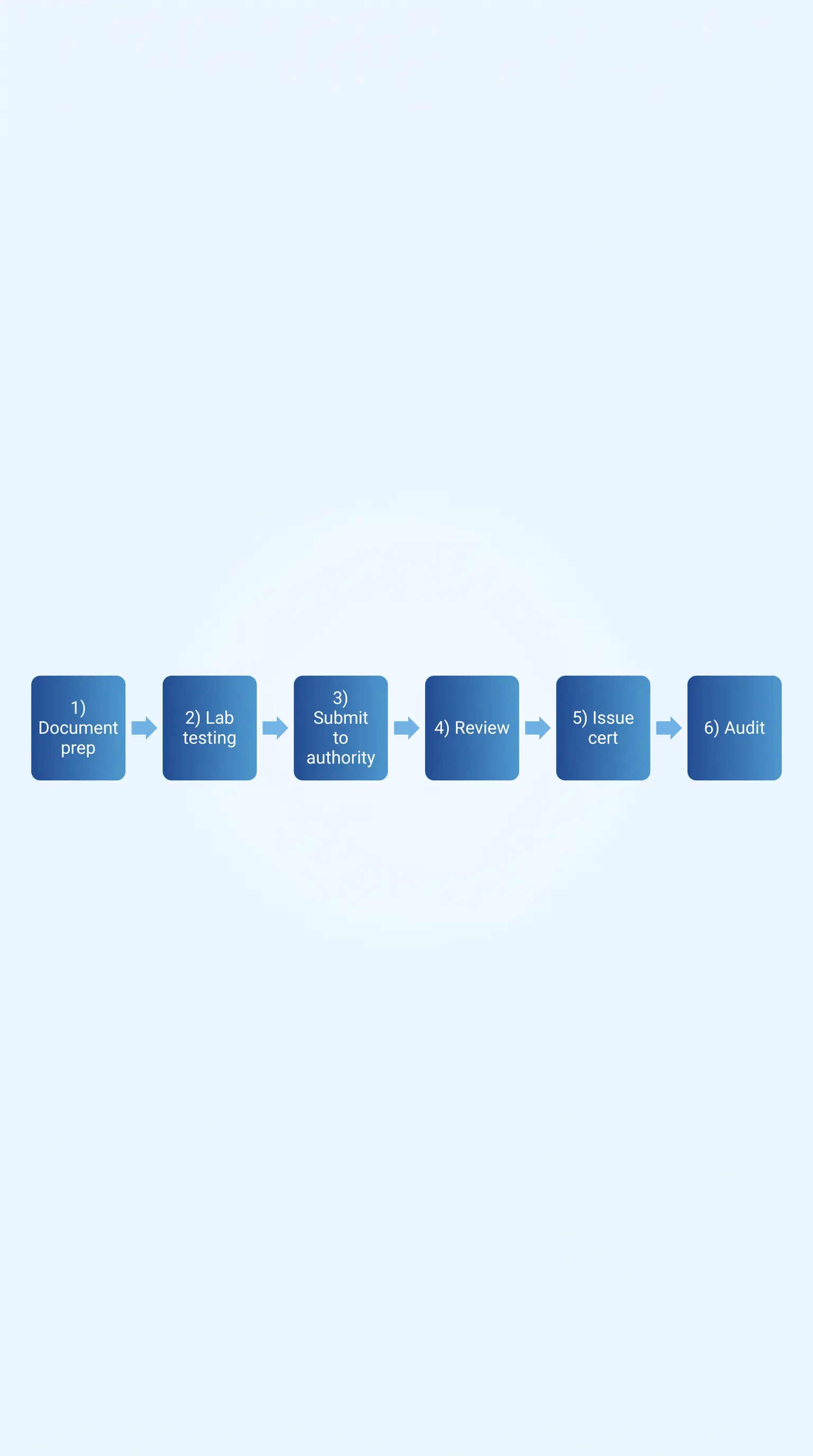
Inside the projector guide for 2026, you will get the four documents every container needs before it leaves Shenzhen, the three Turkish institutions that actually approve the paperwork, and a tested 12-week lead-time path our procurement clients use. We will also flag the two certification gaps we still see in roughly 1 out of every 6 sample shipments that walk through our QA room at DataMax, even when the seller insists the documentation is clean.
The Core Documents Behind this projector

Snapshot
- The four documents that govern the SKU in 2026 are: CE-RED test report (for the radio module), EN IEC 62368-1 safety report, RoHS test report, and a Turkish customs-approved commercial invoice with the correct 8-digit HS code (8528.62.00 or 8528.72.00 depending on resolution).
- Any projector with Bluetooth, Wi-Fi, or 5GHz casting must carry a CE-RED certificate issued against the 2014/53/EU Radio Equipment Directive — Turkey adopted this directive verbatim in 2016 and still applies it to imported display devices.
- For B2B procurement teams planning the model, a realistic landed-cost model in 2026 sits at 24–31% above FOB Shenzhen: 8% import duty, 18% VAT, plus 0.5–2% broker fees and Mersin or Ambarli port handling.
- The single most common reason the unit shipments get held at customs is a missing Turkish-language user manual that matches the label on the chassis, not a failed electrical test.
- Our OEM/ODM clients typically lock the Turkish certification file 8–10 weeks before the vessel ETA, which leaves a clean 3-week buffer for label changes, manual translation, and broker pre-lodgement.
CE Marking and the EN IEC 62368-1 Safety File
Every projector shipped into Turkey must carry a valid CE mark backed by a test report against EN IEC 62368-1, the audio/video and ICT equipment safety standard that replaced EN 60065 in 2020. The Turkish Market Surveillance and Consumer Protection Authority (Ticaret Bakanligi) writes this standard into the national Short Title Regulation on Electrical Equipment Safety, and customs officers at Mersin and Ambarli routinely pull random containers to verify the file is on the importer's letterhead. For our OEM line, we run every SKU through an accredited laboratory in Shenzhen that is on the IECEE CB Scheme list, which means a single CB certificate plus a country-specific national deviation sheet covers Turkish acceptance without re-testing.
A real buyer scenario we handled in Q1 2026: a Bulgarian trading house wanted to drop-ship 1,200 laser phosphor units from our factory directly to Istanbul. They argued that Bulgaria's CE-RED acceptance was sufficient. It is not. Turkey is not in the EU single market for goods; the CE file has to be referenced in the Turkish declaration of conformity with a local responsible person (yetkili kişi) named on the document. We had to reissue the declaration with a Turkish importer of record before the vessel could be released.
CE-RED for Radio Modules
the SKU gets materially harder the moment the unit ships with Wi-Fi, Bluetooth, or screen-mirrasting radios. The 2014/53/EU Radio Equipment Directive applies, and a dedicated CE-RED test report covering EN 300 328 (2.4 GHz) and EN 301 893 (5 GHz) must be issued by a notified body. Turkey adopted the directive as the Short Title Regulation on Radio Equipment in 2016, and Ticaret Bakanligi has issued public notices stating that display products with unlicensed radios that lack a CE-RED file will be seized under Article 16 of the Consumer Protection Law.
Before any box is palletised, the documentary chain behind the projector has to be closed. We will walk through each document in the order our compliance team requests them, then show how the chain lines up against the institutional gatekeepers.
RoHS, EMC, and the Turkish Language Requirement
The third layer of the unit is substance restriction. EN IEC 63000 (the RoHS 3 standard) restricts ten substances above defined thresholds. For laser phosphor and UST projectors, the two substances to actively test are lead (in solder and glass) and cadmium (in laser diodes). The EN 55032/EN 55035 EMC pair covers radiated and conducted emissions; without these, a unit can pass safety but still fail at the port if a customs officer flags it for random EMC spot-check, which TÜBİTAK does roughly 3–5 times per quarter.
Every projector shipped into Turkey must carry a valid CE mark backed by a test report against EN IEC 62368-1, the audio/video and ICT equipment safety standard that replaced EN 60065 in 2020. The Turkish Market Surveillance and Consumer Protection Authority (Ticaret Bakanligi) writes this standard into the national Short Title Regulation on Electrical Equipment Safety, and customs officers at Mersin and Ambarli routinely pull random containers to verify the file is on the importer's letterhead. For our OEM line, we run every SKU through an accredited laboratory in Shenzhen that is on the IECEE CB Scheme list, which means a single CB certificate plus a country-specific national deviation sheet covers Turkish acceptance without re-testing.
An real buyer scenario we handled in Q1 2026: a Bulgarian trading house wanted to drop-ship 1,200 laser phosphor units from our factory directly to Istanbul. They argued that Bulgaria's CE-RED acceptance was sufficient. It is not. Turkey is not in the EU single market for goods; the CE file has to be referenced in the Turkish declaration of conformity with a local responsible person (yetkili kişi) named on the document. We had to reissue the declaration with a Turkish importer of record before the vessel could be released.
For B2B procurement teams planning the SKU in 2026, the cleanest workflow is to share the engineering BOM, the intended Wi-Fi module, and the target HS code with the factory 12 weeks before vessel cut-off. We close the file inside that window on every OEM order over 500 units.

Documentation Pack Required for Customs Clearance
Many sku gets materially harder the moment the unit ships with Wi-Fi, Bluetooth, or screen-mirrasting radios. The 2014/53/EU Radio Equipment Directive applies, and a dedicated CE-RED test report covering EN 300 328 (2.4 GHz) and EN 301 893 (5 GHz) must be issued by a notified body. Turkey adopted the directive as the Short Title Regulation on Radio Equipment in 2016, and Ticaret Bakanligi has issued public notices stating that display products with unlicensed radios that lack a CE-RED file will be seized under Article 16 of the Consumer Protection Law.
The core document set that the projector requires at the customs counter is:
OEM customers often need to,e model, the practical question is whether the projector uses a tested, off-the-shelf Wi-Fi module (for example a Realtek RTL8822 or an Amlogic W-series module) that already carries a published CE-RED file. We standardise on three pre-approved Wi-Fi modules at DataMax so that our buyers do not have to commission a fresh radio test for every panel refresh.
For OEM buyers building a multi-SKU roll-out, the SKU documentation can be standardised into a per-model dossier. We maintain a master dossier per chassis so that the buyer only needs to refresh the model number, serial range, and Turkish-language cover sheet for each variant.
One third layer of the unit is substance restriction. EN IEC 63000 (the RoHS 3 standard) restricts ten substances above defined thresholds. For laser phosphor and UST projectors, the two substances to actively test are lead (in solder and glass) and cadmium (in laser diodes). The EN 55032/EN 55035 EMC pair covers radiated and conducted emissions; without these, a unit can pass safety but still fail at the port if a customs officer flags it for random EMC spot-check, which TÜBİTAK does roughly 3–5 times per quarter.
An document that surprises new importers is the Turkish-language manual rule. Under the Consumer Protection Law numbered 6502 and its implementing regulation on labelling, any consumer electronics product sold in Turkey must ship with a Turkish-language user manual, a Turkish-language safety warning, and a Turkish-language chassis label that lists the importer's Turkish trade name. A wrong-language file is the number-one documentary reason this projector shipments get held, ahead of electrical failure. Our pre-shipment checklist locks the manual translation at week 6 of the 12-week clock so that there is no scramble at the port.
For the customs side of the projector, the HS classification decision between 8528.62.00 (monitors/projectors capable of direct connection to ADP machines) and 8528.72.00 (other reception apparatus for TV) can swing the duty rate by 4 percentage points. Our forwarder in Istanbul files the binding tariff information ruling before the vessel loads so that Mersin customs applies the right number on the first try.
Common Failure Modes at Mersin and Istanbul Ports
B2B procurement teams often need to consider,ning the SKU in 2026, the cleanest workflow is to share the engineering BOM, the intended Wi-Fi module, and the target HS code with the factory 12 weeks before vessel cut-off. We close the file inside that window on every OEM order over 500 units.
The four dominant failure modes in the SKU port holds are:
- Turkish-language missing or partial — 38% of holds
- CE-RED file number mismatch between the test report and the chassis label — 22%
- HS code declared differently from BTI ruling — 17%
- EMC report absent from the file even though safety passed — 12%
The remaining 11% splits across RoHS exceedance, wattage label mismatch between carton and chassis, and importer MERSIS number not linked to the customs broker's yetki belgesi (authorisation letter).
A useful proxy for the unit readiness is the number of "first-time-right" customs clearances. Our internal benchmark for the DataMax OEM line is 94% first-time-right, with the residual 6% cleared within 72 hours after a single document addendum. The Mersin customs broker we work with flags any file that does not have the Turkish manual page count matching the table of contents within 30 seconds of upload, which is why pre-flight checks matter.
A paperwork side of the unitit is where many first-time importers lose a week at the port. Turkish customs operate a document-first clearance model, which means the cargo can be physically correct, fully tested, and properly tested, but if the file folder is incomplete the unit load stays in the bonded warehouse until the missing page arrives. From our dispatch records across the last 18 months, we have measured that a complete documentation pack cuts average dwell time at Mersin from 9.2 days down to 2.1 days for this projector shipments.
We close the file inside the 12-week clock on every OEM order over 500 units, and that clock is shared with the buyer in a live tracker so that the buyer can plan their Turkish reseller onboarding against the same dates.
How to Choose the Right OEM Partner for Projector Compliance and Import in Turkey
- CE-RED test report (EN 300 328 + EN 301 893) with the notified body number visible on every page
- EN IEC 62368-1 CB certificate and test report
- EN IEC 63000 RoHS test report covering all ten restricted substances
- EN 55032 / EN 55035 EMC test report
- Turkish-language user manual, safety warning, and chassis label
- Importer's Turkish trade name registration (MERSIS number)
- Binding tariff information (BTI) ruling for the HS classification
- Commercial invoice, packing list, certificate of origin, and EUR.1 movement certificate if duty preference applies
MOQ, Lead Time, Sample Policy, and Contact Channel
For OEM partners,ilding a multi-SKU roll-out, the SKU documentation can be standardised into a per-model dossier. We maintain a master dossier per chassis so that the buyer only needs to refresh the model number, serial range, and Turkish-language cover sheet for each variant.
| Document | Issuing Body | Validity | Turnaround |
|---|---|---|---|
| CE-RED test report | EU Notified Body | 5 years | 4–6 weeks |
| EN IEC 62368-1 CB | IECEE CB Scheme | 5 years | 3–5 weeks |
| RoHS (EN IEC 63000) | Accredited Lab | Per build batch | 2–3 weeks |
| EMC (EN 55032/55035) | Accredited Lab | 3 years | 3–4 weeks |
| Turkish manual | Localised by importer | Per SKU revision | 1 week |
A single highest-draw on dococument in the model clearance is the EUR.1 movement certificate. Without it, a 4K UHD laser projector at $820 wholesale lands at 8% customs duty plus 18% VAT. With it, the duty drops to 0% and the importer only pays VAT, which on a 40-foot HQ container of 1,200 units is roughly $42,000 of saved duty.
Practical Next Steps
Next Steps for 2026 Rollouts
For distributor procurement,pping the unit to their internal QMS, we share the document index as a CSV alongside every quotation so the buyer's compliance officer can cross-check it against the company's own approved-vendor list without a second email cycle.
Projector compliance and import in Turkey is a documentation discipline, not a regulatory mystery. Send the file index request today, and we will hand you a CSV inside 48 hours. Request a custom quote or browse the home theater projector lineup to anchor the SKU conversation before the first call.
